Gillian’s Found Photo #61

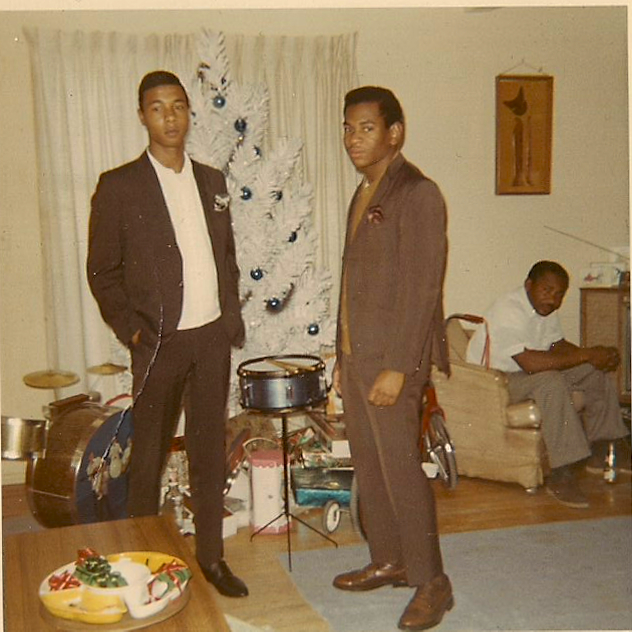
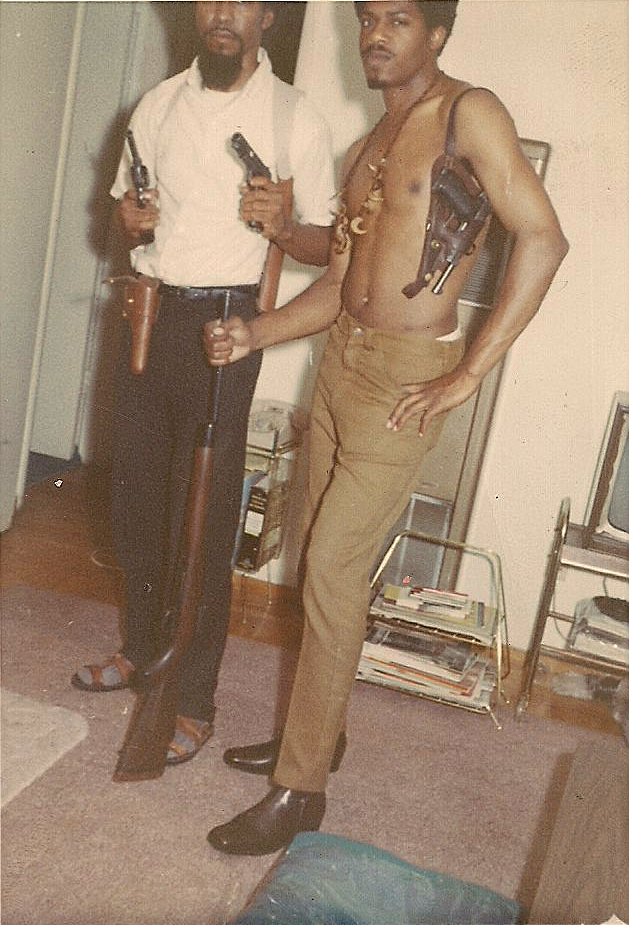
Now here’s couple of stylin’ young thugs. Date and place unknown, but judging by the trousers I’d say early to mid-60’s (or as scientists like to call it, the pre-flare era).  Can anyone identify the arsenal? Don’t you want to see what the rest of this roll of photos looks like?

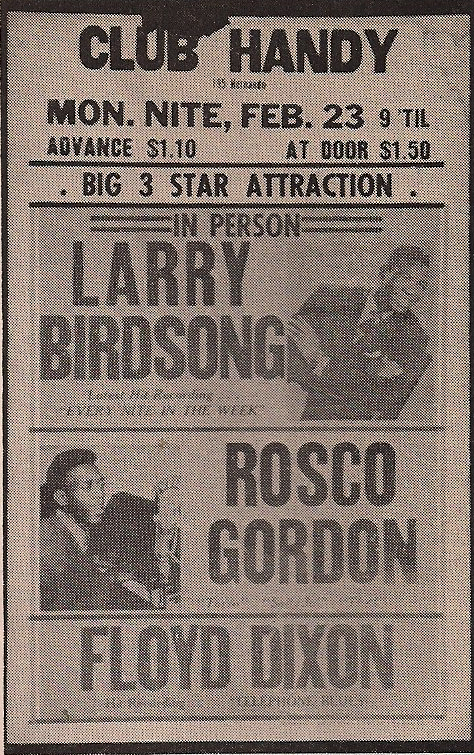
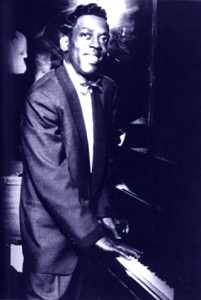
Rosco Gordon

Rosco Gordon
Me and Rosco Gordon, 1996.

[youtube https://www.youtube.com/watch?v=M5rrSAOyzb4%5D

Rosco Gordon from the film Rock Baby Rock It.

[youtube https://www.youtube.com/watch?v=HlKfziQlVdg%5D

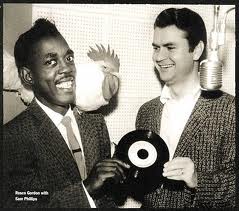
Rosco Gordon serenades Butch the alcoholic chicken.

Rosco Gordon, Butch and Sam Phillips.

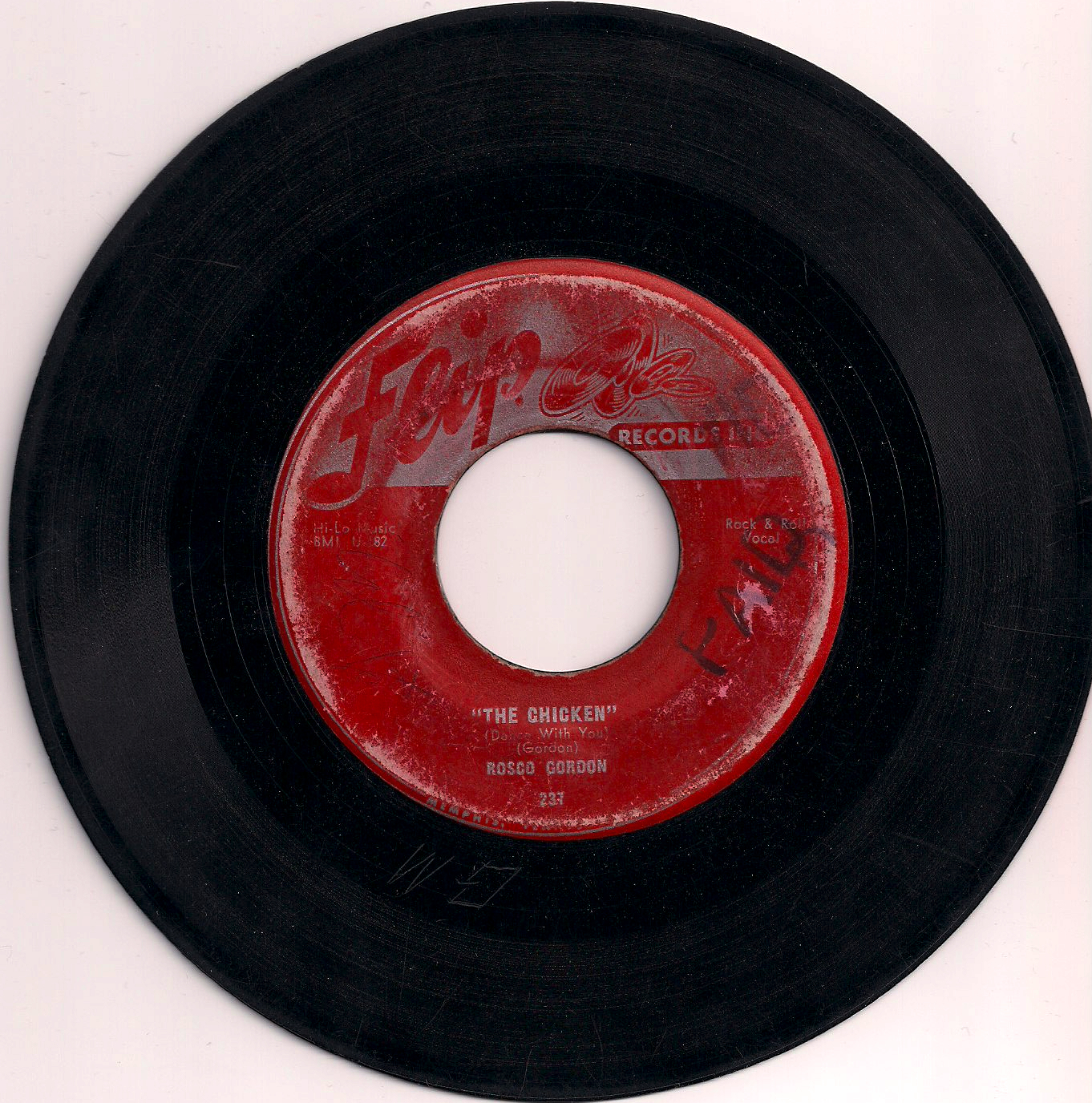
   Still the easiest 45 to find on this label.

.
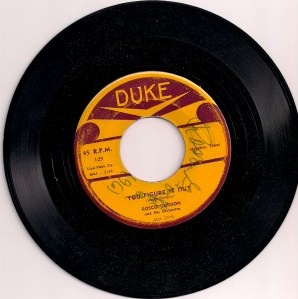
Signed Duke 129.

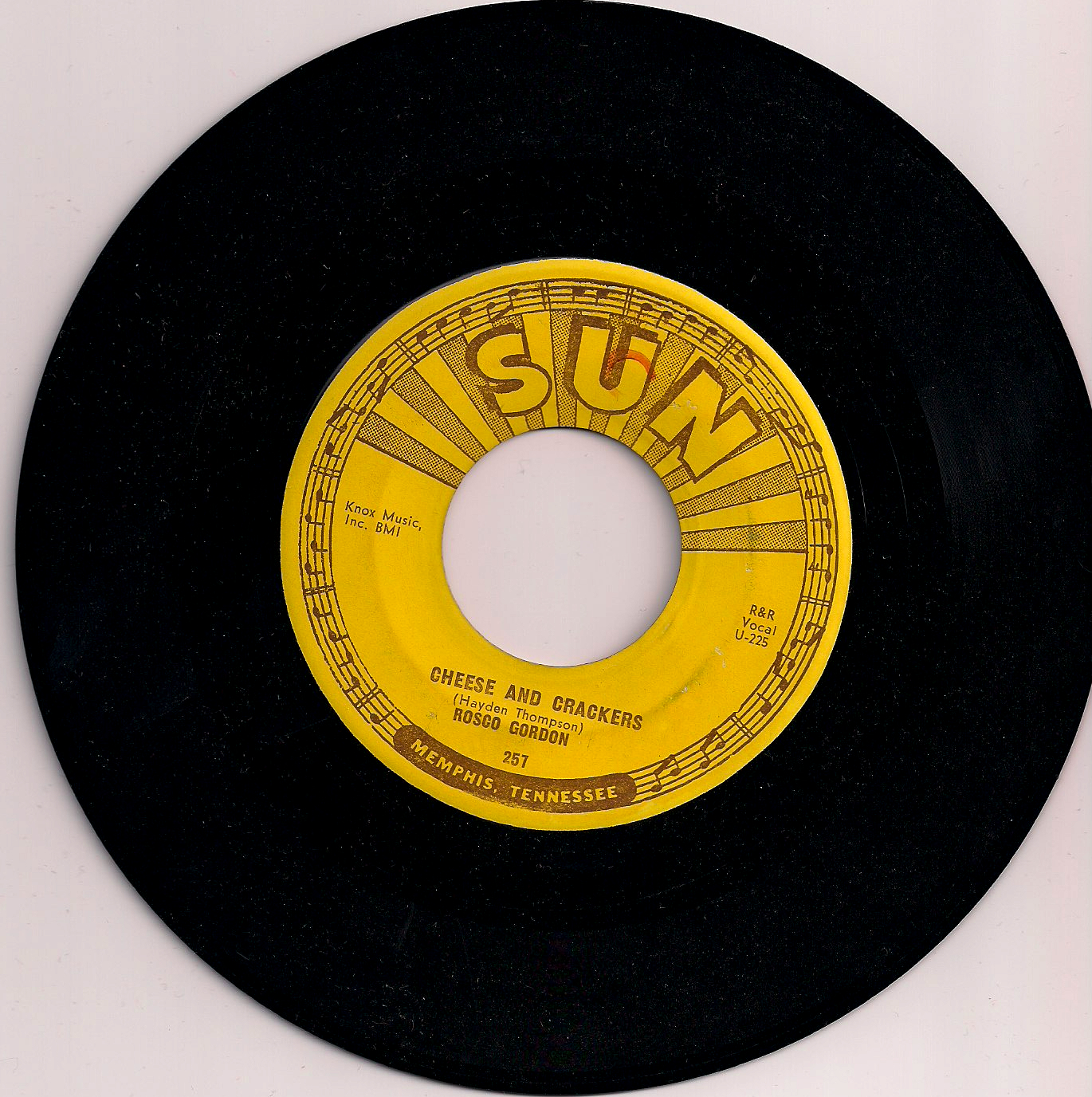
Return to Sun, the one was written by rocker Hayden Thompson.

Notice writing credit and mis-spelled first name.
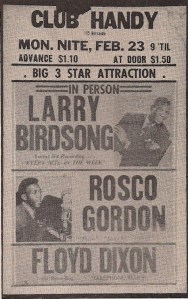
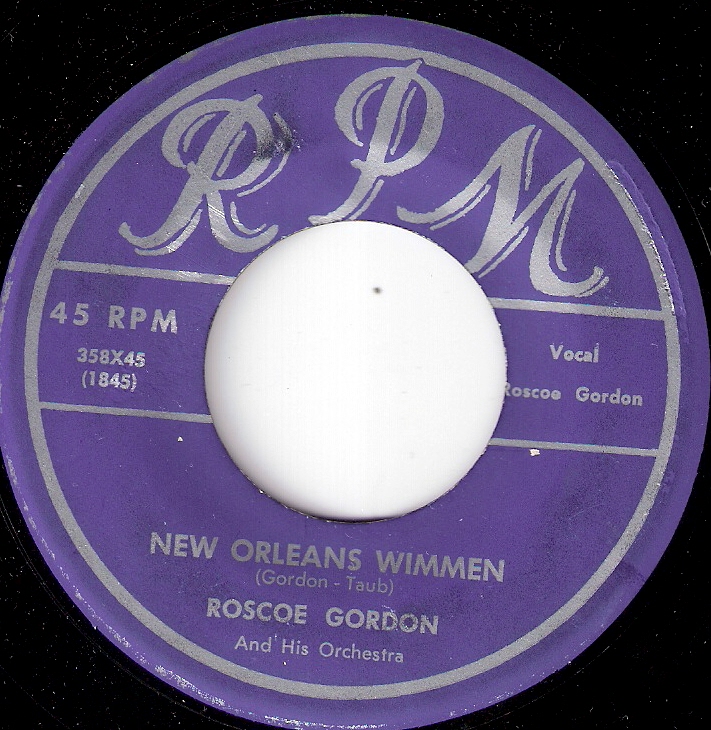
When A Buck And A Half Bought Something.
  Rosco Gordon Jr. was born in Memphis in 1934, the youngest of eight children, growing up on Florida Street. He taught himself piano by sitting next to his sister while she practiced her lessons and before the age of eighteen had won the Talent Show at Beale Street’s famed Palace Theater (the M.C. was Rufus Thomas) and was appearing on WDIA, America’s first all black radio station (where B.B. King got his start around the same time). Through WDIA’s owner James Mattis he was sent to see Sam C. Phillips who recorded him, leasing his sides to the Bihari Brother’ RPM label out of L.A., charting for the first time with Saddled  The Cow (Milked The Horse) b/w Ouch! Pretty Baby which went to #9 R&B in September of ’51.  Then Phillips sent two versions of the same master– Booted, one to RPM and a slightly different alternate take to Chess in Chicago.  The Chess version hit #1 R&B in February of ’52 kicking off a three way tug of war which ended up with RPM securing Gordon’s contract (and the services of talent scout/band leader Ike Turner who had topped the charts for Chess with the Phillips produced master Rocket 88 under the guise of Jackie Breston & his Delta Cats, Chess would get Howlin’ Wolf in the same deal).  Since RPM was no longer dealing with Phillips, Gordon cut sessions in Memphis at Tuff Green’s house in a makeshift studio, moonlighting for Phillips who then sold the masters to Mattis’ Duke label. Soon Duke was sold to Peacock’s owner, Don Robey, along with Gordon, Bobby Blue Bland (who was Rosco’s chauffeur, he made his debut singing on a Rosco Gordon b-side), and Johnny Ace. Confused? Don’t worry you will be.
 Since Rosco had two top ten hits and had seen no royalties (and the Biharis had cut themselves in for a piece of his songwriting by putting their nome-de-disque Taub on all his discs), Rosco Gordon took the short money upfront, and hence would cut a disc for whom ever was willing to put his price (usually $3-400) in his pocket. Between the years of 1951-59 he cut eleven singles for RPM (including the #2 hit No More Doggin‘), eight for Duke, five for Sun (the biggest seller The Chicken appearing on both Sun and its subsidiary Flip), one for Chess (the aforementioned Booted), and four more for Vee Jay, including his biggest hit– Just A Little Bit, featuring Classie Ballou on guitar, which would go on to become an R&B standard.
  It would be a daunting and quite pointless task to attempt to put these twenty-nine discs in any sort of chronological order. In fact, much of the best material was left in Sam Phillips’ vault which remained un-issued until the early 1980’s when Charley Records (a rumored money laundering operation for the Corsican mob) began releasing un-issued Sun recordings in bulk.  The basic Rosco Gordon sound was based around his piano pounding (known as Roscoe’s rhythm), shuffling drums, guttural saxophone and often distorted guitars, over which Rosco usually delivered a wonderfully mush mouthed vocal. In addition to the above sides, some of his best were, and still are–  RPM 322- Rosco’s Boogie b/w So Tired,  Duke 129- Three Cent Love b/w You Figure It Out, the a-side sporting a beautiful solo from Pat Hare, the flip perhaps his most over the top vocal, RPM 358- New Orleans Wimmen b/w What You Got On Your Mind, Sun (and Flip) 227- Weeping Blues b/w Love For You Baby, Sun 257- Shoobie Oobie b/w Cheese and Crackers, Sun 305 Sally Joe b/w El Torro (the a-side an experiment in rockabilly, the flip an uncharacteristic Spanish guitar led instrumental that is rarely re-issued but I love), RPM 369- Dream On Baby b/w  Trying RPM 384- Whiskey Made Me Drunk b/w Tomorrow May Be Too Late, Duke 173- Tummer Tee b/w I’ve Loved and I’ve Lost. Among the best of the un-issued sides you’ll find T-Model Boogie, Decorate The Counter, Let’s Get High, Bop With Me Baby, I’m Gonna Shake It, I Don’t Like It and Nineteen Years Old.  He was cutting excellent sides into the late 60’s such as this 1964 duet with his wife Barbara which appeared on New York’s Old Town label– Gotta Keep Rollin’, and this 1968 remake of Just A Little Bit which appeared on gangster Nate McCalla’s Calla label.
  Rosco Gordon had a colorful career. In one run in with hoodlum label owner Don Robey, Robey threatened to kick Gordon (he’d previously crushed Little Richard’s testicles in an argument over royalties). Gordon patted the revolver tucked into his belt and told Robey the foot he kicked him with was the foot he would put a bullet in. He escaped with his testes in tact.  He toured the south on many package shows, relocated to Shreveport, La. in the late 50’s where he met his second wife Barbara (his first marriage at age 15 lasted only weeks), and kept churning out discs. He also toured the Caribbean where he was wildly popular, No More Doggin’ being one of the biggest R&B hits in Jamaican history and along with Fats Domino’s Be My Guest and Wilbert Harrison’s Kansas City, the blueprint for the coming ska sound. He also appeared in one of the greatest rock’n’roll movies of all time– Rock Baby Rock It (1957) along with rocker Johnny Carroll, in it Gordon serenades his pet chicken Butch (he later told me Butch, whom he toured with, was an alcoholic).
 In the late 60’s he relocated to Queens, New York, where he founded his own Bab-Roc label issuing a handful of singles in the 70’s and then, in the style of TV’s George Jefferson, opened a dry cleaners. He kept performing till the end of his life and was in fine form as late as the millennium. He recorded an album for ska pioneer Clement “Sir Coxone” Dodd  in the 90’s, it wasn’t particularly good, but I was thrilled to meet Dodd who was selling the discs from a cardboard box at the back of one of Gordon’s gigs in Brooklyn.  In his final days Rosco Gordon attempted to patch things up with Sam Phillips who took great offense to Rosco’s disregard of exclusive contracts (even though Phillips had operated much the same way at the dawn of his career) and still harbored a grudge.  In 2000 Rosco booked time at Sun Studio and asked Sam to produce a few sides. Rosco recorded an album at Sun but Phillips never showed. It was issued as Memphis, Tennessee later that year.  In 2002 Rosco Gordon died of a heart attack in Rego Park, Queens, New York. Perhaps if life on earth continues for long enough, someone will compile a re-issue of his complete Duke sides.
Gillian’s Found Photo #60

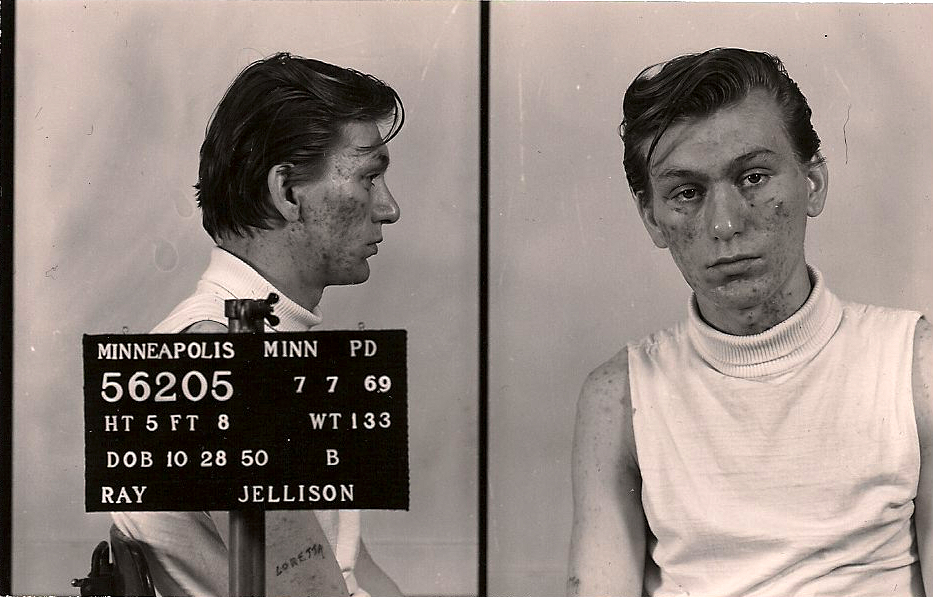
Fang’s contribution this week is pretty self explanatory, a mugshot from the Minneapolis PD circa 1969. I give this little zit-faced greaseball snaps for keeping his pre-Beatles hair do, and getting his gal Loretta’s  name tattooed on his arm in a decidedly amateurish font (in fact it looks kind of crooked). The mock turtle neck sleeveless makes me think he night be wearing one of Loretta’s dresses. What do you think he did to get arrested, and where do you think he is today?

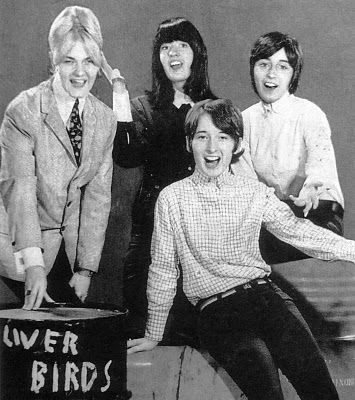
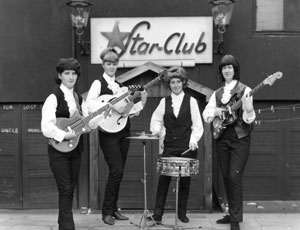
The Liverbirds

The Liverbirds
The Liverbirds in the Star-Club

                           The Liverbirds in front of the Star-Club

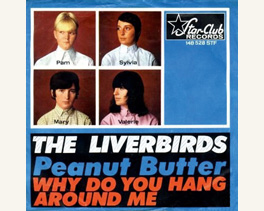
                               German pic sleeve.

[youtube https://www.youtube.com/watch?v=lL_D4gnpEx8%5D

[youtube https://www.youtube.com/watch?v=-essM3zzcrY%5D

  It seems the last posting where I sighted a soft spot Freddie and the Dreamers has instigated a furor over what exactly is good, bad and mediocre music. In my opinion, great rock’n’roll usually has elements of all three, often in the same song. However the first (good) is never needed to make great rock’n’roll.
If you want good music you can listen to jazz or classical, rock’n’roll is supposed to be crude, stupid
and unpalatable. That’s why we, or at least I love it. Which brings  us to today’s subject, the Liverbirds,
a Liverpool Beat combo who distinguished themselves by not only sitting when the piss, and having the ability to bleed for days on end without dying, but by being as competent as at least the Remo Four if not the Beatles themselves, whose John Lennon once opined that “they’d never make it”.
 While not even rating a mention in the standard text on the subject– Alan Clayson’s Beat Merchants (Blandord, UK, 1995) and only a passing mention in the same author’s Hamburg- The Cradle Of British Rock (Sanctuary, UK, 1997), they did lay down enough wax to verify that they were as good or better than 90% of the other groups out there,  could stomp out the Uber Beat with the best of them,
and are due for a full revival complete with documentary, biopic, and posthumous praise by current stars not fit to lick their cuban heels.
 Formed in Liverpool in 1962, originally as the Debutones, the Liverbirds– guitarists Pamela Birch and Valerie Gell, bassist Mary McGlory and drummer Sylvia Saunders (they all sang), played the basic Mersey set list made  up of mostly U.S. rock’n’roll of the time– Chuck Berry, girl group, early Motown, and made their mark in Hamburg, where they were more accepted than at home. They were regulars at the Star*Club, recording for the Star Club label, they scored one German top ten hit with a version of Diddley Daddy, cut at least one LP (I’ve heard mention of a second by never heard it), toured with the Rolling Stones, the Yardbirds, and the Detours (who would become the Who), and eventually in 1968 packed it in, three of the four members marrying Germans and settling in the greater Hamburg area. Pam Birch passed away in 2009.
 One thing that separated the Liverbirds from their Mersey compatriots, beside the obvious one, is that unlike the Liverpool competition, they had a distinct Bo Diddley influence, keep in mind Bo was probably the only early rocker who tunes were never covered by the Beatles (which I’d say accounted for their clanky sound),  and most of the U.K. wouldn’t hear Bo’s tunes until the Rolling Stones, Pretty Things and Yardbirds began playing them. In fact they had more in common with the London R&B bands than with the Mersey Beat sound. I like them better than  most of the Liverpool groups except maybe the Swinging Blue Jeans, and as much as London’s Downliner’s Sect for that matter. Some of their better recorded sides were their rendition of Sir Douglas Quinet’s (S)He’s About A Mover, Bo Diddley’s Mona (gives the Stones a run for their money), Road Runner, Bo Diddley’s A Lover, and Before You Accuse Me, the Coasters’ Down Home Girl, the Everly’s Love Hurts (which sounds like the Velvet Underground with Moe Tucker singing),   Chuck Berry’s Too Much Monkey Business and Talkin’ About You, as well as some originals like Why Don’t You Hang Around Me, He’s Something Else, Hands Off and Oh No Not My Baby. All excellent sides, and if the covers aren’t as good as the American originals, they’re better than anything you’ll hear on the radio today.  I won’t insult the Liverbirds by saying their pioneering ways were responsible for some of  the truly lousy female rock groups that came later, I’ll just say they were a great band.

Two Guys Named Freddie

[youtube https://www.youtube.com/watch?v=Caw5lrE0mmw%5D
Freddie & the Dreamers.

[youtube https://www.youtube.com/watch?v=7gqSLERc1GE%5D
Freddie & the Hitch- Hikers.


The top clip, from the 1965 NME awards shows just what a maniac live performer Freddie Garrity (who died in 2006) was. I never liked I’m Telling You Now, their only U.S. hit, although I do love Do The Freddie, their attempt at a dance craze, but they could liven up a TV appearence like nobody’s business.
Lester Bangs once called them– “a triumph of rock as cretinious swill”, as a lover of cretinious swill I concur.
The second clip was sent in by  by reader Tom Lundin along with this article from the Denver Eye about Freddie & the Hitch-Hikers who cut the amazing Sinners b/w Mop Flop for Band Box in 1960. Great pix! Great record.

Papa Lightfoot

Pardon the crappy scan….
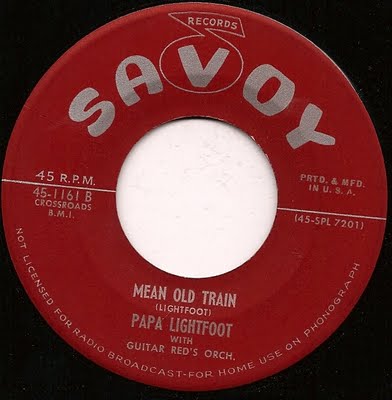
Same tune, different version…

Today’s subject was born Alexander Lightfoot in Natchez, Mississippi on March 2, 1924, he would go through life calling himself George and recorded as Papa Lightfoot, although he would also be known Little Papa Walter and Papa George just to confuse matters.  He taught himself to play harmonica, kicked around little clubs in Natchez and New Orleans where he hooked up with Edgar Blanchard’s Gondoliers, an important R&B band that featured Tommy Ridgley on piano. In 1949, with the Gondoliers he cut his first record,  recorded in Houston for Don Robey’s Peacock label, backing up a singing drummer named Silver Cooks. Mr Ticket Agent Man b/w Coming Back Home while wasn’t a particularly great record, it does have its charm,  but it did not sell. Probably recorded at the same session were two tracks with Lightfoot as leader– Papa George Blues b/w Lightfoot Boogie, which were evidently released, but I know of no one who has ever seen or heard this disc. A third set of sides from the session with Edgar Blanchard as vocalist were issued under Blanchard’s name– Creole Gal Blues b/w She’ll Be Mine After A While, this disc is also extremely rare and couldn’t have sold more than a few hundred copies at most.  It is of interest mostly because the players are so out of tune with each other they sound drunk. Maybe all for the best, Lightfoot and Blanchard weren’t a great match, Blanchard’s band was urbane, and Lightfoot’s own sound primitive and distorted. 
 Returning home, his next disc was issued in 1950 on the tiny Sultan label out of Natchez–Winding Ball Mama b/w Snake Hipping Daddy is again so rare I have never seen nor heard it, although one must exist since there’s a  picture of it on his trail marker on the Mississippi blues trail
I include this information not because I want to see these discs on your want lists, but because I live with the dim hope that some reader somewhere, will sell, trade or better yet, give me copies of both the missing Lightfoot discs, which I will then file away and pull out and stare at, and maybe even listen to, into my waning days.
Two years later, back in New Orleans, Papa Lightfoot cut another four sides with Blanchard’s band, this time they played mostly in tune.  Issued on Aladdin– first came P.L. Blues b/w Afterwhile, followed a few months later by Jumpin’ With Jarvis b/w Blue Lights which were were all instrumentals, a fast boogie on the a-side and a blues on the flip, both discs very much in the style of then chart topper Little Walter. Again these sides sold naught and it would be two more years before anyone let Papa Lightfoot near a recording studio again.  It was on April 17, 1954 in New Orleans when Papa Lightfoot cut his best session, this time for Imperial, backed by unknown musicians, he waxed the double sided distorted masterpiece Mean Ole Train b/w Wine Women Whiskey, singing through his harmonica mike, and backed by a driving beat, Papa had found his sound. Two more tracks recorded that day– Jump The Boogie and a whacked out rendition of When The Saints Go Marching In would later see the light of day on Liberty’s (which bought Imperial in the early 60’s) Legendary Masters: Rural Blues series that Canned Heat’s Bear Hite compiled in 1970. These four sides represent not just the best of Papa Lightfoot, but are among the crudest, most distorted, driving, and therefore best blues records ever made. His harmonica playing and singing are totally original, and the band just about thunders along behind him. 
From there, Lightfoot recorded behind Champion Jack Dupree for King, toured the south, appearing on package shows with Fats Domino and Dinah Washington, cut an un-issued session for the ultra obscure Jiffy label,  before washing up in Atlanta in 1954 for one session for Savoy where backed by Edwin “Guitar Red”Marie’s band, he recut Mean Ole Train and a rockin’ instrumental called Wildfire.
No matter what Wikipedia says, Lightfoot never recorded for Excello. In ’54 he won a talent contest in Atlanta sponsored by middle of the road band leader Horace Heidt (who orchestra Art Carney had started with as a singing comedian) and toured theaters with Heidt’s orchestra until 1958. What this music sounded like is anyone’s guess, but I can only imagine what Mean Ole Train sounded like with Papa Lightfoot bellowing into his harmonica mike and Heidt’s goofy arrangements behind him. Later Papa Lightfoot would tour with Smiley Lewis, appear in an obscure fifties film called Spooky Loot (1956), then he returned to Natchez where he hosted a radio show, and eventually found some sort of real job. In 1969 he recorded a pretty good album for Steve LaVere’s Vault label in an attempt to build an audience amongst white blues fans. He would appear at the Ann Arbor Blues Festival in 1970, and drop dead less than a year later from respiratory illness. The best of early Papa Lightfoot (minus the Peacock and Sultan sides) can be found on a CD bootleg called Papa Lightfoot/Sammy Meyers, the Vault material, titled Natchez Trace, has been re-issued with many extra tracks, both are fairly easy to find.  A full discography can be found here

Gillian’s Found Photo #59

It’s been awhile since we’ve run a found photo from the Fang (and there’s still a few copies of the book
of the first fifty left, click here for details, and also ask about the catalog for her Help Me show).
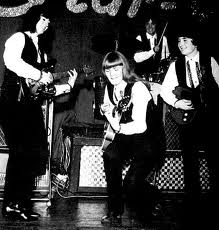
Today’s photo shows two slicks in cool, Italian cut suits, circa January 1968. The white Christmas tree is a nice touch, as is the plastic covered chair that old uncle Willie is sitting on in the rear right of the frame.
The real question in my mind is who is that on the bass drum head? It looks a bit like the Isley Brothers, one the drum head that is? Also notice that there’s an adult size snare drum as well as the aforementioned kiddie kit in back. No drummer jokes please.

Fritz Lang- Liliom (1934)

 Fritz Lang on the left rocks out.

 Fritz Lang with pipe and mood lighting.

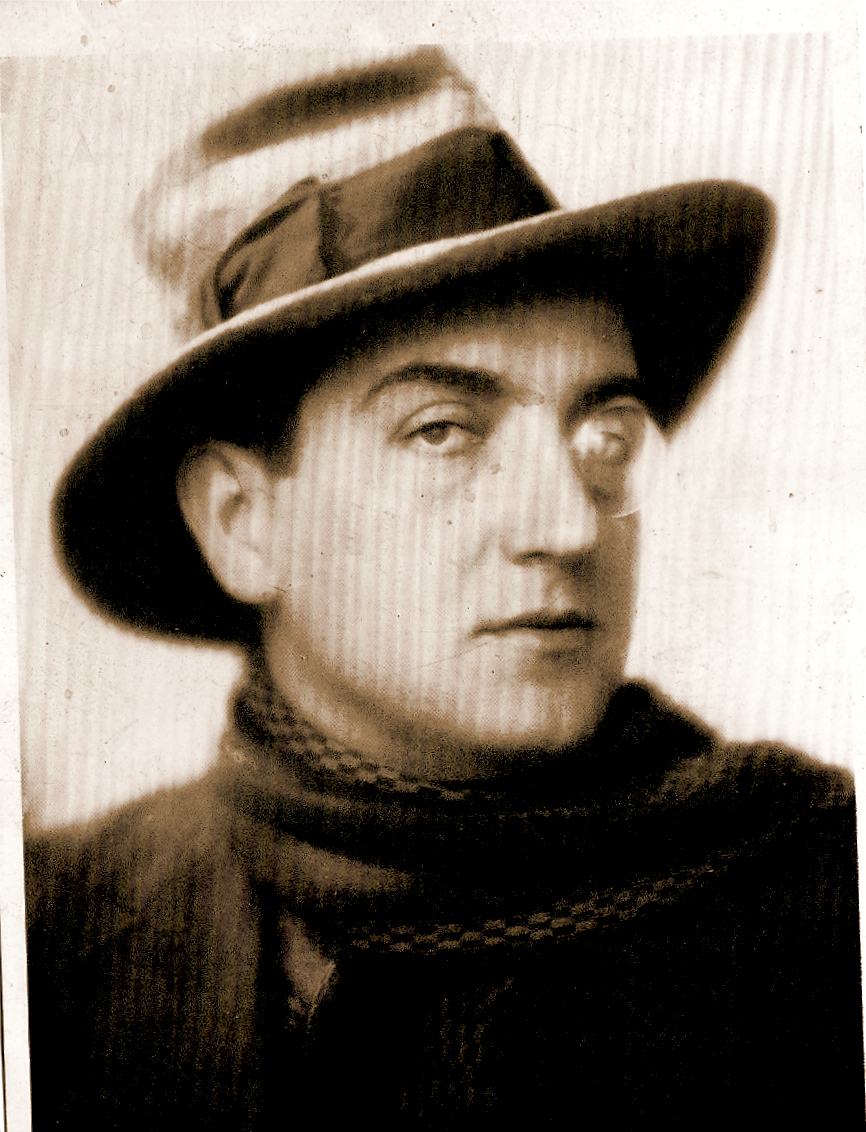
Fritz Lang with snazzy hat, snazzy monocle, and natty scarf.

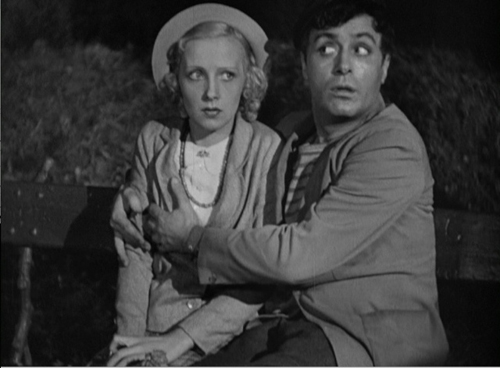
 Liliom, Boyer cops a feel from Madeleine Ozeray (1934).
Fritz Lang (b. Dec. 5, 1890 in Vienna, d. Aug. 2 1976 in Hollywood) is having a good year. His masterpiece Metropolis (1927) has grown by nearly 25 minutes with recently added missing footage that had turned up in Argentina.  The new version of Metropolis was shown earlier this year in New York at the Film Forum and again on TCM (which is showing Lang’s underrated Ministry of Fear tonight at 8 PM EST as part of a Graham Greene inspired double feature along with Carol Reed’s Fallen Idol, look for Abbott & Cosetello’s Hilary Brooke and all time great Dan Duryea in small but important roles). Having just returned from France, my mind keeps returning to a film I saw a year or so ago (and luckily saved on my cable company’s version of Tivo which they call DVR), one of the strangest and rarest flicks in the Fritz Lang canon, Liliom, a French remake of a 1930 Hollywood film that Lang made in between fleeing the Nazis back in Germany and his Hollywood debut Fury two years later.  Liliom is a film that is somewhat whimsical and evidently personal, two words you wouldn’t normally associate with Lang. Lang’s sense of humor, missing from nearly all his other films (except maybe Scarlet Street) is quite prominent in Liliom, especially in the scenes where Boyer finds out heaven has as many rules and regulations as earth. Liliom was a film Lang felt strongly about, and towards the end of his life often called it his favorite.  A bit of background.

 Paris was the first stopping place for the mighty German film industry which fled the Nazis en masse in the early 30’s, but unlike fellow refugees like Robert Siodmak, Robert Wiene, Douglas Sirk, G.W. Pabst, Billy Wilder, Peter Lorre, and others who arrived in Paris penniless, Lang, who stayed in Germany long enough to field an offer from Goebbels to head the Nazi film biz, arrived in style, living in a luxury suite at the George V hotel off the Champ Elsees with a retinue of servants (but without his second wife and greatest collaborator Thea von Harbou who stayed behind).  Such excess didn’t exactly make him popular amongst his compatriots (nor did the review of Das Testament des Dr. Mabuse that ran in the  New York Times on April 29, 1933 which claimed “Lang is a Nazi”).  It’s unlikely Lang cared what anyone thought of him at that point, he’s already directed what are still some of the greatest movies ever made, and had a rather high opinion of his talents. Liliom was a big budget, first class production, produced by Erich Pommer, with contributions from Franz Waxman (his first score, he’d  later win two Oscars) and Robert Liebman (who’d written The Blue Angel and would die in a Nazi death camp).

Based on Ferenc Molnar’s 1909 play, Liliom was later remade as the musical Carousel, which I’ve never seen and could care less about, although Danny Fields, the final word on all things musical theater assures me is fabulous, Liliom is the story of a lowlife Paris carny barker, played by a young Charles Boyer,  in his best roll, and his ill fated romance with the long suffering street urchin (and photographers assistant) as portrayed by Madeleine Ozeray. Boyer’s charachter gets himself killed in a botched robbery and spends the rest of the film going back and forth between heaven and earth where he tries to make life better for his widow and child. It’s a lot more light hearted than your usual Lang fare, while still visually stunning and totally unique. It’s well worth searching out. In an amazing cameo Antonin Artaud appears as “le remouleur” (the grinder), a different role than he’d played in 1923 when he appeared in the stage production of Liliom as a cop. Lang’s Liliom was a flop in France when released, having been denounced by the Catholic church, and was never released at all in the US,  in fact it was nearly impossible to see for many years, now of course you can find the DVD, although the surviving print isn’t great, Lang fans are used to scratchy negatives. Lang would never make another film in France, something of a shame since the one he made there is so interesting. Soon after its failure it was off to Hollywood for Lang where he’d make modest budget film noir for several decades including such classics as Fury, The Big Heat, Scarlet Street, etc. before returning to Germany for his final three films (1960-1). He made no films the last decade of his life, although he appears opposite Jack Palance and Brigitte Bardot in Godard’s excellent and hateful Contempt (1963).
There are many excellent books on Fritz Lang, I’d recommend Lotte Eisner’s Fritz Lang (Secker & Warburg, 1976, and if you haven’t read her classic The Haunted Screen, get that too),  Peter Bogdanovich’s Fritz Lang In America (Praeger, 1969) and Patrick McGilligan’s Fritz Lang: The Nature Of The Beast (St. Martin’s Press, 1997) although I’m not sure if I believe McGilligan’s case for Lang murdering his first wife.
Fritz Lang, we’ll not see another like him, nor will we see another film anything like Liliom. Too bad about that.

Screamin’ Lord Sutch II

http://www.megavideo.com/v/WS5FGMZI459bbdd9531a08c7a3bb51f5ec8565202
Screamin’ Lord Sutch & his Savages- French TV courtesy of Bedazzled!

http://www.megavideo.com/v/J7C9BCI43b2c108eda0fac7adb47ec1fb1c02ad02
More Lord Sutch.

Not  my caption.


I guess it was two years ago that I wrote about the late Screamin’ Lord Sutch on this blog, but Spike
over at Bedazzled has just posted an amazing vintage clip from French TV (another one of my
obsessions, I love French TV,  I spent the last week in Paris in utter astonishment watching a show called Viiip Carre) and with not much to say but way overdue for a blog entry, I refer you to the above clip and over to Spike at Bedazzled for more goodies.

Please Kill Me In Paris

The Ig, Raw Power tour ’73.
James Williamson, 1974.
At home with Ron Asheton, 1995.
The Velvet Underground & Nico.
The Primitives, Lou Reed 2nd from Left, John Cale far right. 1965.

Back from many weeks wandering the desert, I’ll be posting some new entries in the next few weeks but tomorrow we’re off to Paris to catch the last performances of the theatrical adaptation of Please Kill Me, adapted from the book by Legs McNeil and Gillian McCain, the latter oddly enough being my wife.
It was adapted by Mathiea Bauer and I hope to improve my non-existent French skills by sitting through it. If anyone’s going to be in Paris next week let me know, I’m easy enough to find.
Back to blogging soon, thanks for your patience and sorry if I haven’t returned any e-mails, phone calls and text messages.