Rev. Utah Smith

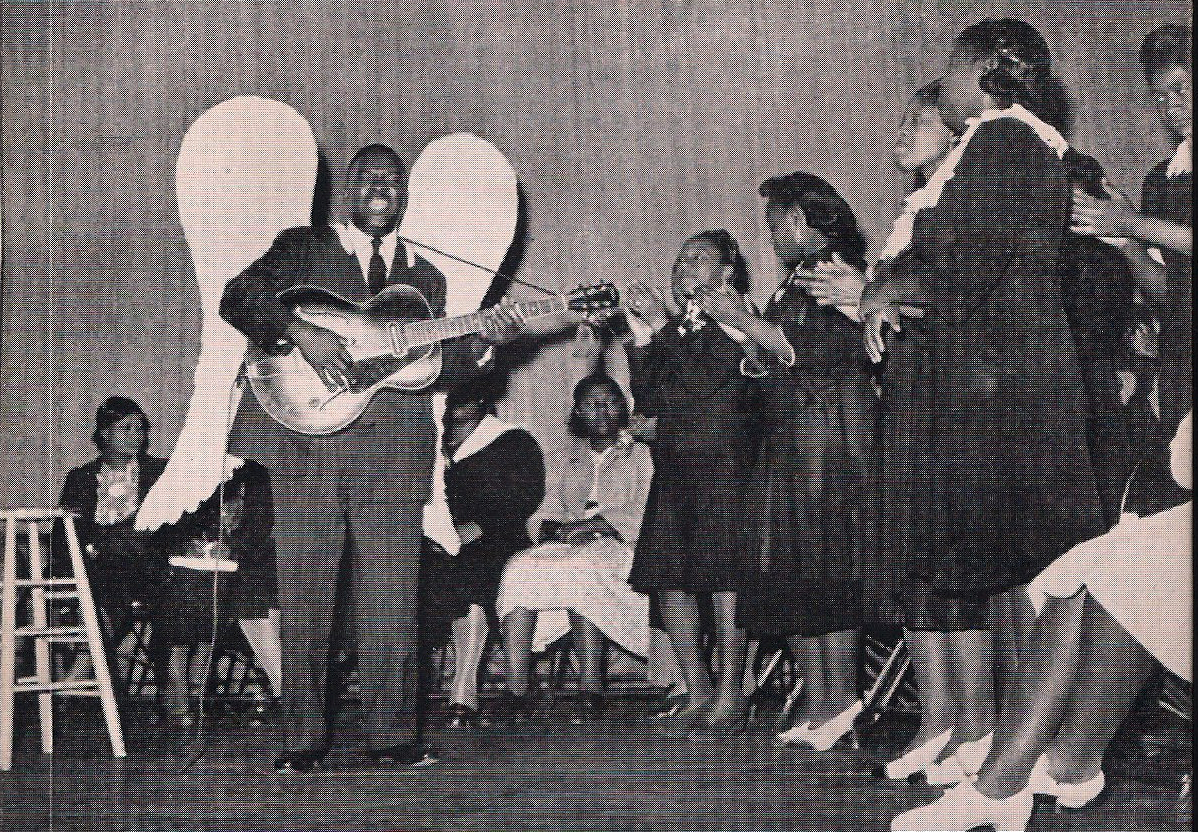
Rev. Utah Smith and wings…
Pre-flight warm up.
Wrecking the house in Houston.
Utah Smith brings eyesight to the blind.

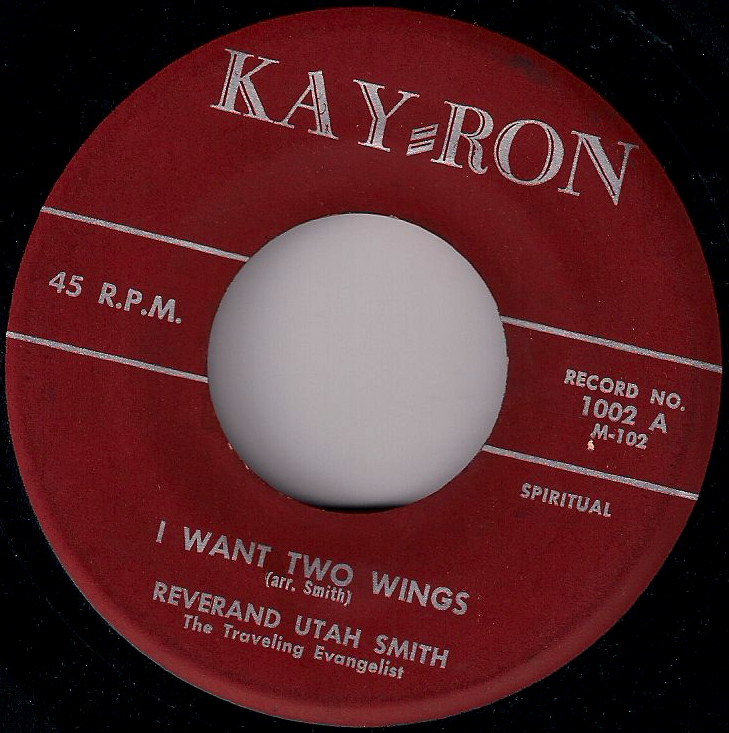
          Rare 45 pressing of his first disc, originally on Regis (78 only)


 Utah Smith was born in 1906 in Cedar Grove, Louisiana,  in the countryside outside of Shreveport. He was schooled to the third grade, then took a job as a water boy in the cotton fields before graduating to picking cotton. He later worked in a chicken plant plucking and cleaning chickens, a job he was fired from.  In 1923, he took up the calling and became an evangelist in the Church of God In Christ, usually just called the Holiness or Sanctified Church. He was  married in 1929, set up a home in Shreveport, but was on the road by 1925 where he’d spend most of the next forty years.
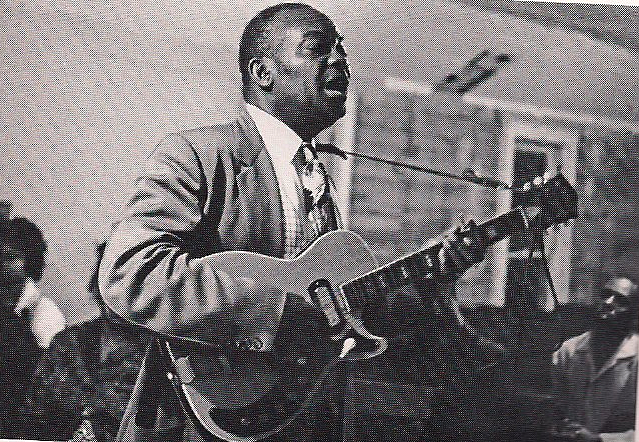
  Smith had taken up harmonica as a teen, soon switching to a steel guitar, and finally an electric guitar. He also had noticed that he, as many were later to testify, had healing powers, and an ability to tell jokes. Early on he was billed as  “God’s Funny Boy” and was heard preaching the Devil’s funeral and attempting to move trees which of course didn’t budge as well as “laying on the hands” healing the sick and maimed.  By 1938 he was using his electric guitar in his revival meetings,  his daughter for one claiming he was the “first black man to own one”, and if he was not the first, he was certainly among them. Folks would travel for miles just to see the thing.
  On the gospel highway, Reverend or sometimes Elder Utah Smith proved to be a popular attraction and he criss crossed America for four decades, his photographs appeared in not only the major black publications but also Newsweek, the New York Times, in folk music publications and he was recorded and broadcast for the BBC in 1947 as part of a audio documentary called “The Story Of New Orleans Music”.
He would make three commercial recordings, which would be issued on at least six different labels, three of which were versions of his theme song– I Want Two Wings. First came a 78 RPM for Regis, recorded and first issued in 1944, then re-issued on Manor (1949), Arco (1950) and on 45 rpm on Kay-Ron (1958): I Want Two Wings b/w  God’s Mighty Hand. The second disc came in 1947 and was self issued on his own Two Winged Temple label out of New Orleans– (I Got) Two Wings b/w Glory To Jesus I’m Free, this is the rarest of his commercial discs, it was pressed as a 78 and later on 45.
In 1953 he cut a session for Checker in Chicago, two songs were released– the third rendition of Two Wings and on the flip side Take A Trip, which is a re-working of the old gospel standard Gospel Ship.
All these discs feature his crude, open tuned guitar prominently, and he is backed by a small female choir on all of them. There also exists at least two other versions of Two Wings he recorded that exist on single copy acetates.
   Rev. Utah Smith ran his own Church in New Orleans, the aforementioned Two Winged Temple (the first location was torn down to build the Calliope projects, the second was on Octavia off Magazine), but was best known for holding revival meetings, many of which were covered in the pages of the Louisiana Weekly newspaper.  He was fairly famous in and around New Orleans, but traveled from coast to coast, catching the attention of composer and New York Tribune music critic Virgil Thomson while appearing in Newark, N.J. in ’41.  Thomson approved of what he saw calling him “an interesting musical manifestation”. Indeed. The same year he appeared at one of NYC’s Museum Of Modern Art’s “Coffee Concerts”.  In the 1950’s he toured with gospel stars like Mahalia Jackson, the Bells Of Joy and Brother Joe May, the Thunderbolt Of The Mid-West (for a time May’s pianist was Esquerita, could Esquerita and Utah Smith have met?), knocked ’em dead in Atlanta, Memphis and Dallas, and generally made a big impression on everyone who saw him,  sometimes wearing gigantic white paper wings and always blasting away on a Gibson electric guitar.
  The gospel highway is rough on the body though, and Smith suffered from diabetes (he was said to eat twenty biscuits in one sitting) and glaucoma, and in 1961 he retired to the Octavia Street Temple’s basement where he died on January 24, 1965, blind and no longer able to play his guitar, it was said  he’d taken to drink and fell down the stairs.        
   The life and times Of Rev. Utah Smith were fascinating, and for a more detailed look I refer you to Lynn Abbott’s biography– I Got Two Wings (Incidents and Anecdotes Of The To Winged Preacher and Electric Guitar Evangelist Elder Utah Smith) (Case Quarter, 2008) which also comes with a CD of his complete recordings. Amen.

Gillian’s Found Photo #67

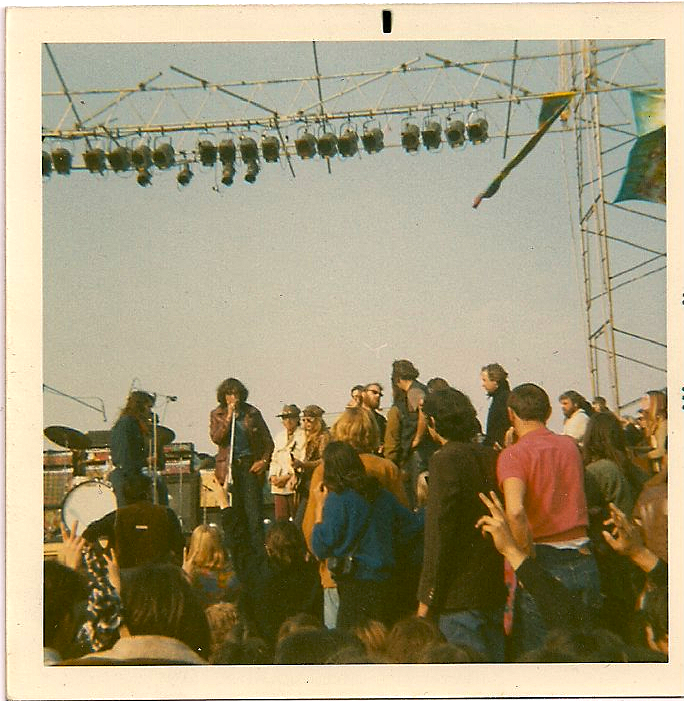
Today’s found photo from the Fang bears the date, printed on the right side of the border, of December ’69, as if we couldn’t have figured that out our self. Yes, this was taken at Altamont, the all time rock festival bummer and setting for still the greatest of all rock snuff flicks Gimme Shelter. Too bad it’s not a picture of the Stones, but since they went on after dark they probably wouldn’t have shown up on a snap shot.  Onstage is Sam Cutler trying to restore order, and the Jefferson Airplane, whose Marty Balin (far left) would soon be knocked unconscious, a few Hells Angels, and a whole bunch of folks who just wandered onstage. Whose idea was it to make the stage two inches off the ground?
Well, I was never much of a Jefferson Airplane fan but I do remember working security at one of their concerts as a teen and being quite impressed that the band and crew called Paul Kanter “Das Fuhrer”, a title he happily responded to.  The best thing I ever read about Altamont was in the (now quite rare) Avon paperback original– The Forgotten Festival- Altamont: Death Of Innocence In The Woodstock Nation, edited by Jonathan Eisen (Avon, 1970) which contains a first hand essay by one Lars Tush, aka Richard Meltzer titled “The Terror Beyond Death”, from which I quote–“Some people are going to say it was just a matter of alcohol in the wrong hands. That’s all well and good and true, but whose wrong hands do they mean? Can they mean the Angels? They might mean them and in so doing forget about incidents of violence that were going on all afternoon, all morning and the night before, even in spots where a Hells Angels never showed his face during the entire festival if you can call it that.” He later proceeds to describe watching a bunch of college jocks pummel some poor kid into “a pile of his own blood and bones”. As Keith Richards said “Altamont, it could only happen to the Stones man….”

Andy Shernoff

[youtube https://www.youtube.com/watch?v=MOKMl57WtK0%5D

Andy’s latest: Are You Ready To Rapture.

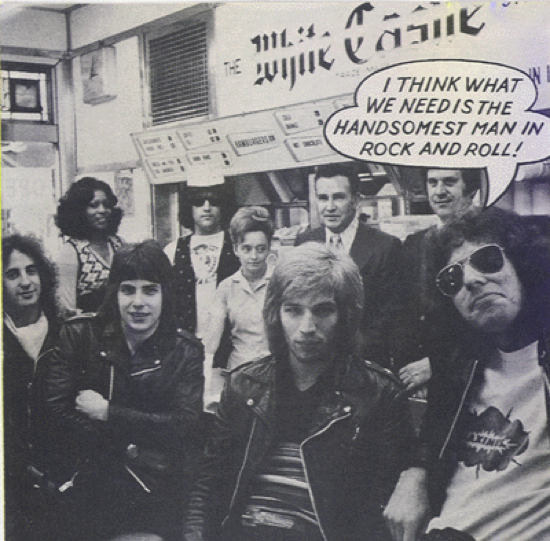
1974: Rare inner sleeve for the Dictators Go Girl Crazy, Andy on right.


Andy Shernoff has had a longer recording career than Howlin’ Wolf or Muddy Waters. That in itself is not so remarkable, there are plenty of pediatric rockstars out there who have been around longer. What is remarkable is that he’s still great. When was the last time Ray Davies or Pete Townshend wrote a good song? (If you ask me, and you shouldn’t cuz I ain’t gonna argue about it, I’d say 1970 and ’67 receptively).
Andy’s last great song was released a couple of weeks ago (Are You Ready To Rapture, see video above, I assume you can order the 45 rpm from his website).
 Shernoff, who’s career began with might be the greatest (and definitely the funniest) ever fanzine– Teenage Wasteland Gazette (a never published final issue of which has resided in Handsome Dick Manitoba’s closet for forty something years), is best known as full time songwriter, bassist and sometimes lead singer for NYC rock’n’roll institution the Dictators, whose 1974 debut The Dictators Go Girl Crazy (Epic) remains one of the greatest and most perfect punk rock records ever released. He shepherded the Dictators through three more fine LP’s– Manifest Destiny (Asylum,1977), Blood Brothers (Asylum,1978) and D.F.F. D. (Dictators Multi-Media, 2002), and don’t forget Norton Records‘ 2009 release Everyday’s Saturday that features their original demo tape and many incredible studio outtakes including lost tunes like Fireman’s Friend and Backseat Boogie (a project I think I instigated when I lent Billy Miller two CD’s worth of un-issued Dictators stuff, still in the vault are tunes like Too Much Fun and Tits To You as well as a killer Interstellar Overdrive).  Andy was also the guiding light behind Dictators spin-off Manitoba’s Wild Kingdom, fronted the Bel-airs and the Master Plan (with the Fleshtones’ Keith Streng), co-wrote tunes with Joey Ramone (for both the Ramones and Joey’s solo album), produced a bunch of bands,  and was involved in dozens of other projects that slip my mind at the moment (including a second career as a punk sommelier).
I bring this up to you because I happened to wander into my own bar (Lakeside Lounge, 162 Ave B., NYC) two Wednesdays in a row (a rare occurrence these days, I assure you) where Andy currently holds court at 7 PM with his acoustic review, and I have to say, it’s the best hour of live entertainment I’ve seen in eons.  The set changes weekly, and Shernoff has an incredibly deep catalog of great tunes to pick from, but I think last week’s show which opened with an acoustic reading of Master Race Rock and included Dictators classics’ Baby Let’s Twist, and Hey Boys, and a beautiful version of Joey Ramone’s Don’t Think About It was as perfect a set as I’ve ever seen.  In between tunes Shernoff talks about his life and times in rock’n’roll, some of these stories are hilarious (the first Dictators shows), some are touching (the final days of Joey Ramone), some are both (the David Roter story). With free admission and half priced drinks, you really can’t possibly go wrong. Andy will also be appearing at the Norton Records 25th Anniversary shindig in November, I’m not sure which night but all four are sold out, so you’re either all ready going or you ain’t.
Andy Shernoff may actually outlive rock’n’roll (or did that already happen?), but he’s one of the last of the breed, and there are too few left to ignore him.

Son House

[youtube https://www.youtube.com/watch?v=8jN5vqEyV7g%5D
Son House: 1965.

[youtube https://www.youtube.com/watch?v=lUVZtGdFMMc%5D
Howlin’Wolf berates a drunken Son House, Newport, ’66.

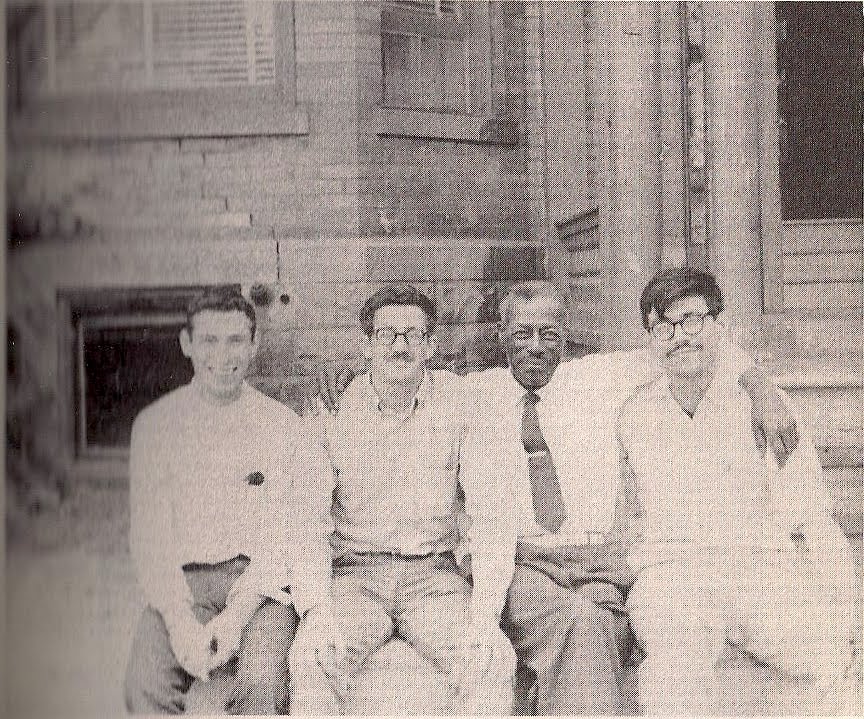
Son House greets his “discoverers”, he hadn’t known he that he was lost.


I told my old pal Pat that I’d review a book he sent me in the mail- Daniel Beaumont’s Preachin’ The Blues: The Life & Times Of Son House (Oxford, 2011). This was many months ago and I’m just getting around to it because to be perfectly honest I do not have much to say about Son House. Which does not mean it is not an excellent book, which it is. Although I must admit, I find the most interesting parts of the book are those that deal with Son House’s relationship to his “discoverers” and the white blues audience of the 1960’s that had expectations of him that he could barely fathom never mind live up to.
For those who are unfamiliar– Eddie “Son” House Jr (born March 21, 1902, probably in Lyon, Mississippi), was a great Delta blues singer and guitarist who recorded one session for Paramount Records in 1930, and was recorded again in 1941 for the Library of Congress by traveling folklorist Alan Lomax.
He was not heard from again until 1964 when Dick Waterman (who became his manager), Nick Pearls ( a collector who would go on to found Yazoo Records) and Phil Spiro found him living in Rochester, N.Y.,  this “rediscovery” happening after they had searched the Delta looking for clues.
To backtrack, House grew up in the Delta and began his career as an entertainer preaching the gospel.
As a young man he fell under the spell of the great Charley Patton, got himself a guitar and began playing the blues. He soon struck up a partnership with Patton’s sometime accompanist Willie Brown, and it was through Patton’s patronage he recorded for Paramount in 1930. Paramount issued four 78 RPM records:  My Black Mama pt 1 b/w pt 2, Dry Spell Blues pt 1 b/w pt 2, Preachin’ The Blues pt 1 b/w pt 2 and Clarksdale Moan b/w Mississippi County Farm Blues. The latter two discs are so rare that only one known copy of each exist (and the latter didn’t surface until the 21st Century), the other two are
considered more common with four known copies of each. A single copy of a test pressing of Walking Blues was found in someones garbage in the 1980’s. In forty years of collecting I’ve never seen a Son House 78, have you? These are the discs that House’s reputation is based on, and they are among the finest examples of the type of blues played in the Mississippi Delta in the late 20’s and early 30’s ever recorded. That said, they are a bit hard to listen to since the copies that survived are so worn out (and Paramounts never sound that great anyway) as there is more  surface noise than  music left in the discs and to listen to them is like hearing someone playing down the block while someone else holds a pan of frying bacon next to your ear. Although in recent years the sonic quality of the tranfers has improved dramatically.  Personally I’ve always preferred the 1941 Library of Congress recordings because you can actually hear the music, not to mention the version of  Walking Blues cut with a rocking little string band that remains the best example of what a Saturday night frolic might have sounded like full swing.  Since House had a limited repertoire all the same tunes appear on the 41 sessions, albeit with different titles, I especially like the version of Levee Camp Blues.
House has been criticised, most notably by the late Stephen Calt in his biography of Charley Patton for playing out of tune, but I tend to agree with Jim Dickinson that tuning is a “European and decadent concept”, out of tune didn’t hurt Chuck Berry.
After leaving the Delta, House lived in Detroit and Rochester, worked outside of music, and eventually disappeared into the woodwork until he was found and coaxed back into playing in 1964, and here lies the meat of Beaumont’s book. He digs up much new info, including a self defense killing in Long Island in the 50’s, and a new source of House information in the guise of Mississippi born, Rochester blues singer Joe Beard who was close to House and who had a very different take on who House was than his new found white keepers. There’s lots of interesting asides, including that House was in the audience when the Rolling Stones brought Howlin’ Wolf out on an episode of the Shindig TV show in ’65, and House’s manager being told by fellow human archaeologist Tom Hoskins (who found Mississippi John Hurt)-“What you have on your hands is a nigger“.  That House would confound all their expectations by not giving a fuck, about the blues, or his white audience, may seem natural from our vantage point, but to his keepers he remained an enigma. And that’s what makes this book such a fun read.
Son House is probably best remembered for being a key musical inspiration to Muddy Waters and Robert Johnson, (the latter connection even led to him being signed by Columbia). I wonder how many people who sight his name have even heard the Paramount and L.O.C. sides?  Myself, I hadn’t given him a listen in years, my own tastes in such things leaning more towards Leroy Carr, Geechie Wiley & Elvie Thomas (about whom nothing is known), and Charley Patton, but digging out his discs for this posting, I must say, they sure sound good. This music is nearly a century old, so it’s quite amazing not just that it survived, but that it is more popular and accessible than it ever was. And that, Pat, is the best I can do for your book review.

Gillian’s Found Photo #66

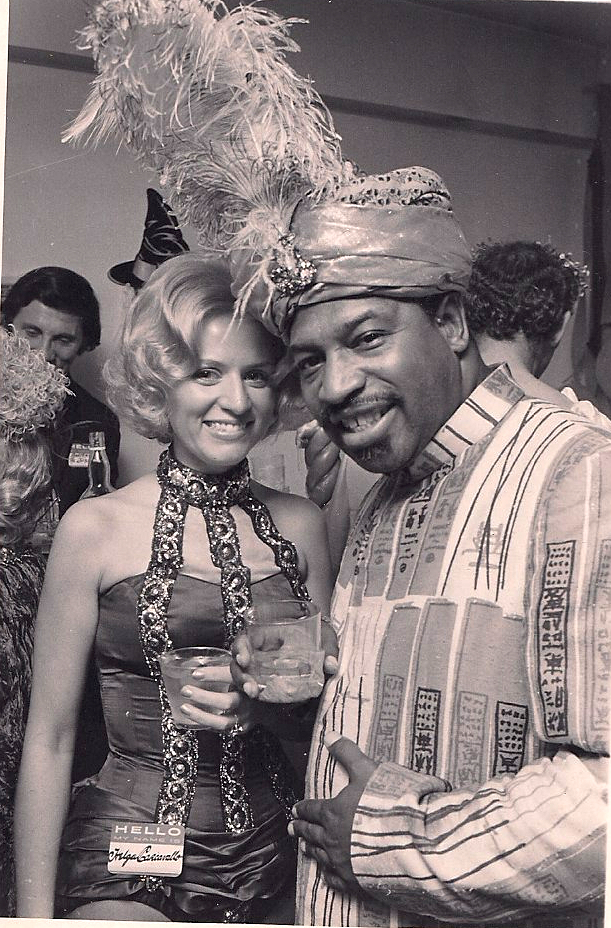
The turban is the perfect sartorial touch for any man; Chuck Willis, Screamin’ Jay Hawkins, Sam The Sham, The Great Gaylord and many others have made this fashion statement into any art form. And it hides the doo-rag if your head is all nappy. Gals like it too.  I have no idea where or when this photo was taken, but it’s nice to see there’s alcohol involved, and our be-turbaned friend here seems to be patting down his diner. I for one think the turban should make a comeback. It’s the perfect post 9/11 fashion statement. I can just see the headline on the New York Times Sunday Style Section– The Turban–It’s Not Just For SikH Cab Drivers Anymore!

Packy Axton

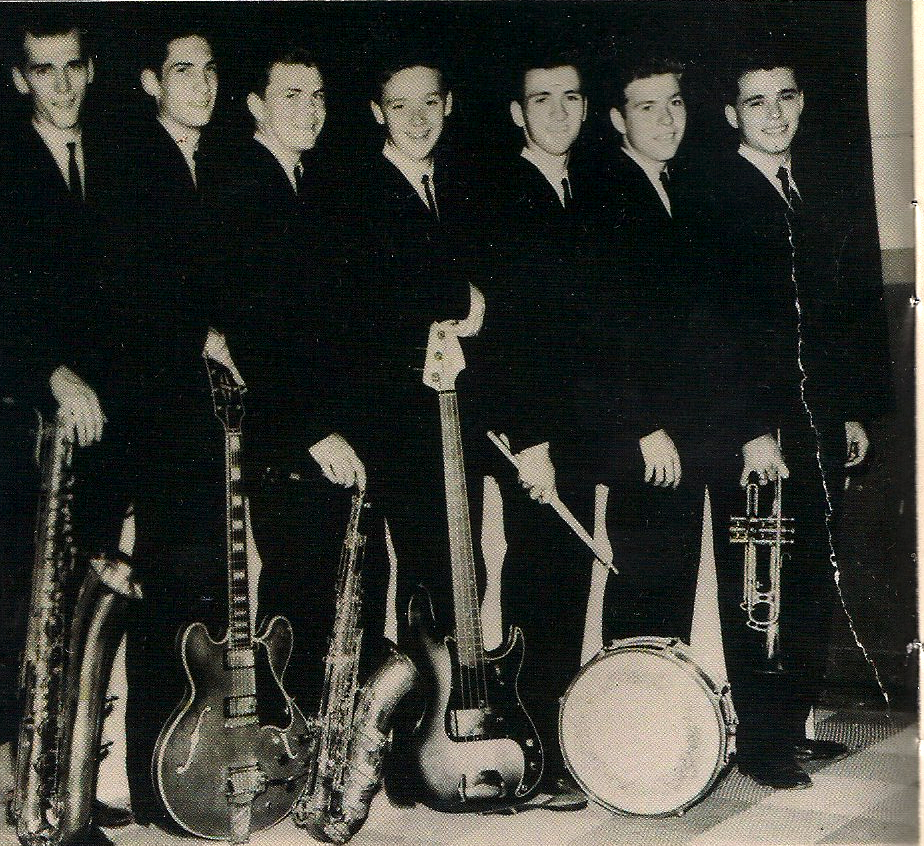
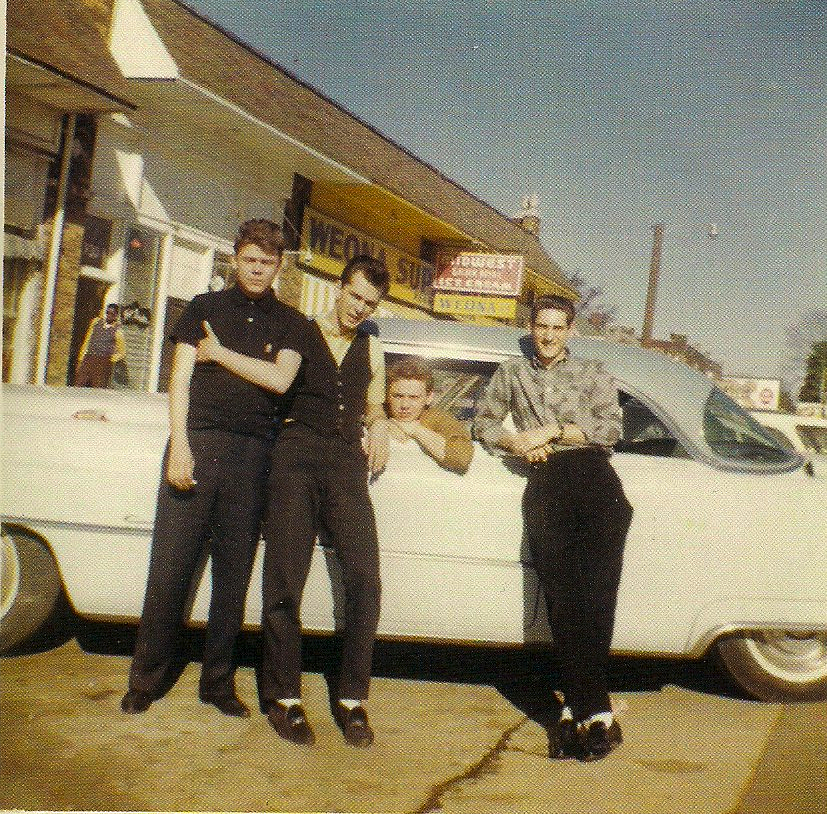
The Royal Spades, l. to r.- Don Nix, Steve Cropper, Packy Axton, Duck Dunn, Terry Johnson, Ronnie Stoots and Wayne Jackson.

         Packy (left) with Don Nix, Duck Dunn and Steve Cropper.

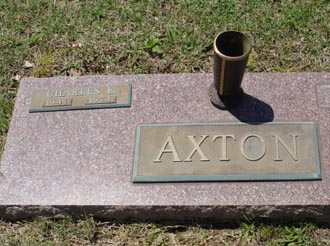
                 Packy Axton- final resting place.

 Packy Axton (born Charles Axton,  Febuary 17, 1941 in Memphis), was, as Jim Dickinson once put it– “one of the most transracial individuals I’ve ever met”. The son of Everett and Estelle Axton and nephew of Jim Stewart, his family owned and ran Stax (originally Satellite) Records. A white kid who loved R&B and rock’n’roll, Packy cut his teeth playing his tenor sax along with fellow Messick High School students Steve Cropper, Charlie Freeman, Duck Dunn, and Terry Johnson in a band called the Royal Spades (Axton trading in his guitar for a tenor saxophone to join because they already had two guitarists). The Royal Spades, who eventually configured into the group pictured above, where white kids in thrall of The “5” Royales (Cropper has just released a tribute to The “5” Royales album which I’ve not heard), the Midnighters, Jimmy Reed (Cropper with a harmonica on a rack for the Reed tunes), Ray Charles and other classic R&B acts of the era. When Packy Axton’s mom and uncle started up a record label and store in Memphis, the Royal Spades became the right guys in the right place at the right time.  Cropper, Axton and who knows what other members of the group along with some local black session players ended up playing on Last Night, credited to the Mar-Keys, one of the all time great R&B instrumentals, basically just a dumb but funky riff played over and over again with a bridge thrown in (the master was spliced together from two takes), when it rocketed to the top of the charts in the summer of ’61, the Royal Spades (now with Smoochie Smith on piano and Wayne Jackson on trumpet, Freeman long gone) hit the road, becoming the Mar-Keys.  The Mar-Keys hit the chitlin’ circuit and worked it for awhile until the group’s leader–Steve Cropper quit in a power struggle with Axton (to be replaced by Charlie Freeman),  and returned to Memphis and work in the studio. He’d soon to form Booker T. & the M.G.’s whose Green Onions remains the high water mark for R&B instrumentals to this day. Axton carried on as leader of the Mar-Keys for a bit before handing the band over to Freeman.
All my way of introducing you to the best thing to come through the mail slot in ages– Charles ‘Packy’ Axton– Late Late Party 1965-67 (Light In The Attic), a collection of Packy’s best post Mar-Keys sides, seventeen Memphis soul instrumentals in the solid Booker T & the MG’s /Mar-Keys groove, and not a dud amongst them.
   Post Mar-Keys, Packy was something of an outcast at Stax since he didn’t get along with Cropper or his uncle Jim Stewart, and in 1965, along with guitarist Bongo Johnny Keyes hit the west coast, where (oddly enough) with the Stax team in support scored a hit with the Packers’ Hole In The Wall (Pure Soul), then returned to Memphis to cuts sides as the Martinis’, including the inebriation classic Hung Over (24 Karat) where he can be heard barfing, the The Pack-Keys, and L.H. & the Memphis Sounds.  The best of these post Stax recordings are collected on said disc including such rarities as Greasy Pumpkin by the Pac-Keys, Late Late Party by the Martinis and Out Of Control by L.H. & the Memphis Sounds.
  Packy was a libertine and a wild man. “Packy was a playboy. He was a mama’s boy….Packy was allowed to do what  Packy wanted to do” remembered Cropper.  His inability to get along with Cropper, Jim Stewart and Chips Moman effectively made him persona non grata at Stax by the time the golden era arrived, and he never really got over it. Packy Axton drank himself into an early grave, he died in 1974.  In Peter Guralnick’s Sweet Soul Music (Harper & Row, 1986), still the best book on the subject, he comes off as sort of an evil hipster, the devilish alter ego to the ambitious and pragmatic Cropper. This, the first CD issued under his own name stands proudly next to the best of the early Mar-Keys and Booker T. & the M.G.’s.  Packy may not have been what you would call a great musician (is there anything duller?), but he had something; a flair, a style, and an ability to keep it simple (some times moronically so, in the best possible way), that made for great R&B sides.

Nick Tosches

                                 Nitro Nick Tosches

                                        His latest 

Eau de Newark- Tosches perfume label.


Nick Tosches has long been a, make that, the, most perspicacious observer of what is left of, dare I say it? Popular culture.
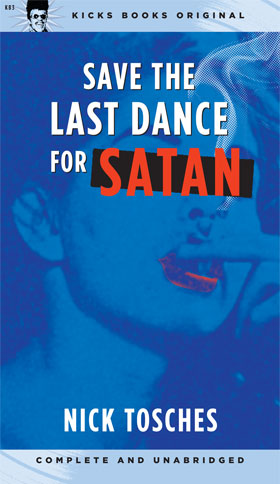
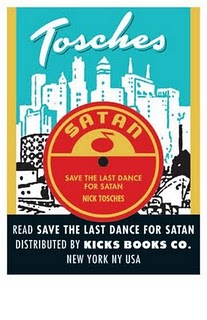
His latest book Save The Last Dance For Satan, published by Brooklyn paperback powerhouse Kicks Books (and perfume company) is essential reading not just for anyone who wants to know something about the history of rock’n’roll when it was actually fun, but as to why it no longer exists in today’s world. Both the rock’n’roll and the fun. 
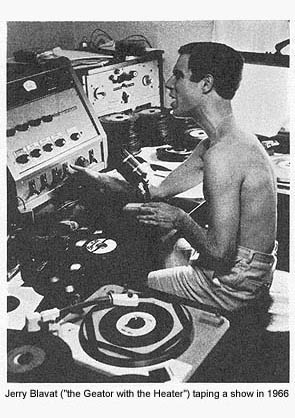
Expanded from a magazine article written for a publication so trite I refuse to type its name, Save The Last Dance For Satan examines the characters behind the scenes in the early days of rock’n’roll who were said to be “connected”. Old Town’s colorful Hy Weiss, motor mouth Philadelphia DJ Jerry “The Geator With The Heater” Blavant,  one time promo man (and later Madonna and Jacko’s manager) Freddie DeMann,  Morris “Moishe” Levy, George Goldner, a guy named Wassel,  a guy named Bruno, and the true story of the Jaynettes’ ethereal classic Sally Go Round The Roses, are all present and accounted for. I shall not ruin what I promise is a quick and gainful reading experience by telling you what it actually says about them in its pages, but you will learn how made guys and degenerate gamblers, girls who spell their name Lezli and guys who wore Velour jump suits, and of course Wassel and Bruno,  all colluded to perpetrate that music we remember as the real thing. The good shit. Rock’n’roll. And oh yeah, the pussy eating contest.  
As our world falls apart around us (Says Nick– “I give it two years…at most“), and we watch those both at the top and at the bottom, both too dumb to and figure out where it all went wrong, scratch their assholes and moan; I quote from Save The Last Dance For Satan:
The true gage of the freedom of any community is the measurement of the degree of equality by which the fruits of malfeasance are shared by the rulers and the ruled, the cop on the beat and the man or woman on the street. The essence of democracy, as of capitalism is corruption. Only when the criminal in blue and the criminal in mufti, the peddler and the priest and the alderman and the drunkard–only when they are neighbors of common root and conspiracy is any neighborhood safe for the old lady on the stoop on a hot summer night, only then is there true charity, only then is there a justice that is real, and only then is there life in the air. As the social clubs close, so the churches empty. This is fact, not metaphor”.
Amen. 
Nick Tosches will be reading from his latest work on Friday, September 9, at the Jefferson Market Library (425 Sixth Ave at 10th Street, New York City) at 8 PM, admission is free.  Tosches perfume (I kid you not) will be for sale.
In other Nick news, an article in Variety reported that art oaf Julian Schnabel will be directing Johnny Depp in a feature film version of In The Hand Of Dante. When questioned on the subject, Nick inhaled from his cigarette and grimaced. 

Gillian’s Found Photo #65

Here’s another from the Fang that reminds me of Hubert Selby’s classic Last Exit To Brooklyn. Date and place unknown.
The guy on the left is all about the eyebrows, the drag queen on the right, well it’s hard to say. S/he certainly spend some time on her hair, or is that a wig?
Perhaps s/he’s a friend of Esquerita (who towards the end of his days worked NYC in drag doing biz as Fabulash), or Bobby Marchan.  Hell, until a few months ago I assumed Lady Ga Ga was man in drag.
All of which has nothing to do with our picture.  I wish I could think of a caption.

Kongo (1932)/ West Of Zanzibar (1928)

[youtube https://www.youtube.com/watch?v=tj6nDJaSY7g%5D

[youtube https://www.youtube.com/watch?v=6YgT-wz8cio%5D

[youtube https://www.youtube.com/watch?v=BpEUkcjkqkU%5D
Top Three Clips from Todd Browning’s West Of Zanzibar (1928).

[youtube https://www.youtube.com/watch?v=fAzTNnINWOc%5D
William Cowen’s 1932 soundie remake: Kongo.


Todd Browning, second from right. 
If I had to pick an all time favorite movie, it might just be William Cowen’s Kongo, a 1932 re-make of Todd Browning’s 1928 West Of Zanzibar.  In fact, both titles along with Cecil B. DeMille’s Sign Of The Cross (making a rare big screen appearance this Sunday in NYC at the Film Forum), make up my top three.
  Based on the play by Chester DeVonde  and Kilbourn Gordon (which was titled Kongo and was a huge hit on Broadway), West Of Zanzibar/Kongo is one of the most gruesome, sensational and lascivious re-writings of Joseph Conrad’s Heart Of Darkness ever unleashed, it makes Apocalypse Now look like a an episode of Rocky & Bullwinkle.
  The convoluted story line (which starts in London in Browning’s version, although Cowen’s remake cuts straight to the non-chase in Africa), revolves around a stage magician Dead Legs (the character’s given name changes in the two versions from Phroso to Rutledge) who in an altercation over his girl gets his spine crushed and ends up a dead legged cripple.  In Browning’s version Dead Legs is played by Lon Chaney (Browning’s greatest leading man), in Cowan’s by Walter Huston (who had played the role on Broadway).  Dead Legs follows his rival, Crane (an ivory trader, played by Lionel Barrymore in the silent), to Africa where he sets himself up as a deity amongst the the natives, controlling them with sugar cubes, tongue twisting torture, and his old stage magic routine disguised as folk religion.  When the rival shows up at Dead Legs’ hut, the story then moves on to the long lost daughter of the now deceased woman they fought over. Thinking it was his rival’s daughter, Dead Legs’ takes possession of the girls upbringing, raising her in a sheltered convent only to degrade her in the jungle when she reaches her majority. I won’t ruin the plot twist. But there’s enough depravity for a dozen sideshows (Browning’s specialty), my favorite being Lupe Velez as an alcoholic jungle nymph in Cowan’s version of the story, although how a Mexican spitfire ended up in a shack in the Congo is never explained, I can’t say I mind.  I give Cowan’s version a slight edge for it’s incredible dialogue, much of which revolves around the words– “He sneered”.  Browning’s version looks a bit better, although both have an incredibly claustrophobic, sweltering, disturbing feel, much like Werner Herzog’s wonderful soliloquy about the jungle heard in Les Blank’s Burden On Dreams (“fornicating, writhing, strangulation,…the birds don’t sing so much as scream in pain….”).  It’s hard to decide who was a better Dead Legs, Chaney has never been less than brilliant, or Huston who really brings something of his own to the role.  Either, or. West Of Zanzibar and Kongo are two must see films for anyone who likes their movies twisted, depraved, and sensational.  TCM shows them on occasion, or you can watch them in short segments on YouTube.