Jane Birkin #2


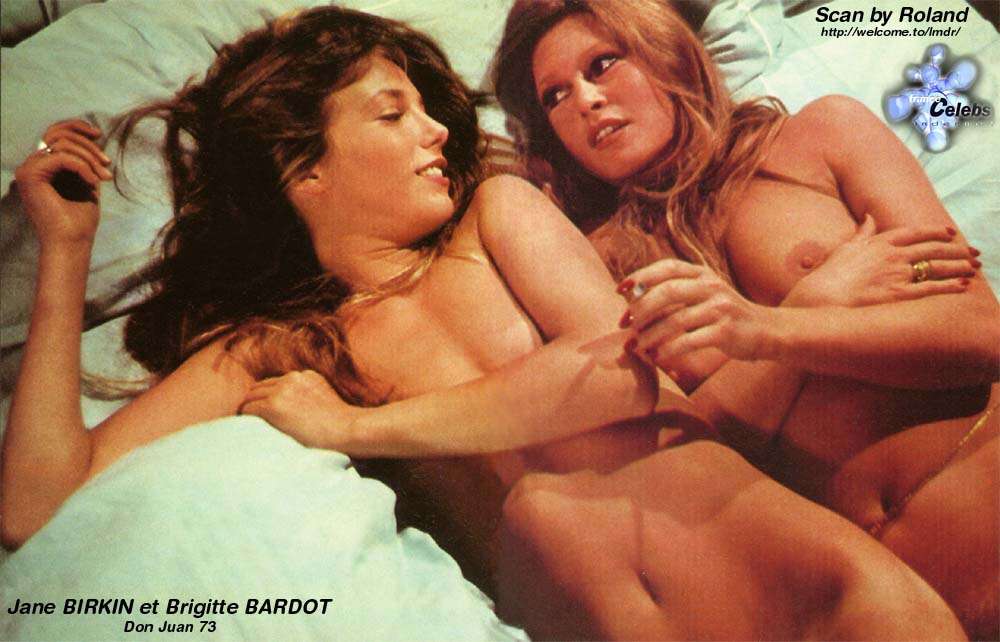
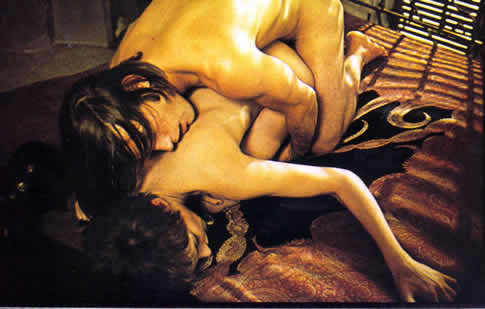
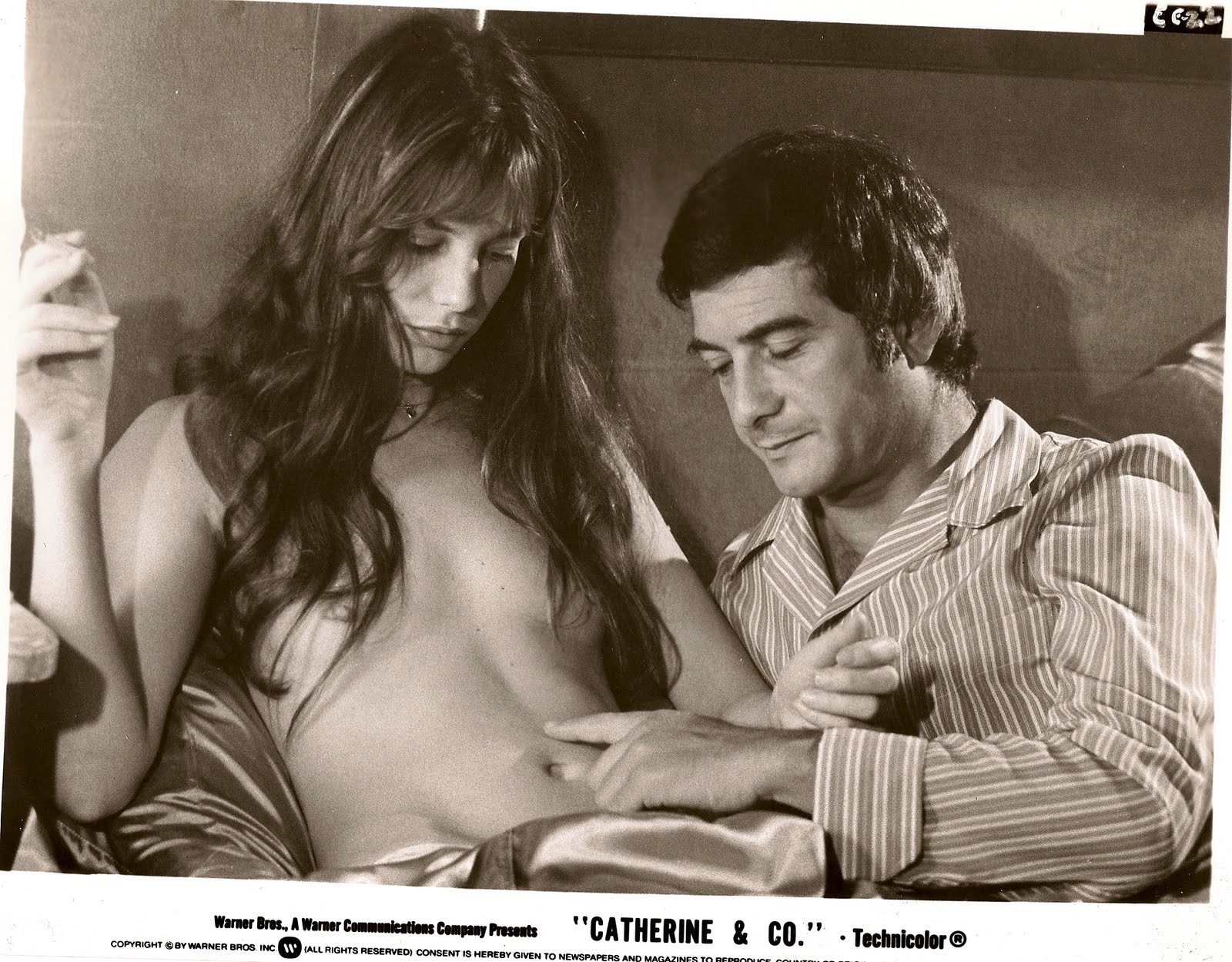
The handcuffs are a nice touch….


From Roger Vadim’s Don Juan ’73, a terrible movie with a brief nude love scene between Jane and Brigitte Bardot, the stills are way better than the film.

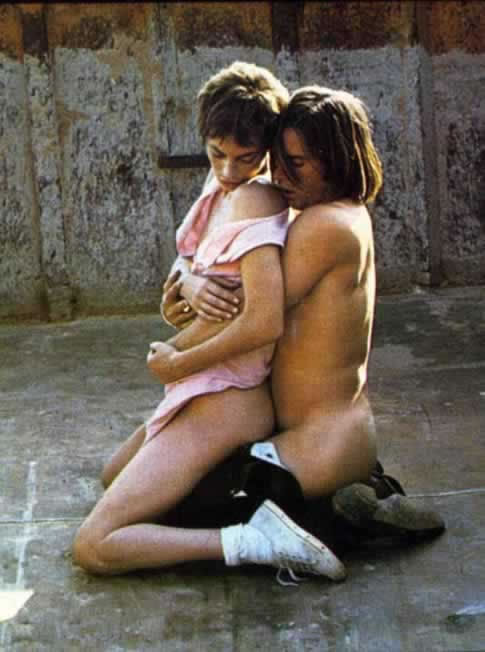
With Little Joe Dallasandro, from the amazing film Je t’aime moi non plus (directed by Serge Gainsbourg).


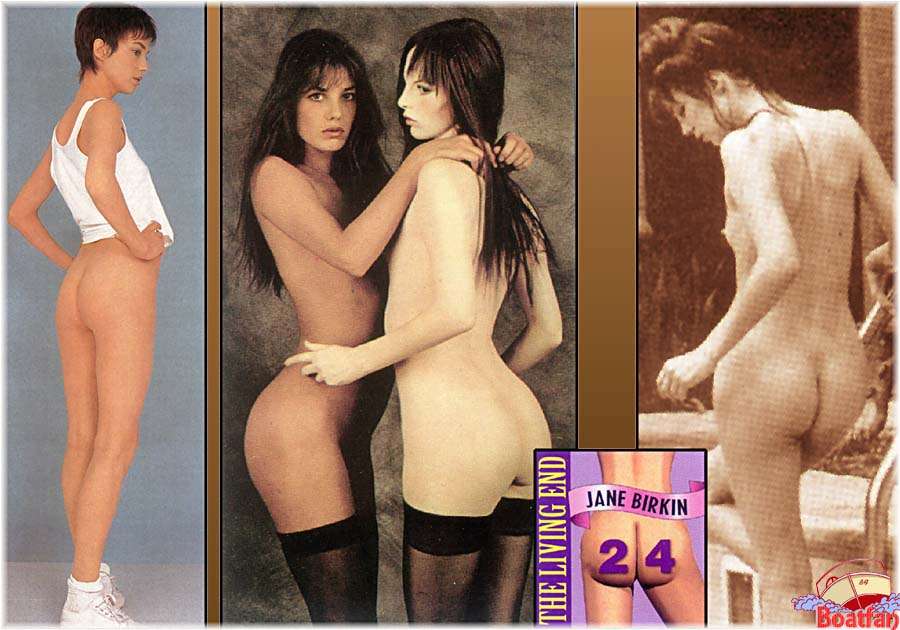
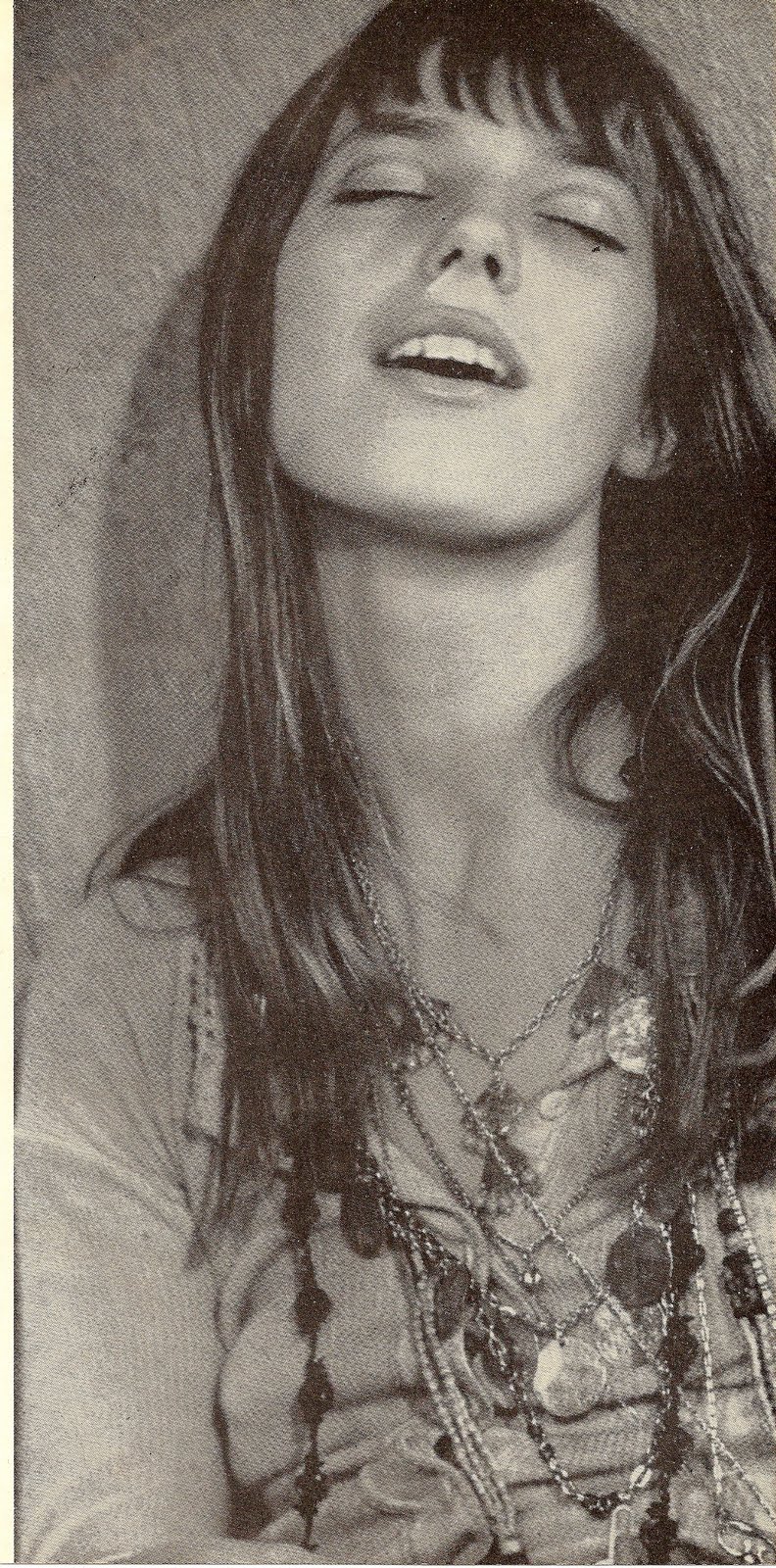
When ever I look at the live feed to this blog it seems there’s never a moment of the day or night when someone isn’t looking at the photos of Jane Birkin posted in Dec. 2008. I’ve posted pix of Brigitte Bardot, Michelle Phillips, Tuesday Weld, Julie Newmar, the lovely Bo Diddley, and they get hits once and a while, but it’s nothing like the amount of traffic Jane Birkin gets. Are these readers all typing with one hand? I’d love to edit a coffee table book of Jane Birkin photos, any publishers out there game? Her filmography can be found here. Her daughter
Charlotte Gainsbourg has a new record out this week produced by Beck, I haven’t heard it yet but they’ve both made a few records I really liked so it’s probably worth checking out.

Anyway, since I have nothing to say today, I thought I’d post some more pix from my collection, I know there’s a lot of you Jane Birkin fans out there. You’re welcome.

Gillian’s Found Photo #36 (part two)

This comes from the same batch of snap shots as last week’s found photo (#36), in fact the girl on the right of this photo can be seen be-wigged and adorning the arm of her pimp in that pic. The green velvet (or more likely, velour) pantsuit really brings back memories, my first girl friend in the eighth grade had one just like it. The girl on the left certainly has the classic 70’s look down. Who started that hat craze? Was it Ali McGraw in Love Story? Well, these girls look happy, and well fed, maybe the mack in the first photo wasn’t such a bad guy. Where do you think they are today?

BTW: In the comments section of GFP #36 one reader mentioned the pimping career of the Mighty Hannibal, which I didn’t know about, but as it turns out, in his day he was one of the most successful pimps in Atlanta. Evidently he’s quite happy to discuss the subject should you run into him, I wish I’d asked the last time I saw him.

Jimmy Nolen B.C. (before chank)


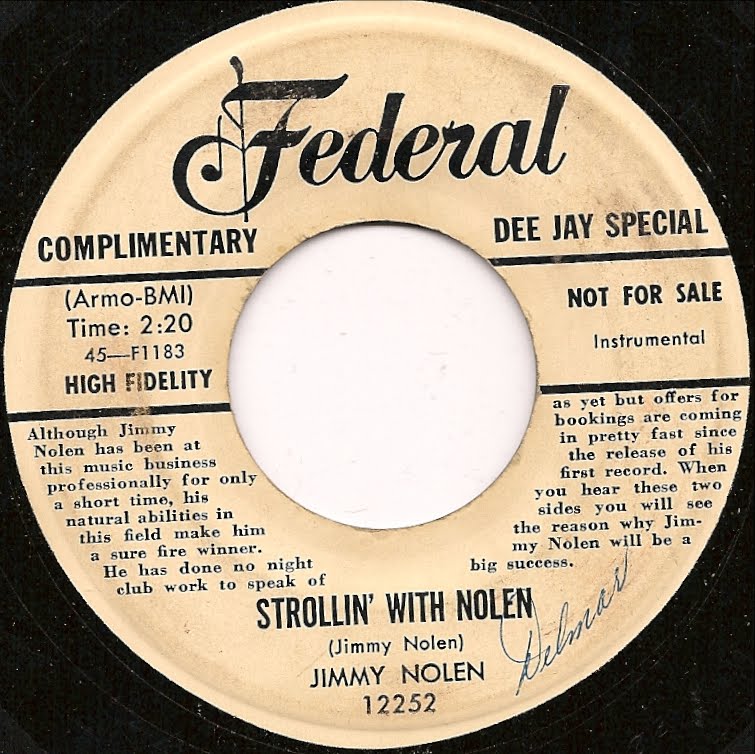
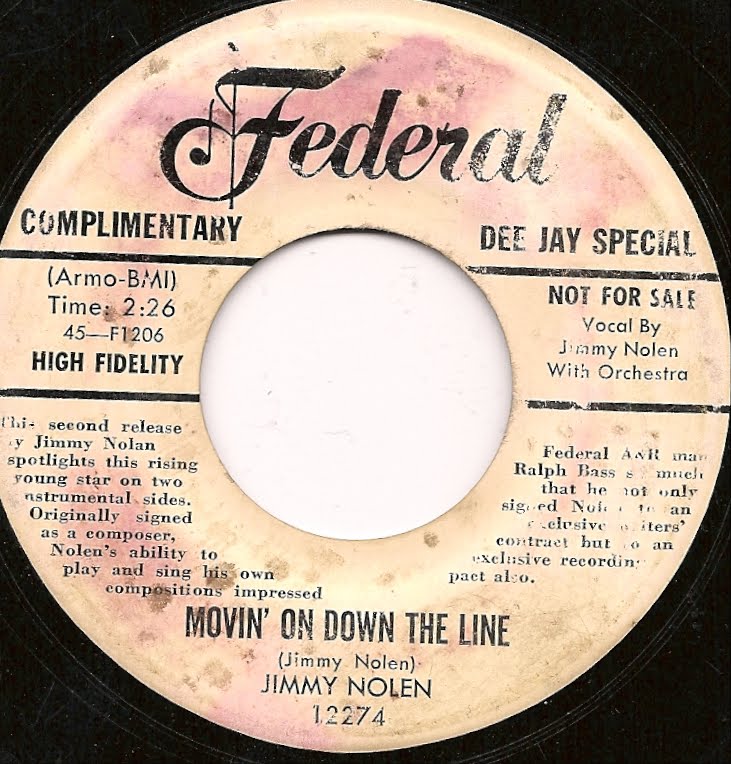
I love these early “bio label” Federal promo 45’s.

The Johnny Otis Show, Jimmy Nolen is seated to Otis’ right, behind Three Tons Of Joy.

Nolen gets a rare chance to play the blues with James Brown’s band, 1981.

The career of guitarist Jimmy Nolen can be divided into two parts, the first as an R&B and rock’n’roll guitarist, best known for his stint with The Johnny Otis Show (1957-59), and as a solo artist, and a second part spent playing behind James Brown where his style changed, starting with James Brown’s recording of Out Of Sight (1965), when Nolen developed a new style of playing, using the guitar as a percussion instrument, loosely barring an A chord, and whacking away it it, it was a style which he’d play for the rest of his life. Literally, he played that A chord for the rest of his life. It was from this latter style he got his nickname “Chank”, which was the sound he made hitting that chord. It was this later part of his career for which he is often celebrated, having virtually invented the funk style of guitar playing, but today, we, make that I, shall survey the early part of his career, since no one else seems to care much about it.

James Nolen was born in Oklahoma City in 1934, he began playing violin as a kid, and influenced by blues giant T-Bone Walker got himself a cheap Harmony guitar and taught himself to play the blues. Jimmy Wilson, best remembered for the minor hit Tin Pan Alley, spotted him playing in Tulsa and hired him, bringing him to Los Angeles.
In L.A. he played with local R&B acts like Monte Easter, with whom he made his recording debut appearing on the Aladdin disc Blues In The Evening b/w New Orleans Hop (there’s a copy on Ebay right now, minimum bid $200), and also with sax honker Chuck Higgins, rocking away in fine style on his Dootone sides like Wetback Hop, The Rooster, Oh Yeah and Lookin’ For My Baby. He recorded his first single for the local Elko label (it was later leased to Imperial) in 1955- Slow Freight Back Home b/w Let’s Try It Again, the b-side being his debut as a vocalist. Another disc issued on Elko– Strangest Blues b/w I Used To Love A Woman under Nolen’s name is actually by Jimmy Wilson according to the latest edition of The Blues Discography 1943-1970 (Les Fancourt and Bob McGrath, Eyeball Productions, 2007) He also cut some excellent sides for Federal in two sessions held in 1956. Between 1956 and 1957, Federal issued five Jimmy Nolen singles- I Can’t Stand You No More b/w You’ve Been Goofing, Strollin With Nolen b/w After Hours (this is the version sighted by Roy Buchanan as his main inspiration, he would go on to record it several times, always using Nolen’s arrangement as the template), Strawberry Jam b/w The Lost Train, Move On Down The Line b/w The Way You Do and It Hurts Me So b/w How Fine Can You Be. These sides leave no doubt that he was an passable singer and better than average songwriter, but it was as a guitarist that he really stood out as a truly original stylist. Charly re-issued all his Federal recordings (with alternate takes) on the CD Scratchin’ along with seminal sides by Pete “Guitar” Lewis and Cal Green (of the Midnighters) in ’91 (CD 268).
in
In 1957 when Pete ‘Guitar’ Lewis left the Johnny Otis Show, Nolen was a natural choice as his replacement. Otis had recorded him for his Dig label, although the recordings– Jimmy’s Jive and Come On Home went unreleased until the 1990’s. With The Johnny Otis Show he can be heard on classics like Willie & the Hand Jive, Castin’ My Spell, Crazy Country Hop, Can’t You Hear Me Callin’ Baby, playing mostly in a style similar to Bo Diddley, although Otis claims he had been playing that hambone beat since the late thirties as the drummer with Count Otis Mathews’ House Rockers, the Bay Area combo he began his long, illustrious career with. Nolen stayed with Otis until 1959 when he struck out on his own, recording for the Specialty subsidiary Fidelity that year, the result being an extremely rare two part instrumental– Swinging Peter Gun Part One b/w Part Two. I’m still looking for that one.
Nolen spent the next five years leading his own band, touring around the south west, backing up bluesman George “Harmonica” Smith, and struggling for a break. Finally, in 1965 he joined James Brown’s backing band, developed his “chank” style (sometimes called the “Scratch” or “Chicken Scratch”), staying with Brown until 1970, when he quit along with the whole band who walked out en masse, rebelling against Brown’s draconian system of fines and low pay. With Maceo Parker as leader, they soon regrouped sans Brown as Maceo and All the King’s Men. Urban legend tells us when Brown was auditioning Nolen’s replacement he asked one picker, “Can you play an A chord”?, followed by “Can you play it all night”? then, “You’re hired”. Nolen would rejoin James Brown’s band in 1972 and stay until he died from a heart attack in 1983. With Brown he rarely got to solo, although the above clip shows he still had the heart and finger tips of a blues man until the end. His rhythmic playing was featured prominently chanking away on his like Papa’s Got A Brand New Bag and I Can’t Stand Myself (When You Touch Me), and plenty of other guitar players were listening. Today his style totally ingrained in the sound of modern music, but we shall forgive him, it wasn’t his fault music got so crappy.
And that readers, is pretty much what I know of Jimmy Nolen’s story. Anyone with copy of Fidelity 3015 to sell or trade can e-mail c/o this website.

Various Artists–I Love TeeVee

Wilbert Harrison at the piano…this might be the only known footage of him.

I never saw this footage of JB Lenoir before, shot in Chicago circa 1964.


JB Lenoir again, this time with the great Freddie Below on drums. 1965

JB, at home with cool Kay guitar

Arthur ‘Big Boy’ Crudup wonders where the money went.

Big Joe Turner with the Johnny Otis Show, 1970.

Big Joe at the Apollo, early 50’s.


Little Walter and Hound Dog Taylor, alcoholics unanimous.

Muddy Waters and his drunk assed band.

Muddy and Sonny Boy Williamson II (Rice Miller).

Mickey Baker (in shades) with Coleman Hawkins.


This is bizzarre, Serge Gainsbourg interviews Jerry Lee Lewis!

Even if I have to watch it on my computer, I love TV. It’s better than real life, you don’t have to talk to people, and you can always change the channel. So here’s some blues, and R&B clips and a bonus meeting of the minds between Serge Gainsbourg and Jerry Lee Lewis (courtesy of Donna Lethal) most from European TV and documentary footage. I have no idea where the Wilbert Harrison clip is from, but it’s great, as was he. The Coleman Hawkins and Mickey Baker clip is incredible, it stand with the Ben Webster sides cut with Johnny Otis and Pete Guitar Lewis for Mercury, and the Albert Ayler recordings with Harvey Vestine (Gamblers/Canned Heat) as one of the most successful comminglings of blues and jazz.

Something to ponder, how come Various Artists isn’t in the Rock’n’Roll Hall Of Fame? That name is on more good LP’s than any other.

James Luther Dickinson Reposts

[youtube https://www.youtube.com/watch?v=ZeEBVgjrCVk&hl=en_US&fs=1&%5D

A few days later, I thought I’d add this, I agree 100%


The great Memphis musician, producer, and philosopher James Luther “Jim” Dickinson gave up the ghost last August, you can read my post and watch some video on him here with an addendum here. The links on those posts however are dead. You can find his classic 1971 LP Dixie Fried at the Twilight Zone blog (as well as some of his field recordings done around Memphis, search TZ for Delta Experimental Projects Vol. 1 and 2). One of the two LP’s by

Mudboy & the Nuetrons’– Negro Streets At Dawn (their second) can be found here.
After a thirty year hiatus, Dickinson began recording solo albums again in 2002 with Free Beer Tomorrow (Artemis) and released three more LP’s in quick succession– Jungle Jim & the Voodoo Tiger (Memphis Int’l, 2006), Killers From Space (Memphis Int’l, 2007) and the posthumous Dinosaurs Run In Circles (Memphis Int’l, 2009). Those you can buy, you cheap fuck. I did. Here are some rare sides, all of them personal favorites which I’m reposting because they should be heard. Thanks to his son Luther of the North Mississippi All-Stars and the South Memphis String Band for the version of Rumble, the 45 of which I’m still looking for.
Here’s some sounds:
*New Beale Street Sheiks- You’ll Do It All The Time (Southtown, 1964, his first single)

*Jim Dickinson & the Katmandu Quartet- Shake ‘Em On Down b/w Monkey Man (Southtown, 1965)
*The Jesters- Cadillac Man b/w My Babe (Sun, 1966)
*Flash & the Memphis Casuals- Uptight Tonight (Block, 1966, written by Dickinson who also plays guitar on it).
*JD & the Hoods- Rumble (Barbarian, 1980, see my second posting on J.D. and the comments section for the story on this one)
*The Johnny Burnette Rock’n’Roll Trio- Rooster Blues, Ubangi Stomp (Rockabilly, 1981, Paul Burlison and Johnny Black put the Trio back together without the late Burnette brothers to make an album with guest vocalists like Charlie Feathers and Malcom Yelvington, J.D. sings and plays piano on these two cuts).
*Jim Dickinson & the Cramps- Red Headed Woman (Big Beat, recorded 1977, released 1981, at Sun Studio while the Cramps were recording the tracks for the Gravest Hits EP).
I have pretty much written what I have to say about him in the earlier postings, but let me reiterate, we’ll never see another one like Jim Dickinson, he is one of immortals.

Julie Newmar


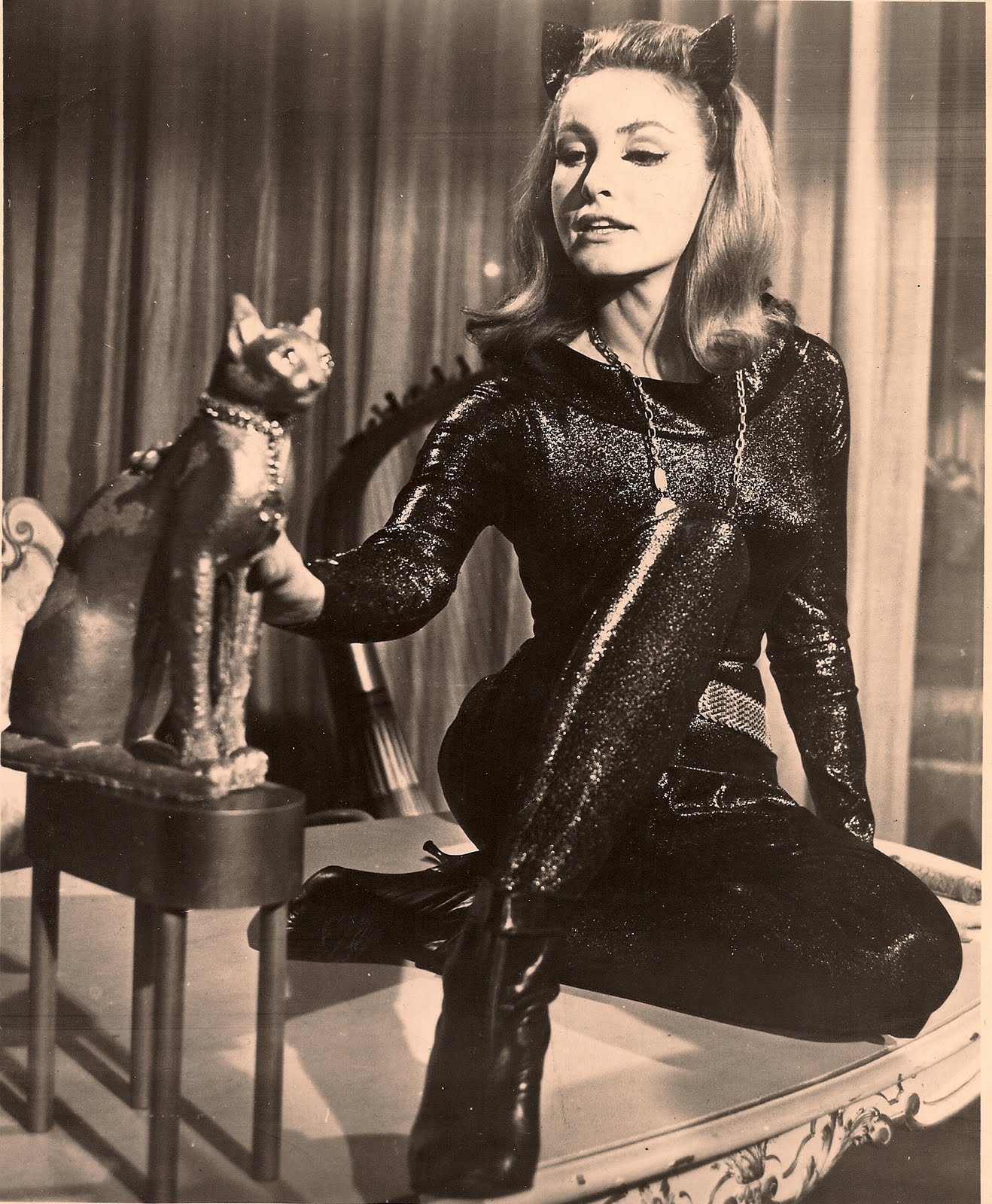
Of all the actresses who have played Catwoman on TV or in the movies, in my less than humble opinion, only Julie Newmar really captured the feline qualities that make a certain type of woman seem like slinky ocelots. She had the same lynx like quality that Simone Simon brought to the original Cat People (1942). She was a natural blond who went brunette for the role. Julie Newmar showed up early in her career (under her real name Julie Newmeyer) in William Castle’s Slaves Of Babylon doing a harem dance (bottom clip), but her real screen debut was in Seven Brides For Seven Brothers, she’s the highlight of an otherwise dull movie. She had cameos in all sorts of TV shows including Twilight Zone (in the 1963 episode Of Late I Think Of Cliffordville in which she plays a she-devil), F Troop, The Beverly Hillbillies, Route 66, The Monkees, Star Trek, Columbo, and Get Smart. She also shows up in Elvis’ King Creole (1958, uncredited), Lil’ Abner (1959, playing Stupefyin’ Jones), Rowan and Martin’s semi-retarded vehicle The Maltese Bippy (1969), Streetwalkin’ (1985), and loads of TV movies, not to mention being interviewed for the fairly watchable documentary King B: A Life In The Movies. She grew up in L.A. and began her career as an “artists model”, and posed nude in several 50’s pin up mags, none of which I can find at the moment, but I know I have a few in the basement somewhere. Judging by the change in her appearance over the years it looks as if she had a nose job in the early 60’s. Meow.

Gillian’s Found Photo #36

This 70’s era snap shot of a pimp and two of his stable brings back a lot of memories for someone who came of age in the 70’s. The celebration of “The Life”,that is for lack of a better term, Pimp Culture had entered the main stream and was visible everywhere. There were books like Iceberg Slim’s Pimp (Holloway House), A.J Jackson’s Gentleman Pimp (Holloway House), Alfred “Bilbo” Gholson’s The Pimp’s Bible (Research Associates), The Life: The Life and Folk Poetry of the Black Hustler by Dennis Wepman, Ronald B. Newman and Murray B. Binderman (Holloway House), Black Players: The Secret World Of Black Pimps by Christina and Richard Milner (Little, Brown) and the works of Donald Goines (Whoreson, Dope Fiend, et al) on every inner city newsstand. A great coffee table book to keep an eye out for (it was re-issued a few years back) is Gentleman Of Leisure: A Year In The Life Of A Pimp by Susan Hall with photos by Bob Adelman (Quadrangle/New York Times), which follows a New York City mack named Silky through his year and finally love and marriage with his top girl.Incredible photos throughout. Writing this post I realized I’ve built up quite a library on the subject.

Movies like Super Fly, Willie Dynamite (which is shown on TCM a lot these days) The Mack, J.D.’s Revenge, and of course Rudy Ray Moore’s Dolemite films were doing, in Variety’s words ‘bofo box office’. Most blaxplotation films had great sound tracks (check out this sampler from Never Get Out Of The Boat blog for a nice selection of sounds). There were tons of Pimp songs recorded– from Curtis Mayfield’s chart topper Super Fly to Don Julian & the Meadowlarks’ Shorty The Pimp, Mr. Wiggles’ Homeboy and of course Andre Williams’ Cadillac Jack (Andre’s debut novel Sweets & other stories (Kicks Books) delves into the life in great depth and is a must read).
Nowadays it’s rare to see a pimp mobile in New York City, and high school kids play a game called Pimps and Ho’s (anyone with teenage kids out there know the rules?). When Britney Spears married K-Fed, the groom and his best man and ushers all wore sweat suits that said “Pimp” on the back. Britney and the bride’s maids all wore matching sweat suits that read Ho’s.
Talk about cultural interlopers, as the Rev. Al Sharpton would say. Britney and K-Fed seemed to be keeping the tradition of the minstrel show alive.
Getting back to the Fang’s found photo, the suit, the hat, the gloves, the jump suit and wig on the girl on his right arm. No wonder why he’s smiling! This photo is worth a million words.

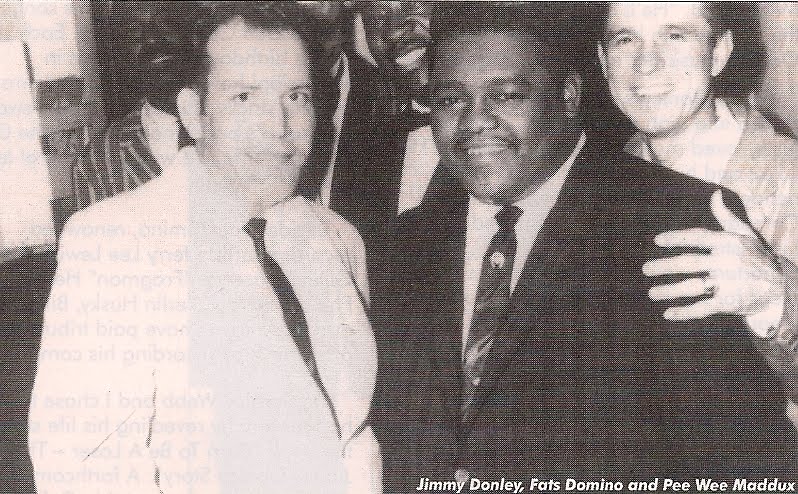
Jimmy Donley- Born Loser

Jimmy Donley, 1957, showing off a hairy right forearm.

Left to right: a loser, a winner, and a wiener.

Rock’n’roll’s a loser’s game, as Mott The Hoople once explained to us. At least it was until the jocks and the cheerleader’s’ parents decided it would be “cool” for them to be in rock bands.

That’s a topic for another day, today’s subject– Jimmy Donley, just might’ve been the biggest loser of them all, and he knew it. Born James Kenneth Donley, Aug. 17, 1929, in the small hamlet of Jonestown, Mississippi to an abusive father and doting mother, he was called Kenny by his family, and he grew to be a foul tempered tyke who at age three grabbed his father’s pistol and fired off two rounds at his three year old cousin Catherine when she refused to get off of his tricycle. Our irritable anti-hero dropped out of school at his father’s urging at age sixteen to take a job on the docks of Gulfport, Mississippi, unloading banana boats. A stevedore’s life was not for young Jimmy and in 1948 he enlisted in the U.S. Army. After boot camp he was stationed in Panama in the Canal Zone, it was there he developed a taste for marijuana and for Army issued amphetamines.
White trash is as white trash does. On duty in the Canal Zone he was arrested and thrown in the brig after holding a knife to a non-commissioned officer’s throat and declaiming– “I ain’t gonna take no orders from a nigger, my daddy wouldn’t have have let you get away with it. If you try anything I’ll slit your throat”.* He was given a dishonorable discharge, Section Eight, and shipped back to Gulfport in October of 1949.
Back in Mississippi he began singing in local nightclubs and went through four marriages in four years (1950-54). Donley was a bad drunk and an abusive husband who would go through the rest of his short life using women as punching bags, and worse.
He was, however, a fine singer who sounded black, and also a superlative songwriter with a natural talent for plaintive ballads. His biggest influence was Fats Domino, whom he could mimic uncannily. Fats would later record seven of his tunes, although Donely’s name only shows up on the songwriting credits of one of them since he, as often as not, sold his writing and publishing rights for quick cash, sometimes as little as $50. Whether or not he would have taken orders from Fats is unknown, but they later became friends.
As Donley developed a following around the redneck Riviera, he came to the attention of local promoter Pee Wee Maddux who brought him to Decca Records. Decca signed him in 1956, sending him to Nashville to record under the aegis of producer Owen Bradley, and his first single– Quit Kickin’ My Hound b/w Come Away was released in early 1957. It failed to sell, and I don’t own a copy, but it’s a pretty good, not great disc, I’ll track down a copy one of these days. His second single– South of the Border b/w Trail Of The Lonesome Pine, a somewhat lackluster affair also sunk without a trace. It wasn’t until his third Decca platter Baby How Long b/w I Gotta Go that he start selling records, almost exclusively in the Mississippi/Louisiana/East Texas area where it was a strong regional seller. No wonder, he sounds so much like Fats Domino, the biggest star the region has ever produced (and second in record sales only to Elvis Presley in the first rock’n’roll era) it’s scary. He even adopted Fats’ “wah-wah-wah-wah” falsetto cry and rolling second line beat.
No doubt he was a southern DJ and promoter’s dream– a white guy who sounded just like Fats Domino, a dream come true at least until they met him. Donely’s consistently fucked up every opportunity handed to him. His fourth Decca single would be the song most identified with him for the rest of his life– Born To Be A Loser (later covered by Jerry Lee Lewis) b/w Please Baby Come Home. Born To Be A Loser is the type of south Louisiana minor key ballad that, as they say, is sung in the “key of heartbreak”. Although it never charted nationally, it was huge in the Gulf Coast area.
His next release was the novelty number Radio, Jukebox and TV b/w I’m Alone, another still born disc, followed soon by one of his best sides ever– The Shape You Left Me In b/w What I Must Do, the a-side being a rocker in the key of self pity. Again, it was a big regional record on the Gulf Coast and unknown practically everywhere else. It was now 1959 and rock’n’roll was changing, greaseball rockers and screaming black men with conks were out, guys named Bobby from Philadelphia in sweaters were in. Decca issued three more singles between 1959-62, Give Me My Freedom b/w Now I Know, I Can’t Love You b/w Our Love, and I’ve Been There b/w My Baby’s Gone, none as good as what had preceded them and the label soon lost interest in attempting to promote his discs when it was obvious his offstage life was completely out of control: an orgy of arrests, bar room brawls, beaten women, car wrecks and suicide attempts. Decca did not renew his contract and in 1962 he signed with Houston based Huey P. Meaux’s Teardrop label.
Meaux’s story is even more colorful than Donley’s, for he was perhaps the greatest rock’n’roll producer to do Federal time for the crime of pedophilia. He would be involved in hit records from soul chanteuse Barbara Lynn’s You’ll Lose A Good Thing to Texas rockers the Sir Douglas Quintet’s She’s About A Mover, right up to Rockin’ Sydny’s surprise 1984 smash My Toot Toot. He operated out of his barber shop, and was a hustler’s hustler to put it mildly.
1959 also saw two more pivotal moments in Donley’s sad life. He would meet and marry his fifth and final wife, and muse–Lillie Mae, who would inspire many of his greatest tunes (and be on the receiving end of his most out of control freak outs) and also met his idol Fats Domino who would go on to record seven of his tunes, including What A Price (here’s Donley’s demo version), a song written when Lillie Mae walked out on him after a particularly brutal beating. Before meeting Lillie Mae, when not on tour, he had taken to living in his car. Teardrop would issue a handful of singles by Donley, all good regional sellers including Please Mr. Sandman, Think It Over , I’m To Blame, I Really Got The Blues, a Ray Charles sounding twistplotation record– Honey, Stop That Twistin’ and the eerie Strange Strange Feeling among my personal favorites. Don’t look for Donley’s name on the songwriting credits, he sold them to Meaux for “considerations”, most likely the price of a bottle or bail money. These were truly tunes in the “key of heartbreak”. His relationship with Fats Domino blossomed and he would provide six more songs for the Fat man with the big diamond rings. Here are his demos for Rockin’ Bicycle, Domino Twist, Stop The Clock, as well as a wonderful un-issued number cut for Teardrop called Oh How It Hurts that wasn’t released until thirty years after his passing. Fats would also cut Donley’s Hold Hands, Nothing New (Same Old Thing), Bad Luck and Trouble, and I’ve Been Calling.
Should I work in that overused expression “downward spiral” now? In Johnnie Allan and Bernice Larson Webb’s incredible biography of Donley– Born To Be A Loser: The Story Of A Rock’n’Roll Poet’s Tragic Life (Jadfel, 1992, and yes, it’s the same Johnnie Allen who recorded the best ever version of Chuck Berry’s The Promised Land among other great Cajun rockers). Allan and Webb recount an ever escalating cycle of booze, drugs, jealous rages (he once found a photo of Lash Larue his second wife clipped out of a magazine and almost beat her to death), senseless violence and cruelty to Lillie Mae, partying, arrests, suicide attempts, gun incidents, car wrecks, trashed hotel rooms, songs sold for a pittance, disappointment, and worse. It’s one of the best, and most disturbing rock’n’roll biographies I’ve ever read. No home library should be without a copy. Lillie Mae stuck with Donley through it all, how and why we shall never know. I will not defend a man who beats on women, I’ve watched too many episodes of Law & Order: Special Victims Unit for that. But his musical legacy cannot be denied. After each drunken escapade he would wake up drowning in guilt, regret and self hatred, begging Lillie Mae to take him back. He could direct all the self loathing and self pity that welled up inside him and turn it into heart breaking, spine tingling music. Probably the reason she stayed around as long as she did.
By early 1963 his penchant for self-annihilation was reaching new lows. Lillie Mae seemed to be finally ready to escape his abusive clutches and his adoring mother passed away. He tried to return to the church, but the call of the bar room rang too loudly in his ears. He was back to living in his car. Finally, on March 20th of that year, Jimmy Donley pulled his vehicle to the side of a road, stuck a rubber hose on the exhaust pipe and ran it into the window and turned on the engine. He’d finally done something beside singing and writing tunes, correctly, asphyxiating himself with carbon monoxide. He had screwed up at least four previous suicide attempts. James Kenneth Donley was thirty four years old with little to show for it other than a rap sheet full of petty crimes and a couple of dozen 45’s with his name on them. The copyrights to his tunes were long gone.** Like others whose name are known only in that culturally unique area such as Joe Barry, Dale & Grace, and Rod Bernard, on the Gulf Coast, Donley remains a local legend, a star even. Jimmy Donley seemed to be on every jukebox from Biloxi to the Galveston, but most especially in the area just west of New Orleans where his records sat beside such local hits as Rod Bernard’s This Should Go On Forever, Jivin’ Gene’s Breakin’ Up Is Hard To Do, Tommy McClain’s Sweet Dreams, until the century changed. Maybe they still are, I haven’t driven that patch in ten years. Today this type of music, with an emphasis on minor key ballads and the pronounced influence of Fats Domino is often referred to as “Swamp Pop” (think of Phil Phillips’ smash Sea Of Love as the definitive Swamp Pop record). Back then it was just the south Louisiana sound, or more aptly– the Fats Domino sound. Jimmy Donley was certainly a loser, but we listeners get to win every time we hear one of his records— in the key of heartbreak.
* Quote taken from Johnnie Allen and Bernice Lawson Webb’s Born To Be A Loser (Jadfel, 1992), pages 83-84.
** Pages 325-326 of Allen and Lawson’s book contain a chart of who Donley sold his songs to and for how much. It makes for quite fascinating reading.
Addendum: For those who don’t bother to read the comments, Retreat From Oblivion (is that
Albanian?) reminds us the WFMU has posted this incredible aircheck from Huey Meaux’s radio show. Other vintage airchecks can be found here.
Addendum #2: A couple of Jimmy Donley stories came my way via Dick Blackburn who got ’em right from the Crazy Cajun (Huey Meaux)’s mouth (so they must be true):
1) Owen Bradley offered to sell Donley’s management contract to Meaux after Donley threatened Bradley at gunpoint to “take those bitches off my record” (I assume meaning the Anita Kerr singers who sang back up on his Decca sides).
2) Donley had an open Bible beside him in the car when he snuffed himself, opened to the same
pages that the minister would unknowingly read at his funeral. Wonder what the scripture was? Anyone want to guess?
3) Blackburn asked Meaux if he had any idea that Donley would commit suicide and Meaux replied- “Well, yea, I figured something was troublin’ him after he went and made hisself a rat poison sandwich and ate it. Face turned yeller and swolled up and he had to go into the hospital”.
Thanks for the antidotes Dick!
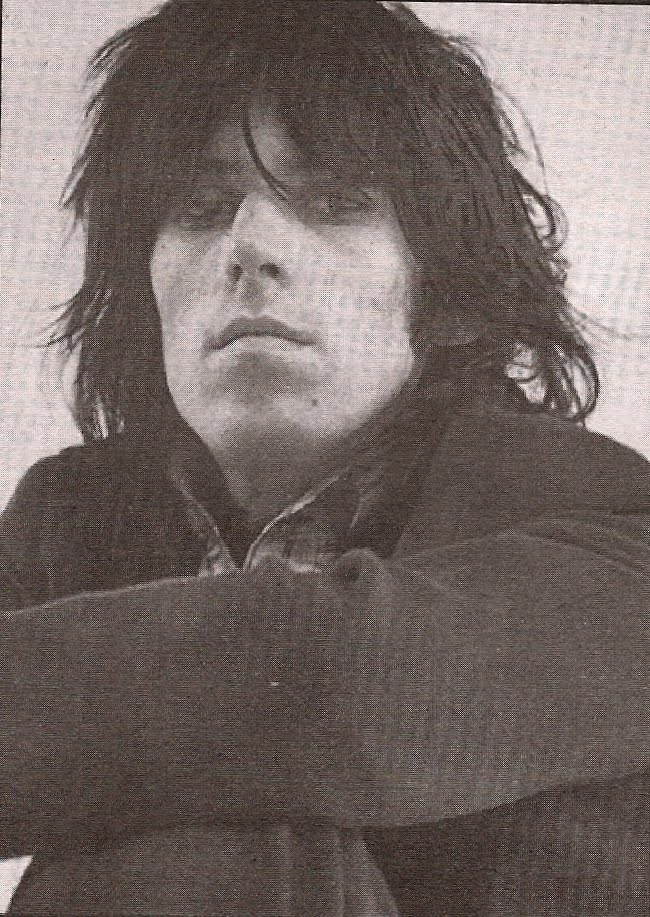
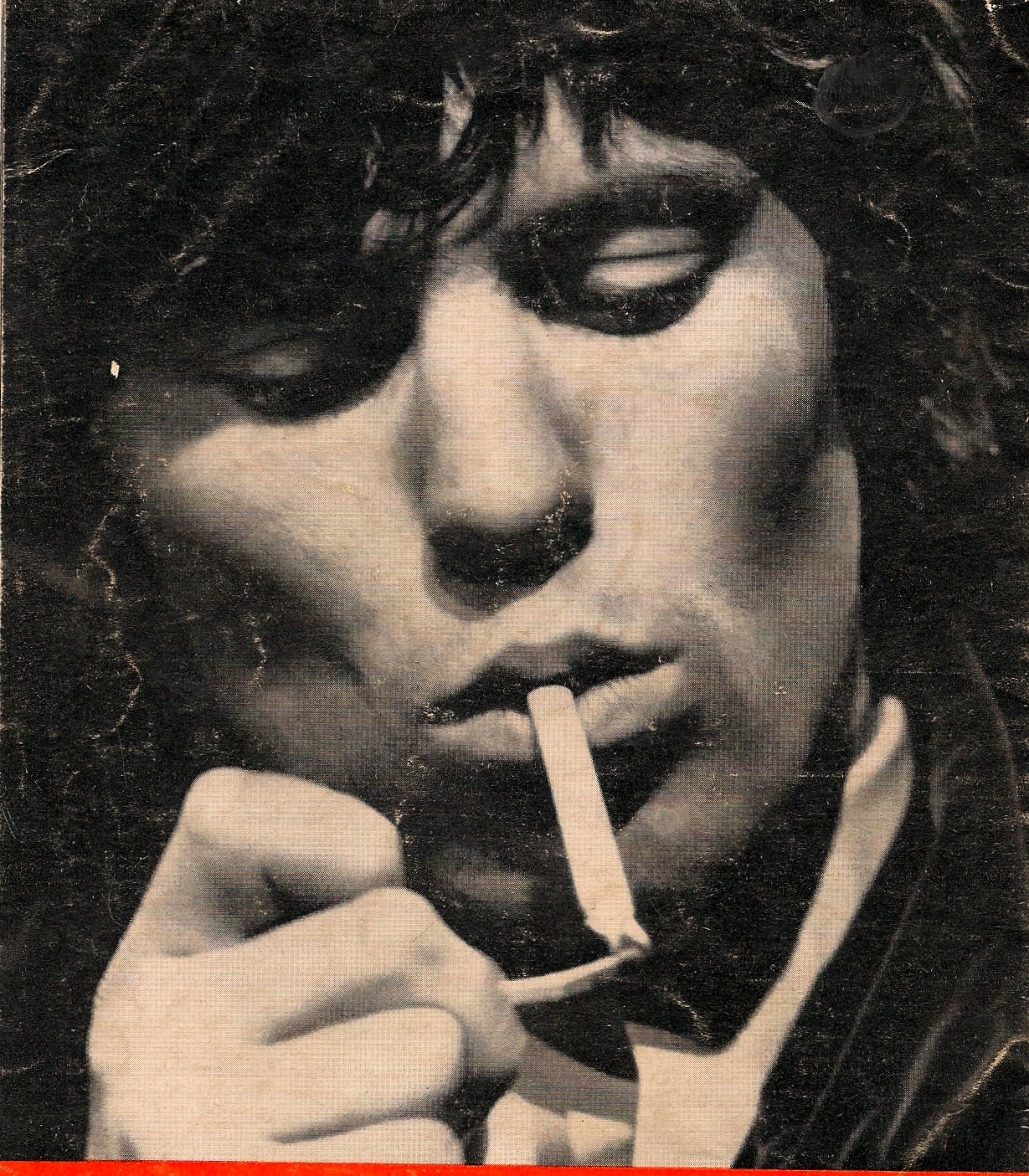
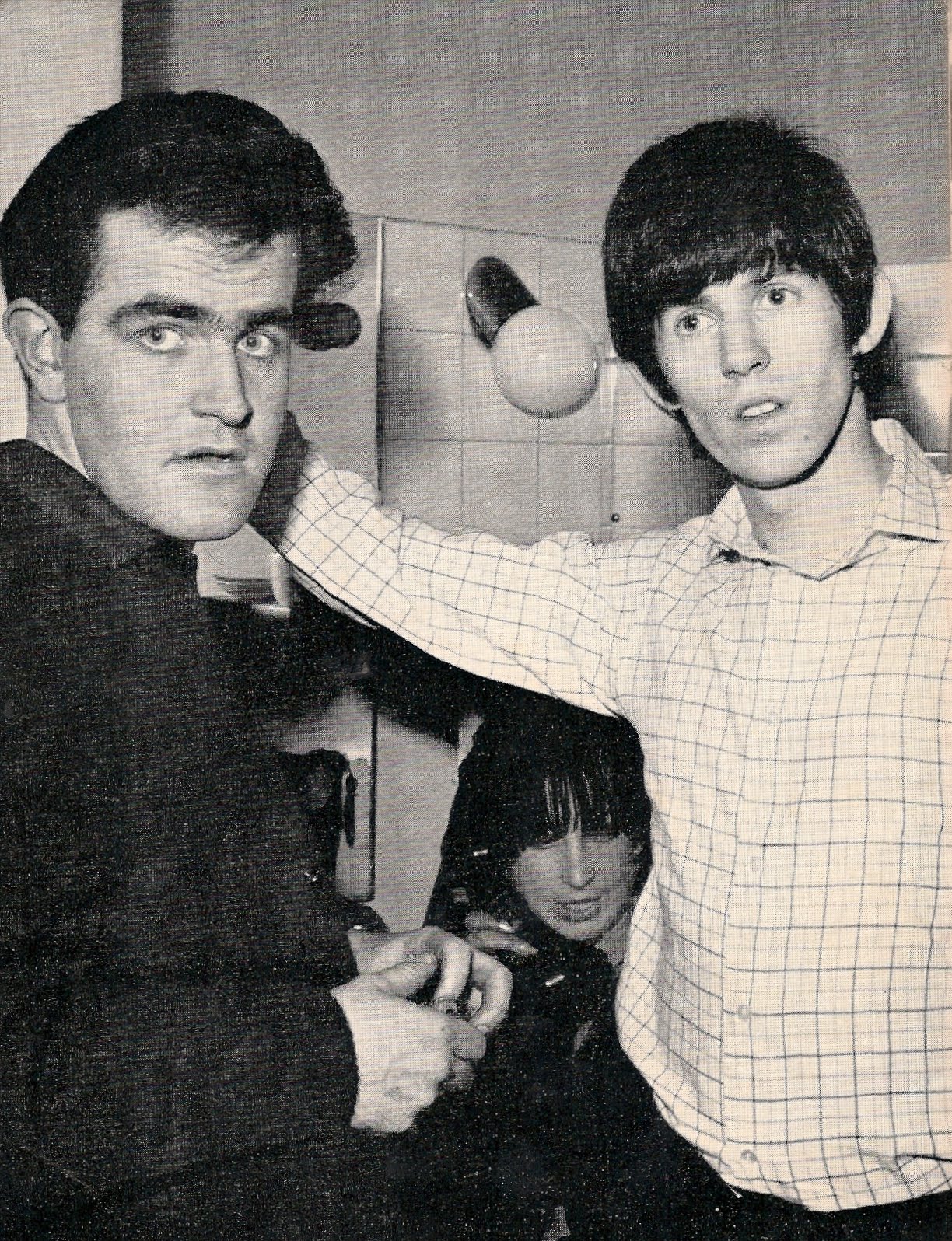
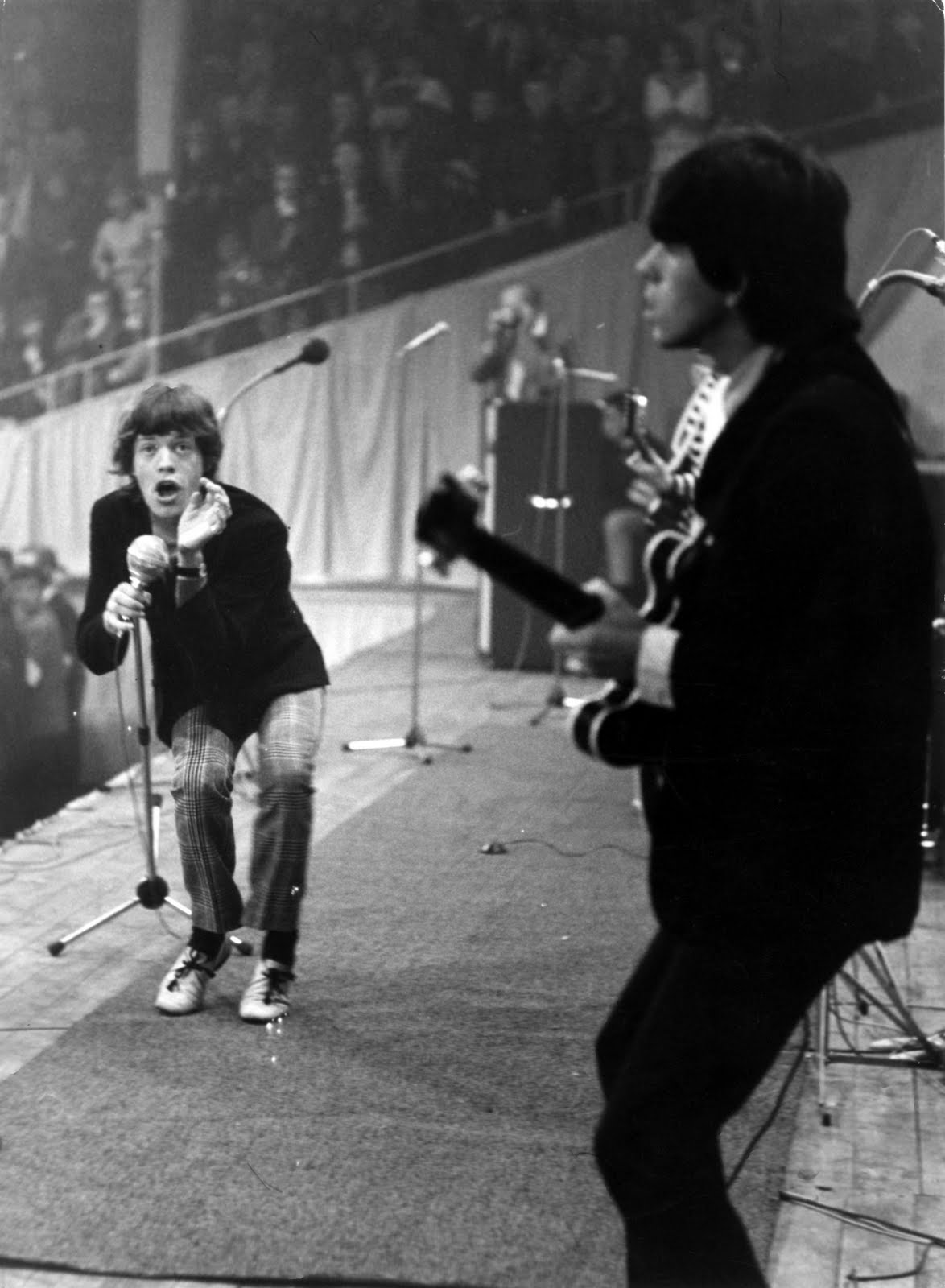
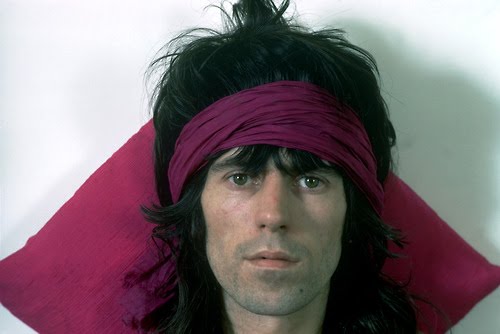
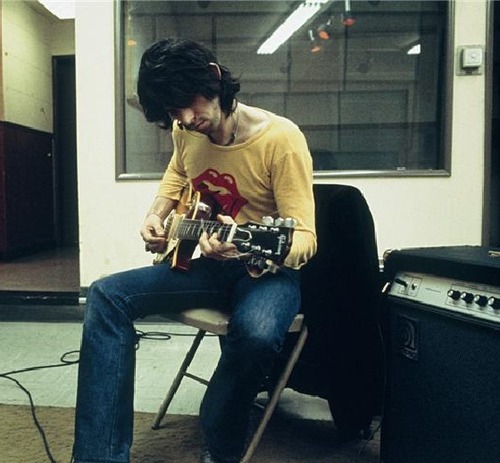
Keith Richards does Jimmy Reed (repost)

Remember when he looked like this?

Lighting up in ’66

Explaining to Ian Stewart what Andrew Oldman meant by “too ugly” (notice the difference in the size of their heads).

Straps were shorter in the 60’s.

Counting down the seconds until a riot starts.

Pinned eyes and wrapped head, ’72.

Making a D chord, backstage, 1969.
I’m re-posting these Jimmy Reed impersonations done by the Rolling Stones sans Mick Jagger in an L.A. studio circa 1981– My First Plea, My Second Plea, My Third Plea, and Jimmy Reed Jam since they’re rather hard to come by, and are probably the last really good studio recordings done by any of the Rolling Stones (unless you count the Keith Richards’ produced Rasta gospel group The Wingless Angels, whose album is incredible, you can find it in two parts here). My First Plea is one of my favorite Jimmy Reed songs, the lyrics are amazing– “Don’t pull no subway/I’d rather see you pull a train” (translation: don’t leave me, I’d rather see you gangbanged). The Mick-less Stones really capture the Jimmy Reed Vee Jay sound, right down to the compression on the cymbals. While I’m at it, I thought I’d throw in Keith’s ’66 demo for Dandelion– Sometimes Happy, Sometimes Blue, one of his most under rated tunes, once again, Mick is nowhere in sight. Also here is Keith and Charlie’s tribute to Charles Mingus’ Lord Don’t Drop That Atom Bomb On Me. This was recorded for Hal Willner’s tribute to Charles Mingus LP- Weird Nightmares (1992). Keith shows here how to play jazz without playing big, jazz chords, no mean feat. You also get to hear Charlie Watts’ only recorded drum solo (unless you count the four bars of Get Off Of My Cloud). Bobby Keyes is on sax. Hal if you want me to pull it just let me know. Ah, hell, here’s one more, recorded when Mick finally showed up at the ’81 session that the Jimmy Reed stuff was cut– a cover of Freddie Cannon’s classic Tallahassie Lassie. Mick always said Brown Sugar was a re-write of Tallahassie Lassie, this proves it.
Addendum/Re-postings: Since none of the pre- Oct 15, 2009 links work anymore (see Old Links) I’ve been thinking about reposting some of the things that are simply impossible to find anywhere else. The JD & the Hoods version of Rumble (Barbarian) from the second Jim Dickinson posting and William Burroughs reading Junkie are at the top of my list, but if you have any requests get them in now. The Great Lost Hasil Akdins album is here. Don’t ask me to post anything on Norton or any thing that is in print on a small label like Bear Family, Ace, etc. as I don’t want to hurt their business, I imagine that the small labels are having a tough enough time these days.

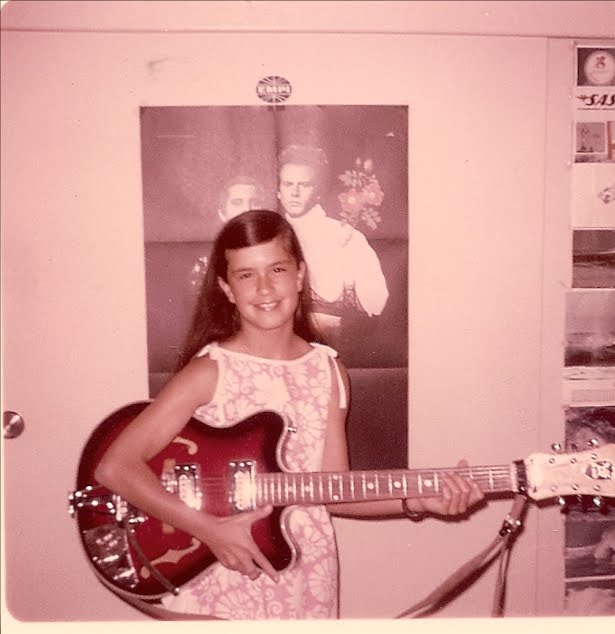
Gillian’s Found Photo #35

copyright G. McCain archives

Despite the Simon & Garfinkle poster on the wall, I think this little gal’s getting ready to rock.

Perhaps she was a fan of Simon’s early, rockin‘ sides (True Taylor, Tico & the Triumphs, Tom & Jerry). Is that a Hagstrom she’s playing? I believe she’s making a gang signal with her right hand. Anyway, innocent though she may look, a few years on the road and I think she’ll end up
looking like the gal in Gillian’s Found Photo #32. Not visible in the shot, but I’d bet she’s wearing boots from Biba, just like #32. Definitely not a frontwiper.