Please Kill Me In Paris

The Ig, Raw Power tour ’73.
James Williamson, 1974.
At home with Ron Asheton, 1995.
The Velvet Underground & Nico.
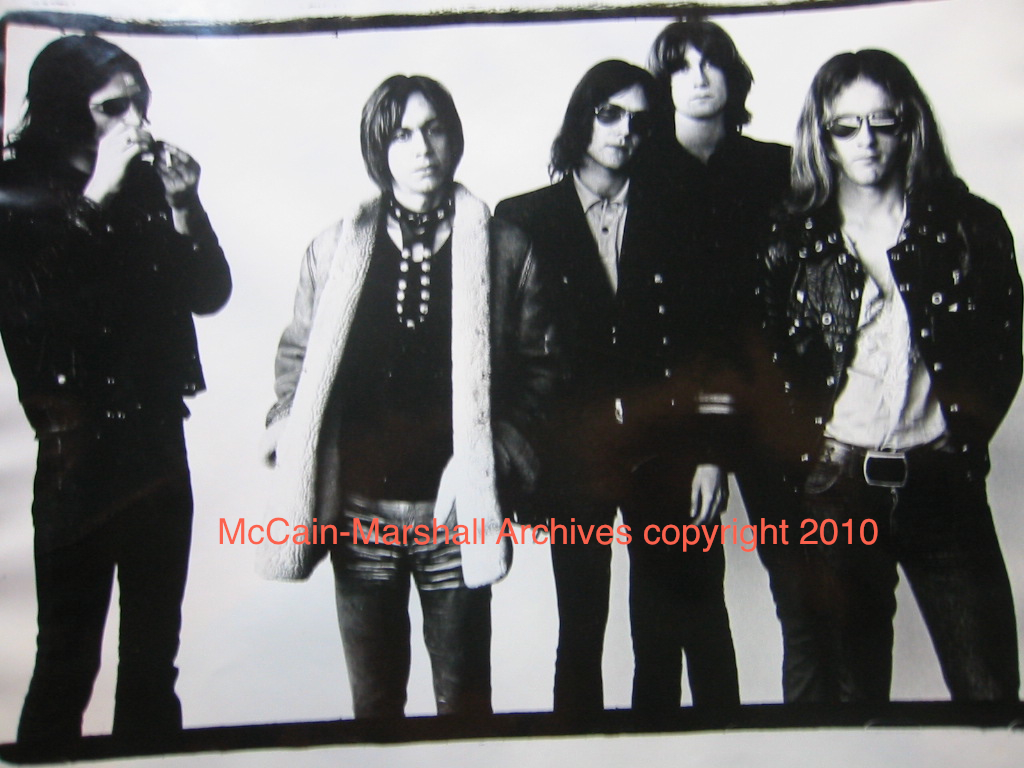
The Primitives, Lou Reed 2nd from Left, John Cale far right. 1965.

Back from many weeks wandering the desert, I’ll be posting some new entries in the next few weeks but tomorrow we’re off to Paris to catch the last performances of the theatrical adaptation of Please Kill Me, adapted from the book by Legs McNeil and Gillian McCain, the latter oddly enough being my wife.
It was adapted by Mathiea Bauer and I hope to improve my non-existent French skills by sitting through it. If anyone’s going to be in Paris next week let me know, I’m easy enough to find.
Back to blogging soon, thanks for your patience and sorry if I haven’t returned any e-mails, phone calls and text messages. 

Johnny Mad Dog

For you New Yorkers, at the Anthology Film Archives  until Thursday of this week:

[youtube https://www.youtube.com/watch?v=4m465VOV1_c%5D
This movie will never get a theatrical release in the U.S.

[youtube https://www.youtube.com/watch?v=FcjRl8MGORw%5D
The Lion King it’s not!

Johnny Mad Dog was made in 2008, shot in Liberia, starring mostly ex-kid soldiers. It doesn’t get much grimmer than this.  If you can’t see the film, try the book by Emmanuel Dongala.
The DVD is available in the U.K., any unscrambled player or computer should be able to read it.

The next clip is a look at the real thing, this ran a few years back on the sadly defunct NY Times/Discovery Channel, great purveyors of snuff TV.   It’s called Liberia: An Uncivil War and the only way to see in nowadays is in ten minute clips via YouTube.  About half way though if I remember it correctly is perhaps the most brutal scene ever filmed. Thankfully the war is over in Liberia, Charles Taylor is still on trial. Didn’t Lars from the A-Bones date his daughter way back when?  It’s unlikely Taylor will ever experience even an iota of the suffering he has caused.  but these things can happen anywhere in the world, at any time. How soon until it happens here?

[youtube https://www.youtube.com/watch?v=DGbob5O2pbE%5D

Me, sorry, but I’m gone until spring. See you then.

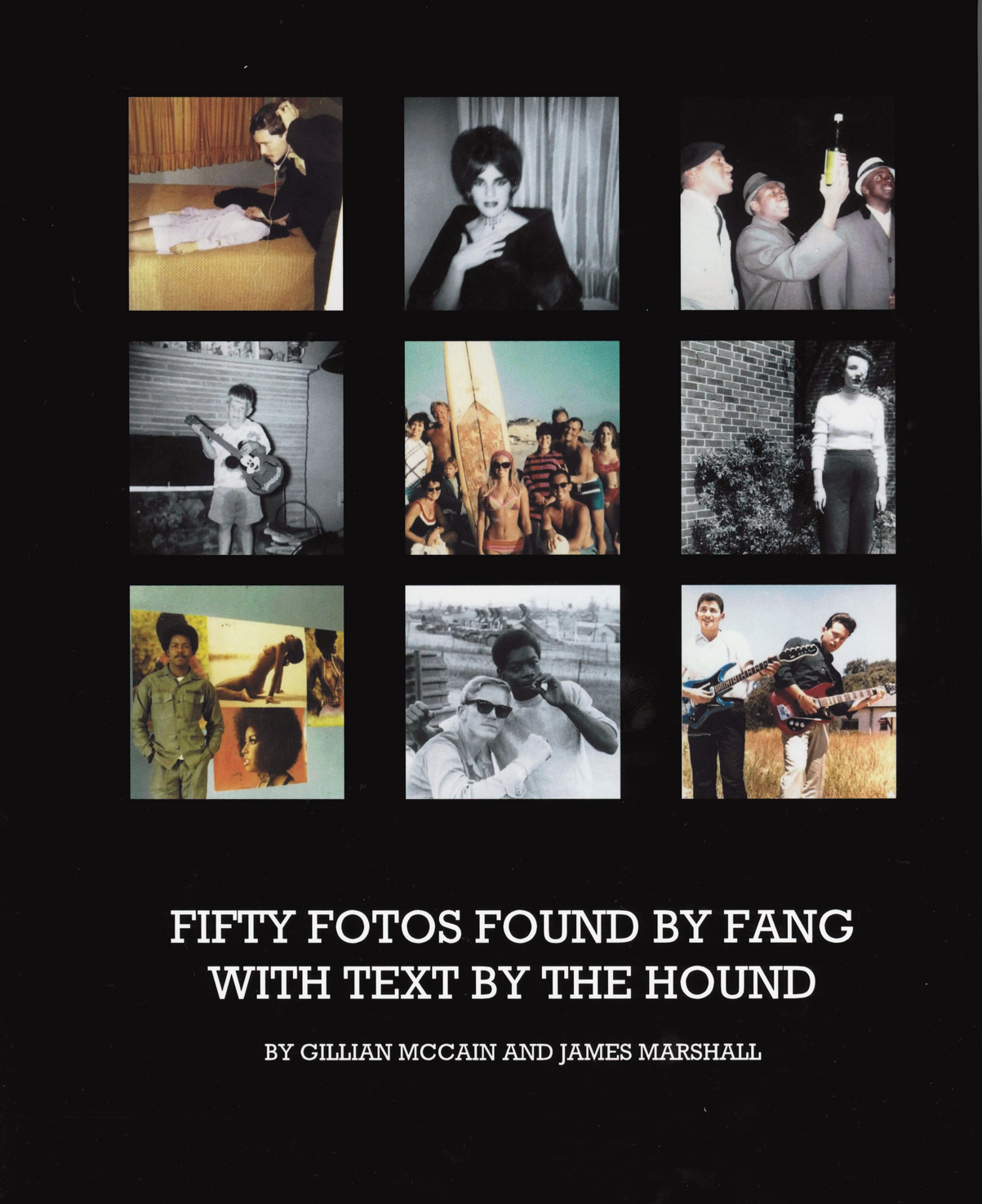
Fifty Found Photos From The Fang

  The Fang has published a limited edition hard bound volume of the first fifty Found Photos from our Gillian’s Found Photo installments. Comments by me and you all. I think they are $35 + postage (roughly what is cost to print  ’em). For more info e-mail the Fang @ gmcfriesprojects@gmail.com. I think there’s also copies of the book from the Help Me show still available.

The Byrds 1967

The Byrds- Early ’67, Crosby’s Last Stand.

The Byrds Late ’67 .

I loved the Byrds as a kid, so cool, mechanical and mysterious. At least until David Crosby started talking in public. Even if there whole sound came from two Beatles songs, maybe one (Rain, their best).
I’m pretty sure I’ve never seen the top clip before, if I did, it was as an eight year old and I drove it out of my mind.
The Byrds, post hair iron, Mike Clarke high enough to fall out of his drum chair (and sporting a precursor to his Firefall look), Chris Hillman with a natural ‘fro,  David Crosby, looking full of himself enough to smack, as I’m sure the other bands members would agree. Lip syncing, but not to the record, but an alternate version of their peak moment– Eight Miles High.
Below we see ’em later the same year, the offensive David Crosby given the boot and replaced briefly by Gene Clark, who oddly enough had been booted out for making more money than the rest of the band due to his songwriting credits on the first two album, he’d be gone again within months.
Skip forward to around the six and half minute mark on this version out take of Universal Mind Decoder to hear a funny studio argument, the word fuck was removed at the Byrds requested 17 times, anyone have the uncut version out there?
Universal Mind Decoder.

Bobby Robinson

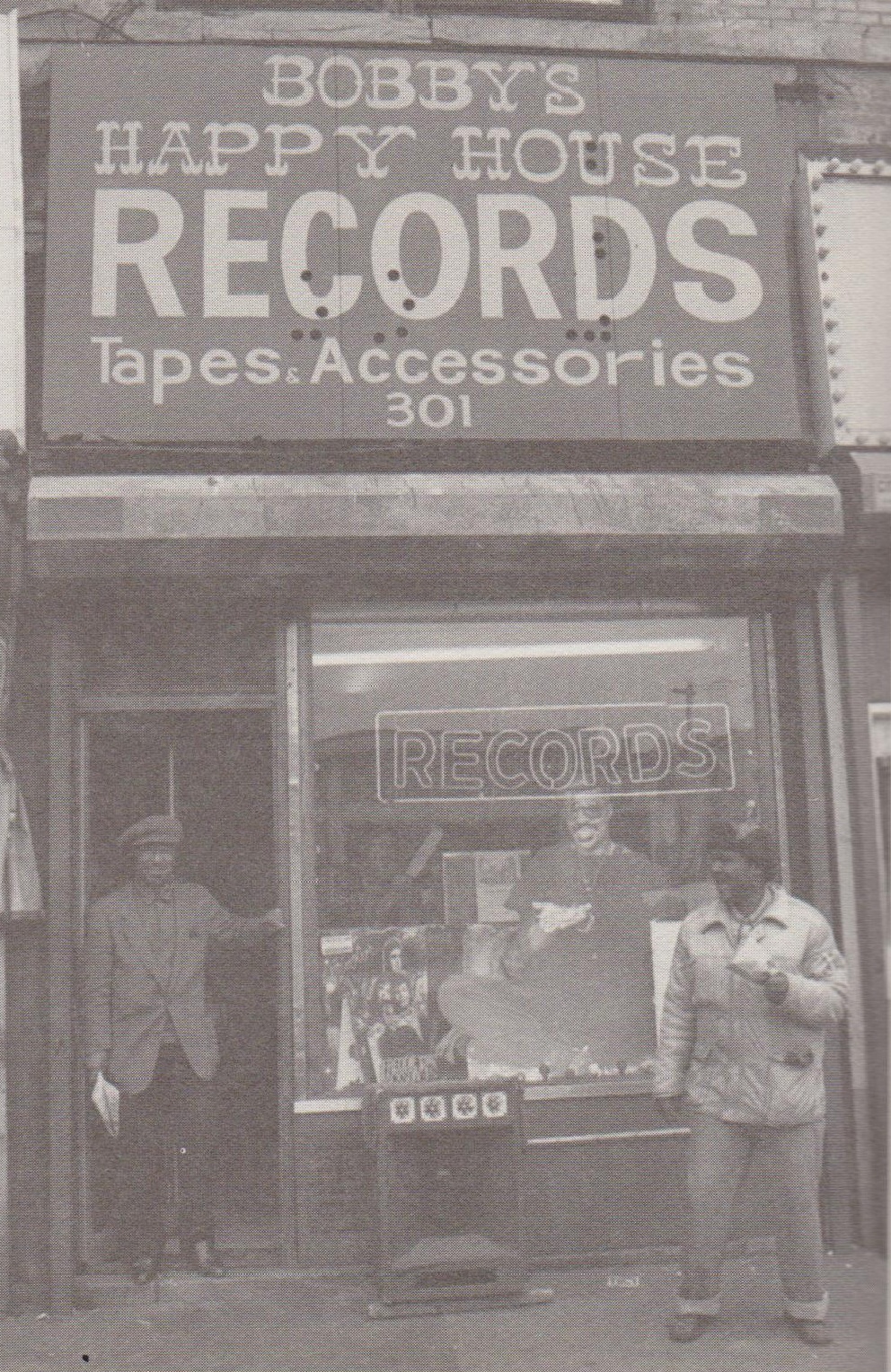
The Original Bobby’s Happy House, 301 West 125th St.

 
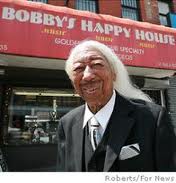
Bobby’s In Th Early 90’s.

They’re going to bury Bobby Robinson (Morgan Clyde Robinson, born April 16, 1917, in Union, S.C.) tomorrow at the United House Of Prayer For All People on 8th Ave and 125th Street, the viewing is 3-6 PM with a service to follow.  Obit can be found here.
Bobby’s the last of the great New York record men, he died early this week at age 93, but he really died a few years ago when he could no longer afford the rent on his 125th St. record store Bobby’s Happy House (his old store is now a KFC, he was relocated around the corner for a few years,  that building was torn down and Bobby was out on his ass), Bobby’s Happy House which had been on the block since 1946.  Priced out nearly twenty years ago, the block is now home to Starbucks and Bill Clinton and the white gentrification of Harlem.
  Christ, how many great R&B and rock’n’roll records did Bobby make?  Kansas City by Wilbert Harrison, the #1 record the day I was born (May 23, ’59), always made me feel like we had a personal bond. Lee Dorsey, Wild Jimmy Spruill,  Lightnin’ Hopkins, Elmore James, a couple of hundred great doo wop records, early hip hop, Jerry Wexler couldn’t shine his belt buckle.  I met him many times when Jimmy Spruill would take me by the record store, he always had a funny story to share, a smile, a joke, and some honest advice.  Bye bye pal, the town won’t be the same without you.
Bobby & Buddy- What’s The Word, Thunderbird (Fury 1008)

Goodbye Naughts…

The Rolling Stones Ready Steady Go Special, 1966. Best Live Stones Footage Ever (in three parts).


The Stooges around the time of the Uganos recording (photo by Peter Hujar).

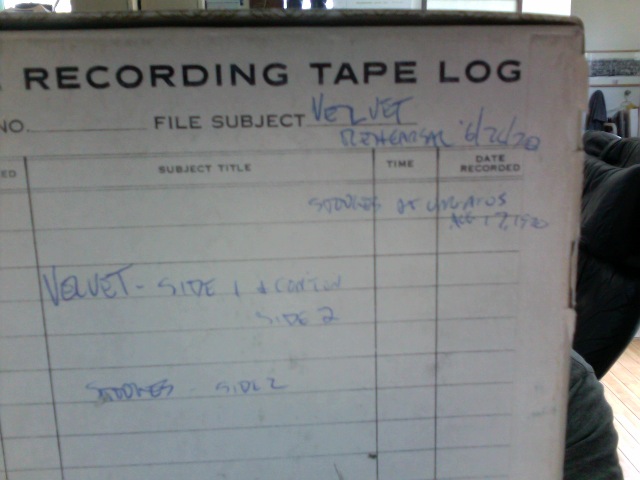
Danny Fields’ tape box for Stooges Uganos (w/Velvets rehearsal on the other side!). 

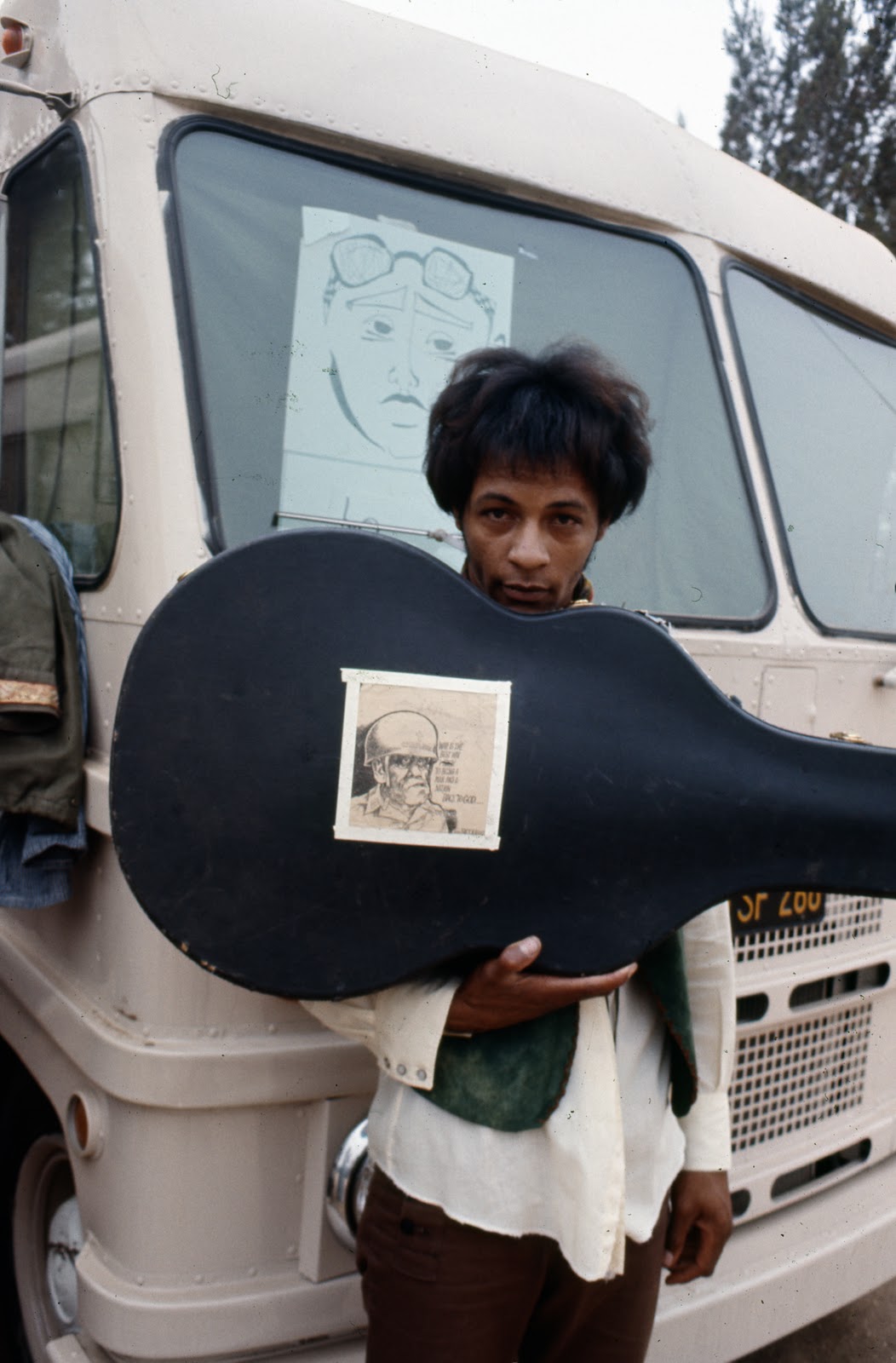
There’s nothing about Arthur Lee in today’s post, I just like this photo.

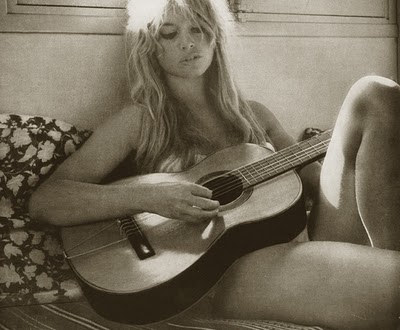
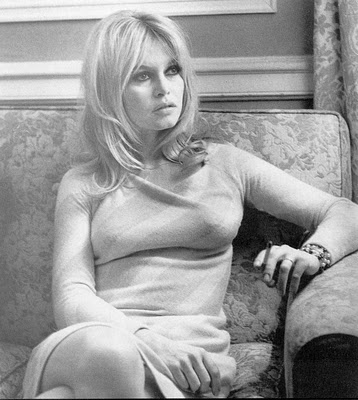
When in doubt, run photos of Bebe.

As the end of the first decade of the 21st century closes in, it’s time to make some sense of what happened in the last ten years. By the time I’ve done that, the roaring 20’s should be here.  One thing is for sure, the world I once knew, and inhabited, is long gone. For lack of a better word, “bohemian” life in NYC is a thing of the past. Priced out by high rents, the city that was once a playground for the cool and the crazy is now a mall for the entitled. I came here in 1977 with $200 in my pocket, and had a job and an apartment within a week. What would I do if was eighteen today? I have no idea. I guess life, or at least social life, has moved into cyber space, which leaves old timers like me more than a tad alienated.  I think the outbreak of autism just may be the human race mutating into the type of creature it will have to be to survive in the future. The skills we don’t need (human relations, face to face contact, etc.) have atrophied, welcome to product driven man. Each day is more and more like living in a Phillip K. Dick novel, except I’m not much of a Dick fan. I’m more of a Graham Greene type, and the subjects he addressed– loyalty, duty, etc. seem almost quaint in the modern world.
Maybe it was bound to happen, you can only arrange three chords so many different ways, but Rock’n’Roll has become something akin to Dixieland, i.e. something old folks get together to do on weekends, a generation to dumb for rock’n’roll has grown up and taken the reins of pop culture, and most of the people I knew and associated with rock’n’roll are dead. Which is a long winded way of saying, I need a break. After 28 months of at least bi-weekly blogging,  I’m taking a month off to let my mental battery recharge. I’ll be back at the typer around the second or third week of January.
One thing never changes, and that is the Stooges are still the kings of rock’n’roll and the touchpoint for whatever is left of the stuff. Buy yourself a Christmas present and get Rhino Handmade’s Stooges: Have Some Fun: Live At Uganos, despite the quality of Danny Field’s hand held cassette recording, we get to hear the band at one of their peaks, coming off the heels of recording Funhouse, they’re white hot, and this disc is a must. They’ve got shows booked for 2012, who would have thought the Stooges would be around after 45+ years, having buried all their contemporaries (and half their band) they’re like the eternal torch for rock’n’roll. For a review of the Have Some Fun check Blog To Comm  (scroll down a bit).
Those other mainstays of R&R mentality, for better or worse, The Rolling Stones may never play again, in light of Keith Richards wonderfully vitriolic Life, but then again, even they can’t hold a candle to the modern day Stooges.  They haven’t sounded right since Bill Wyman left anyway. I assume Bob Dylan will tour until his vocal chords snap, good for him. I must admit, I like the matador get up he’s been wearing.
It’s that time of year when I start missing the people– Bob Quine, Kelly Keller, Bill Pietsch, Dee Dee Ramone, Rockets Redglare, so many others, who were part of my day to day life. Luckily for them, none of them had to think about Facebook.  See you in the new decade.

Billy Boy Arnold

Original Version before Jimmy Reed and Yardbirds cover versions.
His First and Best Disc.

Sure Sounds Good At 78 RPM.
Billy Boy Arnold circa 1993.

In late 1954, when Bo Diddley showed up at Chess Records to record a demo of an x-rated tune called Uncle John (where is that demo today?), he didn’t arrive alone. In tow where three friends, the mainstays on a loose musical aggregation that played on the streets of Chicago for loose change who called themselves The Langley Avenue Jive Cats. With Bo where Jerome Green whose maracas were an important ingredient in the group’s unique sound, drummer Clifton James, and our subject today, harmonica player and singer William “Billy Boy” Arnold (b. September 17, 1935 in Chicago). Missing were guitarist Jody Williams, who’d soon join the group in the studio, Roosevelt Jackson who played washtub bass and another guitarist known only as Buttercup.   Leonard Chess, who recorded the demo told Bo to clean his song up and bring his group back to record it for real, which they did on March 2, 1955. In addition to the cleaned up version of Uncle John which was re-written as Bo Diddley and recorded without Arnold, they also recorded Bo’s originals I’m A Man, Little Girl, You Don’t Love Me (You Don’t Care) and three tunes with Billy Boy Arnold leading the group– You Got To  Love Me, I’m Sweet On You and the harmonica instrumental- Rhumba.  Chess issued Bo Diddley b/w I’m A Man on his Checker label and the rest was history. A second session with the group was scheduled for May.
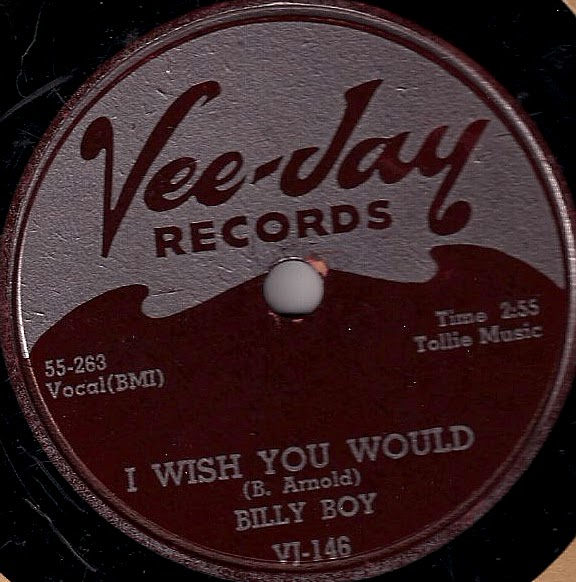
Billy Boy Arnold had already recorded back in ’53 when he was just 17 years old–  I Ain’t Got No Money b/w Hello Stranger, his recording debut, was issued on the Cool label, today it’s so rare that he doesn’t even have a copy and I’ve never seen nor heard it.  In the intermittent months between Bo Diddley’s first and second sessions, Arnold, convinced Leonard Chess, who already had Little Walter under contract, had little use for his talents,  made his way across the street to Vee Jay Records. There he cut a session for Vee Jay with fifteen year old guitarist Jody Williams (who would re-join Bo’s band, as well as doing session work for Howlin’ Wolf, and recording under his own name for Argo and as Little Papa Joe for Blue Lake), and session men Henry Gray on piano, Earl Phillips on drums and Milton Rector on bass. From this session, in early May of ’55 Vee Jay released under the nome du disque Billy Boy– I Wish You Would b/w I Was Fooled (Vee Jay 146), a smoldering slice of vinyl and/or shellac depending on how many RPM’s you prefer, as ever emanated from Chicago. 
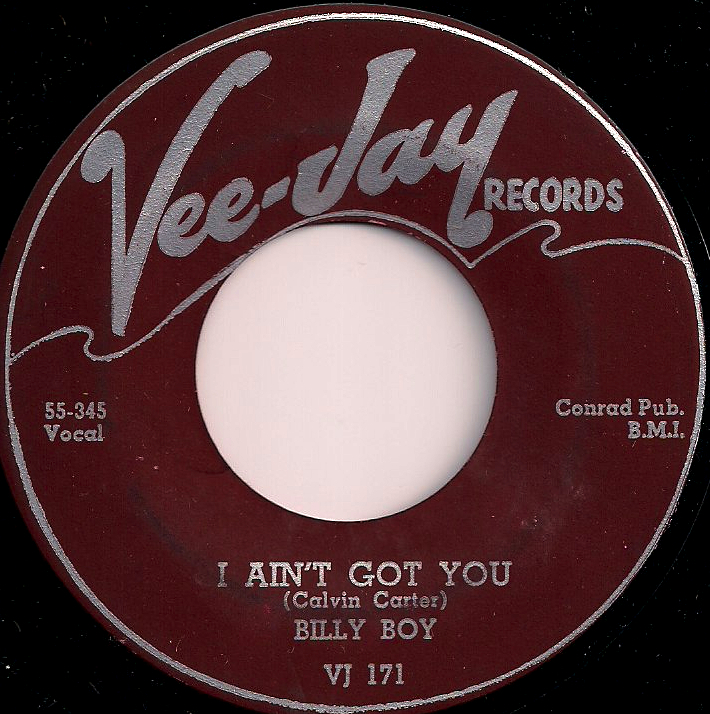
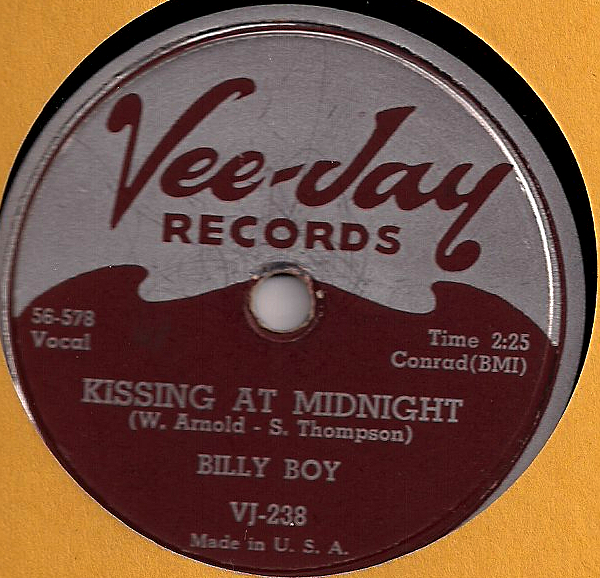
Meanwhile, a week later, at Bo’s second  recording session,  Billy Boy Arnold played on She’s Fine, She’s Mine,  but when they set about recording Diddley Daddy, Arnold explained to Chess he’d just recorded the song as I Wish You Would for Vee Jay. Billy Boy was promptly shown the door, to be replaced by Little Walter on Diddley Daddy. The songs were different enough that both men would take writer’s credit on their respective discs, but Billy Boy Arnold was persona non grata with the brothers Chess.  It didn’t matter anyway, since that fall Billy was back in the studio for Vee Jay recording four more sides, this time with Fred Below on drums and Syl Johnson and Odell Cambell playing guitars. Two singles were released in 1956– I Ain’t Got You b/w Don’t Stay Out (Vee Jay 171) and You’ve Got Me Wrong b/w Here’s My Picture (Vee Jay 192). His third Vee Jay session came in November of ’56 which produced the single Kissing At Midnight b/w My Heart Is Crying (Vee Jay 238) and two un-issued tunes. His final Vee Jay disc was recorded in September of ’57– Rockin’-itis b/w Prisoner’s Plea (Vee Jay 260), as well as two more outtakes–No, No, No, No and Everyday and Every Night.  I Wish You Would was a small, local hit, as was I Ain’t Got You, the next three singles sold very few copies and Vee Jay let him go. Bo Diddley would set on a career as a rock’n’roll star, touring the world for over fifty years and leaving a recorded legacy on Checker that is second to none. Billy Boy Arnold would return to the streets, and later the clubs of Chicago’s south and west sides, where his career as minor, second tiered (in terms of fame and popularity, not musical worth) bluesman lasts until this day. He wouldn’t record again until 1963 when he cut his first LP for Prestige, More Blues From The South Side with Mighty Joe Young on guitar. A surprisingly good album, in my own opinion blues like rock’n’roll is a form best enjoyed on singles, whether 78 or 45, and would suffer from recording sessions where an artist would be expected to produce a whole album instead of two sides of a single. Starting in the early 60’s, these blues albums were mostly aimed at white “folk blues” fans, and most of them are garbage. 
 But getting back to the five Vee Jay singles, which remain the high point in a long recording career.
All five singles have a rocker on one side and a slow blues or shuffle on the flip. I Wish You Would would become something of a standard after the Yardbirds version, a version even ending up on David Bowie’s 1974 Pin Ups (an album of “mod” covers made while his manager negotiated a new publishing deal) and is still something of a blues standard today. But all five singles are great, as good as anything you’ll ever hear. All use some variation of the Bo Diddley beat on one side, and all his songs are of superior quality. Arnold was an excellent lyricist, clever, never falling back on the cliches of the genre.  They have a unique sound, and a touch of menace, making them quite unique.
Eventually, as the big names died off, Billy Boy Arnold would gain fame and respectability with blues fans, especially in Europe, touring often, playing festivals in the summer months, cutting at least a dozen albums, probably more.  Having learned to play harmonica from Sonny Boy Williamson (John Lee Williamson, the original Sonny Boy), although he plays harp more like Rice Miller, the second Sonny Boy, he was even making good records into the 70’s, his version of Dirty Mother Fucker, on Red Lightnin’, backed by a charmingly inept white British boogie band called the Groundhogs, remains popular among fans of such things.  Billy Boy was re-united with Jody Williams at the first Ponderosa Stomp in New Orleans back in 2003 and they sounded great together. Arnold’s still alive today, although he no longer tours much. His best sides- the Vee Jay recordings, are sadly out of print (Charley in the UK had released an album of all his Vee Jay material called Cryin’ and Pleadin’ in the eighties, some of the tunes later showed up in the US on a series of Vee Jay blues compilations A Taste Of The Blues, all have gone out of print). That will hopefully be corrected some day soon. Whoever undertakes such an endeavour should add the Cool single and the three songs from the first Bo Diddley session to the twelve existing Vee Jay recordings, that would make a nice CD, an excellent testament to Billy Boy Arnold’s greatness. That would be called “getting it right”, a rare occurrence in the music biz,  Maybe it will even appear before he dies. Stranger things have happened.  

Gillian’s Found Photo #58

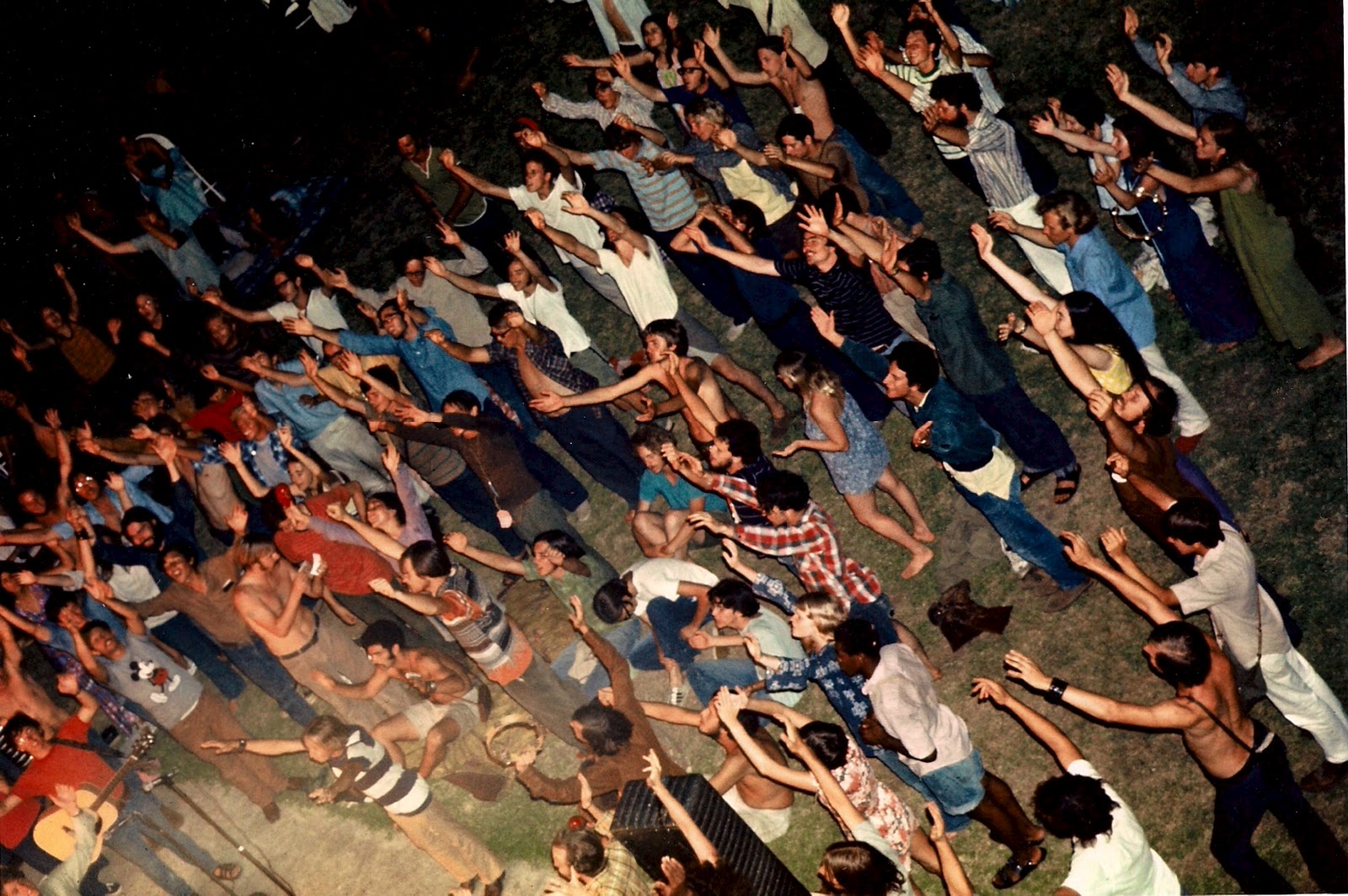
This week’s found photo, exact place and date unknown, shows a bunch Children Of God cult members caught in their own version of religious rapture. The Children Of God, were (and still are) a creepy hippie-Christian cult,  I touched on them briefly in my June, 2009 posting on Jeremy Spencer, the Fleetwood Mac front man who quit the group to join the C.O.G. mid-tour back in 1971. The Children Of God are still around, now doing biz as “Family International” (briefly they were Family of Love), and Spencer is still with them. Children Of God were founded by the late Moses David aka Dad (born– David Brandt Berg) who croaked back in ’94, just as the law was closing in on him. Over the years all sorts of disturbing reports have come from former members from accusations of child abuse and kiddie porn, to a sort of prostitution they call “flirty fishing”– using young women to seduce men into the cult, or out of their money. They have been run out of the U.S. and Europe, and are mostly based out of communes in South America and South East Asia.
Still, I love this photo because I find photos of people involved in stupid behavior entertaining. I asked the Fang why she liked it and she simply replied– “because it’s sick”.

Rev. Julius Cheeks

The Sensational Nightingales- Charles Brown impersonating June Cheeks.

Sensational Nightingales, late 50’s promo photo.

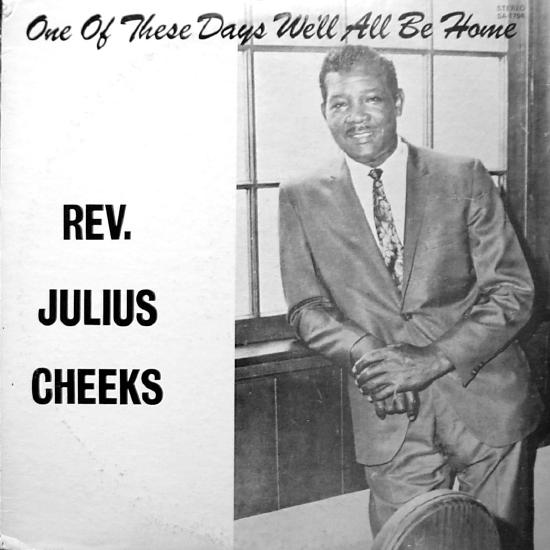
Mid-sixties solo album, sharkskin suits for Jesus. 


 June Cheeks with the Sensational Nightingales, at his peek.

Early solo single, Holy Wine Spo-Dee-O-Dee.


I just can’t seem to stay off the subject of screaming. Why is it that I love to listen to folks screaming so much? Personally, I never scream. Nor does my wife. In fact she almost never even raises her voice, save for those times she falls down the stairs (the stairs in this house are very slippery, I fall down them myself quite regularly). Anyway, you may have to ask Sigmund Freud why I enjoy to hearing musical screams,  but it doesn’t a genius to tell you who the greatest musical screamers of them all were. The greatest screams came from those singers that came out of the Church Of God In Christ, and of those singers there are two who have gone down in history as the greatest of the screamers. One was Archie Brownlee of the Five Blind Boys Of Mississippi, who literally shouted himself to death, his lungs wracked by pneumonia, he passed away on tour with the  Five Blind Boys in New Orleans back in 1960 at the tender age of thirty five.  The other was Reverend Julius “June” Cheeks– born August 7, 1929 in Spartanberg, South Carolina, (the same town that begat Ira Tucker of the Dixie Hummingbirds) who will always best remembered as the hard shouting frontman for the Sensational Nightingales at their peak.
Cheeks was born into poverty, one of thirteen children, his mother, a widow known to all as “Big Chick” Cheeks, picked cotton to raise her brood. Julius, known from childhood as June, dropped out of the second grade to join his mother in the fields, a tough way to get by– “It was bad, man. We didn’t have a clock, we told time by the sun. We didn’t eat right, we lived off fatback and molasses”, he told Anthony Heilbut for his classic volume The Gospel Sound: Good News and Bad Times (revised edition: Limelight Editions, 1985).  He went through life illiterate, although he could sign his name. He would listen to the recorded Bible on massive stack of 78’s and eventually be ordained in the Church Of Holiness Science out of Detroit. As a teenager he heard local bluesman Blind Boy Fuller, and on a neighbors’ radio his favorite spiritual groups– the Soul Stirrers, the Dixie Hummingbirds, and the Fairfield Four. In the mid-1940’s June joined a local group called the Baronets and in 1946 they found themselves opening a bill for the Five Blind Boys Of Mississippi and the Sensational Nightingales. Cheeks was working in a filling station at the time. June Cheeks took the stage in his finest clothes– overalls with patches sewn over the holes. When the Sensational Nightingales left town the next day they took June with them, he would become their new lead singer.  To Archie Brownlee, who was also on the bill that night, up to that time, unquestionably king of the house wrecking shouters, a man who could cause an entire audience to “fall out” when he hit his blood curdling scream in the Five Blind Boys’ version of The Lord’s Prayer–, Cheeks was his only compitition–“Don’t nobody ever give me any trouble but June Cheeks. That’s the only trouble I have, that’s the baddest nigger on the road”.  The Nightingales manager rehearsed the group from nine in the morning until late afternoon until Cheeks was ready to take the stage. It was an impressive group with hard shouting tenor singer Paul Owens, guitarist Jo Jo Wallace (who wore an Esquerita styled pompadour atop his dome,  and was known for his wild stage antics, he said, when looking back on his career with the Nightingales– “I was Chuck Berry and Little Richard and Jo Jo, rolled into one”), Carl Coates singing bass (husband to the great Dorothy Love Coates), were all in the group at the time. To this, Julius Cheeks added his thundering baritone lead, and his own wild stage antics. He’d run up and down the aisles, fall down on his knees, tell corny jokes— “I cut the fool so bad”. He was much criticised for his showmanship at the time,  but the audience loved it.  He was the hardest working man in the business. And along with the aforementioned Dorothy Love Coates, one of the few gospel singers to vocally back the Civil Rights movement at a time (late 40’s/early 50’s) when such expressions of free speech could be dangerous for one who toured the south constantly.
 Life on the Gospel Highway was not an easy one. Once Cheeks found his group stranded in Miami with only fifty cents in his pocket. “I just went and threw mine (fifty cents) as far as it could go into the Atlantic”. To support his family– a wife, two kids, and Big Chick back in South Carolina, he joined the Soul Stirrers for two years in the early fifties (“I was the one caused Sam Cooke to sing hard. I gave him his first shout”) before returning to the Sensational Nightingales in time to cut a string of classic records for Don Robey’s Peacock label out of Houston. From 1952-1959 he led them through a string of spine tingling discs, including such classics as Blood Of Jesus, Morning Train, Savior Don’t Pass Me, What Would You Give,  I Want To Go which featured Jo Jo’s rocking guitar riffs, To The End, Standing At The Judgement (which Hank Ballard and the Midnighters would re-write as the rocker What Is This I See), and his greatest recorded moment– Burying Ground. As near as I can figure, Peacock released at least eighteen singles and five LP’s on the Sensational Nightingales on which Julius Cheeks sang lead. Not long ago, attempting to engage me in conversation, a person volunteered the opinion that Graham Nash was the “greatest harmony singer of all time”. Hey, I like the Hollies a little,  and I like the Beach Boys and the Byrds a lot, but when people tell me that those groups are “great harmony singers”, I just want to laugh. They’re good singers, sure, and they made some great records, no doubt. But if you want to hear great harmony singing. I mean great, as in as good as it could possibly get– listen to Carl Coates’ bass parts on the above discs, then listen to the subtle, restrained introduction on Blood Of Jesus, and listen to the way they build the intensity to the screaming finale of Burying Ground.
Few “rock’n’roll” records have rocked this hard. Just listen.  Then try and talk to me about Graham Nash being “great”. You will know why I’m laughing. And why I don’t like to talk about music with many people anymore. Opinions are like assholes, everyone has one, and they all stink of shit. I include myself in that summation, heck, I still listen to Mott The Hoople on occassion (to say nothing of Menster Phips and the Phipsters).
 June Cheeks left the the Sensational Nightingales in late 1959, put in a year with the Mighty Clouds Of Joy (who later went on to record a tribute LP to Cheeks), then began a solo career, releasing at least nine singles on Peacock, a few of these billed his backing group as the Sensational Knights, I assume to purposefully confuse matters.  Of these solo discs, my favorite is the bluesy Holy Wine, a Cheeks original which puts the anti-booze faction of church folk in their place, since, sighting two episodes in the New Testament where Christ himself made and served wine (first at the wedding and again at the Sermon On The Mount). Good enough for Jesus, good enough for June. Cheeks admits on the road he “had myself a time”, and that he liked to drink. The flipside of Holy Wine– Tomorrow’s Sun, was a screaming rocker with a pounding boogie piano part that could have off of a Jerry Lee Lewis Sun record. Cheeks kept up his solo career, as well as preaching, until the end. Of all the 60’s soul singers he inspired, only Wilson Pickett  admitted publicly just how much he had taken from this man. Toward his final days his voice was a hoarse rasp, he had literally shredded his vocal chords screaming night after night. He had worn himself out, when he died in 1981 in Newark, N.J., he was only 51 years old. To this day, no one has ever sang harder, or left a greater legacy.
A video clip (its embedding disabled) from his solo career backed by the Sensational Nights can be found here.

Mickey Hawks & the Nightraiders

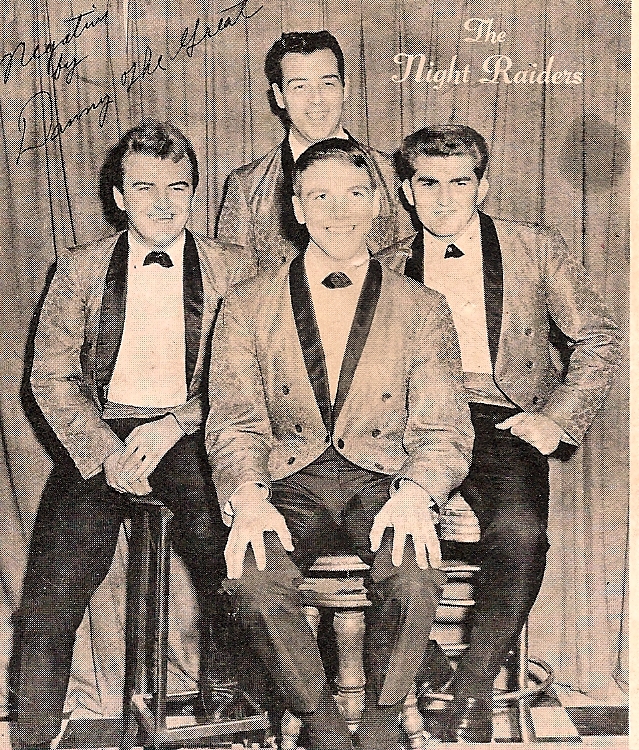
Early shot of the Night Raiders, Mickey Hawks rear center.
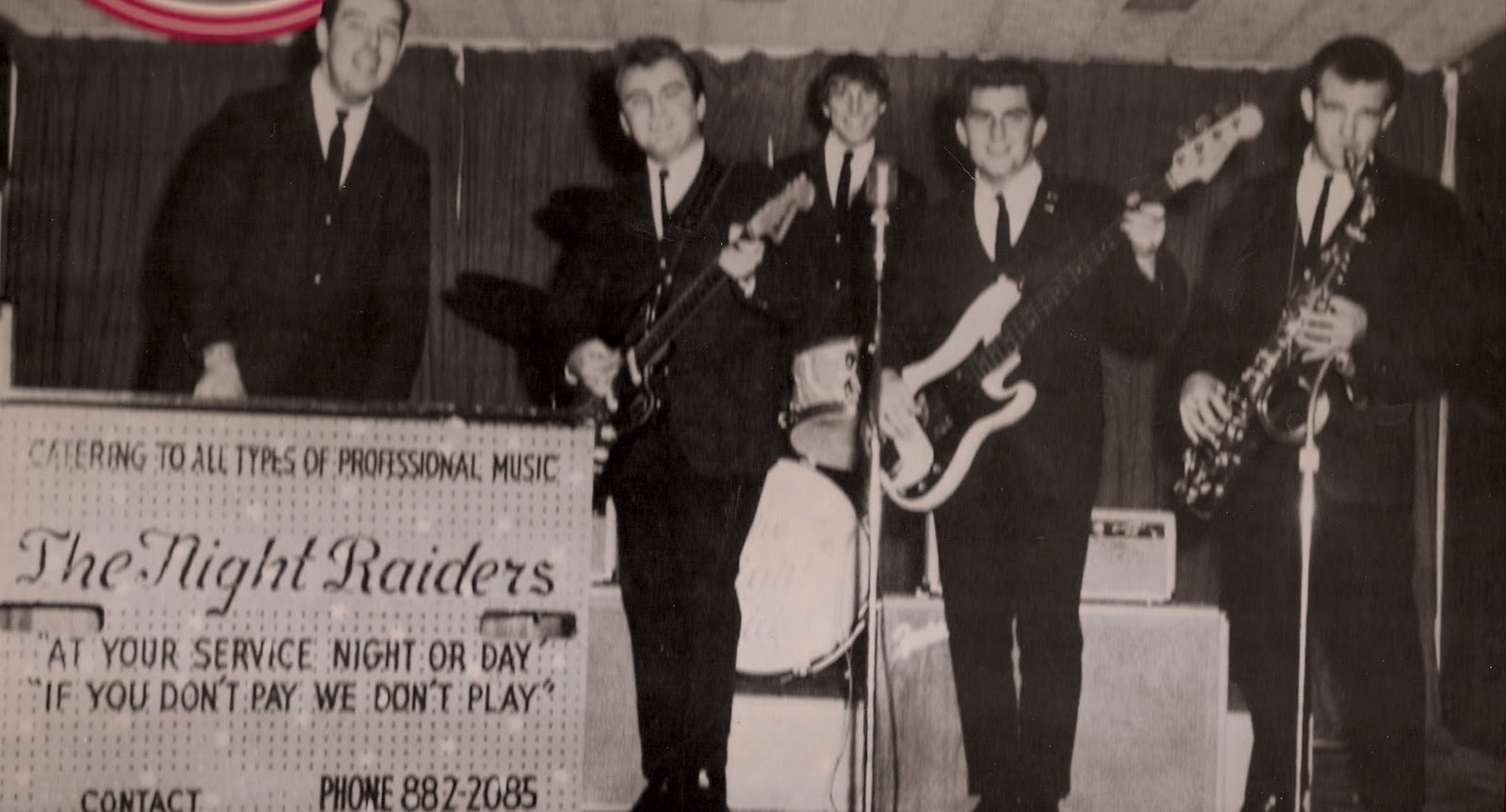
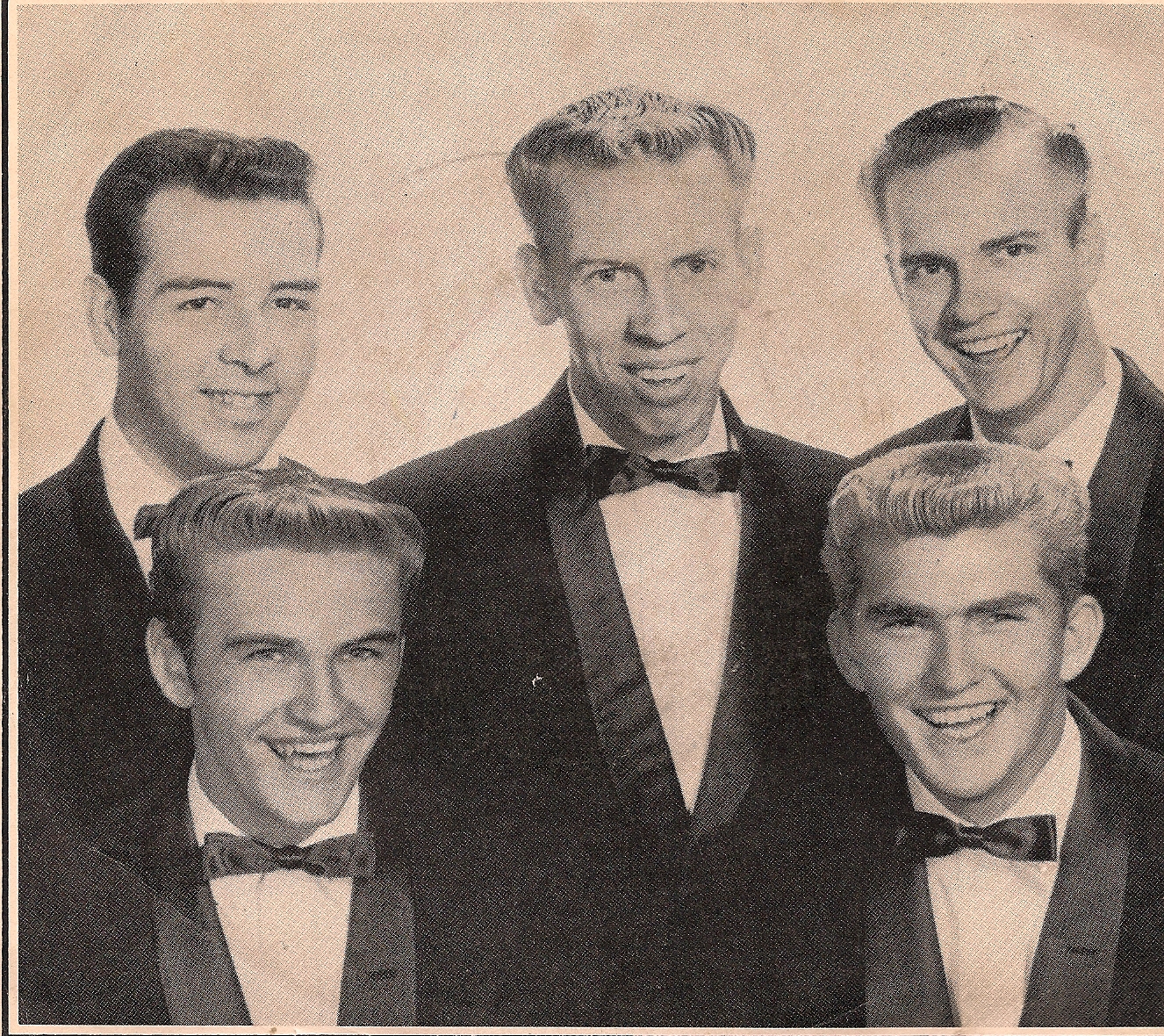
The Night Raiders 1958- (left to right)- Mickey Hawks, Bill Ballard, Bob Matthews, John Owens, Moon Mullins.
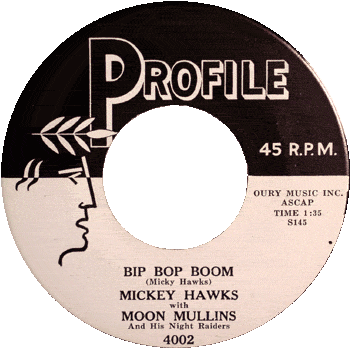
Screaming third single.
The third  issue of their first single.

Mickey Hawks (on the upper left) with the Nightraiders.
Fourth single, with Mullins singing lead.

Last week I decided to cover the one white gospel singer who could compete with his counterparts of color. This week’s subject is one of the few white rockers who could match Little Richard’s screaming delivery of a rock’n’roll song scream for scream. There has been only a few of such voices to emerge in rock’n’roll over the years. In the 50’s Sun Records’ star Sonny Burgess on his debut disc- We Wanna Boogie b/w Red Headed Woman would be at the forefront of this small pack. In the early 60’s– Paul McCartney on the Beatles version of Long Tall Sally and his own I’m Down
was one such set of pipes, in the same group, John Lennon, warbler of the definitive version of the Isley Brothers’ Twist and Shout was another. Later, Gerry Rosalie of the Sonics, and Jim Dickinson who sides would be spread out of a series of labels small (Sun, Plantation, Quality, Southtown, Barbarian, New Rose) and large (Atlantic) would join the club. But one of the first, and to my ears, the greatest, of the  Little Richard inspired ofay howlers, would be a young lad from North Carolina named Mickey Hawks (born David Michael Hawks, July 17, 1940 in Thomasville, N.C.,  a few miles south of Winston-Salem). In fact, although it’s rather unlikely that either band ever heard of the other, in as many ways as one can count, Mickey Hawks and his Night Raiders were the precursors to the sound of the aforementioned Sonics, who from 1964-66, and then again since their 2003 re-union, the Sonics, pretty much sound like the Night Raiders with the Kinks guitar sound welded on top.
It is time once again to digress. Mickey Hawks’ family relocated from Thomasville to High Point, N.C., hear the Virginia border in 1942. As a young teenager, Mickey began teaching himself piano on his mother’s instrument, taking in all sorts of music on the radio, most especially the country sounds that dominated the southern airwaves. In 1956 he first heard Little Richard, and would soon learn to ape both the piano and singing style of the Georgia Peach. In High School he meet a drummer named Bob Matthews (a fascinating interview with Matthews can be heard here). Together the formed a duo called the Rhythm Rockers and began entertaining teens at school and local sock hops.  Matthews was friends with a R&B styled tenor saxophone player named Moon Mullins who had a radio show on a small station in High Point.  Mullins lead a four piece rock’n’roll band, said to be the only one in the immediate area.  Soon the Rhythm Rockers– Hawks and Matthews joined Mullins group, and now a quintet and The Night Raiders were born. In addition to Mickey Hawks on piano and lead vocal, Moon Mullins on tenor sax (and sometimes lead vocals), and Bob Mathews on drums were 14 year old guitarist Bill Ballard and bass guitarist John Owens. Mullins surmised that his group needed matching uniforms, and to raise money for a haberdasher , decided to release a record. Mullins approached his friend Eddie Robbins, and using a home made studio built on Robbins back porch, they recorded two Hawks originals– Bip Bop Boom and Rock And Roll Rhythm. Robbins pressed up 500 copies of this record on his own Red Robbins label, which the band sold mostly at gigs. The entire press run was soon sold out, and today this first pressing (all of which were on clear red vinyl) is so rare I can’t even find a photo of the label, and a copy sold at auction would easily fetch in the four figures. For reasons unknown,  Eddie Robbins would not press any more discs, but Moon Mullins would soon approach a disc jockey friend based out of Martinsville, Virginia, who pressed an additional 500 copies which were issued on the Mart label. Again, the entire press run sold out in a matter of weeks. Sometime in 1958, at a dance in Sanford, N.C. where the Night Raiders were appearing,  they were approached by a fellow (possibly a soldier stationed at a nearby base) named Ian Thomas who claimed to have contacts with a record company in Chicago. Thomas forwarded a copy of the disc to Mike Oury who worked for Mel London’s Profile Records, the Chicago based indie (and sister label to London’s Chief, Age, Mel and USA labels) that would issue Junior Wells first (and best) singles with Elmore James on guitar, as well as rockabilly by Hayden Thomspon (who had recorded for Sun), blues guitarist Lefty Bates, and the proto-garage band  the Noblemen (who cut an amazing version of Dirty Robber).  Soon Profile re-issued Bip Bop Boom b/w Rock And Roll Rhythm, and it began to garn airplay around Chicago, even reaching #1 on a couple of stations. Bip Bop Boom became something of a local hit in the mid-west and went on to sell some 50,000 copies, which is believable, since it is still fairly easy to find. Despite (or perhaps, because of) its primitive recordings conditions– Bip Bop Boom remains one of the most astounding sonic displays to grace vinyl. “Bip bop boom/ it’s like a sonic boom”, so it said, so it was, so it shall always be.  With two wailing, guttural sax solos, an over-distorted guitar break, pounding piano and thundering drums, it is everything rock’n’roll should be, but rarely is. I’ve used to to fill the dance floor while DJing for three decades and I’ve seen crowds literally go berserk when it kicks in after the stop time introduction.  The flip side, one of those anthems to our music like Rock’n’Roll Is Here To Stay and It Will Stand, is only slightly less feral. 
  In 1959, exact date unknown, Oury took the Night Raiders into Chicago’s Universal Sound studio (where Jimmy Reed, Little Walter, Bo Diddley, Howlin’ Wolf, and so many others recorded their best work). Although Universal was a state of the art facility with  genius engineers, the Night Raiders sounded pretty much exactly like they did on their home recorded debut– primitive and out of control. Of the six sides cut that day, four of them would be issued on two singles– Hidi Hidi Hidi (a re-write of Huey “Piano” Smith & the Clowns’ Don’t You Just Know It, the songwriting credits were shared by Oury and someone named D.Thomas) was backed with the blasting, Link Wray style guitar instrumental Cotton Pickin’ , authored by the by now sixteen year old guitarist Bill Ballard. It was released in May of ’59, timed to celebrate the massive world wide jubilation that accompanied my birth, while two more tunes from the session– Screamin’ Mimi Jeanie b/w I’m Lost would escape the vaults thirteen months later. The final two tracks from that session, an original entitled Late Date Tonight and the Merrill Moore/Amos Milburn/ Ella Mae Morse & Freddie Slack/Chuck Berry/Rolling Stones (choose your favorite version) classic Down The Road Apiece went un-issued, perhaps lost forever. All four issued sides are superlative rock’n’roll, the best tune being Screamin’ Mimi Jeanie which opens with a cracking”machine gun”drum roll, the likes of which would not be heard on record again until the Sonics’ debut four years later. It’s also Mickey Hawks best vocal. He delivers the bellowing screams with musical blood lust. Again, there’s a full toned, blasting sax solo and a blistering guitar workout in the middle. It’s got everything you’d want in a rock’n’roll record, all played at full throttle!
Can I find any more appropriate cliches to describe these discs? Let’s try– savage, brutal, wild, frenzied, or just plain old fuckin’ great. This is the sound of hard rock’n’roll, in all its excitment and glory,  as oppossed to “heavy rock”, which to my ears is lugaborious and painfully dull. 
  The Night Raiders played Chicago to promote their singles, drawing well in the clubs there. Back home in the South East, they performed around the Carolinas and Virgina area regularly for nearly seven years, building up a good size audience everywhere except their home town of High Point where for some reason they never caught on.
 Profile closed up shop in late 1960,  and the Night Raiders would not record another single until 1962, at which time Moon Mullins took over singing lead. That single — Gonna Dance All Night pts 1 and 2 (part two was simply an instrumental version of the a-side) was released on the Richmond, Virgina based Lance label and it doesn’ come close to matching their Profile output.
 Meanwhile, Hidi Hidi Hidi b/w Cotton Pickin’ was re-issued on the Hunch label out of Pittsburgh, with Hawks’ name mis-spelled as Hanks. This was most likely a bootleg made to cash in on local airplay it got from Mad Mike and other Pittsburgh jocks that prided themselves on playing wild, obscure discs. After that, The Night Raiders wouldn’t set foot in the studio again until 1968 when the Piedmont label released the country flavored Baby I Got You on which Hawks, his singing style now much toned down, dueted with a girl singer named Gynn Kellum. The b-side was sung again by Mullins, Ain’t Gonna Cry wasn’t much to write your Mom about.  The original group had gone their separate ways by now, although both Hawks and Mullins kept their playing music. Micky Hawks returned to his original screaming rock’n’roll style in the eighties when he discovered that he had a sizable audience amongst Teddy Boys and record collectors in Europe. The Profile sides had been bootlegged and re-issued dozens of times, starting with their appearance on the Collector (later White Label) LP Rock’n’Roll Vol. 1 in 1971, they would appear on dozens of compilation LP’s, bootlegs 45’s and eventually CD’s.  They still show up on compilation discs, most recently on the U.K. JSP label’s double CD Virgina Rocks and the Virgin (U.K.) double CD United Rockers, both from 2009. Mickey Hawks played quite a few festival dates around England and the continent in eighties and recorded LP’s of new material for the Sunjay and C-Horse labels, while the German Star Club label put out a CD that mixed the classic six Profile sides with some later recordings and some ’62 un-issued demos under the title Bip Bop Boom in 1999. Hawks later recordings were fairly corny nostalgia based tunes like Fifties Girls, Harley Davidson, The Good Old Days, etc. along with some cover tunes, but his voice was still in fine shape and the Teddy Boys loved his live act.
Mickey Hawks kept performing until his death in 1989. Of the original Night Raiders– Moon Mullins opened a club called Danceland in Madison, N.C. and may still be alive, Bill Ballard died in 2005, John Owens and Bill Matthews were both still alive last time anyone checked. And those immortal words– “Bip Bop Boom/it’s like a sonic boom”, they shall live forever. Amen.