
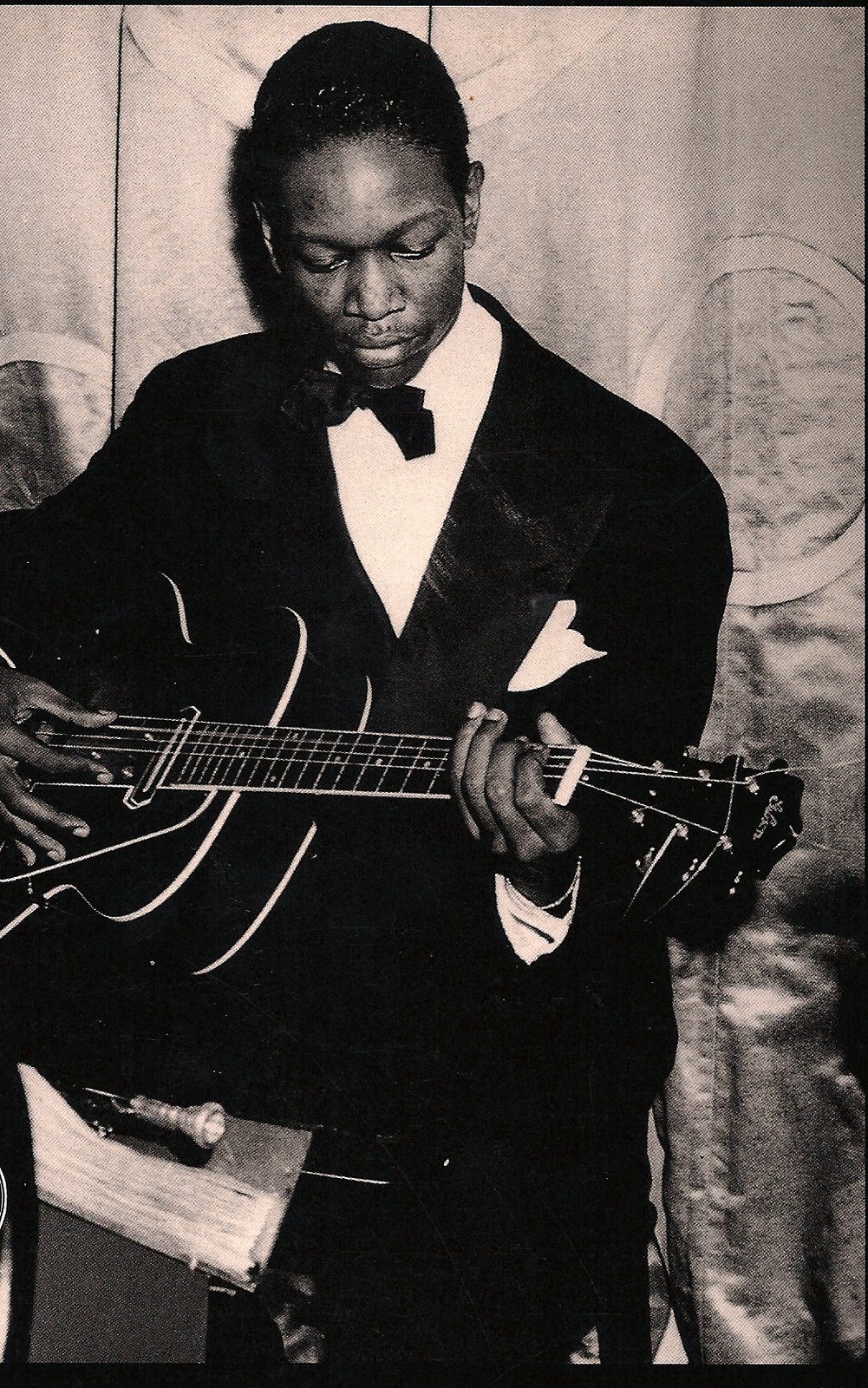
 Why can’t the mayor’s office understand that every creative movement in New York City of the 20th Century, from jazz to abstract expressionism to punk rock started in bars and after hours joints. We need such places. Nowadays, the city loves to harass and bust bars and clubs–for noise tickets, sending in undercover cops to try and bust a place for serving minors (God forbid a twenty year old has a beer), no smoking laws, etc. Fuckin’ idiot politicians…sorry, I’m way off the track already. The subject I’m trying to get to being one of my very favorite records– Charlie Christian Live At Minton’s, which captures the great jazz guitarist Charlie Christian in late night jams where he gets a chance to stretch out in a way he never could in any of the configurations of Benny Goodman’s bands that he played with.
If you’re not familiar with the name, Charlie Christian was one of the very first electric guitar players, he came out of Oklahoma, discovered by John Hammond who brought him to the attention of Benny Goodman who hired him, bringing him to fame at a young age.
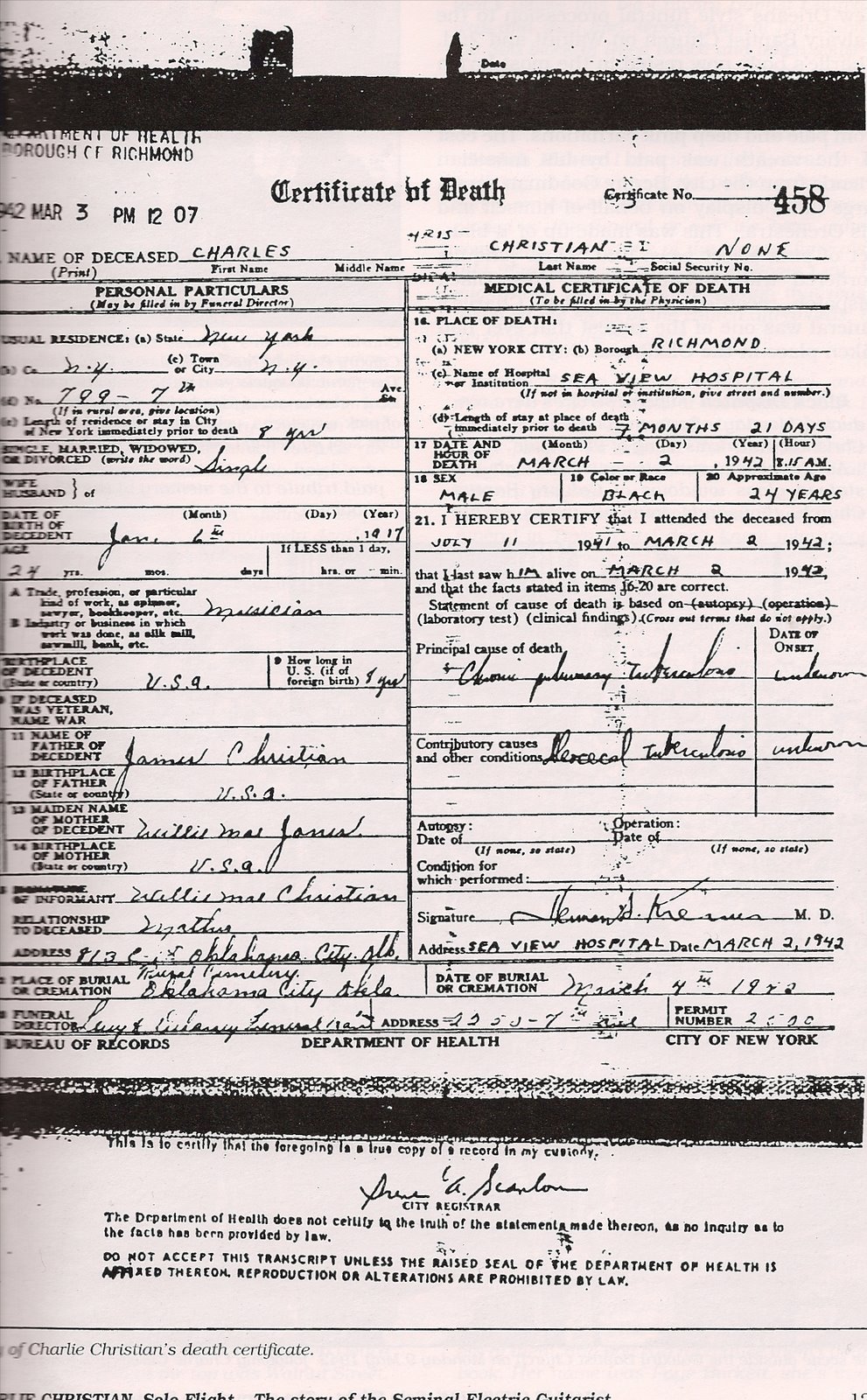
I know he was an excellent musician, but I’ve never liked Benny Goodman’s playing. There’s something about his tone that sounds to me like he’s trying to squeeze a dime between his ass cheeks. Sadly, Christian contracted tuberculosis and died at age 24 (March 2, 1942) so most of his short recording career was spent with Benny Goodman playing in his big and small bands.
It was these Goodman groups that the majority of Christian’s legitimate recordings are recorded with.
Mintons was an afterhours club at 220 W. 118th Street in Harlem where musicians came to jam with the house band which was Kenny Clarke on drums, Nick Fenton on bass, Thelonious Monk on piano and Joe Guy on trumpet. If a crummy player got onstage they’d play at ridiculously fast tempos or in difficult keys to clear the air, this left more time for the best players of the era to work out their ideas in public. Charlie Christian played there so often he kept an extra amp at the place. Over a few nights in early May of 1941 a guy named Joe Newman brought a recording machine in and recorded Charlie Christian in these late night jam sessions.
They were recorded direct to acetate and these discs ended up with John Hammond whose wife sold them in 1974, five tracks would appeared on the bootleg album Charlie Christian At Minton’s. Later a sixth track (Down On Teddy’s Hill) surfaced and was issued on CD with the five existing tunes.
Sixty eight years later, these recordings sound totally modern. He hear the ideas that would later surface in be bop in their musical infancy, but don’t let that scare you, this is jazz that’s fun to listen to.
I love the way Christian, given the space to stretch out (which he never had with Goodman) uses repetition of short phrases at the beginning of his solos to build the tension before letting loose on the longer passages. I love the vibe of these recordings, the way his guitar cuts through the late night din, you almost feel like you’re there at Mintons at 5 AM, you can almost hear the cigarette smoke.
Listen to Swing To Bop, Christian’s most extended recorded workout, Goodman never let him explore like he does here, it might just be the peak of his short career. Or his swinging Stompin’ At The Savoy. The other tracks– Up On Teddy’s Hill, Guy’s Got To Go, and Lip Flips
show us a side of Christian that was only hinted at in most of his recordings with Goodman.
I love everything about this album, it never grows old.
As far as his other recordings go, they’re all worth hearing, like Bird and very few others, every note Charlie Christian ever played is worth a listen. On the Goodman studio sides his solos are usually limited to four bars, which is quite frustrating, but a few fragments survive where he can be heard stretching out, of these non-commercial recordings my favorite is this short impromptu jam– Blues In B which was played for the radio engineer so he could get his mike levels straight. Here Christian plays his ass off, not having to worry about incurring Goodman’s “withering glare”. I also include his blazing solo recorded with Goodman’s big band, at the Hollywood Bowl on this version of Flying Home, Christian drives the whole band. Another great moment is this live aircheck of Solo Flight (Chonk Charlie Chonk), another example of just how advanced the man was.
At one point, in ’41 Goodman decided he would give up his big band and form a group with Count Basie, using Basie’s rhythm section– Joe Jones (drums), Walter Page (bass) and Freddie Green (rhythm guitar), along with Lester Young on tenor sax and Buck Clayton on trumpet. A great idea, especially if Goodman fired himself! The group lasted one rehearsal, part of which was taped. Here are two examples– Lester’s Dream and Charlie’s Dream from said rehearsal. It’s almost as if Goodman does his best (or worst) to keep Christian and Young from exchanging ideas, even cutting off Christian’s solo in Charlie’s Dream just as he gets warmed up. Despite Goodman’s inexplicable inability to let this band this band really swing. we hear two of the greatest soloists in jazz history backed by one of the greatest rhythm sections of all time.
Would have, should have, could have, it’s the story of life….
We’ll never know how far Charlie Christian would have gone musically, but these late night recordings are his best, and for my money among the most essential jazz recordings ever made.
They were never issued legitimately, and to this day remain available only as a bootleg. Had he lived, lord knows what Charlie Christian would have sounded like in the ensuing decades, but I’d bet he would have been using distortion and feedback by the fifties. The Mintons tapes show him already using sustain and the amplifier’s harmonic and sonic overtones, something it took other jazz guitar players years to come around to.
It’s a rainy Sunday afternoon, a perfect day to lay around and listen to the same record over and over again, and I can’t think of a better jazz record for such a purpose than Charlie Christian Live At Minton’s. It’s a like having a table in a smoky club at be-bop’s inception anytime you feel like it. I guess this is my deluxe version, with those last four cuts thrown in. My present to you readers who don’t already have a copy.
Benny Goodman fans, please hold the hate mail. I tried to like him, but compared to Charlie Christian he sounds constipated. Just my opinion, which are like assholes….
Uncategorized
Eddie Kirkland

It’s one of those non-reversible rules of life that says, not everyone who wears a turban is a great rhythm & blues singer, but every rhythm & blues singer who wears a turban is great. Eddie Kirkland, sometimes known as Eddie Kirk is a great blues singer, guitarist and harp player and he wears a turban with sartorial splendor.
Not only that, he’s made some incredible records for the likes of King, Volt, Fortune, Modern/R.P.M., Tru-Sound and LuPine. He was shot in the head. He rocked like a crazy man. Now I shall tell you his story.
Eddie Kirkland was born in Kingston, Jamaica in 1923 and raised in Dothan, Alabama. He learned to play guitar and harmonica. In 1935 he ran away from home, jumping on a truck that carried the Silas Green Show as a stowaway:
“Back then I had a little act, I put the harmonica inside my mouth and beat the “hambone” at the same time”, this way he got his first job in showbiz, at $20 a week (“that was big money back then, five shows a day”). He joined the Army during World War II and was given a dishonorable discharge for smacking an officer. He headed for Detroit where his mother had settled and got a job working at the Ford plant and began sniffing around for ways to make it in music. He also trained as a boxer around this period, and influenced greatly by Lightnin’ Hopkins developed his own guitar style. He mostly played local bars and house parties, sometimes with Eddie Burns, and it was on the house party circuit that he first encountered John Lee Hooker. Kirkland was one of the few guitarists who could second Hooker’s unique style. Since Hooker kept to no regular meter he would drive other musicians nuts and made most of his recordings solo. Kirkland however was able to lock into to Hooker’s unusual sense of timing, and as heard on these early discs for Modern we hear Kirkland’s finger picking anticipate Hooker’s every move. Key To The Highway and It Hurts Me So (the latter with a cheesy horror movie organ chord dubbed onto the master tape) were recorded in Detroit in ’52. The same session produced two sides with Eddie singing and Hooker in support– It’s Time For Lovin’ To Be Done and That’s All Right which saw release on Modern’s RPM subsidiary under the name Little Eddie Kirkland. He toured the south with Hooker, and played up and down Detroit’s Hasting Street.
In 1953 Eddie Kirkland cut some excellent blues sides for King– No Shoes, Please Don’t Think I’m Nosey, Mistreated Woman and It’s Time For My Lovin’ To Be Done, at this point he had developed his own unique and exciting style, sounding like no one else. No Shoes is particularly excellent, here’s an alternate take.
Eddie’s next release wasn’t until 1959 when he recorded this monstrous version of I Must’ve Done Something Wrong b/w I Need You Baby for Jack and Devora Brown’s Fortune Records, one of the coolest labels of all time. Elmore James would record the tune for Fire in New York the following year but Kirkland claims to have written it. You might remember the Yardbirds version from their first LP. Eddie Kirkland’s original version didn’t sell and today could you trade a mint copy for a decent car. It is one of the rawest, nastiest sounding records ever recorded. He also appeared on an Andre Williams Fortune disc but can’t remember which one, only that it wasn’t Bacon Fat.
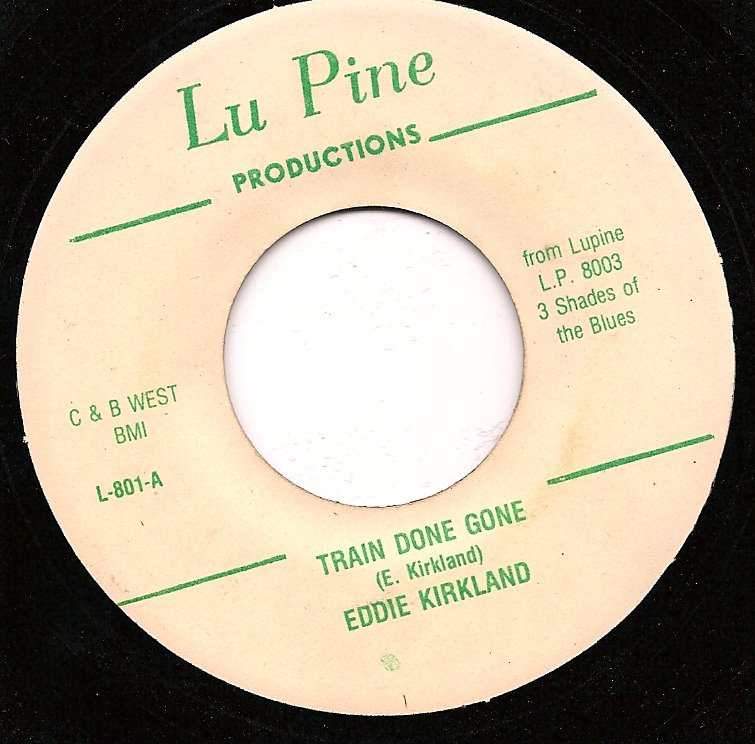
A year later, sometime in 1960, Eddie recorded the first of two versions of Train Done Gone this one for the tiny Detroit based LuPine label. Other un-issued sides for LuPine later showed up on the Relic LP Three Shades Of The Blues.
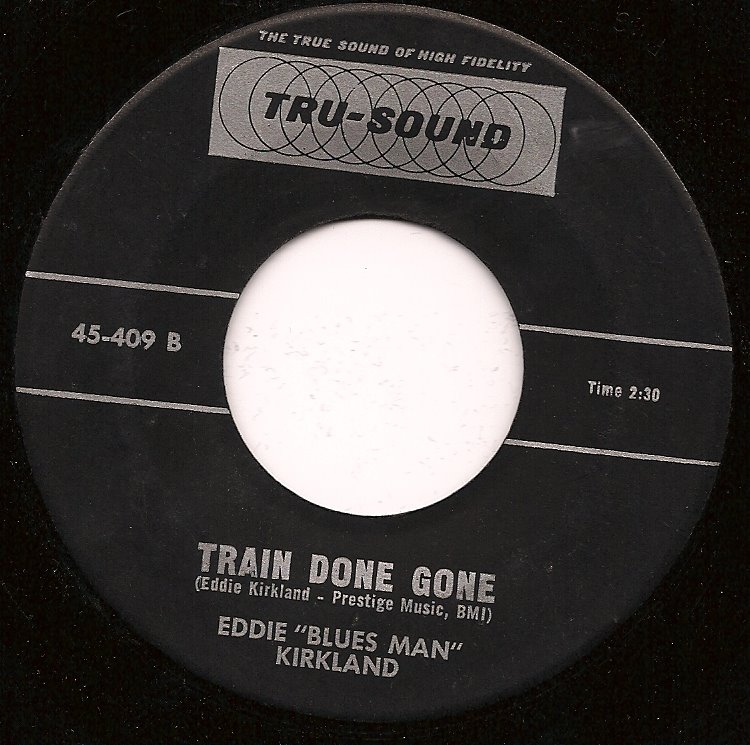
In 1961, he re-recorded Train Done Gone for Tru-Sound in New York City with a band that featured King Curtis on sax. It’s even wilder than the LuPine version. An entire LP of material was cut for Tru-Sound and it’s worth hunting down (it was re-issued by Red Lightning in the 80’s), it’s a killer, as much rock’n’roll as blues, it’s one of the best albums ever made.
In 1964, his name shortened to Eddie Kirk (“Eddie Kirk is my Georgia name”) he was back at King where he recorded It’s Monkey Time and Hawg Killin’ Time with a group that featured Wayne Cochran, the Gorgeous George of R&B on bass. I’ve never heard It’s Monkey Time but Hawg Killin’ Time was so great he’d cut it three times.
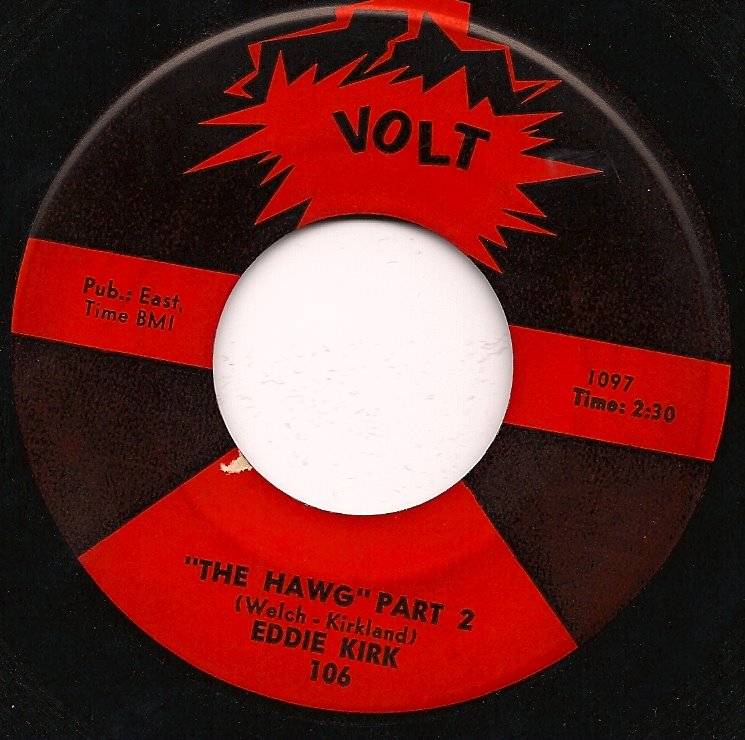
A year later (1965), Kirkland took the tune to Memphis where he cut it as The Hawg Part One b/w The Hawg Part Two on Volt (why was b-side was left off the Stax-Volt box set?). Here Kirkland is playing harmonica and Steve Cropper, Duck Dunn and Al Jackson Jr. from Booker T. & the MG’s are backing him up. A second Volt single– Them Bones b/w I Found A Brand New Love, cut at the same session was issued the same year.
Three years passed without Eddie seeing the inside of a studio, he had relocated to Macon, Georgia where he was managed by Phil Walden (Otis Redding’s manager, later to hit paydirt with the Allman Brothers). He spent most of the years 1965-68 backing soul stars like Otis Redding, Mabel John and Joe Tex.
In 1968 he was back in Detroit and recording again for Fortune, waxing his third version of the same tune, this time retitled The Grunt. His daughters can be heard in the backround. It’s hard to say which version is best, but they’re all great as you can well hear. The third time was not the charm, unfortunately, as for the third time the Hawg/Grunt sunk without a trace, and like all of Eddie Kirkland’s best sides it is quite rare today.
In 1970 Kirkland made his last truly great recordings with an LP on the Trix label. This time he recorded in Macon, Georgia. He wouldn’t release another record until 1979’s Disco Mary on the Fantastic label, the title telling you why you don’t want to hear it. He’s cut other records since then but none of them are quite as raw as his 50’s and 60’s sides. He spent twelve years in the New York area where he performed regularly before moving down to Florida. I never saw him put on a bad or lackluster show. and while the quality of his recordings took a dip after 1970, Kirkland was and is still a great and excitable live performer. He took to billing himself as “The Swami of the Blues”, and sometimes as “The Road Warrior of the Blues”. He somehow got himself shot in the head. Eddie Kirkland, who with one lucky break could have been a huge star was reduced to making a living as an auto mechanic. He appeared in Dan Rose’s flick Wayne County Ramblin’ (with an all star cast that includes Iggy Pop, Nathaniel Mayer, and Bill Pietsch, you can see the trailer below). As of late Eddie Kirkland has had plenty of health problems as any 86 year old who took a bullet in his head would. He toured regularly until the last couple of years, appearing all over the U.S. and Europe, but he seems to have slowed down quite a bit in the last few years but he’s still alive, and that in itself is no small achievement. Besides, let’s face it 99% of all so called “blues” musicians, black or white, are bores, and that’s one thing Eddie Kirkland never has been. Wild, crude, repetitive, but not for once second boring.
In 1970 Kirkland made his last truly great recordings with an LP on the Trix label. This time he recorded in Macon, Georgia. He wouldn’t release another record until 1979’s Disco Mary on the Fantastic label, the title telling you why you don’t want to hear it. He’s cut other records since then but none of them are quite as raw as his 50’s and 60’s sides. He spent twelve years in the New York area where he performed regularly before moving down to Florida. I never saw him put on a bad or lackluster show. and while the quality of his recordings took a dip after 1970, Kirkland was and is still a great and excitable live performer. He took to billing himself as “The Swami of the Blues”, and sometimes as “The Road Warrior of the Blues”. He somehow got himself shot in the head. Eddie Kirkland, who with one lucky break could have been a huge star was reduced to making a living as an auto mechanic. He appeared in Dan Rose’s flick Wayne County Ramblin’ (with an all star cast that includes Iggy Pop, Nathaniel Mayer, and Bill Pietsch, you can see the trailer below). As of late Eddie Kirkland has had plenty of health problems as any 86 year old who took a bullet in his head would. He toured regularly until the last couple of years, appearing all over the U.S. and Europe, but he seems to have slowed down quite a bit in the last few years but he’s still alive, and that in itself is no small achievement. Besides, let’s face it 99% of all so called “blues” musicians, black or white, are bores, and that’s one thing Eddie Kirkland never has been. Wild, crude, repetitive, but not for once second boring.
Gillian’s Found Photo #10

Here’s a happy little sepia toned honey. By the looks of her boots (and the way she holds her cigarette) she may be the mother of the girls in GFP #5. I don’t know what kind of uniform that is she’s wearing but it ain’t the Campfire Girls. Year and place are unknown (anyone want to guess?), and just why is she smiling?
Jack Nitzsche

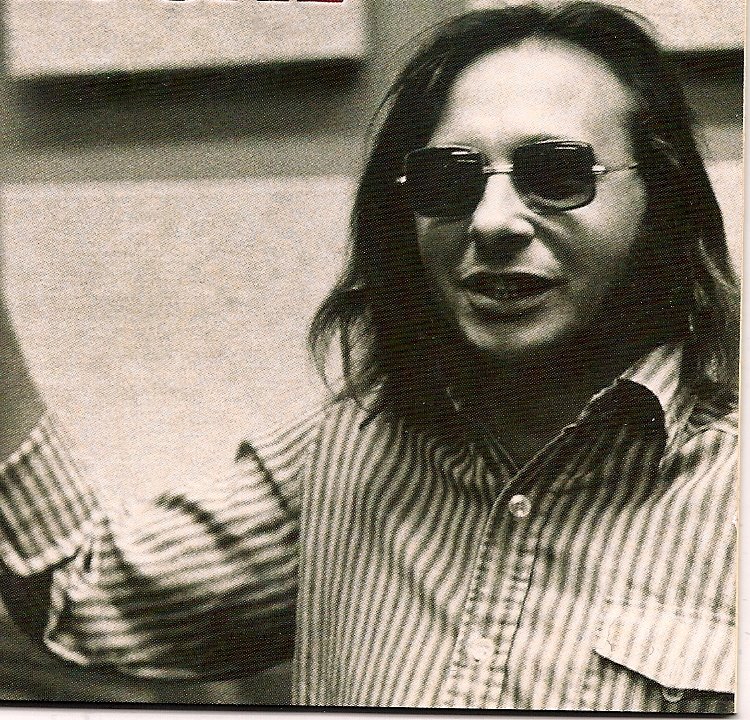
You’d be hard pressed to find a more varied and interesting career in music than the one lived by Jack Nitzsche (1937-2000), or one that left more great music. People throw the word genius around as though it means something, but virtually everyone who ever got within ten yards of Jack Nitzsche uses that word, so I thought I’d get it out of the way. If there’s such a thing as a musical genius in rock’n’roll or pop, then he was one. Or as close as you can get without knowing advanced calculus.
Maybe you never heard of him. He’s best known in rock’n’roll as the arranger on all of Phil Spector’s hits, the job that first brought him to music biz prominence, or as the composer of soundtrack music (The Exorcist, One Flew Over The Cuckoo’s Nest, Officer and a Gentleman, Performance, Blue Collar, Hot Spot, a complete filmography can be found here), or for playing on the first four Rolling Stones albums and producing Buffalo Springfield’s Expecting To Fly and Neil Young’s debut LP, but he made all kinds of records, for all kinds of people, as a producer and arranger and to each record he adds something unique.
As unlikely as this sounds has contributed to great records by the Monkees, Miles Davis, P.J Proby, Doris Day, the Flamin’ Goovies, Ral Donner, Don & the Goodtimes, Mink DeVille, Randy Newman, Mick Jagger, Sonny Bono, Glen Cambell, Sonny & Cher, Lou Christie, Ry Cooder, Captain Beefheart, the Rolling Stones (including the horn arrangement on Have You Seen Your Mother Baby Standing In The Shadows), Soupy Sales, Ringo Starr, Them, Neil Young and Crazy Horse, Young Jessie, Steve Wonder, Ronnie Spector with and without the Ronnettes, the Germs (!), and enough obscurities to drive a record collector nuts. A full discography can be found here. With this in mind, it’s amazing how little has been written about Jack Nitzsche. I can’t remember reading one major magazine piece on him except one in Crawdaddy back in ’73 (here), extremely odd since his life story would make a great book.
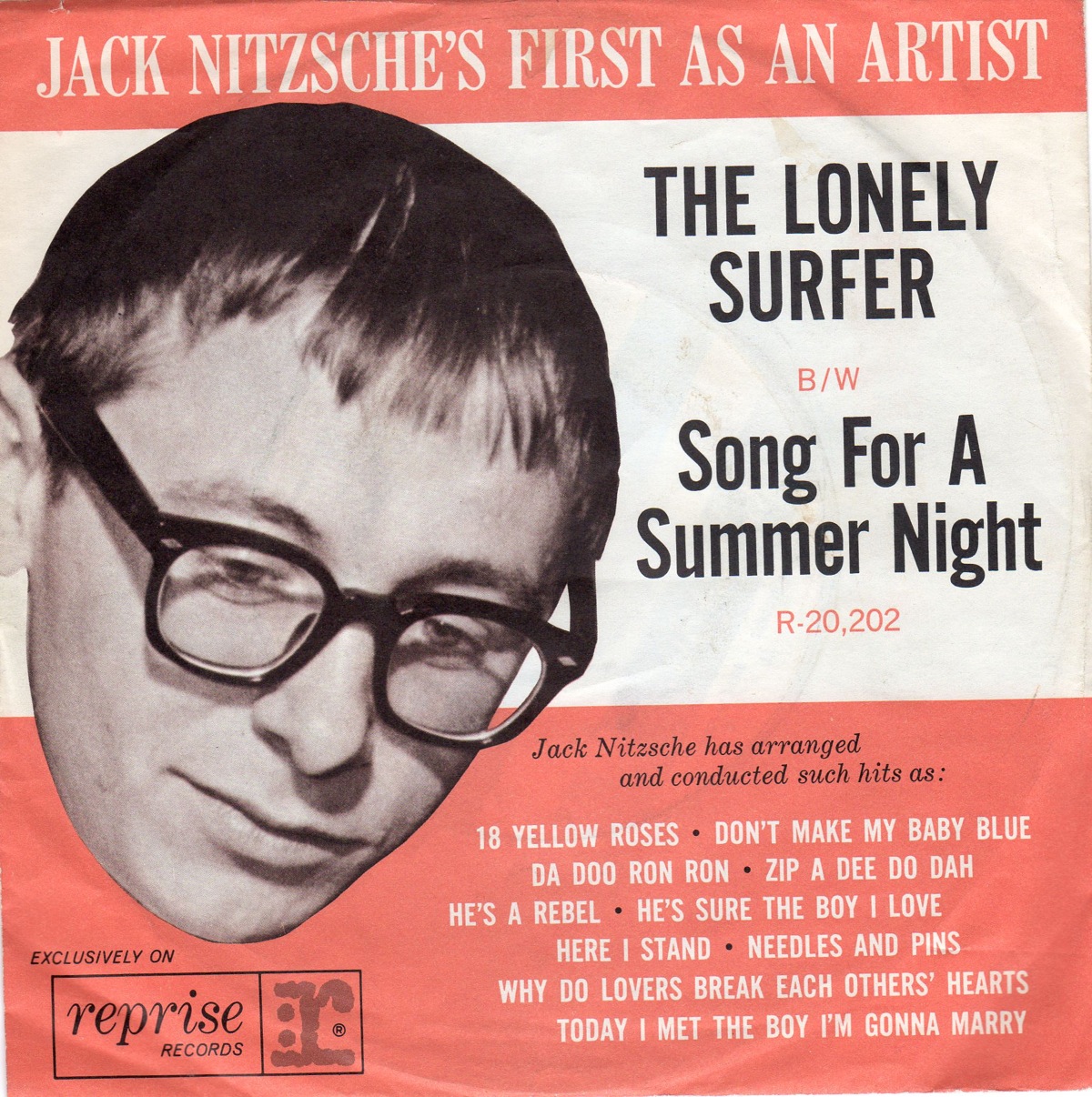
Ace (the U.K. re-issue label) has recently released two CD compilations of Nitzsche productions and/or arrangements: The Jack Nitzsche Story: Hearing Is Believing, you can find Vol. 1 (1962-1979) here and Vol. 2 here if you don’t want to pay for them. The scope alone of these two 26 song sets is a bit mind boggling. Surf, pop, girl groups, soul, R&B and rock’n’roll, he could handle it all. Represented are his early solo 45’s like Lonely Surfer and his TV theme music style arrangement of Link Wray’s Rumble, Marianne Faithful’s stunning Sister Morphine, Buffy St. Marie’s chilling version of Neil Young’s Helpless, the Everly Brothers’ version Young’s Mr. Soul, P.J. Proby’s You Make Me Feel Like Someone, Porpoise Song from the Monkees’ psychedelic explotation flick Head, soundtrack excerpts from Blue Collar, including the Captain Beefheart/Ry Cooder classic Hard Workin’ Man and the closing theme from One Flew Over The Cuckoo’s Nest), Miles Davis blowing over John Lee Hooker and Taj Mahal’s bluesy guitar jam from the Dennis Hopper’s movie Hot Spot, along with lots of obscurities like the previously un-issued Surf Finger, and Round Robin’s Kick That Little Foot Sally Ann. There’s even some hits here, best of all to my ears being Jackie DeShannon’s original Needles & Pins (which the Pretenders used as the blue print for their arrangement of the Kinks’ Stop Your Sobbin’, listen to the way Jackie DeShannon sings “Stop it! Stop it” as the tune fades).
Nitzche’s longest and most successful collaboration over the years was with Neil Young and Crazy Horse. It started when Young was still with the Buffalo Springfield and Nitzsche arranged Expecting To Fly, he would go on to produce most of Young’s debut LP as well as Crazy Horse’s first album without Young (a very underrated album), he later worked on Harvest and Time Fades Away. In 1970 he toured with Neil Young and Crazy Horse, playing piano, a live recording at the Filmore West has made the rounds for years but I think this tape from the Cincinnati Music Hall is better. In fact, one of the best sources on Jack Nitzsche is Jimmy McDonough’s Neil Young bio Shakey (Random House 2002), a somewhat frustrating read since Nitszsche is a much more interesting subject than Neil Young.
Another decidedly oddball Jack Nitzsche project was 1973’s St. Giles Cripplegate (Reprise), a neo-classical piece said to be a favorite of jazz arranger Gil Evans. It’s kind of like a film soundtrack to what ever movie you want to program in your own head.
I met him once in New Orleans where he was involved in recording C.C. Addcock, a south Louisiana guitar player, then playing in Warren Storm’s Little Band Of Gold. We were introduced through Taylor Hackford (ain’t I the name dropper?) and although we only talked for about a half hour, it was obvious this was a guy with a very deep knowledge of music, he seemed to know something about every cool record ever made from Slim Harpo to Link Wray. I’d heard nothing but horror stories about the guy but he was funny and very nice and nothing like I expected him to be. Then again, Chuck Berry was nice when I met him, too.
The two things that stand out in my mind was that he went ballistic at the mention of Mick Jagger. It was later explained to me that Mick had fucked Buffy St. Marie many years earlier, since she was the love of Nitzsche’s life, the subject was still a raw scab.
I was glad I wasn’t the one who brought up Jagger’s name.
Of course, there’s the stories. Anyone who spent any time around Nitzsche had a wild story (at least one). I can’t confirm any of them. There was a headline making assault charge made by actress Carrie Snodgrass (she claimed he raped her with a gun), the charge was later dropped, even her common law husband Neil Young didn’t believe her.
Jack was a dope fiend. That’s the only one I can confirm, don’t ask how, I won’t tell you.
Besides for a man of means, expensive drug habits aren’t really a problem.
Well, it’s not like Nitzsche’s career went unheralded, he worked constantly, made a ton of money, even won an Oscar. As a way of ending this thing here’s some of my favorite Jack Nitzsche music, from the soundtrack of Performance— first comes Buffy St. Marie’s eerie, wordless wail on The Hashishin and some of Ry Cooder’s best guitar work can be heard here on Powis Square and Get Away . The Merry Clayton Singers’ are credited on Turner’s Murder and the other tunes here are credited to Nitzsche himself– Natural Magic, Harry Flowers, Dyed Dead and Read, Rolls Royce and Acid and the final theme Performance. It’s one of my favorite movies and one of my favorite soundtracks (and if you get a chance, try and see director Donald Camel’s other masterpiece– White Of The Eye. Once David Keith, who starred along with Cathy Moriarty, came in my bar and I tried to talk to him about the movie, he put down his beer and ran for the door).
Here’s another one I really like, from 1978, these are from the Blue Collar soundtrack. The band is Ry Cooder and Jesse Ed Davis on guitars, Tim Drummond on bass, Jim Keltner on drums and Stan Sileste on piano. Most of the tunes are re-writes of classic blues, but the vibe is beautiful. Not a bad movie either. Here are the credits. Here’s Zeke, Jerry and Smokie, Quittin’ Time, FBI, Coke Machine and the Blue Collar Main Theme and End Title. The Captain Beefheart title tune is posted above.
Someday, someone, somewhere will write the Jack Nitzsche story (sorry, but I’m not the guy for the job) and jaws will hang open, and maybe even some ears will open up too.
And a big thanks to Scott for the pic sleeves….
Of course, there’s the stories. Anyone who spent any time around Nitzsche had a wild story (at least one). I can’t confirm any of them. There was a headline making assault charge made by actress Carrie Snodgrass (she claimed he raped her with a gun), the charge was later dropped, even her common law husband Neil Young didn’t believe her.
Jack was a dope fiend. That’s the only one I can confirm, don’t ask how, I won’t tell you.
Besides for a man of means, expensive drug habits aren’t really a problem.
Well, it’s not like Nitzsche’s career went unheralded, he worked constantly, made a ton of money, even won an Oscar. As a way of ending this thing here’s some of my favorite Jack Nitzsche music, from the soundtrack of Performance— first comes Buffy St. Marie’s eerie, wordless wail on The Hashishin and some of Ry Cooder’s best guitar work can be heard here on Powis Square and Get Away . The Merry Clayton Singers’ are credited on Turner’s Murder and the other tunes here are credited to Nitzsche himself– Natural Magic, Harry Flowers, Dyed Dead and Read, Rolls Royce and Acid and the final theme Performance. It’s one of my favorite movies and one of my favorite soundtracks (and if you get a chance, try and see director Donald Camel’s other masterpiece– White Of The Eye. Once David Keith, who starred along with Cathy Moriarty, came in my bar and I tried to talk to him about the movie, he put down his beer and ran for the door).
Here’s another one I really like, from 1978, these are from the Blue Collar soundtrack. The band is Ry Cooder and Jesse Ed Davis on guitars, Tim Drummond on bass, Jim Keltner on drums and Stan Sileste on piano. Most of the tunes are re-writes of classic blues, but the vibe is beautiful. Not a bad movie either. Here are the credits. Here’s Zeke, Jerry and Smokie, Quittin’ Time, FBI, Coke Machine and the Blue Collar Main Theme and End Title. The Captain Beefheart title tune is posted above.
Someday, someone, somewhere will write the Jack Nitzsche story (sorry, but I’m not the guy for the job) and jaws will hang open, and maybe even some ears will open up too.
And a big thanks to Scott for the pic sleeves….
Slim Harpo
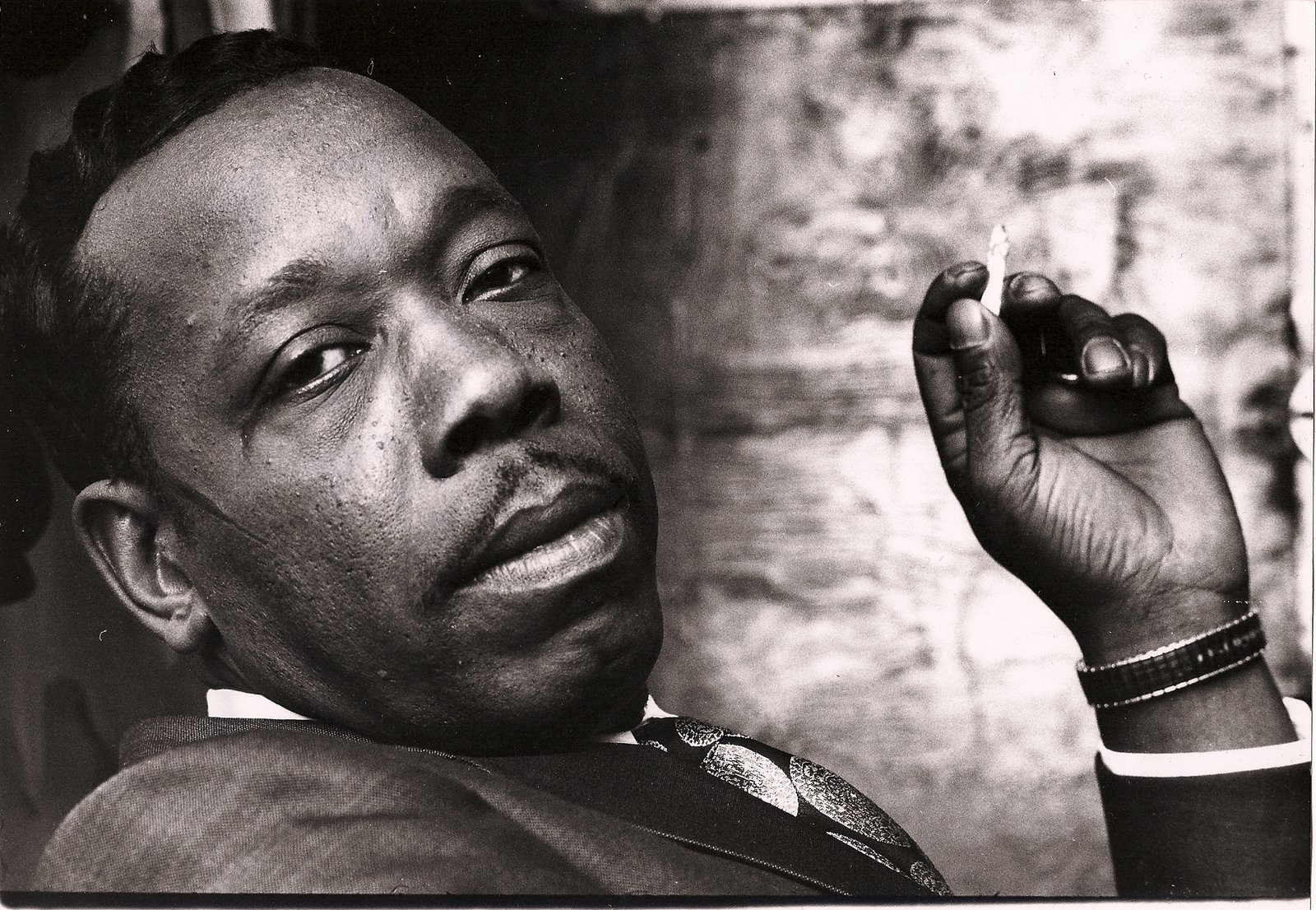
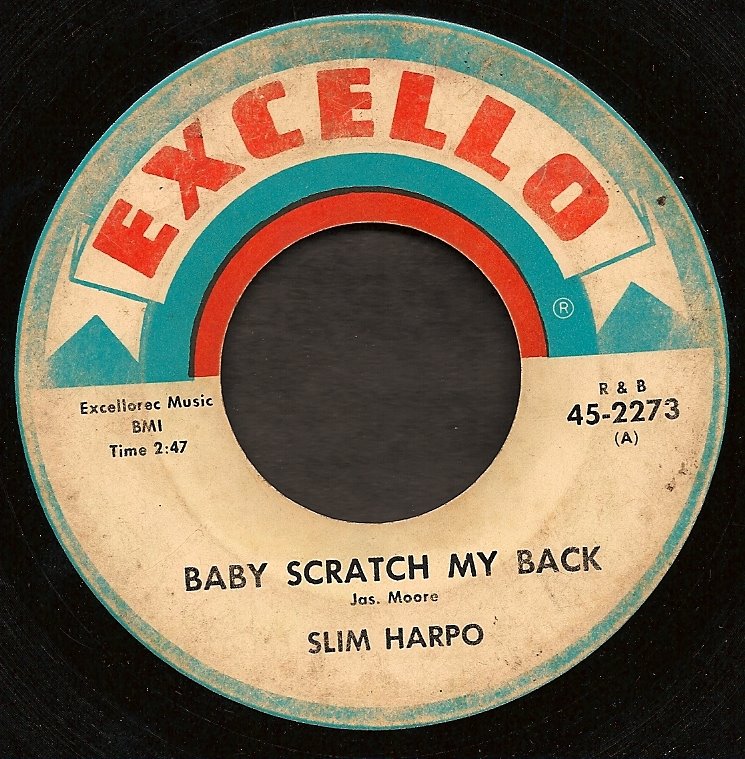
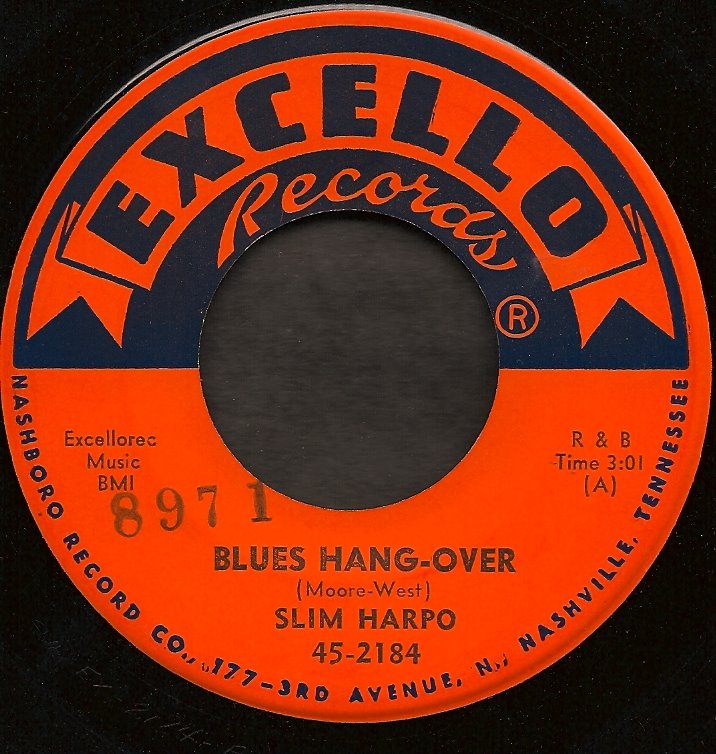
“Why would anyone want to hear us do King Bee when they can hear Slim Harpo’s version”– Mick Jagger.”
Like a lot of Americans of my generation, I discovered the blues via the Rolling Stones.
My grandparents bought me the first Stones album for Christmas in 1964 (I was five), and the first song on side two was a note-for-note cover of Slim Harpo’s I’m A King Bee. It quickly became my favorite song. I thought I was pretty cool with my high rolled collar, polka dot shirt (three buttons on the cuffs), corduroy pants and Beatle boots, walking around singing “I’m a king bee/buzzin’ ’round your hive”. I had no idea what the song meant, but I loved the sound. The way Bill Wyman’s bass just zoomed up and down the neck, Keith’s solo, so simple a cat could have played it, just one note repeated three times on the fourth bar. I had no idea who Slim Harpo was.
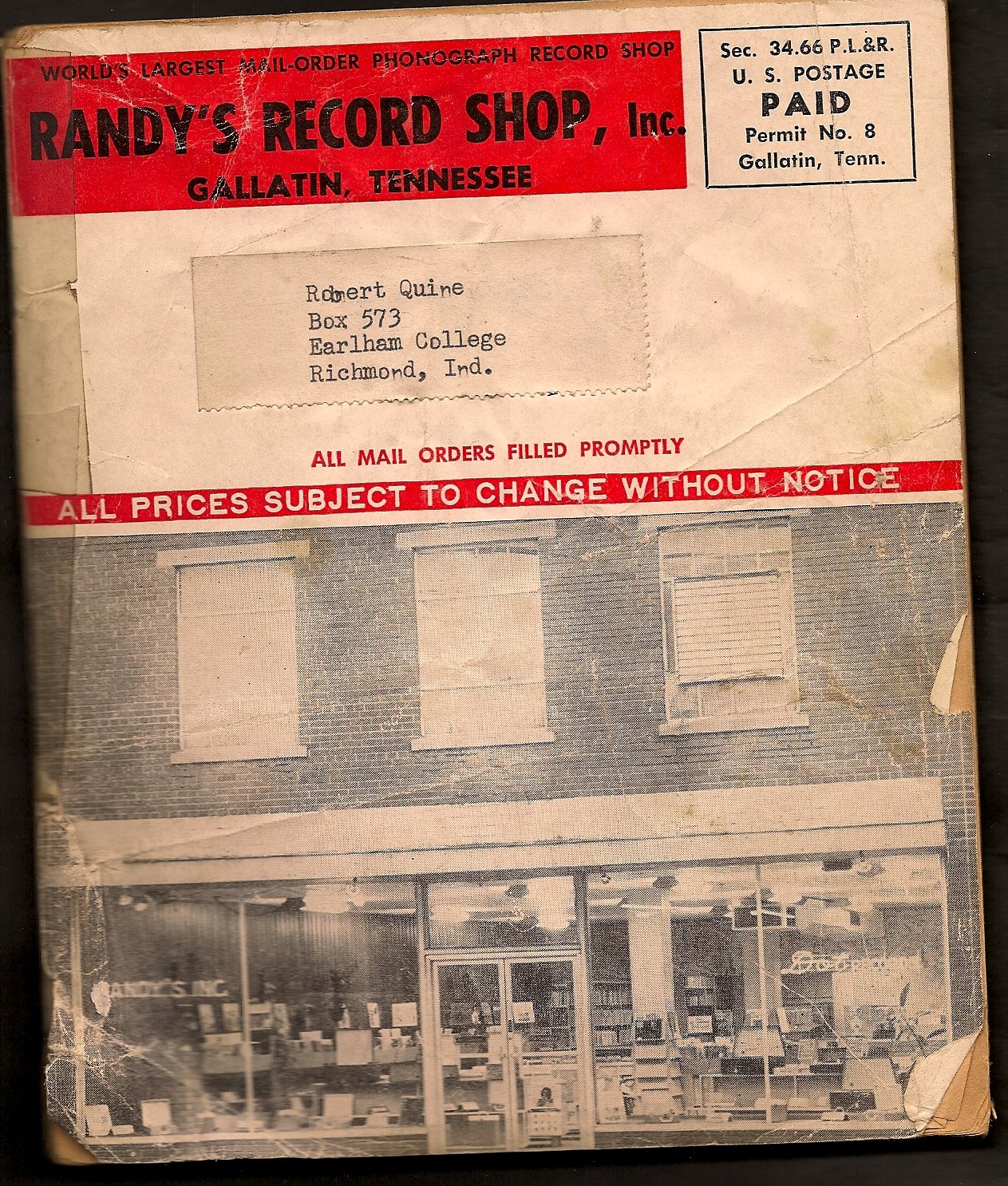
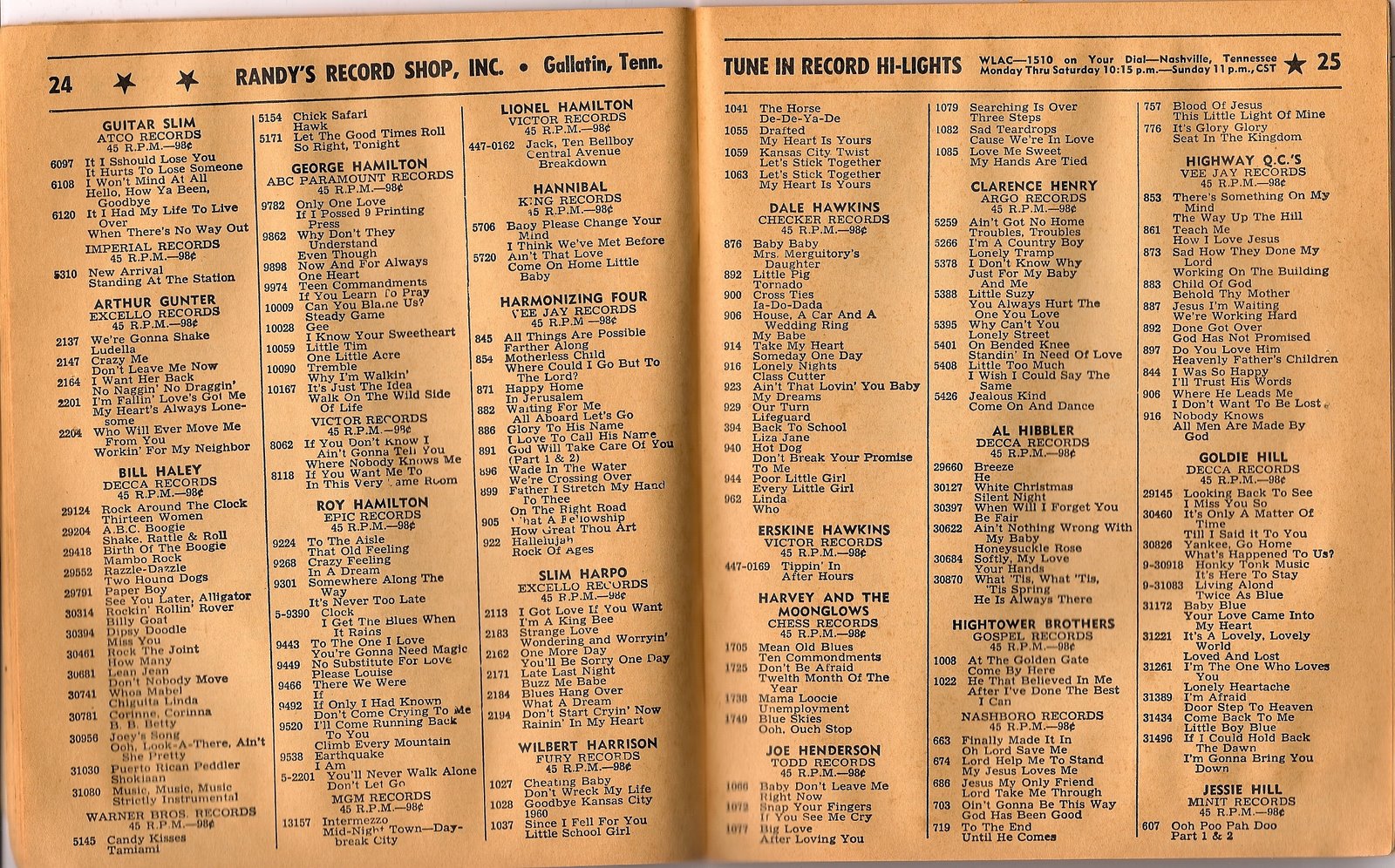
My grandparents also bought me a transistor radio shaped like a Jaguar XKE and I slept with it every night, tuning in the Miami stations for the latest sounds, in this manner I first heard My Generation by the Who, Don’t Bring Me Down by the Pretty Things and Gloria by Them. Spinning the dial I discovered a late night black dj named Butterball on WMBM out of Miami Beach, his theme song was a Bill Doggett instrumental called Boo-Da-Ba and he played the latest Motown and Stax hits along with something much darker and stranger– Jimmy Reed and Elmore James were on his nightly playlist as was Slim Harpo’s Rainin’ In My Heart. Sometimes I could tune in WLAC out of Nashville where Hoss Allen and John R. ruled the night, and they played Slim Harpo as well as other blues discs on Excello with tantalizing names like Lightnin’ Slim, Lonesome Sundown, Lazy Lester, and Silas Hogan. There were nightly advertisements for Ernie’s Record Mart (which owned Excello Records) and Randy’s Record Shop (which owned Dot Records), you could order these records from Ernie’s or Randys and have ’em delivered to your trailer (see Bob Quine’s copy of a 1963 Randy’s catalog above), or you could buy a hundred baby chicks for your own coop (only a dollar) and I can just imagine some poor mail man cursing the place as he humped a hundred baby chicks down the street to somebody’s mailbox. On WLAC Jimmy Reed did a wine commercial, Bo Diddley advertised hair products. So this is how I come to the blues. I got to skip the part where you pick cotton and drink sterno.
In those years– 1964-66 I got heavily into the Rolling Stones, the Yardbirds, Them and the Kinks, whose repertoires were heavy on the Excello sides. In the U.K. the Stateside label had been licensing Excello discs and issued two LP’s– Authentic R&B and The Real R&B, the importance of which cannot be understated. The Kinks alone covered three songs off of the former– Jimmy Anderson’s Naggin’, Lazy Lester’s I’m A Lover Not A Fighter and and Slim Harpo’s Got Love If You Want It. Along with Chess and Vee Jay discs by Chuck Berry, Bo Diddley, Jimmy Reed, Billy Boy Arnold, Howlin’ Wolf and Muddy Waters, these compilations were drawn from heavily to fill out any beat group’s set list. The Stones would return to the Slim Harpo catalog as late as 1972 when they covered Shake Your Hips on their last truly great album– Exile On Main Street. These Stateside LP’s were not seen in the U.S. but their reverberation could be felt coast to coast.
Which brings us back to me. Me and Slim Harpo. Slim Harpo and I. Whatever. Rainin’ In My Heart had been a top 20 R&B hit in 1961 (#34 pop) and was still being played on the radio when I first tuned in around ’64, but in 1966 Slim scored a monster hit–Baby Scratch My Back which went to #1 R&B in January on ’66, (even reaching #16 Pop, a most unlikely event). It was probably the best selling down home blues record of all time and was the first real blues record I ever bought. I was seven years old. Baby Scratch My Back was the crowning jewel in a brilliant career. A career that went something like this:
Slim Harpo was born James Moore in West Baton Rouge, Louisiana on February 11, 1924. His parents died when he was a teen and he took a job in New Orleans on the docks as a stevedore to support his younger brother and three sisters. Eventually he returned to Baton Rouge and found work as a day laborer and soon began playing music as a sideline, billing himself as Harmonica Slim. He was backing up Lightnin’ Slim when first he showed up at Jay Miller’s Crowley, Louisiana studio around 1957. Soon Miller gave Slim his own audition. Miller hated Slim’s voice and suggested he start singing through his nose, giving a rather nasal but pleasing sound. Since there was already a Harmonica Slim working the west coast Miller renamed his new discovery Slim Harpo.
I think this is a good place to work some background on Jay Miller into this story since he is an extremely important part of it. J.D. “Jay” Miller was a Crowley, Louisiana businessman, big in construction and later local politics and real estate who had opened a record store and as a sideline began recording local talent–black, white and Cajun including the likes of Carol Fran, Guitar Gable, Warren Storm, Classie Ballou, Al Ferrier, Johnny Jano, Katie Webster, Rocket Morgan, Clifton Chenier, Charles Sheffield, Tabby Thomas and Lightnin’ Slim and issuing records on his own labels such as Feature, Zynn, Rocko, Ringo, Fais Do Do, and eventually leasing masters to larger labels like Dot, Decca, Jamie and eventually striking up an exclusive deal with the Nashville based Excello/Nasco label giving them the first pick of any of his masters. Together Miller and Excello would strike pay dirt first with with Lightnin’ Slim and later with Slim Harpo, Lazy Lester, Jimmy Anderson, and other blues singers who sounded like Jimmy Reed to varying degrees. Miller built his own studio in the back room behind his little record store and that is where he made his records. Although music would be a side line for most his life, he was an excellent producer, co-writing many of the tunes (under the name J. West), he knew how to take a standard 12 bar blues and turn it into a pop tune. He liked exotic percussion and the use of maracas, wood blocks, etc. are a prominent feature of many of his productions. He also had a knack for coming up classy monikers for his blues singers, the best being Lonesome Sundown. An interesting aside was that Miller, who had recorded so many blues greats also had a label called Rebel that specialized in ultra racist country records by someone named Johnny Rebel. He had a box of these in his store as late as 1982 when I went there.
Jay Miller issued Slim Harpo’s first disc– I’m A King Bee b/w I Got Love If You Want It Babe (Excello 2113) in 1957. It was a good size regional hit and both tunes would become blues standards. The b-side, with it’s rhumba beat would become as popular as the a-side and would become a standard among British R&B groups being recorded by the Kinks and Yardbirds amongst others, although the original has never been matched. I’m A King Bee, is one of the coolest records of all time. The zooming bass sounds like a bee buzzing and the sharp, one note (repeated thrice) guitar solo was the bee’s sting. The Stones didn’t attempt to change even a note. Slim Harpo was backed by Guitar Gable’s band, featuring the great Jockey Etienne on drums.
Between 1957 and 1961 Miller recorded Slim Harpo in six sessions, releasing a handful of fine singles and album tracks including some blazing rockers like Yeah Yeah Baby, Don’t Start Cryin’ Now, Hey Little Lee as well as atmospheric blues pieces like Moody Blues, Snoopin’ Around, the soliloquy on stuperdom Blues Hangover, Buzzin’, One More Day, Strange Love, and brilliant, but un-issued sides like Wild About My Baby and Cigarette which were buried on Flyright compilation albums in the 80’s and are still un-available on CD today, a shame since they’re better than much of the released material.
The genius of these records is their simplicity. In fact they’re so wonderfully understated it’s hard to know what to tell you about them. Then again, you have ears, take a listen.
After Harpo’s initial session with Guitar Gable’s band he was recorded with his own outfit– the King Bees: Rudy Richard and James Johnson on guitars (the later sometimes playing the bass part on guitar), Willie “Tomcat” Parker on sax and Sammy K. Brown on drums, often with Lazy Lester adding additional percussion.
While performing live Slim Harpo played guitar with his harmonica on a rack like Jimmy Reed, but in the studio he rarely played guitar.
It was 1961 when Slim Harpo really hit big with Rainin’ In My Heart (Excello 2194), a swamp pop ballad (Miller and Harpo thought it a country tune) which went to #2 R&B and # 14 Pop. Since Miller was paid a small royalty by Excello, from which he paid Harpo his share, arguments over money ensued. Slim Harpo refused to record for Miller for almost two years, going so far as attempting to jump ship and sign with Imperial (even recording a session for them that went unreleased when Miller’s lawyers stepped in). Despite a good working relationship, bad blood over money would be a constant factor in the partnership between Jay Miller and Slim Harpo.
Excello cashed in on the hit by releasing Slim Harpo’s first LP– Rainin’ In My Heart (Excello 8003), the second blues album I ever owned, it was the staple of southern bargain bins for years.
A finer record would be hard to find, as would an uglier album cover.
It was September of ’63 before Miller and Harpo got back to work on a follow up to Rainin’ In My Heart and much momentum had been lost. His next disc– I Love The Life I’m Livin’ b/w Buzzin’ was a fine record but failed to sell. Luckily, like Miller, music was pretty much a sideline for Slim Harpo who kept his day job, eventually opening his own trucking company.
He did play nearly every weekend, mostly around Louisiana/Texas/Mississippi/Alabama but would go anywhere there was a gig. In 1961 a couple of high school kids recorded Slim Harpo and the King Bees live at the Sage Avenue Armory in Mobile, Alabama, although the tape wasn’t released until 1997 (as Sting It Then on the U.K. Ace label), it’s an invaluable document and one of the few live blues recordings of the era. Despite the crude sound of the P.A. we get to hear what Slim Harpo sounded like in front of an audience– here’s the Star*Time introduction and live versions of I’m A King Bee, I Got Love If You Want It Babe,
Buzzin’ as well as renditions of Lazy Lester’s Sugar Coated Love and Lee Dorsey’s Lottie Mo. You really owe it to yourself to go hunt this one down before it disappears for good, as these things tend to do.
In 1966 Slim Harpo managed to extradite himself from Jay Miller and was signed directly to the Excello label, a move that burned Miller’s ass. He would eventually sue Excello to recover his masters and lose, the deciding judge being the father of country singer and former WFMU DJ Laura Cantrell.
The loss of Miller as a producer saw something of a dip in the quality of Slim Harpo’s recorded output but he still managed to record some great material, including the #1 R&B smash Baby Scratch My Back (whose tremolo guitar riff John Fogerty would build a career on) which was followed up with such dance floor classics as Shake Your Hips (covered by the Stones’ on Exile On Main Street, again, they didn’t change a note, Jagger even calling himself Slim Harpo in the second verse), Te-Ni-Nee-Ni-Nu (don’t you love the way he says “Philly dog! Boogaloo!“? and Tip On In pts 1 and 2, and a beautiful ballad-– I’ve Been Your Good Thing that stands with his best ever.
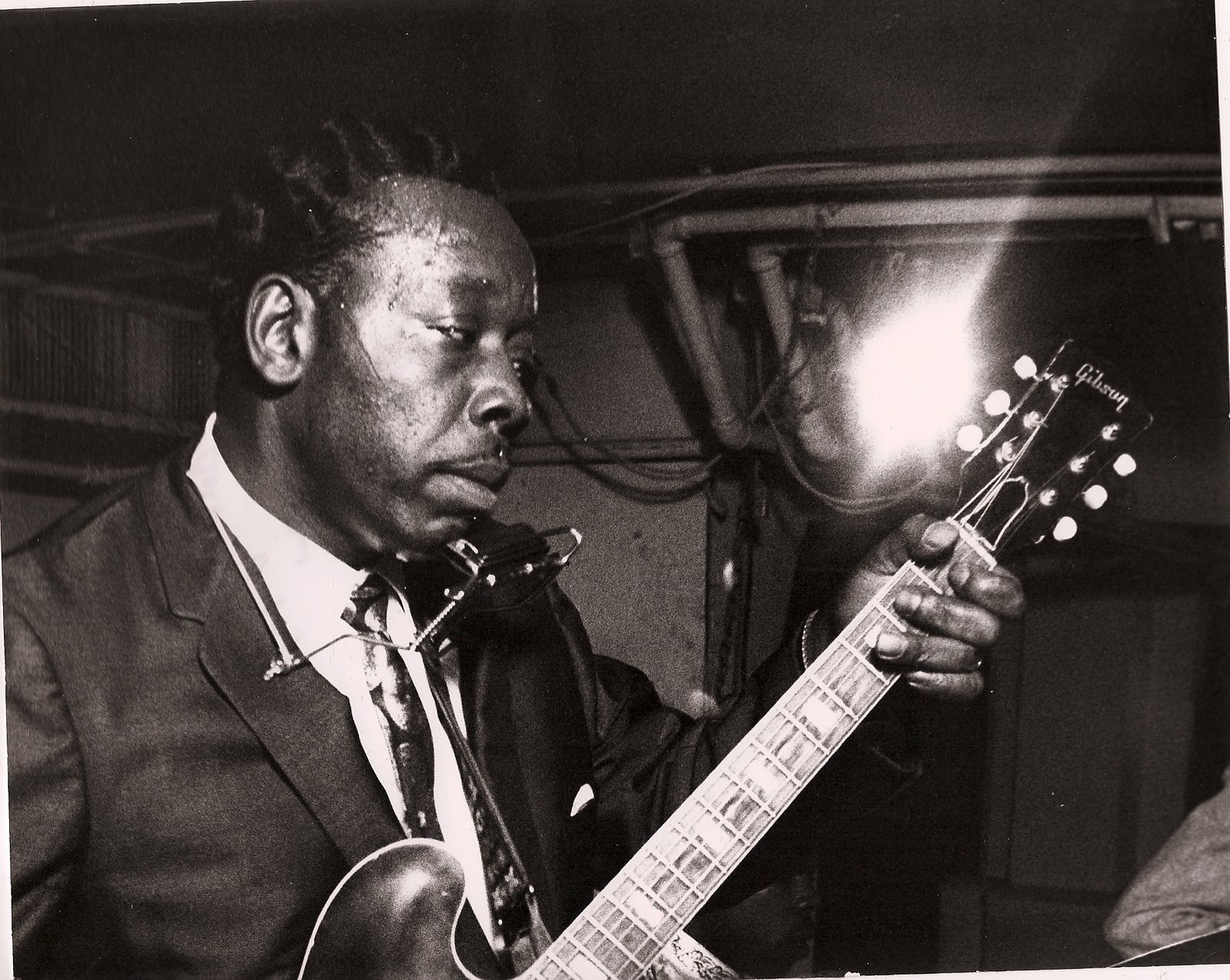
Excello issued three more LP’s and a slew of singles including mediocre covers of Folsom Prison Blues and Mohair Sam. Slim Harpo’s last record was a good one, Jody Man, about a back door man/pimp. Since the chart topping Baby Scratch My Back, he’d appeared at the Whiskey A Go Go in L.A., Steve Paul’s The Scene in New York City (where the above photos were taken by Bob Gruen), he opened the show for James Brown at Madison Square Garden and almost toured the U.K. with Lightin’ Slim. Slim Harpo looked to have a long and profitable career ahead of him. Between hit records, gigs and a profitable trucking business the future looked bright. Sadly, with all these good things happening, he promptly had a heart attack and dropped dead at age 46.
During his life Slim Harpo got little respect from white blues writers. In his pamphlet size book Crowley Louisiana Blues (Blues Unlimited, 1968) Mike Leadbitter, the first writer to call attention to Jay Miller and his artists, called Harpo’s recorded output “mostly dreadful”. It wasn’t until the Flyright label began releasing Jay Miller’s unreleased tapes in the 80’s that a critical evaluation began. Eventually the AVI label in the U.S. and the Ace label in the U.K. began re-releasing Harpo’s back catalog with some care. Still, he (and Jay Miller) have been ignored by the Rock’n’Roll Hall of Fame (I guess they are not as cool as Art Garfunkel or Graham Nash), but let those ignorant fools live their stupid lives and listen to their stupid music. I’ll take Slim Harpo any day.
Sabel Starr 1958-2009
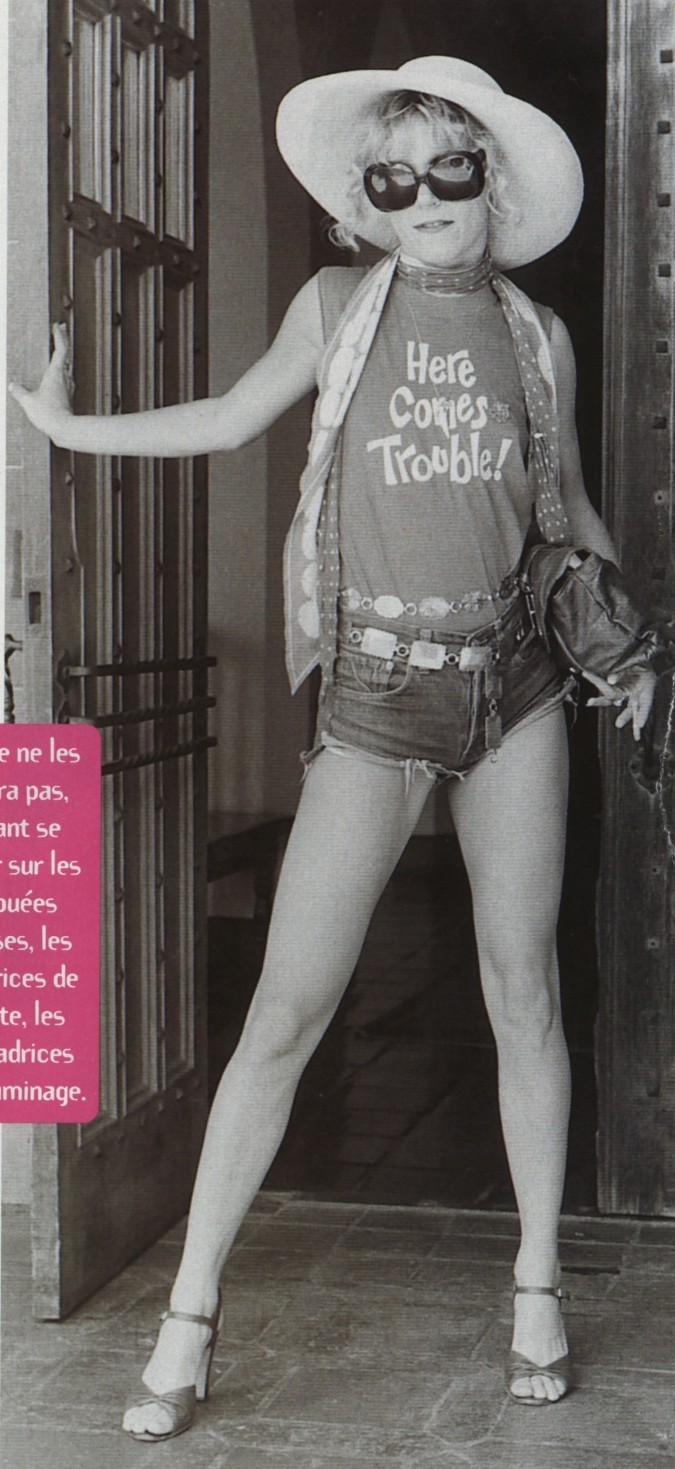
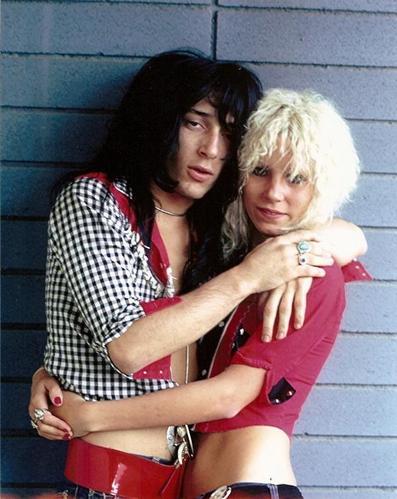
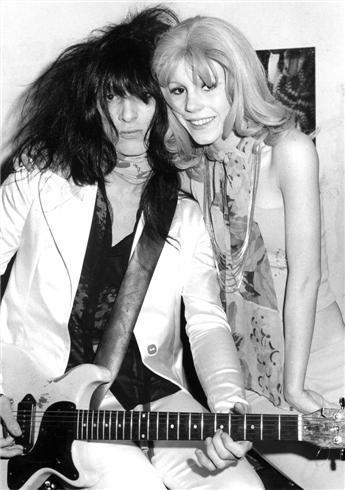
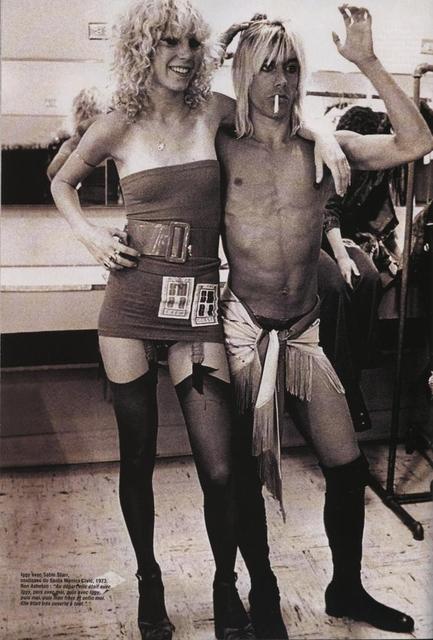
Sabel (sometimes spelled Sable) Starr nee’ Shields died recently of cancer, she had been suffering from several brain tumors over the last year. She was 51 years old.
Sabel, from Palo Verde in the San Fernando Valley outside of L.A. found infamy as an under age groupie in Hollywood in the heyday of the rock’n’roll scene centered around the crowd at Rodney’s English Disco. She appeared on the cover of Star magazine in 1973, and was often seen in the pages of Rock Scene, Creem, Phonograph Record and other magazines of that era. In her own way she was as much of a rock star as any of her celebrated beaus. Sabel was the girlfriend of Johnny Thunders, Ron Asheton and later Richard Hell and was also close friends with the Stooges, Led Zep, and Debbie Harry and Chris Stein of Blondie. I first met Sabel the day I arrived in New York City (May, ’77), she was hanging around with the late Greg Shaw, then manager of the Flamin’ Groovies and editor of Bomp magazine. I never knew her well but she was always nice, funny, and quite beautiful. After moving to New York to be with Johnny, an experience that left her traumatized when she ended up as Johnny’s punching bag, she left the rock’n’roll world for good. Eventually she moved to Reno where she married, had two children and worked as a black jack dealer. The best Sabel stories can be found in Please Kill Me: The Uncensored Oral History Of Punk by Gillian “Fang” McCain and Legs McNeil (Grove Press, 1996). Phillipe Marcade of the Senders saw Sabel as recently as last year and reported that she looked great and was doing well, which makes her death all the sadder.
He sister Coral dated Iggy Pop for several years. Iggy wrote a song about Sabel and Johnny called Look Away which can be found on the LP Naughty Little Doggie (Virgin, 1998).
Gillian’s Found Photo #9
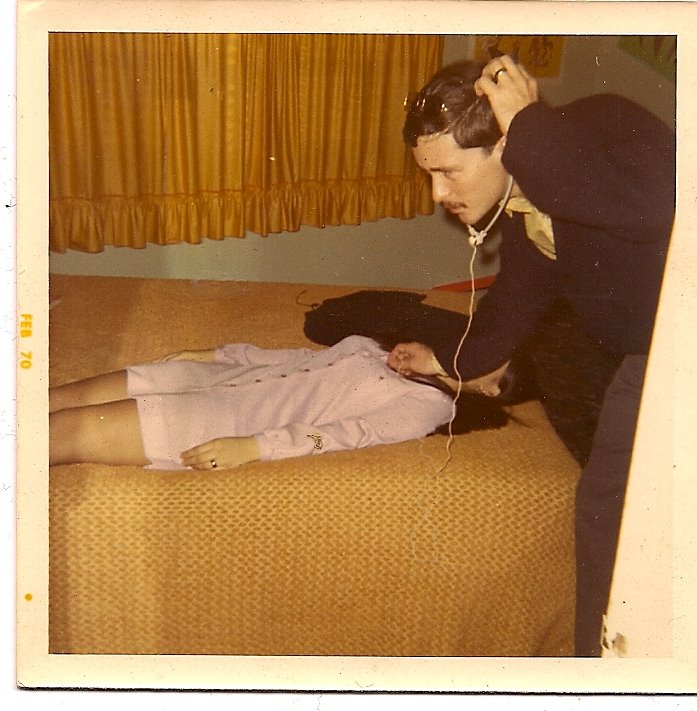 Another week, another ‘what the fuck?’ found photo courtesy of the Fang. This one is from February of 1970. What are we looking at? A cheap hotel room, a young, comatose girl in a mini-dress passed out on a double bed, her black cocktail dress on hanger next to her, and a man with a decidedly satanic vibe attempting to read her heart beat with what might be transistor radio ear phones. Their wedding rings seem to match. He looks like a member of the Process Church Of The Final Judgement. The door is open.
For further background, I remember that Venus by the Shocking Blue was the #1 record for most of that month. With all this in mind can somebody tell me what they think is going on in this photo?
What’s The Word- Thunderbird!

 Me and Quine were standin’ out in front of CBGB’s one night, around 1980, smoking cigarettes, catching a breeze, shootin’ the shit when an old black wino came stumbling out of the Palace Hotel next door. He was dressed in a ragged sharkskin suit, wore a battered, Lester Young style pork pie hat, and he had the mouthpiece of a sax hanging from a cord around his neck. He stuck a dirty, calloused hand out—“Yo, young blood, lemme hold a dollar“. “Yo, professor, lemme hold a dollar“. His eyes were milky red, his lips were cracked. “I used to play with Bird“.
Me- “You played with Bird?” “Yeah, man” he replied. “I played with Bird. I played with Trane too..Bird and Trane….Thunderbird and Night Train! Ahhahahaha“. I gave him a dollar.
This memory was sparked by an entry a few days ago on the Blues For Redboy blog, one of my favorites. Red Boy had posted the Casual-Aires version of (What’s The Word)Thunderbird (Brunswick) along with a record I’ve never heard before, and now want very much– Thunderbird Twist by the Thunderbirds on the Delta label, from here in NYC, year unknown to me. Great record, I hope you agree. And I hope Redboy doesn’t mind my borrowing his copy for my blog (feel free to lift anything from this blog for your page, R.B.). There’s a lot of good versions of Thunderbird, and a lot of good songs called Thunderbird that ain’t the (What’s The Word) Thunderbird tune that sparked the ignition in my brain that led to this blogeration.
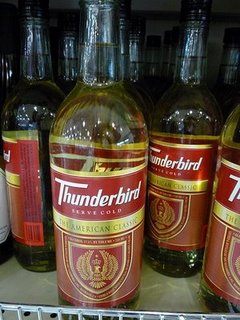
For those who don’t know, Thunderbird is a fortified wine much preferred by degenerates and alcoholics everywhere. I drank a lot of this shit hanging out at the Seminole reservation next to where I grew up in Florida when I was a teen. My liver still hurts from it….well, my liver hurts because I have hepatitis C and cirrhosis, but the memory of Thunderbird, and Night Train (see the October posting All Aboard….The Night Train) and Mad Dog 20/20 bring back memories of
some truly foul hangovers. These wines are created for one reason– fast inebriation, and they have been celebrated in song for just that reason. Shall we proceed to the vinyl?
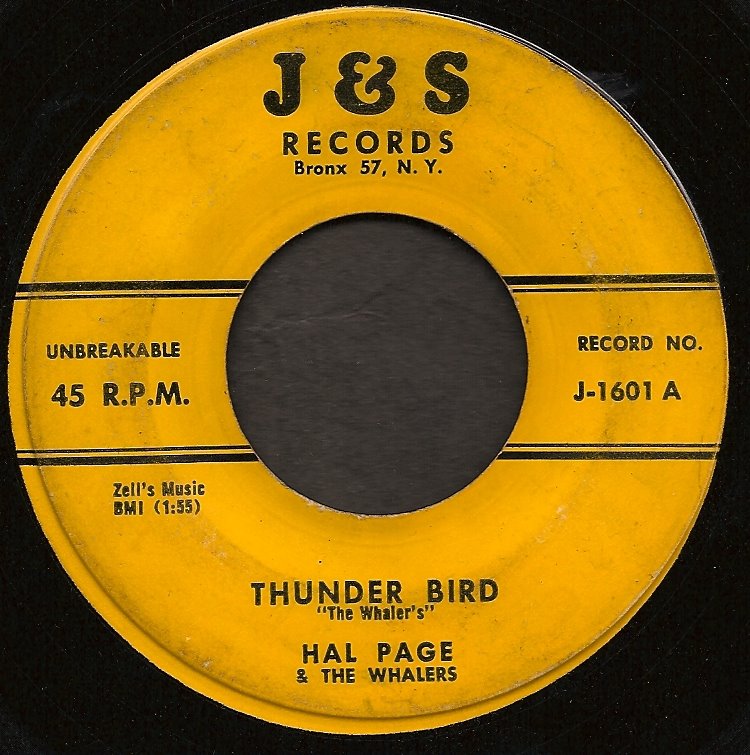
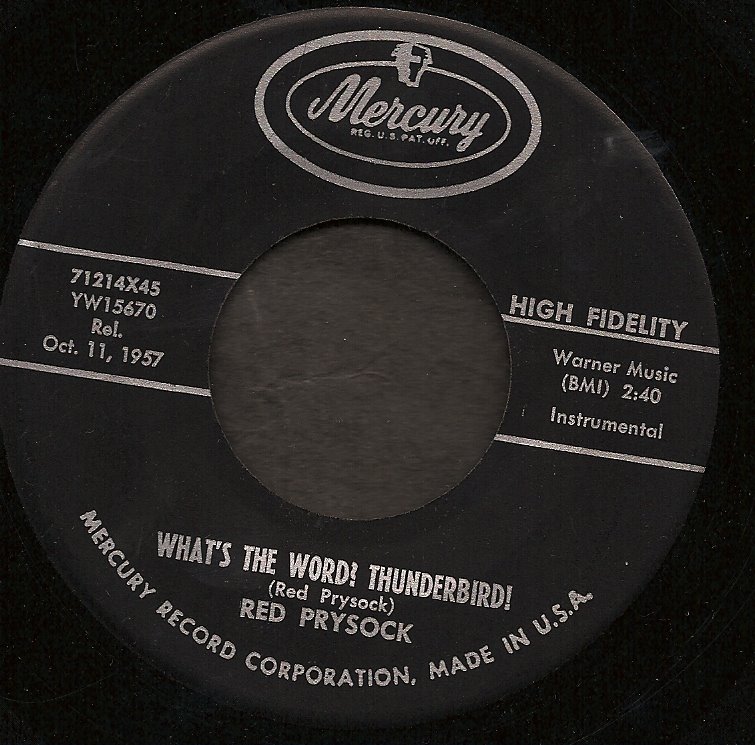
My favorite version of Thunder Bird is by Hal Paige & the Whalers, a fine New York based R&B stomping outfit who recorded excellent sides for Atlantic and Fury as well as this one on the Bronx based J&S label (which originally issued Johnnie & Joe’s Over The Mountain, Across The Sea before Chess picked it up). It’s a raw, crude, fast paced rocker with the classic lines– “what’s the word?/thunderbird, where do you cop?/ beauty shop, what’s the price?/ cut it twice” giving it cross audience appeal (alkies and dope fiends). It was covered on Mercury by tenor sax honkin’ man Red Prysock, retitled What’s The Word? Thunderbird! The label dates it to Oct. 11, 1957.
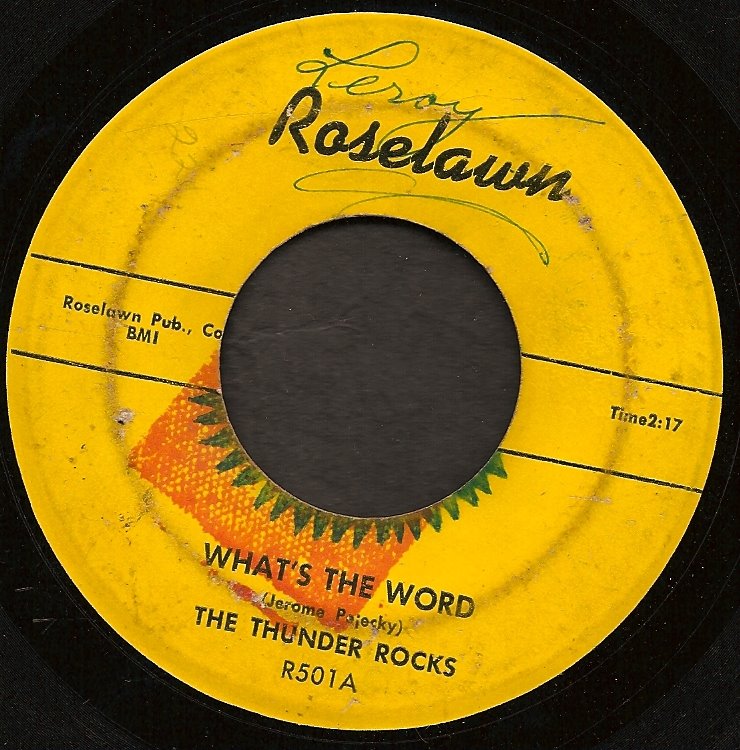
The same tune shows up again, missing the dope references on the Roselawn label by the Thunder Rocks, this time titled What’s The Word in version that is pure guitar rock’n’roll.
West coast guitar great Rene Hall cut a tune called Thunderbird for Specialty that is a completely different song, but still a great record. That’s Plas Johnson on the tenor sax and Earl Palmer beating out the drums. Hall is one of the most under rated guitarists (and arrangers) in rock’n’roll history and is a subject I will get around to writing about one of these days.
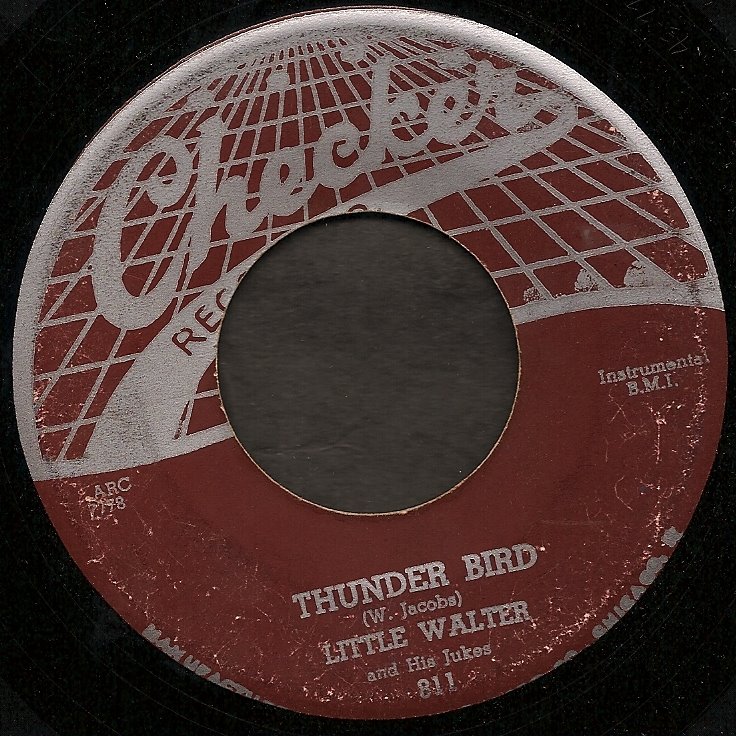
Blues man Little Walter Jacobs knew from shitty wine, it killed him at age 32, and he too used the Thunder Bird title for one of his greatest Checker sides. It was the b-side of his second biggest hit– My Babe, and it’s classic Little Walter all the way with his saxophone like tone soaring over Fred Below’s always propulsive drumming. That’s Robert Jr. Lockwood on lead guitar. It was issued in January of 1955.
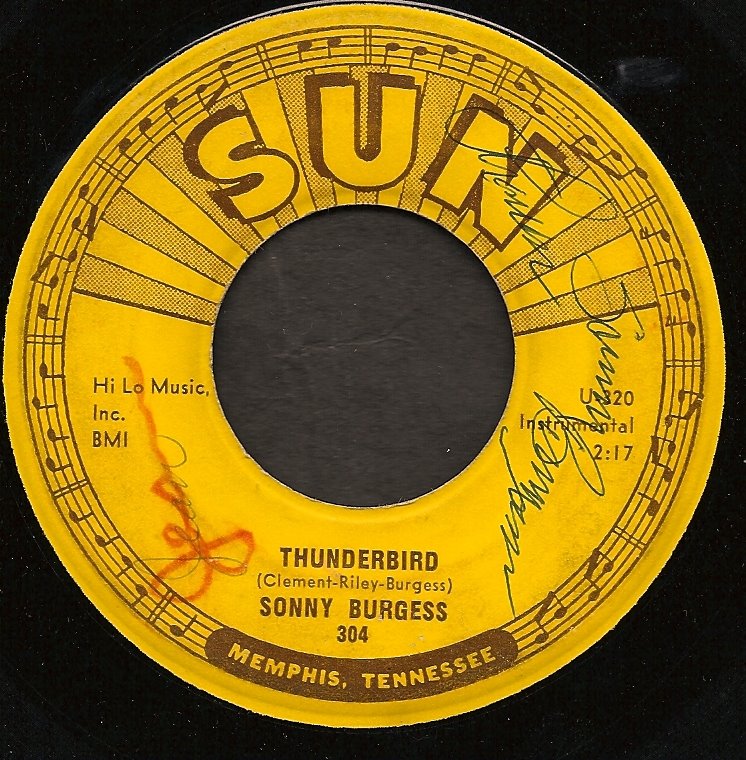
Sonny Burgess, the great Sun rockabilly singer mastered the art of sounding inebriated on such killer discs as Red Headed Woman b/w We Wanna Boogie (Sun 247, 1956), and Ain’t Got A Thing b/w Restless (Sun 253, 1957). Oddly enough, like Elvis he was a teetotaler. Sam Phillips couldn’t get a hit with Burgess’ magnificent voice, so in the wake of the mega smash Raunchy he tried Burgess out as an instrumental artist issuing his tune called Thunderbird backed with the slow groove Itchy (Sun 304, 1958). Much confusion has ensued over the years since virtually every copy pressed had the labels reversed! The fast song is Thunderbird. Itchy is the slow, Link Wray style side. Issued under Burgess’ name, it’s something of an early supergroup with Billy Lee Riley providing the harmonica and Charlie Rich tickling the ivories. James Van Eaton who played on all the Jerry Lee Lewis and Billy Lee Riley Sun sides is on the drums. He was one of the great unsung heroes of Sun Records (dig the way he propels Jerry Lee on his early Sun discs). That’s Sonny’s autograph on the label pictured above, he signed it when he came out to my radio show in the early nineties. Sonny’s a heck of a nice man, and one of the greatest rockers of all, in my opinion.
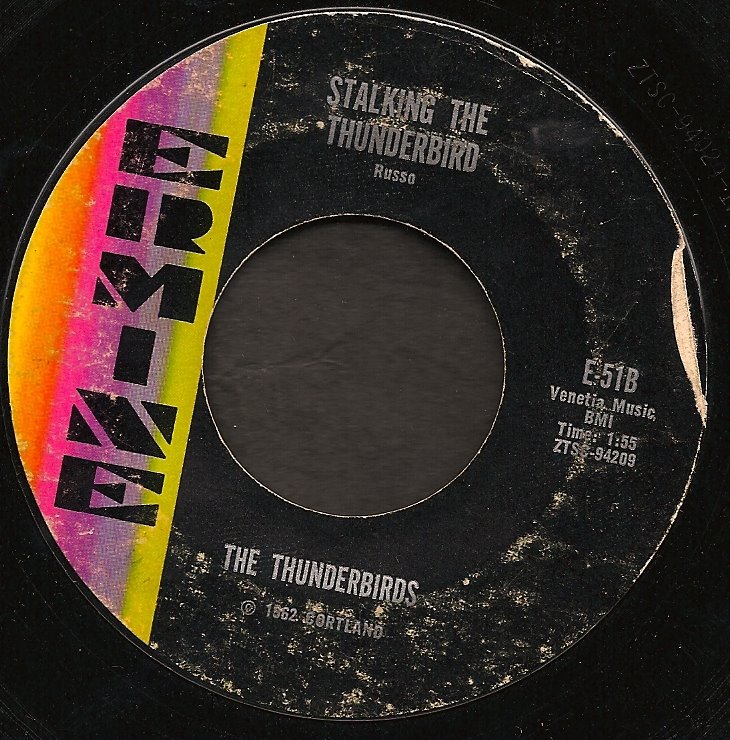
On the Ermine label is a group called the Thunderbirds who are almost certainly not the guys performing the Thunderbird Twist heard above, but this oddball instro-mental– Stalkin’ The Thunderbird was issued in 1962 and that’s about all I can tell you about it.
In this era of economic collapse I’m sure we’re going to see a lot less Cristal and a lot more Thunderbird in the alcoholic intake of musicians, and while it may be vile tasting stuff, it surely inspires better music than fine champagne. This I know is true.
ADDENDUM TO YESTERDAY’S POST: Comedy writer/producer/archivist and all around genius Eddie Gorodetsky sent a version of Thunderbird by Slim Gaillaird from a Dot LP which I’ve never heard before and it’s so incredible I just had to add it.
Check out these lyrics: “What’s the word/Thunderbird/what’s price?/thirty twice/what’s the flavor?/Ask your neighbor/what’s the reaction?/Satisfaction/Who drinks the most?/Us colored folks!” Talk about having a way with words! Thanks Eddie, you’re the best. And thank you Slim Gaillard in heaven-a-roonie.
ADDENDUM TO THE ADDENDUM: Reader KevanA pointed out that I used to play the Nitecaps (of Wine Wine Wine fame) version of Thunderbird on my radio show quite often. That version, which is great, slipped my mind when I was writing the above. It can be found here. Thanks Kev….
The Phil Spector Trial- A few thoughts….
[youtube https://www.youtube.com/watch?v=Ahi4OxvEgsY&hl=en&fs=1%5D
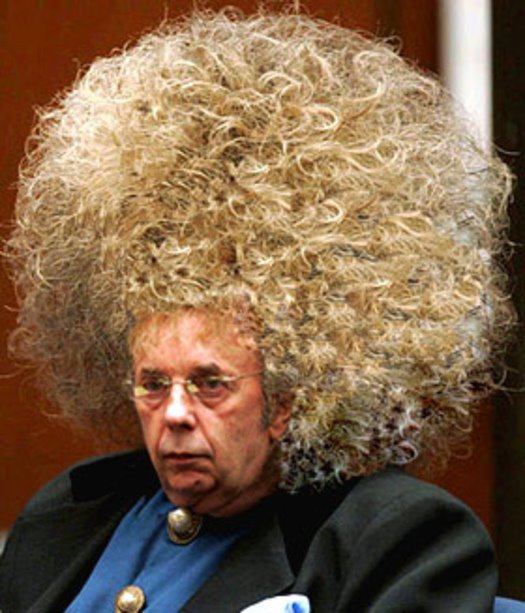
A few thoughts on Phil Spector, currently incarcerated awaiting sentencing for second degree murder charges:
* You Lost That Lovin’ Feelin’ is one of the worst rock’n’roll records ever made.
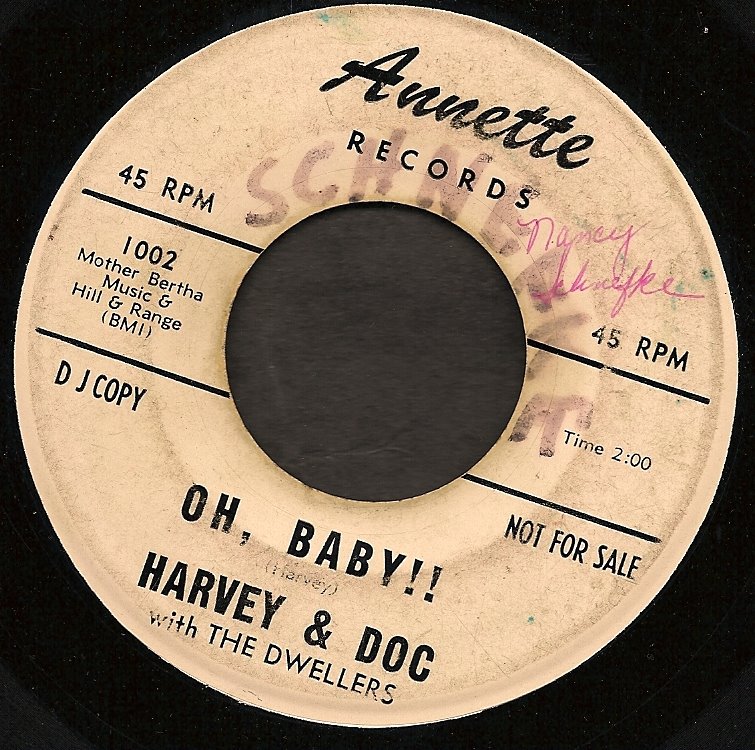
* Spector’s best record is this one– Oh Baby issued on the Annette label under the name of Harvey & Doc with the Dwellers (Doc being Doc Pomus).
* His best group, the Sleepwalkers never recorded. I can’t remember where I read it, but I do remember an interview with Kim Fowley where he recalls their only gig, a band, dressed in 40’s Noir/gangster garb (Phil on lead guitar), takes the stage in trench coats and blows the audience away with a Link Wray/Peter Gunn type spooky rock’n’roll sound. The other members include Steve Douglas and Sandy Nelson, then members of Kip Tyler & the Flips who where occasionally managed by Phil’s soon to be institutionalized sister Shirley.
* Having seen Phil pull a gun on somebody once (at Doc’s funeral), I’m fairly sure he pulled the trigger, although my guess is it was an accident and manslaughter would have been a more fitting charge. No doubt Phil rejected a plea bargain to such charges. I also think Bruce Cutler bought off a juror in the first trial (my opinion, based on no facts, only that Cutler was caught doing it in one of John Gotti’s trials). That said, prison life will not be easy for Phil, I hope he’s under suicide watch 24/7.
* A working girl friend of mine used to trick with Phil, after each meeting she’d come in the bar and quickly down 3-4 shots of tequila and then excuse herself and go to the ladies room and throw up. Her scatological stories were so vile even I don’t feel like repeating them.
* When it’s all said and done, it’s hard not to feel sorry for Phil. I feel even worse for Lana Clarkson (seen here doing her Little Richard impersonation from the Home Shopping Channel) and her family.
Spector’s lawyers attacking her obviously backfired with the jury (who could have found Phil guilty of involuntary manslaughter). They’ll probably get stiffed on their fees, as Phil is broke.
* Nick Tosches began working on a book about Spector several years back (even interviewing Spector’s first wife Annette, who had never given an interview before), but he soon gave the project up. When I asked him about it he just shrugged. The subject just couldn’t hold his interest long enough to write a book about it. Nik Cohn had a similar experience in the early seventies. Come to think of it, I’ve run out of things to say myself….
[youtube https://www.youtube.com/watch?v=vZbQnZGlBh4&hl=en&fs=1%5D
Gillian’s Found Photo #8
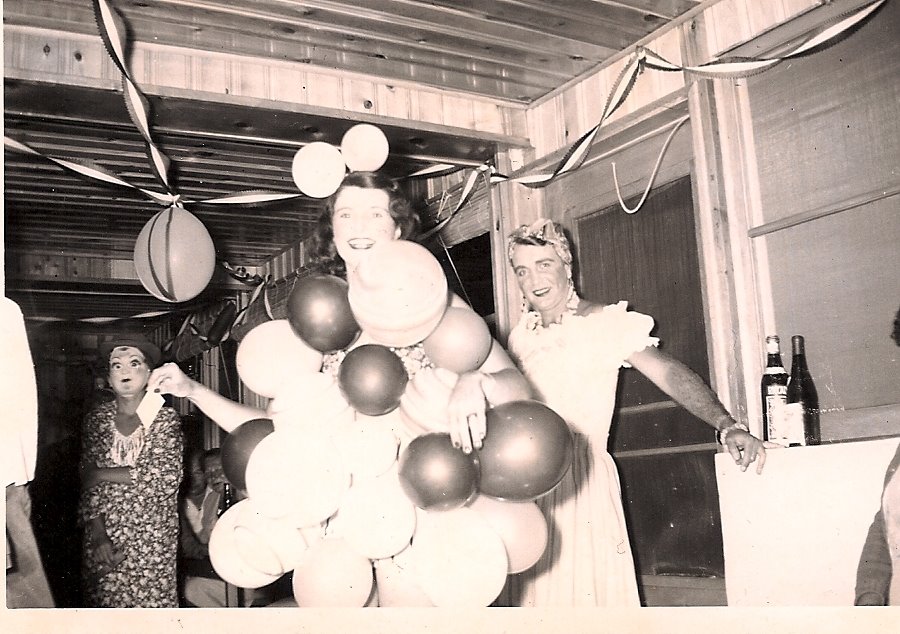 Gee, but this is a fucked up photo, I’m not even sure what to say. The thing on the left, near the rear seems to have wandered in from a Diane Arbus shoot somewhere in the neighborhood, the lady with the balloons, lord only knows, the sad ass queen on the right, probably a bank president. My guess it this was taken in New Orleans, Lundi Gras night (the night before Fat Tuesday when the all the most decedent balls are happening). I can remember coming into my own joint at six a.m. and finding some of the ugliest and most vile human couplings imaginable, right there in the bar, post- AIDS. Of course, this could just as well have be in New York, Wichita, or Gila Bend, Arizona. Anyone wanna guess?