 From the Fang’s vast archives this week’s found photo is an examination of young love. This photo was taken at the Mineola Skating Rink. Mineola is out on Long Island, New York. Long Island scares me, you can’t drive through it, if you want to leave the only way out is to turn around and go back the way you came. Unless you have a boat waiting somewhere. Still, plenty of great rock’n’roll came from Long Island including the Bell Notes (“I’ve Had It”), 3/4th’s of the Velvet Underground, the Young Rascals, Billy Miller of Norton Records (who grew up on the same block as Joe Satriani and Steve Vai!). Technically Queens and Brooklyn are on Long Island, so you can add the Shangri-Las (from Cambria Heights), the Vagrants, the Ramones (both from Forrest Hills), the Excellents (“Coney Island Baby”), the Magnificent 4 (“Uncle Sam”), and the Heartbreakers, not to mention songwriting teams like Goffin & King, Mann & Weil, Burton & Sawyer, etc. I went to a wedding in Mineola once, I remember it as being a mostly Jewish-Italian middle class suburb, looking like most of Long Island– strip malls in every direction, all the women snapping gum, lots of traffic. I’m not sure if the skating rink is still there, nor do I have any idea what became of Russ and his gal, but I love this photo.
Uncategorized
Screamin’ Jay Hawkins
 notice autograph
 pre-I Put A Spell On You
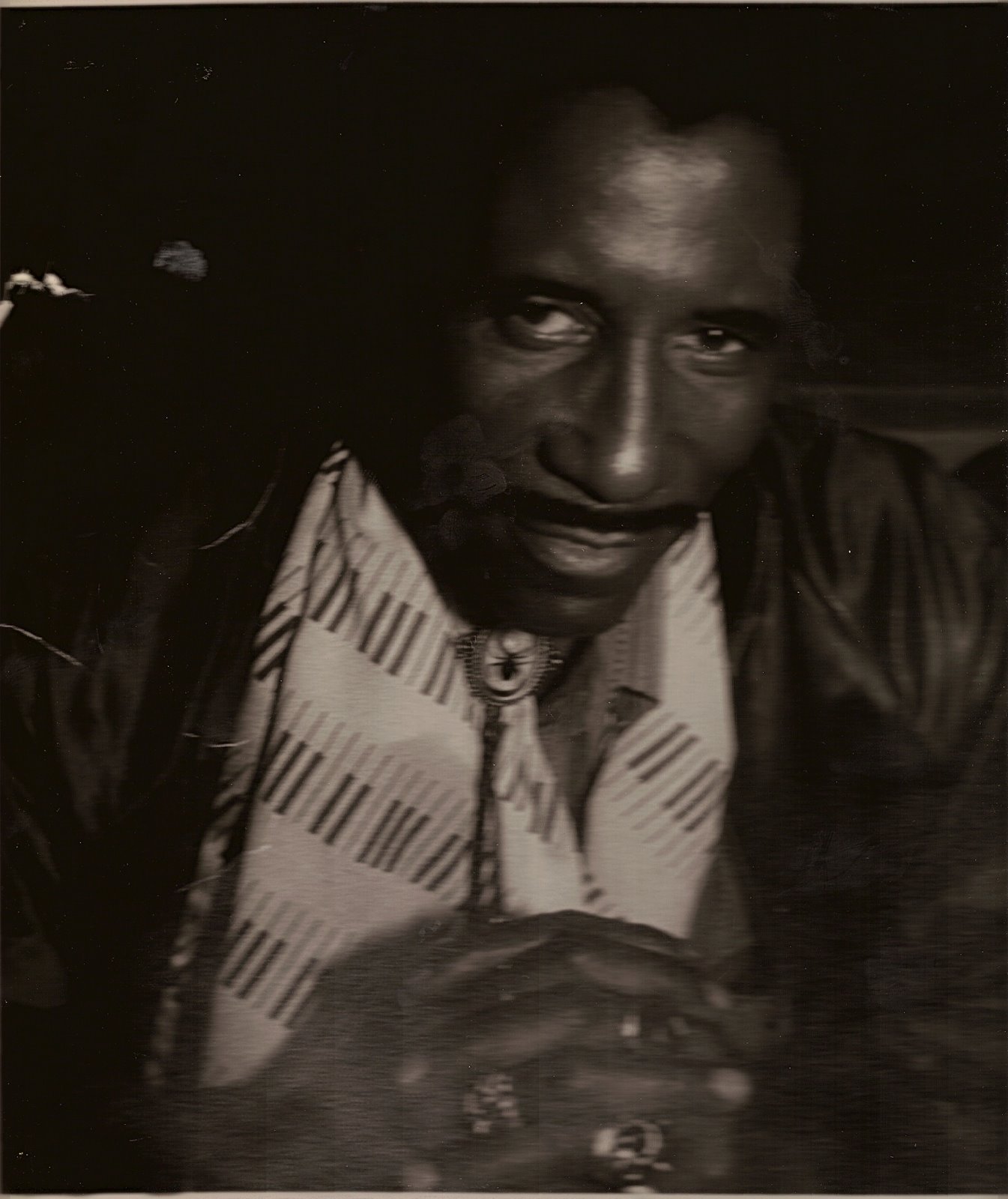 Can’t remember who took this one…..
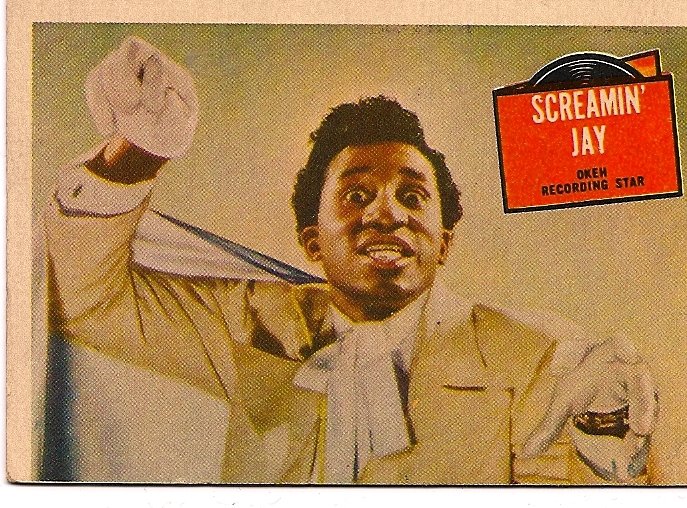 bubblegum card
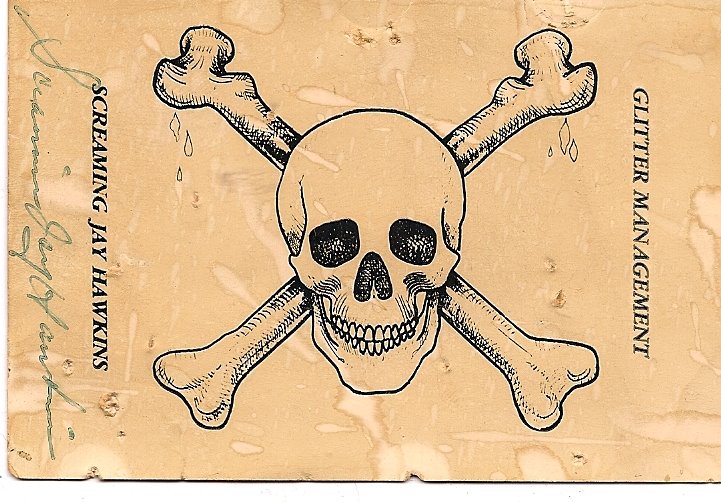 signed business card
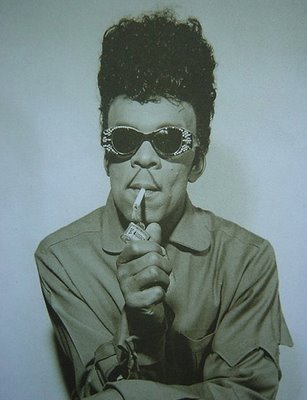 Esquerita Milochi lights up….
It was the only bar on the Bowery I had never had a drink in. It was called Frida’s Disco and it sat on lower 3rd ave in the spot that now stands a club called the Continental. It was a scary looking dive, and in the doorway there was always a drag queen who looked like a thuggish version of one of Wayans brothers (the one who played Homey The Clown on TV) with a head to toe five o’clock shadow and an askew blonde wig. If you got too close to the door the thing that sat in the doorway on a bar stool would call out– “Hey honey, come here and let me suck yo’ cock, it’s just $5”. I would cross the street just to avoid that doorway. Then one day Frida’s was gone, I don’t remember the year but it must have been in the early 80’s, and in it’s place appeared an oddly suburban looking restaurant, a sort of faux- Tony Roma’s type place called Jack The Ribber, all new and clean looking, with a sign in the window that advertised– “Every Wed. Night Live In Person: Screamin’ Jay Hawkins”. I stopped and stared for a few minutes, it was in fact Wed night, and as I pressed my nose to the glass I could see Jay’s greasy conk staring back at me from the other side of the window.
I had met Jay a few months earlier at the old Lone Star Cafe on 5th Ave, and had interviewed him for a rag I was working at called the East Village Eye. Jay waved at me to come in (there wasn’t even a cover charge), and I was surprised he had remembered me. He told me he got the article that I had sent to his manager’s office, and soon he asked me to join him and his Hawaiian wife Ginnie at their table for a drink. So began a weekly ritual that lasted around six months.
Every Wed. night I’d go to Jack The Ribber and hang out with Jay and his wife, catch his set, shoot the shit. Jay could drink me and any five people I knew under the table, drinking large water glasses full of J&B, one after the other, they seemed to have no physical effect on him. Ten glasses later, he would set down at the piano and deliver his set without ever missing a note on the keyboard, or flubbing a line. He would always be remembered for his immortal hit– I Put A Spell On You (then experiencing a bit of a revival since it was on the soundtrack of Jim Jarmusch’s Stranger Than Paradise which had just been released). He always sang it, along with the flip side, the rocker Little Demon. The rest of his set drew from his later records like his incredible rendition of I Love Paris, Bite It— a goofy, x-rated take on the Mar-Keys’ Last Night, an over the top, stomach wrenching masterpiece called Constipation Blues, his version of Fats Domino’s Please Don’t Leave (the arrangement the Fleshtones would soon adopt), my personal favorite– I Hear Voices with it’s almost Shakespearean line– “I long so much to be/the way I was before I was me”, and sometimes tunes from his first Okeh LP– The Feast Of The Mau Mau, Yellow Coat, and Alligator Wine. He’d shake Henry, the top hatted skull on a stick he’d carry with him onstage, pop and roll his eyes, wag his tongue, shake his shoulders, and you could hear his voice clear out to the middle of Third Ave. For the first few months attendance was sparse, and I got to spend a lot of time talking to Jay and his wife. Ginnie had originally eyed me with suspicion, but when I started bringing a joint or two for her she warmed to me and always seemed happy to see me. The autograph on the top of this page “To James– the man with the best” was a reference to the joints I always brought. When I requested he sing one of his pre- Spell sides– Baptize Me In Wine, he dedicated it to me, I think it was the first time anyone had ever done that.
He told me stories about Alan Freed, and his manager Tommy “Corky” Vastola, known as “the Gahloot” (the Hesch character on the Sopranos is a composite of Vastola and Morris Levy, watered down into a harmless little Jewish guy, the real duo were terrors). He talked about Tiny Grimes the four string guitar player who gave him his first break, and about wildman Wynonie Harris, one of his heroes. He’d reminisce about playing in afterhour clubs in Cleveland in the 40’s, working for Moe Dalitz who became one of the most important men in Las Vegas, and of being a professional boxer in Alaska, where he was nearly killed in the ring. He had funny way with a story, and a very subtle, very sick sense of humor, often punctuating his stories by rolling his eyes all the way back in his head.
Around that same time Esquerita Milochi aka S.Q. Reeder Jr. (who began his career playing piano behind gospel singing sissy Brother Joe May “The Thunderbolt Of The Midwest”) had surfaced and was playing a regular Monday night gig seven blocks away at Tramps on 16th St, then a hangout for the Westies, a scary gang of west side Irish thug coke heads, who were also the muscle for some wise guys out in Bensohurst. Once I looked up from my drink to see a little runty lookin’, red eyed leprechaun in a dirty army jacket staring at me, it was Mickey Featherstone and his glazed eyes caused me to break out in a cold sweat. I returned my eyes to my drink. The same club would book Lightnin’ Hopkins, Big Joe Turner (who I saw play there the night he died, he sang Honey Hush twice in row and didn’t realize he’d just sung it), Johnny Shines & Robert Lockwood Jr., and other greats to play for crowds of a couple of dozen people at most. Upstairs in the office was the real action, I met my child hood hero Wayne Kramer of the MC5 there, both of us hovering over a mirror full of white powder.
Anyway, I had become friendly with Esquerita who took to buying dime bags in the old east village storefronts like the Blue Door, and the Rock, the later being right across the street from my apartment. One Wed. night I took Esquerita with me to see Jay play, SQ had told me they were old friends and he was anxious to catch up with Jay for old times sake, but when I walked into Jack The Ribber with him in tow, I knew something was wrong. Jay stared at me with a cross expression on his face, slightly shaking his head. He pulled me aside— “You know that guy”? Yeah, that’s Esquerita, man, he taught Little Richard how to play rock’n’roll! “I know who he is…..” Jay said, making a funny, grumbling noise that emanated from deep in his diaphragm.
“That man will steal the fillings out of your teeth”. Naw, Jay, he’s cool, I insisted. The night ended with the two of them out on the street in front of the club, Jay with a knife, Esquerita with a broken off bottle, blood was spilled, luckily not mine.
Soon the Wed. nights became less fun, Jay never quite trusted my judgment after that, and while he was never rude, I could tell he knew I was a fool (which I admit I am and will always be). The weird rib joint began filling up with trendoids with ironed hair and goofy clothes who thought they would become the next Cramps by osmosis if they could just get some of Screamin’ Jay Hawkins’ mojo in them. The scene just wasn’t fun anymore, although things began picking up for Jay which made me happy. He got a shot opening for the Rolling Stones at Madison Square Garden, and he appeared there, emerging from a coffin, a bone in his nose and Henry on a staff in his hand. In 1989 Jarmusch cast him as a hotel clerk in Mystery Train (which I think is his best movie). Jay stole the show in a scene where he swipes the bellboy’s peach and swallows it in one gulp. Jay was always an under rated comedian, the best poker face since Keaton, and Jarmusch was the only director smart enough to spot his natural acting talents.
Screamin Jay Hawkins would eventually leave New York, first for Hawaii, then to Paris where he lived in tax exile. Jay would tour with the Clash, appear in TV commercials in France, and in the year 2000 he died of an aneurysm, leaving at least 55 illegitimate children. Esquerita would die of pneumonia in a New York hospital in 1986, his immune system destroyed by aids. Mickey Featherstone (who once shot a guy in a 10th Ave bar in the head for not lending him $20) rolled over on his pals in the Westies and went into the Federal Witness Relocation Program. Wayne Kramer lives in Hollywood and still makes music (he’s currently doing the music for the HBO sitcom Eastbound and Down). And I’m still here, the last fool standing.
John Gilmore- Laid Bare
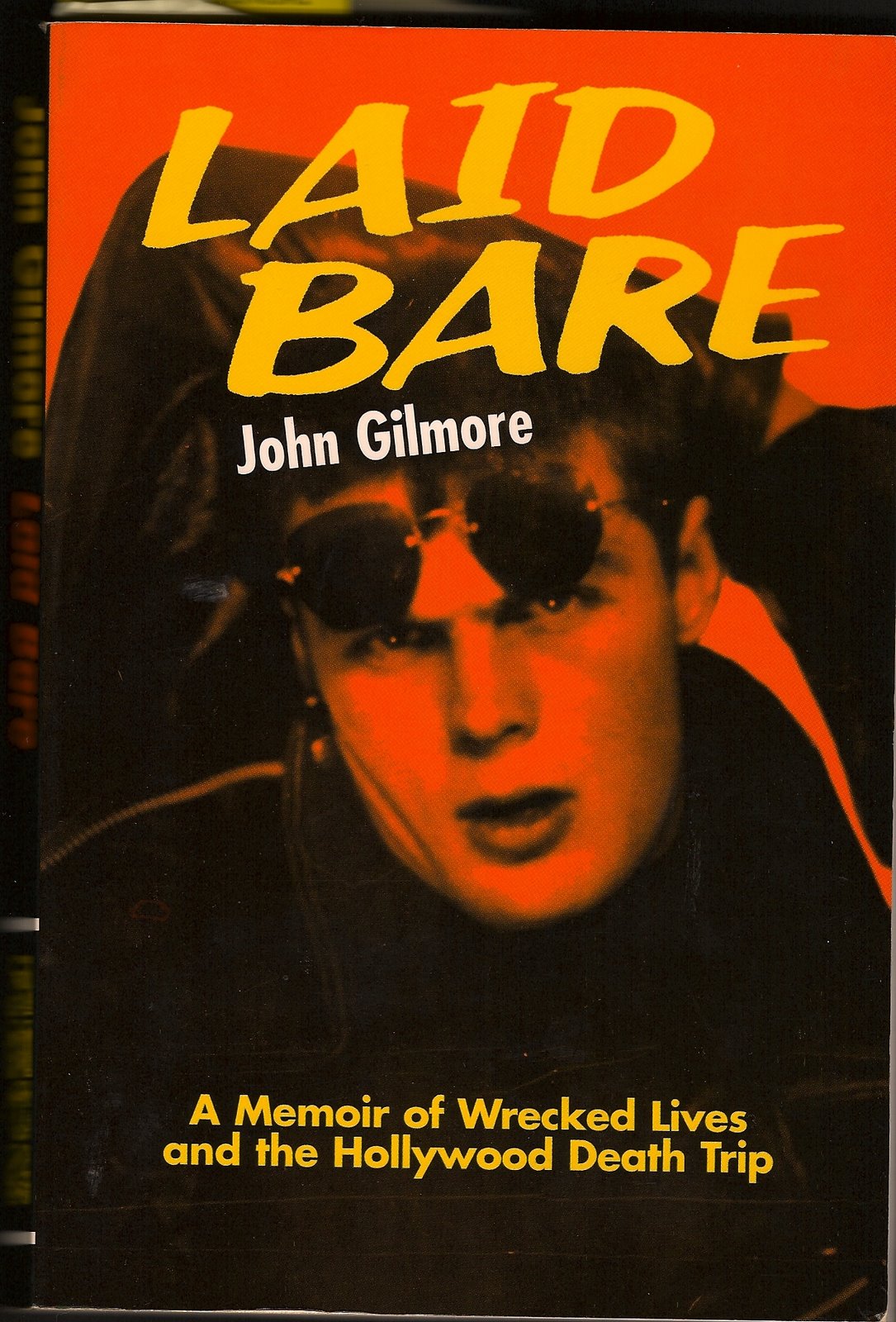 I’ve been laying around sick for a few days, head full of snot, retching up some horrid yellow bile (some sort of side effect from the chronic hep c), and blogerating is the last thing I feel like doing, but lying around staring at TCM, too out of it to even bother starting a new book, I find myself re-reading one of my favorite showbiz memoirs, a book that got almost no attention here in New York when it was published back in ’97 (I assume it must have made a stink in L.A. because when I was there in ’97 living high on the hog at the Chateau Marmont just a mention of Gilmore’s name would send folks into seismic frenzies of denial), but I assure you this is a book you want to read: Laid Bare by John Gilmore (Amok Press, 1997).
Gilmore’s clear eyed, lucid prose captures Janis Joplin years before fame as a down and out North Beach tramp, Hank Williams at the Opry on the verge of superstardom and then pissing his pants months before his death, the only account of James Dean I’ve ever read that made him seem like a real person, scathing looks at Steve McQueen, Dennis Hopper, the underbelly of Hollywood– the Black Dahlia, Manson, Mickey Cohen, and wait, a side trip to Tuscon to cover the trial of Charles Schmidt, the Pied Piper Of Tuscon, sleaze galore from Barbara Payton and Franchot Tone, sad sack Tom Neal (“fate can point the finger at you or me, for any reason at all”), the sadly forgotten John Hodiak, Brigitte Bardot in Paris, Jane Seberg, Lenny Bruce, Vampira, every page of this book is fascinating. I can’t remember who turned me onto it, I just remember an uncorrected manuscript showing up in my mailbox at WFMU at I think my final show (who did I pass that on to? I hope it found a good home….). I’ve given away a dozen copies over the years and have read every other book Gilmore’s written (they’re all excellent, I especially like Deranged aka the Tuscon Murders aka Cold Blooded), but Laid Bare is something truly special, a tell all that tells the truth, and it is written so well it sparkles like jewels on the page. I’m going back to my sick bed for a few days, I suggest you hunt down a copy of Laid Bare for yourself.
Gillian’s Found Photo #12
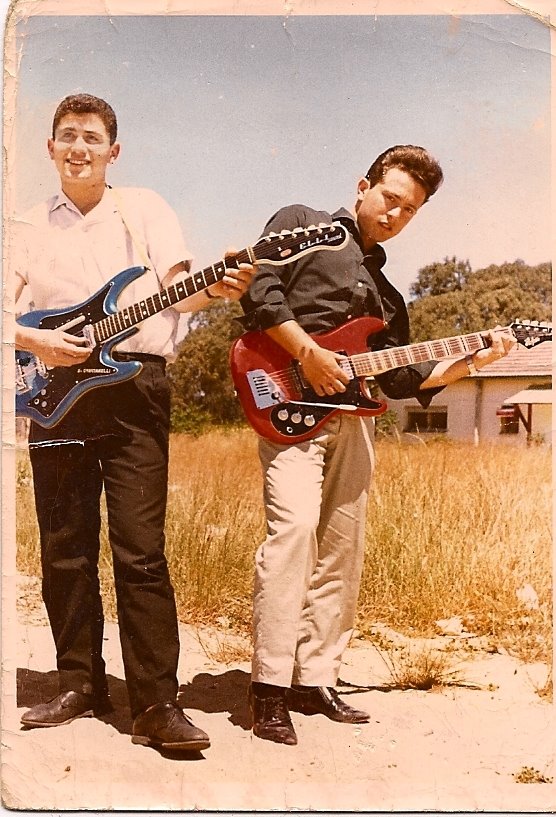 The Fang’s outdone herself this week. Check out these hepsters. The photo is dated 1968 which makes the haircuts ten times cooler, and they were already pretty fucking cool. The guy on the right has some amazing shoes, he really needs some pinstriped socks to go with ’em.
The rest of the writing on the back of the photo seems to be in some Asian language, my guess is these guys are Indonesian or Filipino, surf music was huge in the south Pacific. If you want to see the greatest Indonesian band ever see the Nov. 19th, 2008 posting on the Tielman Brothers. Then again this could be Mexico, or anyplace south of the border. The writing could be some sort of Aztec or Mayan hieroglyphics. There were some amazing Mexican surf and garage bands– Los Locos Del Ritmo being the best that I’ve heard. Here’s their version of Pedro Pistolas (Peter Gunn), played in Spanish.
Getting back to these rockin’ greaseballs, they seem to be standing outside a village, and I bet those guitars came from a factory somewhere nearby, they look brand new. They must have fallen off a donkey.
Getting back to these rockin’ greaseballs, they seem to be standing outside a village, and I bet those guitars came from a factory somewhere nearby, they look brand new. They must have fallen off a donkey.
BTW: Check out Miriam Linna’s (A-Bones/Norton Records/Kicks & Bad Seed mag) new blog: Kicksville 66. First entry is her amazing memoirs of her first year in New York City as the original drummer in the Cramps.
Tod Browning & Werner Herzog
I’m a bit late on the draw, but for those of you in the New York City area, Film Forum has retrospectives of two of my all time favorite directors running simultaneously.
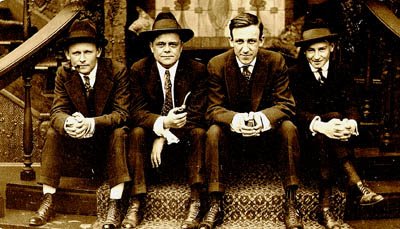
Tod Browning, whose Freaks and The Unholy Three kicked off his series last Monday is represented by one of his greatest films– West Of Zanzibar which is on a double bill with Mark Of The Vampire on Monday, June 1st. I’ve written about it already a bit (and the William Cowan talkie re-make Kongo), but let me reiterate, it’s one of the most jaw dropping films ever made. There will be Browning double features every Monday until June 8th. I’m also reposting the rare photo of Mr. Browning that my wife gave me, just because I like the photo. That’s Tod second from right. The entire schedule can be found here. My fall posting on Browning and TCM is here.
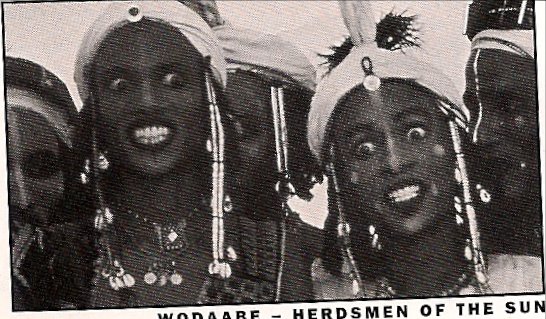
Werner Herzog is the closest thing in the modern world there is to a heroic artist. Well, he’s my hero anyway. The series Herzog: (Non) Fiction starts on May 18th and runs through June 7th, by the title I guess you’ve figured out his documentary work is featured. I’m no film critic but I’d like to recommend two– Bells From The Deep (showing May 27), an incredible and often hilarious look at superstition and religious mysticism in Russia, and Wodaabe–Herdsmen Of The Sun, which documents a male beauty pageant that this nomadic African tribe hold every year. The strange opera music on the soundtrack is supposedly the only recording of the last castrato, who made a few rare opera 78’s almost a century ago. BTW the latest issue of the Paris Review (#188, Spring 2009) contains some of Herzog’s journal kept during the filming of Fitzcarraldo. The above clip from Les Blank’s Burden Of Dreams will give you some idea of his mindset at the time. All it needs is a laugh track. The schedule for Herzog: (Non)Fiction can be found here. Every movie listed is worth seeing.
Five More 45’s
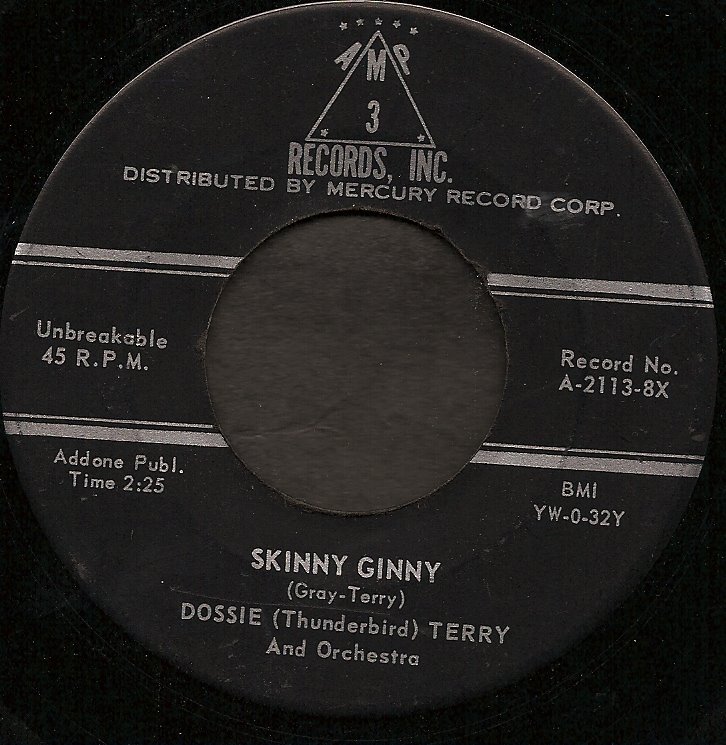
Five more 45’s off the shelves. Let’s start where we left off on Tuesday with Dossie Terry, this time with “Thunderbird” as his middle name as a selling point, proving that the last posting must have sold some records despite it not showing up in the R&B charts. I’m still trying to figure out who this guy was/is although Dick Blackburn wrote to report he is listed in the latest edition of Blues Records 1943-1970 and his first release was in 1946 on the Chicago label. This one here, on the Amp-3 was issued in ’59. The a-side, Skinny Ginny is an attempt at a Larry Williams style saxophone led rocker, Terry sounding a bit too old to pull off such a dumb song with much enthusiasm but the band is solid enough, I prefer the flip, an equally dumb barnyard rocker– Fool Mule which has more prominent guitar and while the lyrics are just as dumb as the a-side, Terry sounds more comfortable with them. Not a great record, I guess you’d call this a rock’n’roll genre record, but I still like it quite a bit. While we’re still on the subject of the mysterious Mr. Terry, Barry Stoltz checked in again and provided us with this one– Railroad Section Man which came out on the budget Extra label. A nice piece of mush mouthed R&B slop if I ever heard one. Barry also reports that according to Blues Records Kenny Burrell is playing the guitar on Thunderbird not Mickey Baker. This makes sense, if you listen to the Sammy Price records on Savoy it’s hard to tell which ones feature Mickey Baker and which are Burrell. This is a case of two guys with a similar style of rock’n’roll playing, but Baker can’t play jazz to save his life, Burrell is a fantastic jazz player (my favorite example being BlueNote LP 1152- Live At The Village Gate) Thanks, Barry. I’ve made it my personal mission to find this Dewey Terry if he’s alive, or at least find out his story if he’s dead. Lets move on to some really great discs.
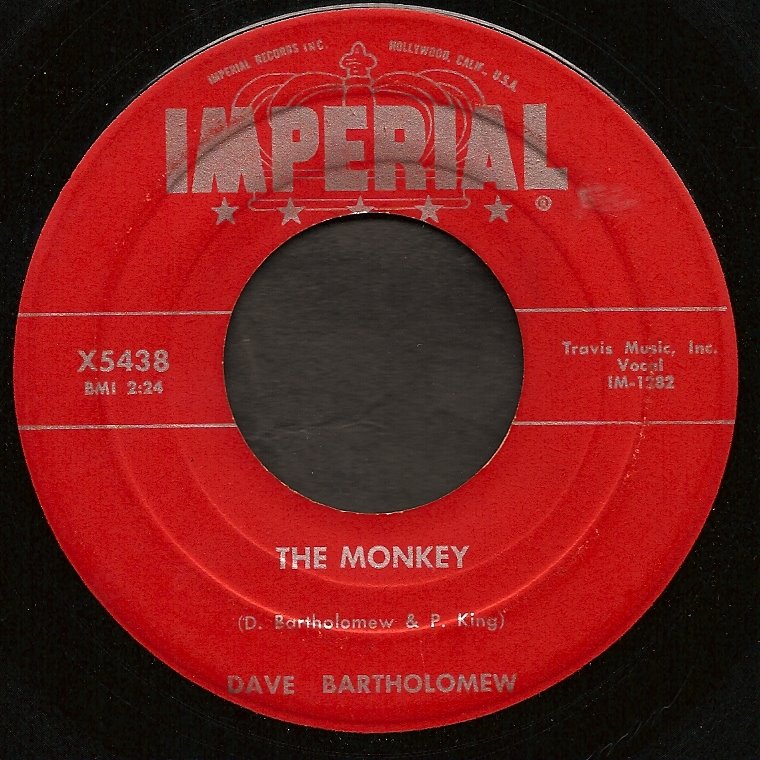
New Orleans based Dave Bartholomew is one of the most important names in the history of rock’n’roll– band leader, talent scout, producer, songwriter, he’s been involved with more great records than any living human being. Fats Domino, Smiley Lewis, Shirley & Lee, etc all made their best sides under Bartholomew’s tutelage. He cut dozens of fine discs with his crack band (which included the cream of New Orleans players like Earl Palmer and Lee Allen) for King and Imperial, including this one. The Monkey, however is something of an anomaly in the Bartholomew catalog–no wailing, sax section, no rolling piano, no second line beat, just a distorted guitar playing one chord over bass and drums with Dave doing this pre- Planet Of The Apes recitation about an indignant chimp, much offended that he’s been accused by Charles Darwin of begetting the loathsome mankind. Great record, Bartholomew even did an updated, lounge rendition of it at the first Ponderosa Stomp back in 2003. The flip– Shufflin’ Fox is more typical Bartholomew’s output, a sort of mutated Night Train riff R&B instrumental, and I don’t think it’s ever been re-issued.
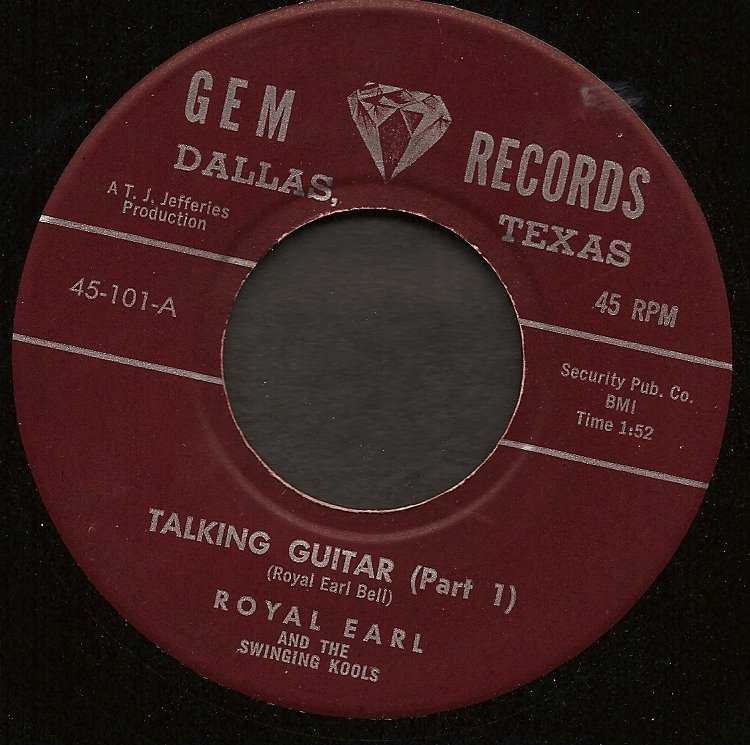
Royal Earl and his Swinging Kools, now there’s a great name. They cut this one for the Gem label out of Dallas, Texas which I’m pretty sure is the only record the label ever released. Talking Guitar pt1 and pt2 is basically a goofy tune made into a great record by Earl’s out of control guitar workout. He gives Guitar Slim a run for his money on the b-side. It’s hard to date this one, probably late from the late fifties.
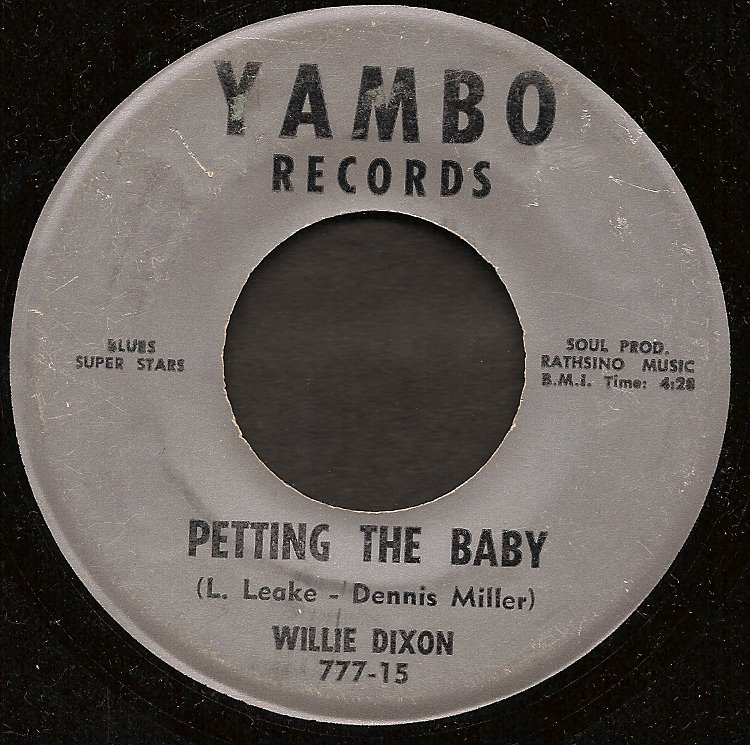
Willie Dixon is best known as a songwriter (Muddy Waters, Howlin’ Wolf, Otis Rush and so many others) as well as bass player, producer and all around man. He started his own Yambo label in the early 70’s and the best release on it was this double entendre Petting The Baby which Dixon didn’t write, but features somebody makes obscene sounds by rubbing up against a balloon while Dixon coos along. I think this is Willie Dixon’s best solo record. The flip is rather jaunty take on the old gospel standard You Gotta Move. Thanks to Phast Phreddie Patterson who gave me this one years ago. Phreddie dj’s all over the NYC area, you can find his latest whereabouts here.
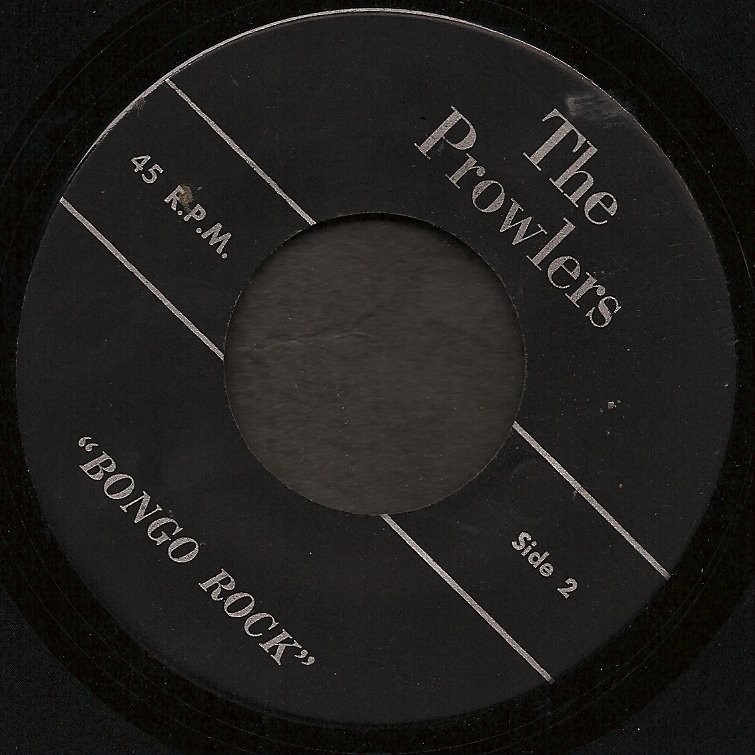
The mystery record today is The Prowlers’ Bongo Rock, errr… I mean “Bongo Rock”, a home made job, no record company name needed. The a-side is a dreary version of Gershwin’s Summertime, but the flip– Bongo Rock sounds like the Fenderman jamming with Preston Epps (two guitars, drums and bongos being the only instruments). If I had to guess I’d date it around ’59, where these guys were from is anybody’s guess. I don’t think it’s the same Prowlers that made two killer singles for Aaragon, who were Canadian, I think.
Bird’s still the word…
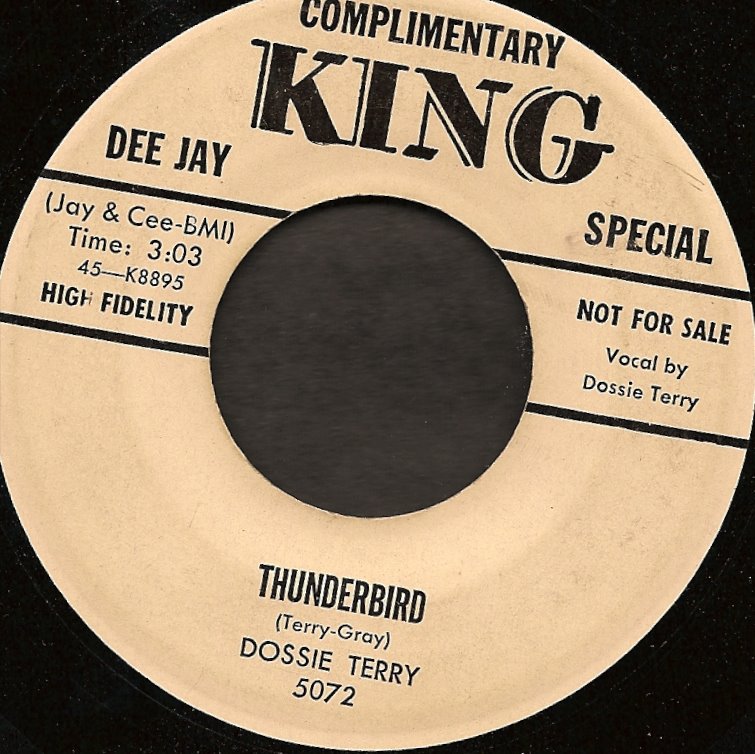 Back in April after the mammoth bloggeration on the subject of Thunderbird (the song and the wine, here), my pal Barry Stoltz e-mailed me to remind me that I’d forgotten this version, on King by Dossie Terry. I meant to go back and add the thing but of course, I forgot. Anyway, I finally pulled the 45 off the shelf and played it, it’s a great record by something of a mystery artist, so I thought I’d post it. In my opinion any record with a Mickey “Guitar” Baker’s guitar solo (see Jan. 9th posting for more on my Mickey Baker worship) is worth hearing, and second, this version is musically unique in that Dossie adds what’s called in music a “middle eight”, that is, a change up in the middle that lasts eight bars, giving this rendition a extra verse that makes it unique. This same version was re-issued by King in the 70’s with the Lamplighters’ Be-Bop Wino on the flipside, a marketing move that I assume was aimed at skid row juke box operators.
The other reason for the posting is my own curiosity. Just who is Dossie Terry? He had a long recording career, starting in 1949 with “When I Hit The Numbers” on RCA, he would go on to cut sides for King, Amp 3, Bonus, Ebony, Chicago, 20th Century, and Enrica. He wrote or co-wrote tunes for Dinah Washington, Floyd Dixon, Ruth Brown, the Drifters, the Clovers, and Eddie “Cleanhead” Vinson, co-writing with such well known names as Rudy Toombs, yet there is no biographical information on him anywhere. He’s not even mentioned in Mary K. Aldin’s Blues Magazine Index (an invaluable website, it is an artists index for blues magazines Blues Unlimited, Blues & Rhythm, Juke Blues, Living Blues, 78 Quarterly, etc., every researcher and blues fan should bookmark it here). Dossie Terry is listed in no discography that I own except for the multiple listings for him in The R&B Indies (Eyeball, 2004) (although I don’t have the latest update of Blues Records 1946-1970 by Les Fancourt and Bob McGrath Eyeball, 2007, is he listed?). Anybody out there know anything about this guy? He was active in the music biz for forty years , in this day and age when T. Valentine can come walking through the door at any minute he’s one of the last mysteries out there, but whatever trail he left is growing cold fast.
Gillian’s Found Photo #11
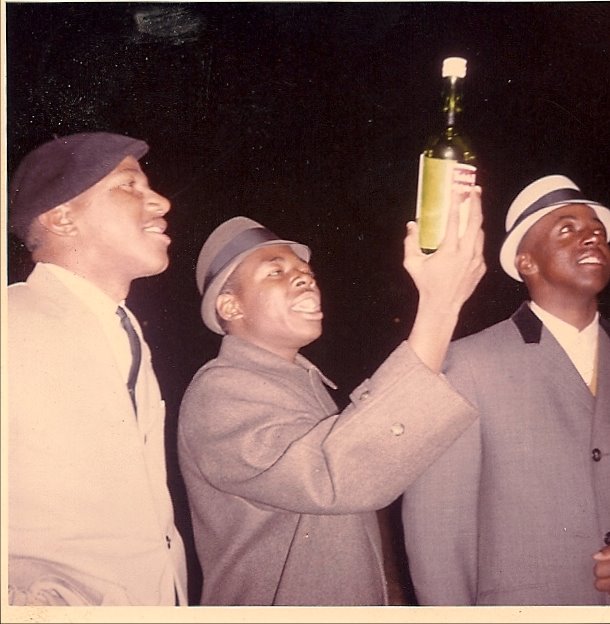 After a week off the Fang is back with a real doozie from her archives. We just can’t seem to stay off the subject of cheap wine here at the Houndblog, my apologies to anyone who arrived here via the link on Eric Asimov’s The Pour blog over at the NY Times. If you missed out on the discussion of Thunderbird wine and its significance in music see the April 17th posting.
These young slicks not only drink the swill, they seem to have based a religion around it. The fellow holding the bottle sure looks like he sees the light. What do you think the other two are looking at?
Jimmy Reed For Gypsy Rose Wine
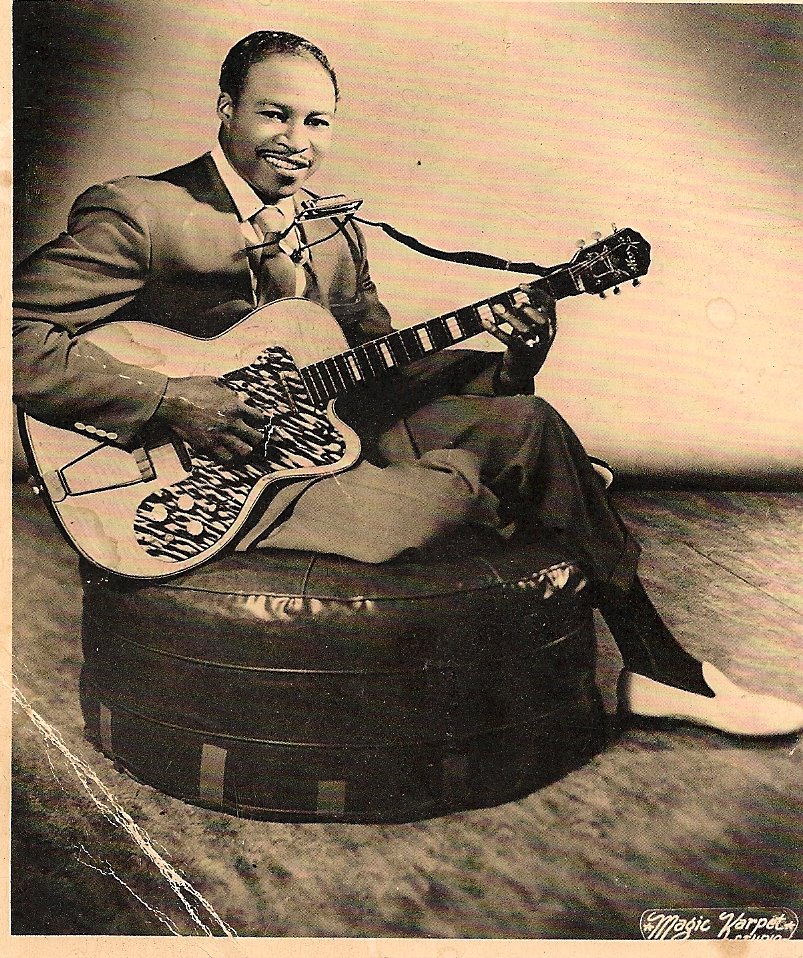

I love Jimmy Reed. As a singer, guitarist, and songwriter he was the greatest, and the drunkest. I assume you’re all familiar with Jimmy Reed’s Vee Jay LP’s- I’m Jimmy Reed, Rockin’ With Reed, Best Of Jimmy Reed, Found Love, t’ain’t no big thing but HE is…Jimmy Reed, and Just Jimmy Reed. All his Vee Jay sides are great, but the earliest, maroon label singles and LP’s are greatness personified. He made it sound so simple. That said, I love this spot Jimmy did for Gypsy Rose Wine in the early 70’s. I heard it as a kid on WLAC, a Nashville station that I could pick up in Florida on rainy nights, it took decades to track it down (if I could only find the Bo Diddley hair straighter spot!), and now here it is again, my present to you readers. Jimmy needed a little help getting through the thing, so his son Jimmy Reed Jr. aka Boonie is actually reading the ad copy. Jimmy must have gotten into the product before the recording started. The Gypsy Rose Wine (a fortified wine like MD 20/20, Night Train and Thunderbird) folks really understood their market. Somewhere in my archives I have a print ad that Carl Perkins did for a toupee company.
I’ll try and dig that out one of these days. Come to think of it, Jimmy Reed also wore a toupee …maybe that was the secret their success? The Rock’n’Roll Hall Of Fame should build a wing for drunk guys in toupees…
Roy Buchanan- The Oily Years

http://video.google.com/googleplayer.swf?docid=-7480111672444131563&hl=en&fs=true
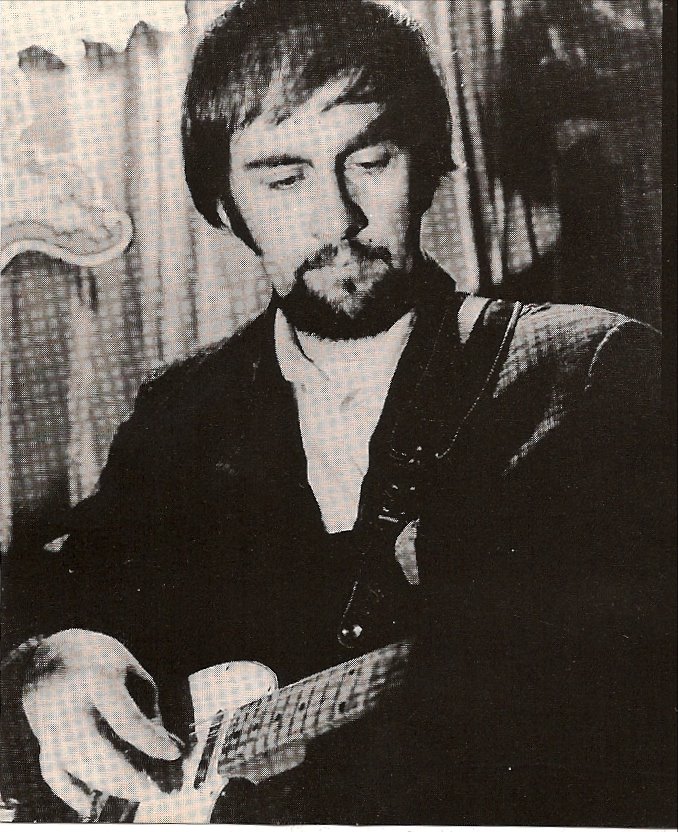
Long before he became king of the blues bar bores, Roy Buchanan was actually a great rock’n’roll guitar player. His best recordings unfortunately are spread out over a handful of obscure 45’s on small labels, coast to coast. By the time he’d made a name for himself the fire had pretty much gone out of his playing, and while he was always a great technician, he simply was not a much of a band leader, so his LP’s are dreadfully dull affairs.
Today, however, we will give a listen to those early sides, and these records I believe more than justify his reputation as one of the all time greats.
Buchanan was born in Ozark, Arkansas, September 23, 1939, and raised in Pixley, California which is in the Central Valley, south of Fresno. I think the Joads end up there at the end of Grapes of Wrath. His father was a Pentecostal preacher. Roy Nicholas, the country guitar great, star of the best Maddox Brothers & Rose 4-Star recordings and later Merle Haggard’s band lived ten miles away and was an early influence. Another influence was Jimmy Nolen of the Johnny Otis Show who Buchanan claims to have met at age 15, more likely he saw him on Otis’ TV Show (Buchanan was known for, lets call it, stretching the truth).
He would site Nolen’s Federal recording of After Hours as his favorite record through out his life.
Roy Buchanan left home as a teenager and in 1958 he hooked up with Dale Hawkins’ band in Tulsa, traveling with them to Shreveport, Louisiana, home of the Louisiana Hayride radio show (where Elvis started) and a hotbed of guitar playing talent– James Burton, Scotty Moore, Carl Adams, and dozens of other six string hotshits passed through Shreveport where Dale Hawkins and his brother Jerry were both based, Buchanan cut his some of his earliest sides with the Hawkins brothers.
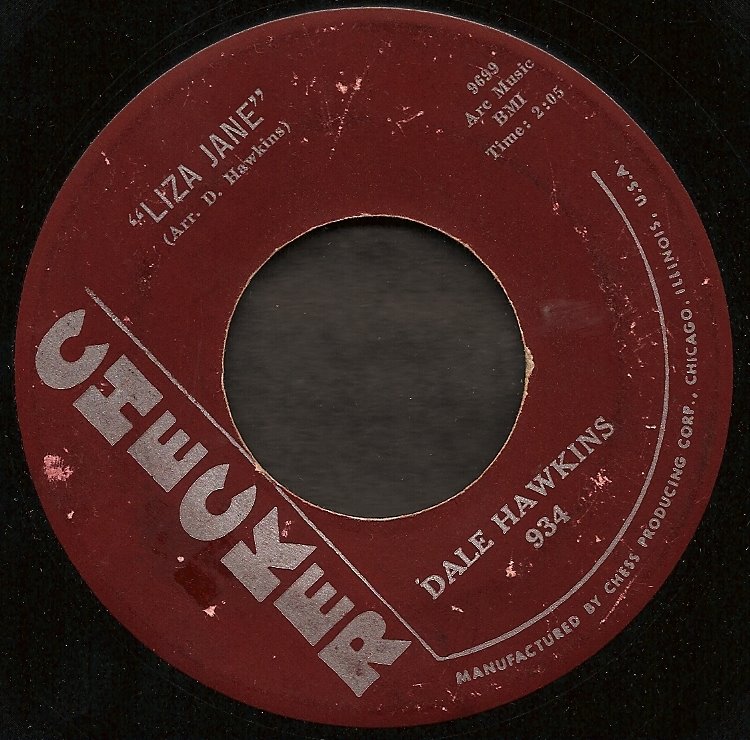
It’s hard to figure out what order his earliest sides appeared, but in 1958 he may have recorded with Alis Lesley on Era, a moot point since I don’t have that particular record. He does appear on Jerry Hawkins’ rockabilly classic Swing Daddy Swing on Ebb (one of his best solos ever), as well appearing on several Dale Hawkins Checker 45’s, the best, guitar playing-wise being his rendition of My Babe (here’s an alternate take ), I Want To Love You, and Liza Jane. While touring with Dale Hawkins he found time for some session work and can be heard on two excellent rockabilly singles on Imperial from that same year– Al Jones’ Loretta (written by Merle Kilgore who penned Ring Of Fire) and Bobby Jay’s So Lonely, a nice Gene Vincent sounding rocker.
Meanwhile, back at the Hayride, Buchanan, following in James Burton’s footsteps moved from Dale Hawkins’ band to Bob Luman’s outfit, recording with four songs with Luman issued by Warner Brothers in 1959, the most interesting of these discs is My Baby Walks All Over Me.
Rockabilly is all about guitar playing, and especially on the Dale Hawkins sides Buchanan is really in his element. Dale was (and is) a great band leader, and he knew how to get the best of of his guitarists.
With the Hawkins band, young Roy Buchanan was touring constantly. He finally left Dale in Toronto and joined his cousin Ronnie Hawkins’ Hawks briefly around 1960, his only recording with them however was on bass. He soon settled in the greater Washington D.C./Maryland/Virginia area where he would spend the rest of his life. There was plenty of work for a guitar player, mostly in rough biker and cowboy joints (remember this is the time and place where Link Wray & the Rayman ruled the roost), and Buchanan soon made a name for himself as far north as Philadelphia where he started doing session work. It’s these Phili recordings that I’d call Buchanan’s best.
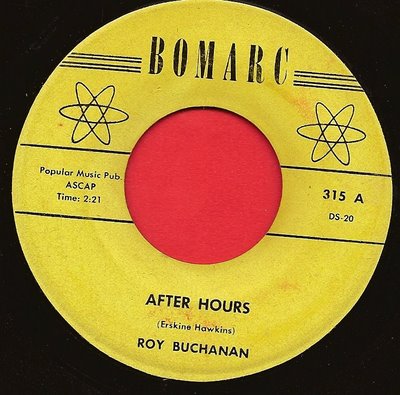
Again, it’s almost impossible to figure out the exact order these discs were released but the first record under his own name was After Hours b/w Whiskers (Bomarc) in 1961. I’ve already blogged about the a-side (see Feb. 6 entry), the b-side (actually a retitled version of Johnny Heartsman’s Johnnie’s House Party) is just as great, capturing Buchanan in top form, take a listen and and ask has a white guy ever bent strings so soulfully?
Later that same year came Mule Train Stomp b/w Pretty Please (Swan). The a-side is an instrumental workout on the old Frankie Laine number Mule Train with Buchanan’s Telecaster riding over a galloping beat and whip cracks, alternating between making his Tele sting at the high end and a rumbling, distorted groove on the low strings, he throws in his best guitar tricks, like using the volume control knob for wah wah effect and overdriving his amp for distortion. Many of the sounds that would become common place by the late 60’s through the use of pedals and boxes, Buchanan was mastering in the early 60’s, but doing it with his hands. He spent years perfecting these signature motifs and they mark his style. Pretty Please is a variation on the Peter Gunn riff which he’d return to at various times over the years, although I think this is his best version. I love the way he bends the strings just before the stops and just lets them ring, he really knew when not to play. As he works his way up the neck with each chorus his playing gets more ominous, more dramatic. He’d never make a better record.
Buchanan would end 1961 on a high note appearing on Cody Brennen and the Temptations (no, not the Motown Temptations) Ruby Baby b/w Am I The One. Buchanan, playing with his amp turned up for maximum distortion is the star of the disc, he just about overpowers the singer with his brutal sound. His solo is simply monstrous, listen to how it ends, did he just slam his guitar into the amp?
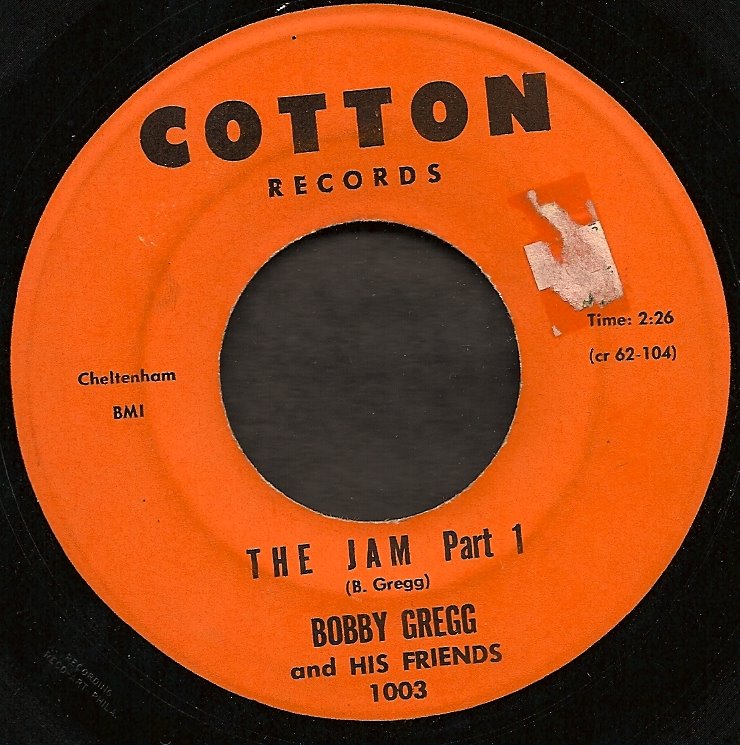
The only hit single of Buchanan’s career came in 1962 where he appears on Bobby Gregg and Friends’ The Jam pt.1 b/w The Jam pt. 2 (Cotton). For the record, Buchanan said of drummer Bobby Gregg “He was no friend of mine”. This crazed instrumental workout went top forty pop and R&B and was such a huge hit in the North East they were drawing thousands of fans a night. In typical, anti-social fashion Buchanan walked out on Gregg before a gig with 8,000 kids screaming for the band. The follow up– Potato Peeler b/w Sweet Georgia Brown (Cotton) finds Buchanan chickin’ pickin’ and using the volume knob to great effect. Too bad it fades as he begins his second solo.
The Secrets’ Twin Exhaust b/w Hot Toddy (Swan) came out in ’62 is basically an excuse for Buchanan to wail, which does in top form. Extra points for dumbest drum solo ever recorded. I love the way it seems to modulate into a completely different song halfway through.
The same year he did session work with Swan appearing on Freddie Cannon’s Teen Queen of The Week and Danny and the Juniors’ Doin’ The Continental Walk. I’ve never heard the latter, and Freddie Cannon (who owns his Swan catalog) is against downloading, so I’ll respect his wishes.
Jerry Leiber and Mike Stoller produced a four song session in ’63 for Bob Moore and the Temps’ which feature Roy’s guitar heavily — Mary Lou b/w The Shuffle (ABC-Paramount) and Trophy Run b/w Braggin’ (Daisy). These are killer sides. Mary Lou is the Young Jessie/Ronnie Hawkins classic and Buchanan is all over it, playing like a maniac. The second single is an instrumental, and it would be Buchanan’s last truly great disc. He’s reach the peak of his style here. Roy claimed Leiber and Stoller recorded other material with him including another version of After Hours, but if they did, none of it was ever issued.
In 1962 Buchanan started playing with a two bit country singer named Danny Denver, appearing on his record Image Of Love on Go Go (later leased to Chancellor), not much of a record, but with Denver, Buchanan would find a steady job that lasted on and off for the next seven years. He’d appear on many of Denver’s self released 45’s and LP’s,although the only good tracks to emerge from this union that I’ve ever heard are this 1966 waxing of Let’s Twist Again, worth hearing only for Buchanan’s out of control solo, and a version of Peter Gunn recorded live with Denver’s band the Soundmasters that same year.
There are a few more spotty recordings from the mid-sixties: the British Walkers’ I Found You on Try was an attempt to sound like the Beatles, he may be playing on on a record by the Hi-Boys on Unicom called They Say, but I’ve never heard it, he also played harmonica on two rare Link Wray singles– Rumble ’68 (Heavy) and Rumble ’69 (Mr. G), but let’s face it, Rumble don’t need no harmonica. Mostly he stepped out of the spotlight, only in his mid-twenties he was already embittered by lack of success, and found a regular gig backing Danny Denver, playing country bars, far from the limelight. With the introduction of wah wah pedals, fuzztones, etc. he felt lost, tricks he’d spent years learning to do were now available for a small price at your local guitar shop. The emergence of Jimi Hendrix in ’67 must have shook him because he told an interviewer later: “when you play at that volume the amps and guitar plays you, I like to use the smallest amp possible, it gives you maximum control”. Roy was feeling the heat, and competing was against his reclusive nature, he would shun the limelight for the rest of his life. Sometimes he appeared with his own band– Roy Buchanan and the Poor Boys but mostly he backed up Danny Denver until a Rolling Stone magazine article in 1969 proclaimed him “the greatest guitar player alive you never heard of” which led a path of rock stars to the crappy clubs Denver was playing to herald Buchanan’s talent. He claims the Rolling Stones asked him to replace Brian Jones but he turned them down because he didn’t want to learn their repertoire. This is most likely bullshit.
Still, players like George Harrison and Jeff Beck sung him praises and soon a PBS documentary brought him to fame’s doorstep, kicking and screaming. He was signed by Polydor and cut a series of boring ass records. He retired and came back several times, the last on Alligator Records in the late 80’s. Unfortunately the fire had gone out. Unlike our previous subject, Charlie Christian, given the freedom to stretch out, Buchanan had become a bore. Under the tight restraints of the three minute 45, and with a strong band leader like Dale Hawkins or producers like Leiber and Stoller, he was great, but as heard on his LP’s, twenty minute solos on standards like Green Onions were duller than dishwater. He became hugely popular in an era that worshipped “chops” and “tasty riffs”, even selling out Carnegie Hall at one point.
His was praised in print by critics and guitar players everywhere, toured the world, had his own signature model guitar marketed by Fender, and was doing quite well despite his inability to make an interesting album.
Each time he reached a commercial peak however, he’d bore audiences to tears and end up back on the Maryland/Virginia/D.C. bar circuit, but even there the competition was nipping at his heals. His friend and student Danny Gatton had become his main competitor, and made records that were much more interesting than Buchanan’s. He was a depressed man in his final years. On August 14, 1988 he was arrested in Fairfax, Virginia for public intoxication, and that night was found hanging in his cell, a suicide according to the police (murdered by the police according to some of his friends).
Sad fuckin’ story, no? But not unique. There’s a million tragic stories in rock’n’roll: Lafayette “The Thing ” Thomas, who made Jimmy McCracklin’s The Walk a hit ended life working as a hose fitter, Pete “Guitar” Lewis of the Johnny Otis Show died a homeless wino, Kenny Paulson, star of Freddie Cannon’s Tallahassee Lassie and Buzz Buzz A Diddle It (and one time Dale Hawkins side man) was almost murdered in prison, and died of an overdose, utterly forgotten, in 1972, and oddly enough, Buchanan’s one time pal and student Danny Gatton, who would commit suicide, shooting himself in his garage, Robert Quine, committed suicide in 2004 had not recorded commercially in four years at the time of his death. Buchanan did better for himself than any of those guys. Hell, he made a living at music, which is more than most musicians do.
In 1989 the U.K. Krazy Kat label released an LP Roy Buchanan: The Early Years, I’m not sure if it ever made it to CD but it had fourteen of the above tracks and is well worth looking for.
As far as his Polydor and Alligator output, I find them unlistenable and recommend them only for students and collectors.