Charlie Feathers

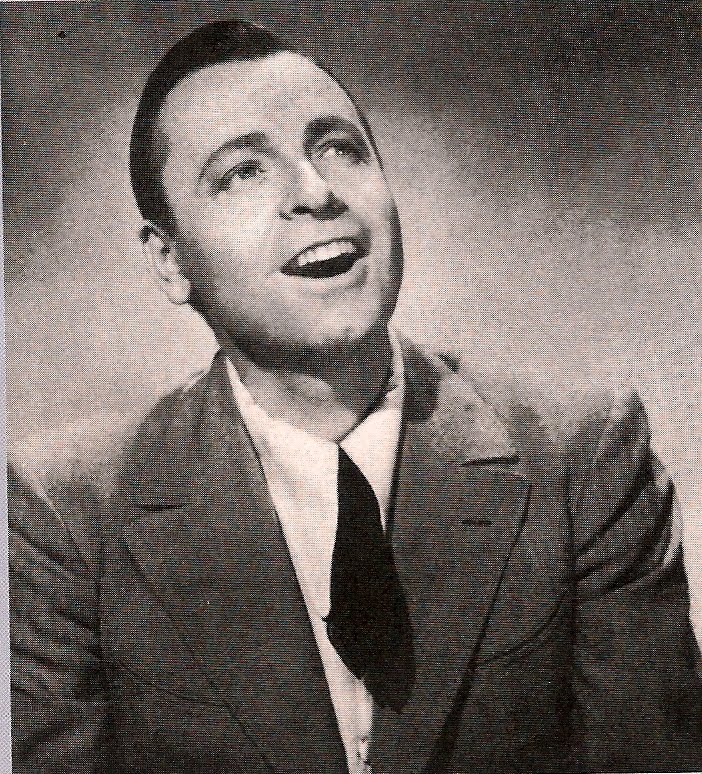
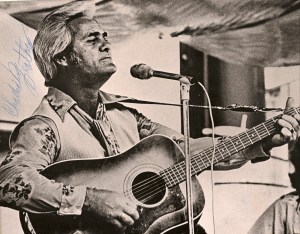
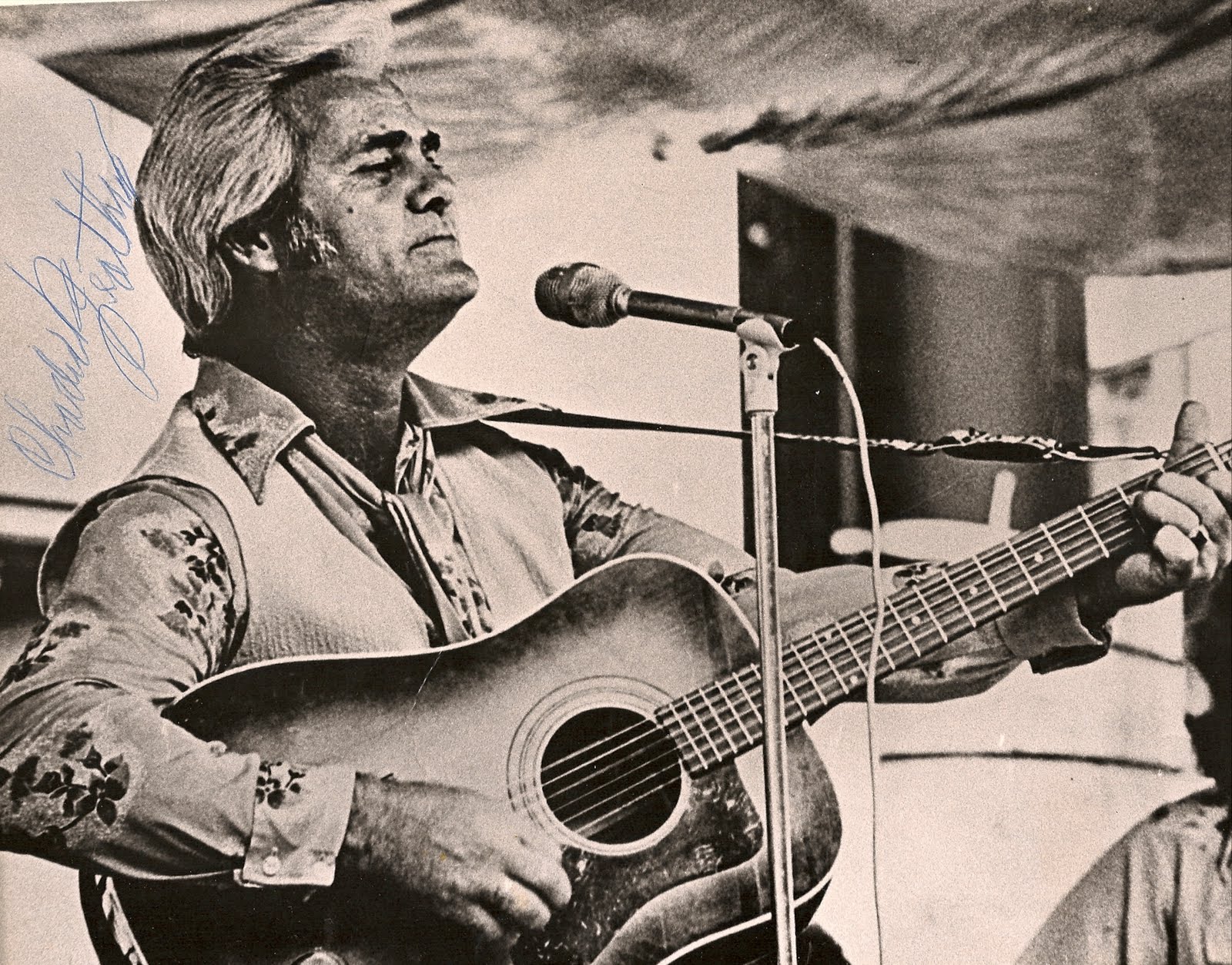
Signed photo.

Charlie Feathers, 1980 with son Bubba on guitar.

If there was ever a case of one man being the living embodiment of one style or genre of music, surely the most perfect example of such a creature is Charlie Feathers, who, although he was perhaps one of the greatest country singers of all time, pretty much personified that character we know and love as ‘the rockabilly’. Born Arthur Lyndbergh Feathers in the country side between Slayden and Holly Springs, Mississippi on June 12, 1932 (a Gemini, like me), to sharecropper Leonard and his wife Lucy, he was one of seven children. In no style of rock’n’roll, or any other music for that matter have so many persons of Native American (or partial N.A.) heritage made their mark (Billy Lee Riley, Andy Starr, Jackie Lee Cochran, Marvin Rainwater, Jackie Morningstar, Link Wray, et al), and like so many other rockabillies, Feathers had much Cherokee blood running through his veins. He got his first guitar at age ten and an aunt showed him a few chords, but it was a black field hand named Junior Kimbrough who really gave him his first musical instruction. Kimbrough wouldn’t find musical fame until the 1990’s when he did quite well with a series of albums on the Fat Possum label, toured with Iggy Pop (whom he called Lollypop), and ran his own juke joint near Holly Springs. I’m already off the track. Charlie quit school in the third grade and went through life pretty much illiterate (yes, that photograph above is autographed, I have quite a collection of illierate’s autographs including the Chenier brothers Clifton and Cleveland, whom when I asked to sign a disc “to James” replied– “you lucky you gettin’ this…”).

He worked on an oil pipeline in Texas, where he would play country songs in juke joints after work, and at a box factory when in 1951 he contracted spinal meningitis. A protracted stay in hospital gave him plenty of time to write songs and perfect his musical chops and kept him out of the Army. After his recovery, he and his wife Rosemary headed for Memphis where he began hanging around 706 Union Ave– Sun Studio.
Here’s where Charlie’s version of the story diverges from nearly everyone elses. According to Feathers himself, it was he who arranged Elvis’ version of Blue Moon Of Kentucky and taught him to rock, even bringing the secret of “slap back”, the immediately identifiable echo effect created by running a piece of tape through two recorders, that today is often thought of as “the Sun Sound”, to Sam C. Phillips himself. Charlie alone stuck to this version of history, and on the tape of the alternate take of Blue Moon Of Kentucky (“Hell little Vi, that’s a pop song now” says Sam) his voice is nowhere to be heard. Scotty Moore backed up Sam Phillips version and I don’t think anyone ever bothered to ask Elvis. Still, Feathers stuck to his story, often adding strange details to it over the years including one that says Elvis was permitted to hang around the studio because he stole his mom’s diet pills (Dexedrine) and dispensed them freely around the place, and another rumour in which Elvis was part black. Great stories, personally I don’t believe them. Sam C. Phillips issued two singles on Feathers, both country–
Peepin’ Eyes b/w I’ve Been Deceived (Flip 503, issued April ’55) and Defrost Your Heart b/w Wedding Gown Of White (Sun 231, issued January ’56). Found in the vaults were some rock’n’roll material, upbeat versions of Corrine, Corrine and Frankie & Johnny probably recorded in ’56.
At this point Feathers had put together his own band– Jerry Huffman (guitar), Jody Chastain (bass) and Jimmy Swords (drums) who would stay with him for the next several years.
As Elvis was topping the charts, Feathers cut his first real rock’n’roll record– Get With It b/w Tongue Tied Jill, which Phillips turned down (he thought it made fun of people with speech impediments, which it does), so it was released by Sun’s cross town rival Meteor Records, run by Lester Bihari, older brother and family black sheep to the three Bihari brothers (Saul, Joe and Jules) who ran the Modern/RPM/Kent family of labels out in Los Angeles. They even gave brother Lester a sure fire hit with blues star Elmore James whom they had enticed away from Trumpet Records and deposited with their older brother. Tongue Tied Jill was a regional hit (#1 in Memphis for a week) but Meteor didn’t have it together to produced a national hit and soon Feathers, who would rather have been at Sun, was recording for cheapskate Syd Nathan at King Records.
The first four song session held in late ’56 at King’s Cincinnati studio resulted in two of the greatest 45’s ever unleashed– One Hand Loose b/w Can’t Hardly Stand It and Bottle To The Baby b/w Everybody’s Lovin’ My Baby. Feathers hated them, King studio’s reverb tank was to his ears an awful substitute for Phillips’ slap back effect. His next King session was held at RCA’s Nashville studio, where Elvis had recorded Heartbreak Hotel and others. Excello doo wop group Johnny Bragg and the Marigolds (the same Johnny Bragg who had fronted Sun’s Prisonaires, small world), were added along with studio drummer Buddy Harmon replacing Jimmy Strong. Four excellent sides came of this session– Too Much Alike b/ When You Come Around and When You Decide b/w Nobody’s Woman, although not the rockin’ craziness of his first two King discs, they were good enough to be chart toppers, but these were the years when Payola ruled and Syd Nathan was vocally opposed to shelling out cash to disc jockeys. Feathers didn’t have a chance and by late ’57 had gone his own way. He didn’t record again until 1960 by which time his style of music was dead as a viable commercial concern. Not that it mattered to Feathers who made on of his finest records– Jungle Fever, a creepy, echo filled chant, with the opening lines “Darkies…creeping through the trees” which fills the listener with a certain terror that’s hard to describe. The flip side Why Don’t You, a fine rocker and a two sided instrumental credited to Jody Chastain– Jody’s Beat b/w My My came from the same session. Desperate, he returned to Sam Phillips and waxed a folk tune for Phillips’ Holiday Inn label– Dinky John b/w South Of Chicago, followed up by a country blues disc– Nobody’s Darlin’ b/w Deep Elm Blues for the same label. The former was his worst record ever and the latter a return to form.
From here, Feathers worked at an ambulance driver, stock car racer, and kept recording, making dozens of albums for as many labels, so many they’re hard to figure out. A full discography can be found here. I’d say his best post-50’s sides were reserved for his own Feathers label, currently available on CD on Norton Records, three CD’s worth of incredible rock’n’roll and country (and even a re-union with Junior Kimbrough that was originally released in the 1980’s as a 78). Wild Side Of Life (Norton 332), Honky Tonk Kind (Norton 333) and Long Time Ago (Norton 334) are essential purchases. Another record I like was his 70’s 45 for rockabilly zionist Ronnie Weiser’s Rollin’ Rock label– She Set Me Free b/w That Certain Female. Feathers last record was his major label debut, cut with producer Ben Vaughn for Elektra in the early 90’s. It was recorded at Sun and issued on their Explorer series.
Charlie Feathers played in New York City exactly once, at the old Lone Star Cafe, it must have been around 1984-5. It was the height of the Stray Kats/RockKats/anybody with Kats in their name and a tatoo craze. Kids who last week had been dressed like the Clash all of a sudden were sculpting their hair into “quiffs” and talking about their love for Dickie”Be Bop” Harrell.
A few nights before, my pals– The Zantees (Billy Miller and Miriam Linna’s pre-A-Bones band) had opened for the Rock-Kats at some club uptown on 86th St, and the joint was packed with the aforementioned suede clod hopper wearing “kats” and girls with crinolines in the dresses.
I naturally expected with so many rockabilly fans about, the Charlie Feathers NYC debut would be a big deal and a packed house. The Zantees also opened the Charlie Feathers show. Which of course was nearly empty. The same dozen or so record collectors I saw at every gig I went to showed up, and not one “quiff” in sight. The trendoids preferred the imitation to the real thing and stayed home in mass, no doubt to work on their hair and clothes. If Charlie Feathers was disappointed in the turn out, it didn’t show in his set for he was spectacular. He had more vocal tricks than George Jones, hiccuping and sputtering his way through a 45 minute set that remains one of the purest and finest things I’ve ever witnessed. I think I even wrote about it in the Village Voice, but I can’t find the clipping. Charlie wouldn’t autograph a record for me, but he did sign a photo (see above), and was quite friendly in a taciturn sort of way. I remember his manager Billy Poore seemed very stressed out over the whole thing. He never returned to New York City, and I never saw him play again. He died of throat cancer in 1998, and these days his songs can be heard in Quentin Tarintino movies. He might not have had the popular success of Elvis, but he outlived him by 22 years, and probably made just as many great records. I wonder where all those geeks with the quiffs went? How many “Love this Kat” tattoos have been covered over, and if any of them ever bought a Charlie Feathers record? Who know? Who cares? It’s never too late to find the good stuff….that’s what I’m here for.
Wilko Johnson and Dr. Feelgood

Wilko gives a guitar lesson, Brian May was on the same show, May stressed the wearing of loose, flowing, garments .

Dr. Feelgood at their peak– 1975. I love the drum solo.

Wilko back in Oil City: Canvey Island, Essex.

Wilko today, he looks a bit like Tor Johnson.

I noticed the Julien Temple’s Dr. Feelgood documentary Oil City Confidential has hit the theaters in the U.K. and parts of Europe, I doubt it will get released here in the U.S., but hopefully it will at eventually turn up on tv, perhaps on Sundance Channel’s Doc Mondays which could really use some help, they consistently show the dullest and lamest documentaries ever made.

Chart toppers in the U.K., Dr. Feelgood never developed much of a following here in the states, by the time the word got out about them, guitarist Wilko Johnson had left the band and Johnny Rotten had pronounced all pub rock “rubbish” giving them an air of unfashionablility. The flared pants didn’t help.
I used to work for a concert promoter when I was a teen, mostly just watching the door and running errands, and I remember once Dr. Feelgood were booked to open for Kiss at the Miami Jai Lai Fronton, a 4,500 seat hall, it must have been around 1975. Unfortunately, the Feelgoods canceled and I didn’t see them until I got to New York City where they played at the Bottom Line once (with the Ramones? Rockpile? I can’t remember who the else was on the bill). They were a thousand times better live than on record. I must admit, if I want to hear Riot In Cellblock #9 I’d play the original Robins version, and if I want to hear Brits covering American R&B tunes I tend to go with the Stones/Pretty Things/Yardbirds, but Dr. Feelgood really did add something unique to a set list that 90% of which would have been familiar to any American bar band between the years 1962-70. And much of what the added came from guitarist Wilko Johnson– his chunky, “it sounds like two guitars” guitar style, his wired, robot walk stage presence, and their best original songs, Wilko was really what made Dr. Feelgood into a truly great band. After leaving Dr. Feelgood in 1977, he was replaced by John “Gypie” Mayo, a good but somewhat colorless player who added little to their sound and had almost no charisma onstage. The chemistry, or perhaps a better term would be alchemy, was gone. That X factor that makes a great rock’n’roll band. The reason why a bunch of crappy musicians can sound great together, or why a bunch of great musicians can sound as dull as dishwater, went out the window when Wilko left the band. Wilko formed a band called the Solid Senders who made a couple of decent records, then joined Ian Dury’s band for a bit, the rest of Dr. Feelgood carried on (in fact their 1978 Nick Lowe produced LP Milk and Alcohol wasn pretty good) , the original members dropping out one by one. There’s a Dr. Feelgood on the road right now, Lord knows who they are. Frontal lobe Lee Brilleaux (pronounced Brillo) from Durban, South Africa (current home to their biggest fan– Brendan O’Reilly) died of cancer in 2004. At Clement Moore Park, around the corner from my house, someone has shelled out to name a park bench in his honor. Wilko Johnson never found a group to showcase his talents as good as sympathetic to his strengths as Dr. Feelgood. For a short time he was in a terrible group called Sheena & the Rokkats, but more often then not plays solo with just a rhythm section. In a way he reminds me of Fleetwood Mac’s Peter Green in that he let something very special slide through his fingers.

Gillian’s Found Photo #37

copyright G. McCain Archives

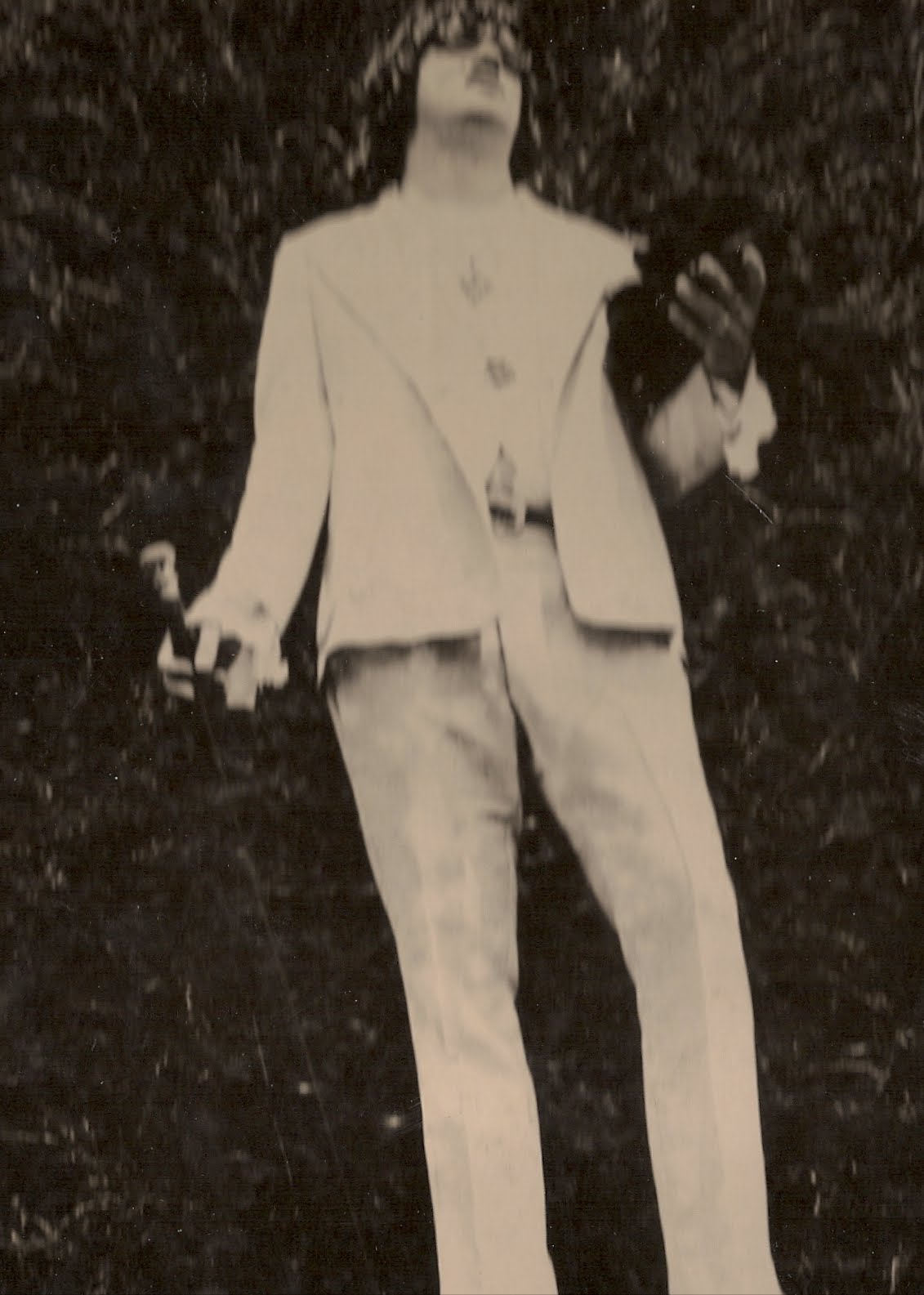
Is it my imagination, or has this guy wet himself? Somebody went to work on the front of his hair with the peroxide, notice the back and his eyebrows don’t match the front. And he hasn’t washed his feet in a couple of weeks. No doubt this gal’s been keepin’ him busy. The tight, satin capris and sweater combo will get ’em every time. It looks like the Fang has stumbled into Larry Clark territory ten years before Clark himself got there. Teenage Lust indeed. I’d guess this photo was taken somewhere between 1956- 1963. What do you think their story is?

Gov. Jimmie Davis

Jimmie Davis, with an interesting tie.


This Is What A Great Record Looks Like Up Close.


There’s a line often found in books and magazine articles that claim to tell the history of rock’n’roll that a greasy kid from Memphis named Elvis Presley, goofing around in Sam Phillips’ Sun Studio in Memphis in the summer of 1954, belted out a version of Arthur “Big Boy Crudup’s That’s All Right Mama, and in doing so, brought together the music of white folks and black folks, and invented something called “rock’n’roll”. Like most of what is purported to be “the history of rock’n’roll”, this is so much hooey. Whites were singing black blues almost within minutes of black “inventing” the blues. If there is something we can call “the truth” (and there is not, but let’s pretend), nobody “invented” rock’n’roll, just as no one “invented” the blues or jazz or ragtime, or anything else for that matter. These strains of music, bastardized forms of all the other types of music to found in various regions of America came together in all types of combinations over the years: black men singing ancient Scottish ballads, white men singing cotton patch tunes, classically trained New Orleans Creoles playing the unwritten “rags” of unschooled, uptown blacks, women from the street singing the songs of women from the church, black men with fifes and drums playing the beats from Africa under melodies from Scotland in the hills of Mississippi, waltz’s from France sung by African-Americans with accordions whose had come here from Santa Domingo after the slave revolt of 1793, white men in black face, black men in black face, men dressed as women balancing chairs on their face; all of them singing about fucking. These musics all came together, constantly blending and separating, like cells in a petrie dish, and what would would last was the music that someone would pay a buck to hear, the music no one would pay for would fade into obscurity, sometimes to be revived when the dollar was waved from the faraway shores of Europe or Japan. If this sort of thing interests you may I suggest you go and and buy two book by Nick Tosches: Country: The Twisted Roots Of Rock’n’Roll (revised edition, DeCapo Press, 1996) and Where Dead Voices Gather (Little, Brown, 1991), then read them. Then listen to the records he wrote about in those books, much easier to find now than even when they were first released. Then report back here and continue where you left off.

By the late 1920’s there were dozens of white men singing and recording dirty, lowdown, blues.
Great records like Jimmy Tarlton’s Ooze Up To Me, Tom Darby and Jimmy Tarlton’s Slow Wicked Blues, Cliff Carlisle’s Ash Can Blues, Allen Brothers’ Drunk & Nutty Blues, and Jimmie Rodgers’ Let Me Be Your Sidetrack were issued in the years before the Great Depression when record sales were booming. Somebody was buying this shit. Of all the white blues singers who recorded back then, my favorite, and in my estimation, the most interesting, was Jimmie Davis. Later best remembered for “You Are My Sunshine”, one of the most valuable copyrights in the biz, and after that, a two time Governor of Louisiana.
This remarkable career began with Davis recording some truly sleazy and wonderful country blues tunes. Let’s take it from the top.
James Houston Davis was born in a log cabin in Beech Springs, Jackson Parish, Lousiana.
He claimed he couldn’t remember his birthday but sources usually list it as September 11, 1899. One of eleven children, like most people without any money, his family were poor. Of his father “the poorest man who ever lived…who is still cropping on shares”, claimed Davis in 1944. One of his highschool teachers was the sister of governor Huey “Kingfish” Long, and Jimmie went on to Louisiana College, taking a BA in 1924, where he also sang in the glee club, and busked on the streets with his guitar for pocket change. After college he worked as a teacher and coach (those who can, do, those who can’t, teach, and those who can’t teach, teach gym, goes the saying). He tooks post graduate classes at LSU (in psychology), and there too he sang in glee club and busked the streets of Baton Rouge. In 1927 he was teaching at Dodd College in Shreveport, he didn’t like teaching and that same year he was heard on the airwaves of Shreveport’s KWKH, the radio station owned by W.K Henderson known for his “profanity based rants against chain stores and the Federal Government”. Henderson started his own record label, the ultra obscure Doggone Records which in 1928 released two discs by Jimmie Davis who was accompanied only by James Enloe on piano– Ramona b/w You’d Rather Forget Than Forgive, and Think Of Me Thinking Of You b/w Way Out On The Mountain. That same year Davis auditioned for Columbia who passed on him (Davis claimed because his pianist, Allen Dees got too drunk to play). In September of 1929, Davis headed to Memphis were he successfully auditioned for Victor Records, this time backed by Prentis Dumas on steel guitar. RCA released two 78’s from that session: The Bar Room Message b/w The Baby’s Lullaby” and Out Of Town Blues b/w Hometown Blues. It would be safe to say Victor signed Davis because his style was very close to that of their best selling artist of the time–the Singing Brakeman, Jimmie Rodgers, one of the most imitated singers that ever recorded.
Of course, Rodgers was the template for Jimmie Davis’ early recordings, but when it comes to the very best of these sides I actually prefer Davis. He was bluesier, dirtier, his voice had a sly hint to it, as if lemon juice was being squirted in his eye while singing. And he recorded with some of the finest blues guitarists, white and black, of the era. Also, his lyrics were incredible.
Jimmie Davis first truly great records was recorded in Memphis under the auspices of producer Ralph Peer (who would build a multi-million dollar publishing house on the tunes he recorded for Victor in these years) using black slide guitarist Oscar “Buddy” Woods, and steel player Ed “Dizzy Head” Schaffer on May 20, 1930. The first sides– Doggone That Train b/w My Louisiana Girl followed soon by She’s A Hum-Dum Dinger (From Dingersville) b/w Cowboy’s Home Sweet Home set a pattern with a sentimental ballad on one side of the disc and a dirty, blues song on the flip. She’s A Hum-Dum Dinger was so popular he would record a part two a year later. In it he introduces the character of Corrine Brown, a nymphomaniac, whom he would revisit in tunes over the next several years. “She dropped anchor/I set sail/lord deliver me from that female”, extols Davis with a delivery of such sly effortlessness, as to truly earn that overused adjective–sublime. Over the next several years (1929-1932) Davis would record such delightfully trashy blues and stomps such as Tom Cat & Pussy Blues, Barnyard Stomp, Rockin’ Blues (yes, in the year of our Lord 1932, Jimmie Davis was indeed rockin‘!), She Left Runnin’ Like A Sewing Machine, High Behind Blues, Red Nightgown Blues (perhaps Corrine’s finest three minutes), Sewing Machine Blues, Shirt Tail Blues and in an incredible parody of a sleazy, backwoods preacher– There Is Evil In Ye Children Gather ‘Round, and Down At The Old Country Church. Notice how close the 1930 recording The Davis Limited, a guitar/harmonica train boogie resembles Bo Diddley’s 1958 Checker recording Down Home Special. The guitarists varied on these discs, Eddie “Snoozer” Quinn is heard playing a steel bodied guitar with a slide on several of the above sides, as were Buddy Jones, Jack Davis, Jack Barnes, and the always fine musicianship of Unidentified.
These tunes are of course the tip of an, well, iceberg is a bad metaphor for music that generates so much heat, they are the tip of the box set! Of course such a beast exists, two in fact, although the first, which covers the years at Victor Records (some of these sides were issued and/or re-issued on Victor’s Bluebird subsidiary) 1929-36 is the one you want. Bear Family’s Nobody’s Darling But Mine (BCD 15943) is a five CD set that contains every track Davis record for Doggone, Victor and Decca between the years 1928-1946 , 125 tracks in all (I know it’s an odd #, there’s some alternate takes and un-issued tracks thrown in), and would be considered by myself as an essential purchase for the lover of life’s finer things. You can try to look for a free download if you’re broke or a cheapskate, the last one I seen was on a blog (El Diablo Tun Tun) that has since been pulled down by Google.
In 1943 Davis either wrote, or some say bought, the song You Are My Sunshine, which became one of the biggest hits in the history of country music. In 1942, running as a Democrat, he was elected to the office of Public Safety Commissioner in the state of Louisiana. In 1944 he was elected Governor, serving until 1948, he set a record for absenteeism, having a second career as a western movie star out in Hollywood to think about. He continued to make hit records, now recording for the Decca label. He left politics after his one term as governor only to be brought back over a decade later when he ran and won again, this time on a segregationist platform. Oscar “Buddy” Woods was no were to be seen as he campaigned from the back of a flat bed truck that carried Davis and his band. Of course his political opponents dug up his early, dirty, records and tried to use them against him, but this seemed to only make him more popular with the voters in Louisiana. After his second term as Governor, he returned to Hollywood. From this time (the mid-60’s) until his death in the year 2000 he would only record songs of a religious nature, including one called God Is My Sunshine. None of these songs mentioned Corrine nor did they feature any steel bodied slide guitar players. Still, Davis never tried to deny or disown the sleazy, rockin’ blues of his past, in fact he seemed rather proud of these discs, and rightly so. Jimmie Davis attempted a political comeback in 1971 but placed fourth out of four candidates in that years Democratic primary for the governorship of Louisiana. James Houston Davis died in the year 200o from natural causes at age 101.

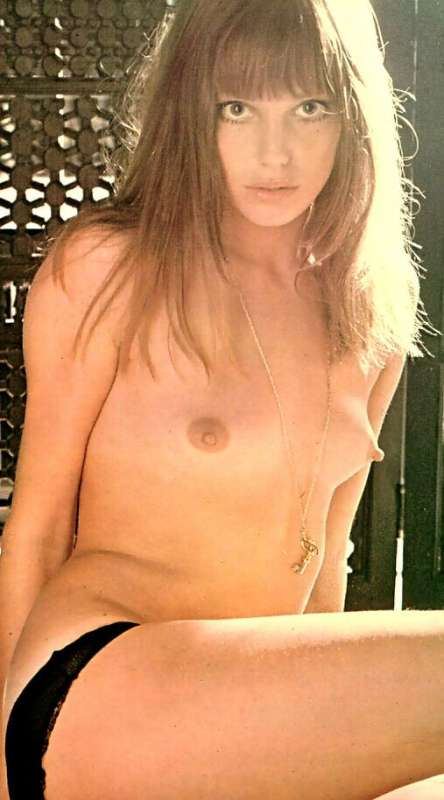
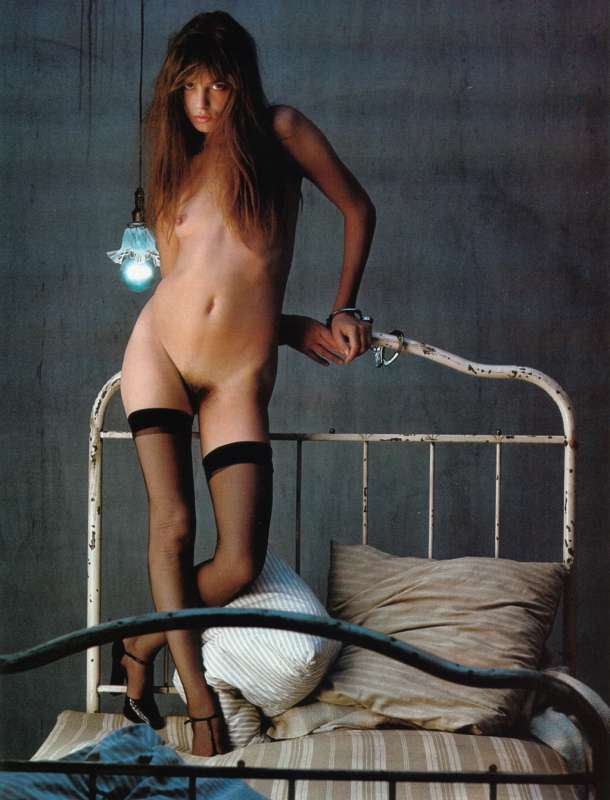
Jane Birkin #2


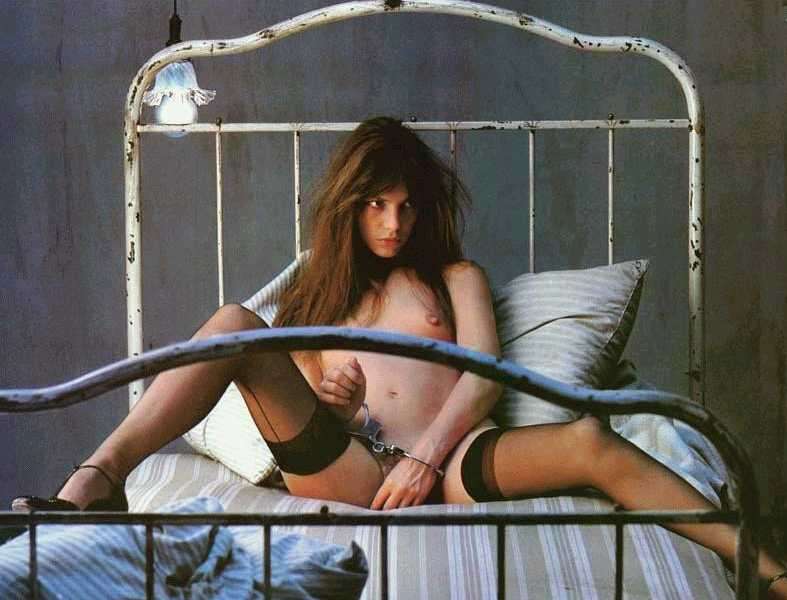
The handcuffs are a nice touch….


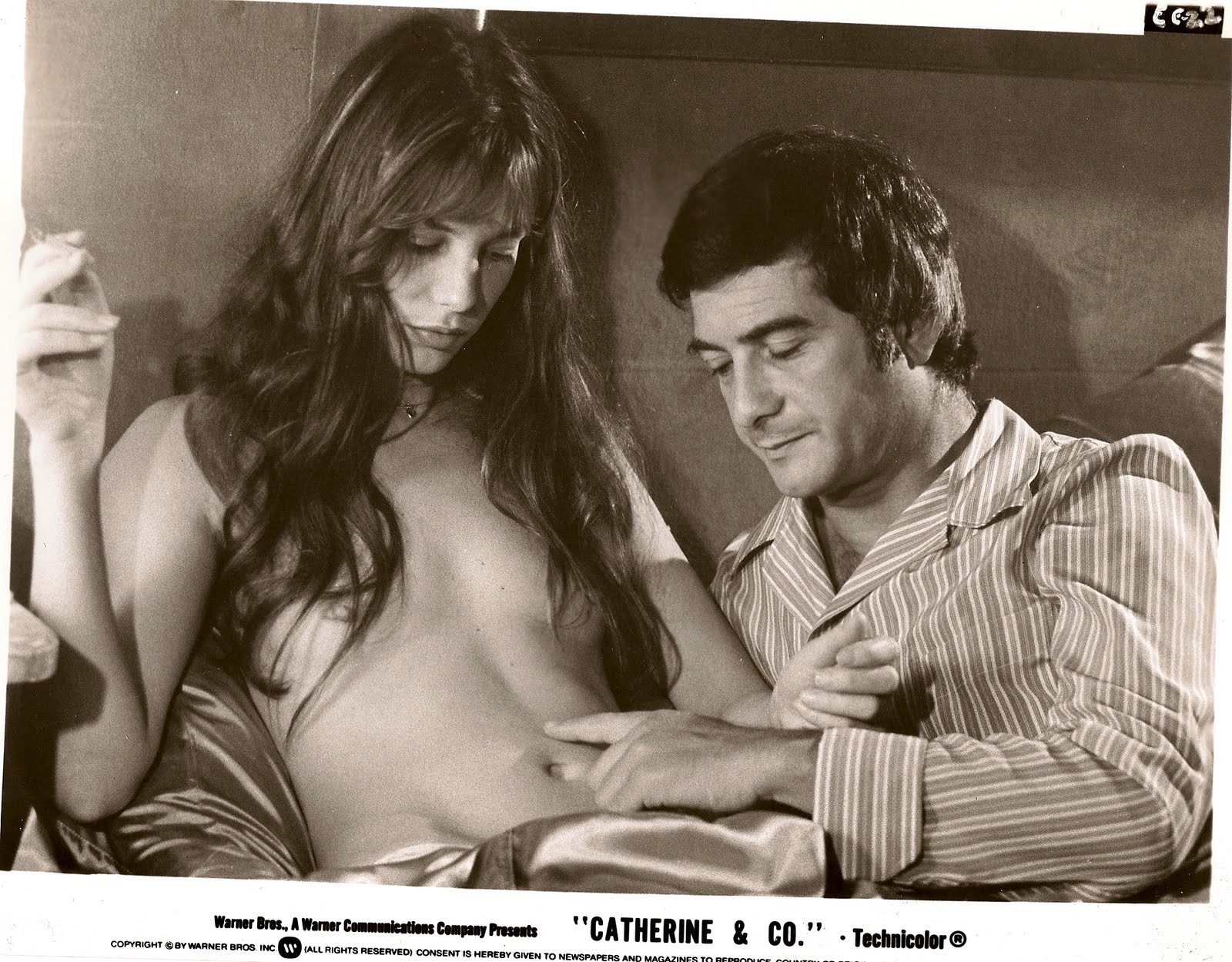
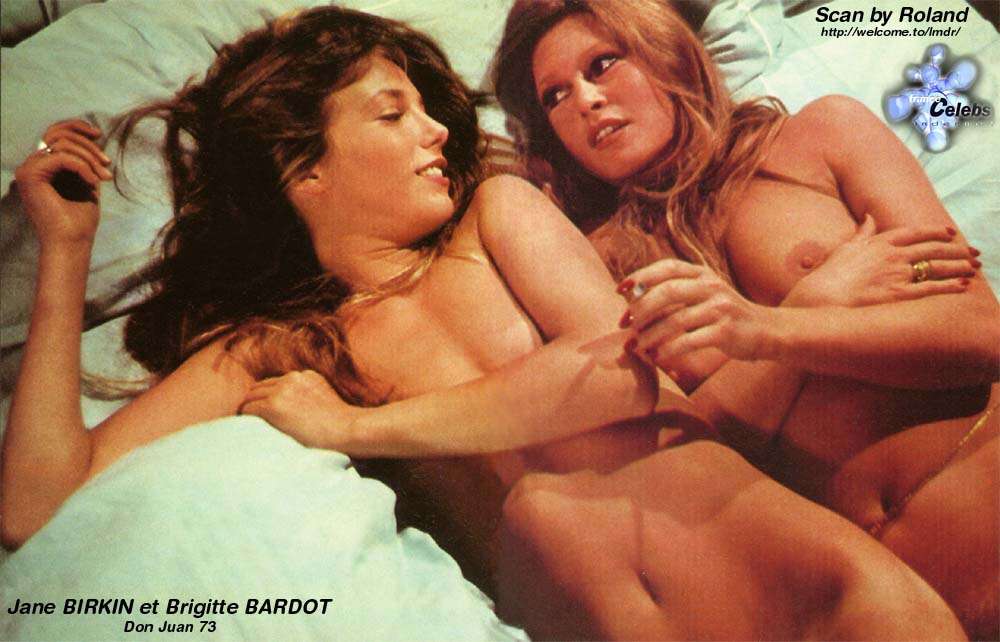
From Roger Vadim’s Don Juan ’73, a terrible movie with a brief nude love scene between Jane and Brigitte Bardot, the stills are way better than the film.

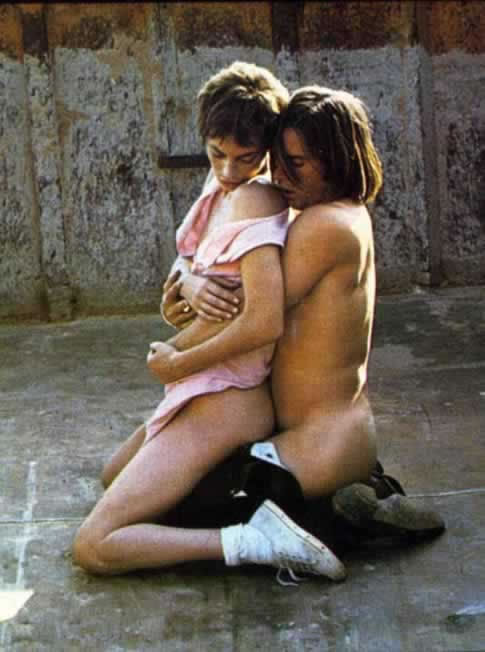
With Little Joe Dallasandro, from the amazing film Je t’aime moi non plus (directed by Serge Gainsbourg).


When ever I look at the live feed to this blog it seems there’s never a moment of the day or night when someone isn’t looking at the photos of Jane Birkin posted in Dec. 2008. I’ve posted pix of Brigitte Bardot, Michelle Phillips, Tuesday Weld, Julie Newmar, the lovely Bo Diddley, and they get hits once and a while, but it’s nothing like the amount of traffic Jane Birkin gets. Are these readers all typing with one hand? I’d love to edit a coffee table book of Jane Birkin photos, any publishers out there game? Her filmography can be found here. Her daughter
Charlotte Gainsbourg has a new record out this week produced by Beck, I haven’t heard it yet but they’ve both made a few records I really liked so it’s probably worth checking out.

Anyway, since I have nothing to say today, I thought I’d post some more pix from my collection, I know there’s a lot of you Jane Birkin fans out there. You’re welcome.

Gillian’s Found Photo #36 (part two)

This comes from the same batch of snap shots as last week’s found photo (#36), in fact the girl on the right of this photo can be seen be-wigged and adorning the arm of her pimp in that pic. The green velvet (or more likely, velour) pantsuit really brings back memories, my first girl friend in the eighth grade had one just like it. The girl on the left certainly has the classic 70’s look down. Who started that hat craze? Was it Ali McGraw in Love Story? Well, these girls look happy, and well fed, maybe the mack in the first photo wasn’t such a bad guy. Where do you think they are today?

BTW: In the comments section of GFP #36 one reader mentioned the pimping career of the Mighty Hannibal, which I didn’t know about, but as it turns out, in his day he was one of the most successful pimps in Atlanta. Evidently he’s quite happy to discuss the subject should you run into him, I wish I’d asked the last time I saw him.

Jimmy Nolen B.C. (before chank)


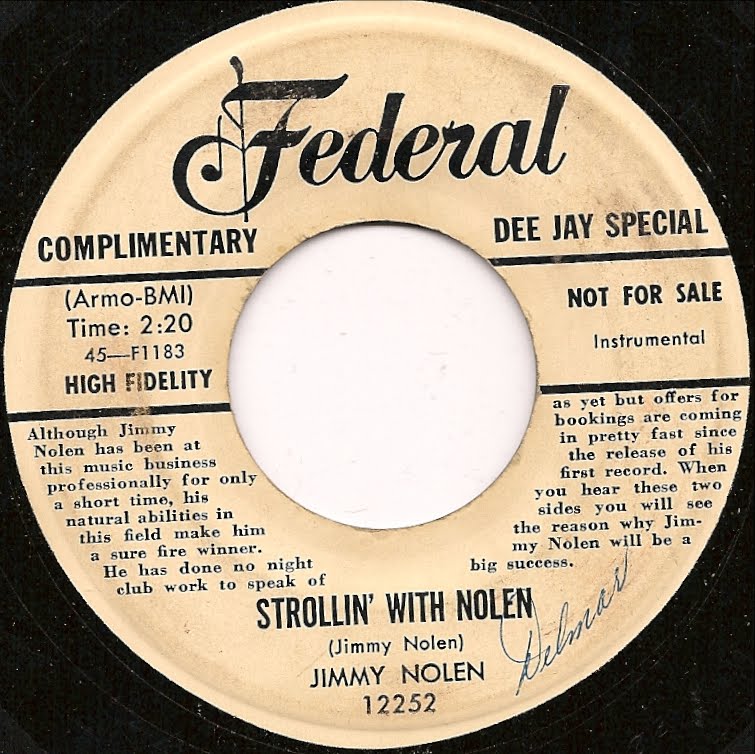
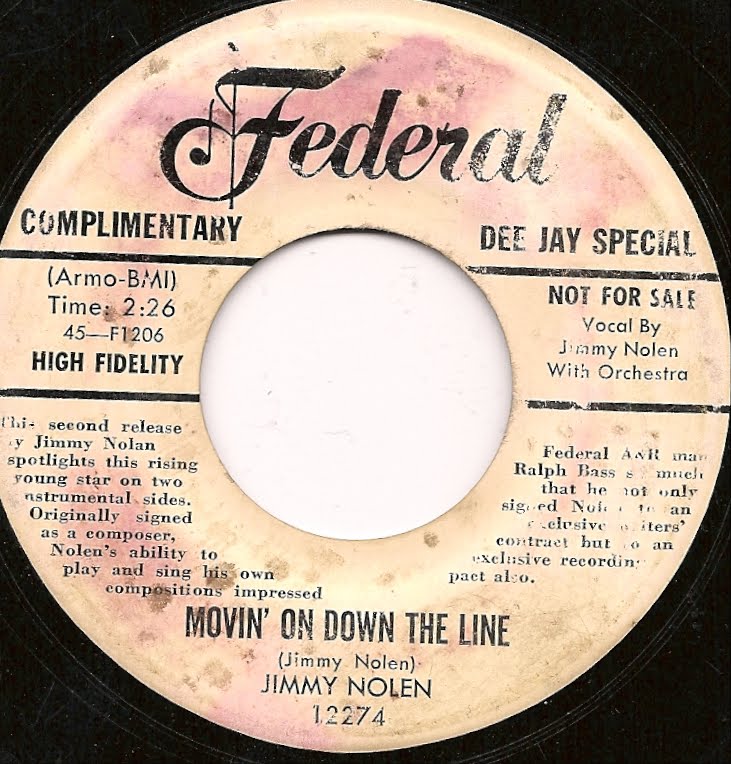
I love these early “bio label” Federal promo 45’s.

The Johnny Otis Show, Jimmy Nolen is seated to Otis’ right, behind Three Tons Of Joy.

Nolen gets a rare chance to play the blues with James Brown’s band, 1981.

The career of guitarist Jimmy Nolen can be divided into two parts, the first as an R&B and rock’n’roll guitarist, best known for his stint with The Johnny Otis Show (1957-59), and as a solo artist, and a second part spent playing behind James Brown where his style changed, starting with James Brown’s recording of Out Of Sight (1965), when Nolen developed a new style of playing, using the guitar as a percussion instrument, loosely barring an A chord, and whacking away it it, it was a style which he’d play for the rest of his life. Literally, he played that A chord for the rest of his life. It was from this latter style he got his nickname “Chank”, which was the sound he made hitting that chord. It was this later part of his career for which he is often celebrated, having virtually invented the funk style of guitar playing, but today, we, make that I, shall survey the early part of his career, since no one else seems to care much about it.

James Nolen was born in Oklahoma City in 1934, he began playing violin as a kid, and influenced by blues giant T-Bone Walker got himself a cheap Harmony guitar and taught himself to play the blues. Jimmy Wilson, best remembered for the minor hit Tin Pan Alley, spotted him playing in Tulsa and hired him, bringing him to Los Angeles.
In L.A. he played with local R&B acts like Monte Easter, with whom he made his recording debut appearing on the Aladdin disc Blues In The Evening b/w New Orleans Hop (there’s a copy on Ebay right now, minimum bid $200), and also with sax honker Chuck Higgins, rocking away in fine style on his Dootone sides like Wetback Hop, The Rooster, Oh Yeah and Lookin’ For My Baby. He recorded his first single for the local Elko label (it was later leased to Imperial) in 1955- Slow Freight Back Home b/w Let’s Try It Again, the b-side being his debut as a vocalist. Another disc issued on Elko– Strangest Blues b/w I Used To Love A Woman under Nolen’s name is actually by Jimmy Wilson according to the latest edition of The Blues Discography 1943-1970 (Les Fancourt and Bob McGrath, Eyeball Productions, 2007) He also cut some excellent sides for Federal in two sessions held in 1956. Between 1956 and 1957, Federal issued five Jimmy Nolen singles- I Can’t Stand You No More b/w You’ve Been Goofing, Strollin With Nolen b/w After Hours (this is the version sighted by Roy Buchanan as his main inspiration, he would go on to record it several times, always using Nolen’s arrangement as the template), Strawberry Jam b/w The Lost Train, Move On Down The Line b/w The Way You Do and It Hurts Me So b/w How Fine Can You Be. These sides leave no doubt that he was an passable singer and better than average songwriter, but it was as a guitarist that he really stood out as a truly original stylist. Charly re-issued all his Federal recordings (with alternate takes) on the CD Scratchin’ along with seminal sides by Pete “Guitar” Lewis and Cal Green (of the Midnighters) in ’91 (CD 268).
in
In 1957 when Pete ‘Guitar’ Lewis left the Johnny Otis Show, Nolen was a natural choice as his replacement. Otis had recorded him for his Dig label, although the recordings– Jimmy’s Jive and Come On Home went unreleased until the 1990’s. With The Johnny Otis Show he can be heard on classics like Willie & the Hand Jive, Castin’ My Spell, Crazy Country Hop, Can’t You Hear Me Callin’ Baby, playing mostly in a style similar to Bo Diddley, although Otis claims he had been playing that hambone beat since the late thirties as the drummer with Count Otis Mathews’ House Rockers, the Bay Area combo he began his long, illustrious career with. Nolen stayed with Otis until 1959 when he struck out on his own, recording for the Specialty subsidiary Fidelity that year, the result being an extremely rare two part instrumental– Swinging Peter Gun Part One b/w Part Two. I’m still looking for that one.
Nolen spent the next five years leading his own band, touring around the south west, backing up bluesman George “Harmonica” Smith, and struggling for a break. Finally, in 1965 he joined James Brown’s backing band, developed his “chank” style (sometimes called the “Scratch” or “Chicken Scratch”), staying with Brown until 1970, when he quit along with the whole band who walked out en masse, rebelling against Brown’s draconian system of fines and low pay. With Maceo Parker as leader, they soon regrouped sans Brown as Maceo and All the King’s Men. Urban legend tells us when Brown was auditioning Nolen’s replacement he asked one picker, “Can you play an A chord”?, followed by “Can you play it all night”? then, “You’re hired”. Nolen would rejoin James Brown’s band in 1972 and stay until he died from a heart attack in 1983. With Brown he rarely got to solo, although the above clip shows he still had the heart and finger tips of a blues man until the end. His rhythmic playing was featured prominently chanking away on his like Papa’s Got A Brand New Bag and I Can’t Stand Myself (When You Touch Me), and plenty of other guitar players were listening. Today his style totally ingrained in the sound of modern music, but we shall forgive him, it wasn’t his fault music got so crappy.
And that readers, is pretty much what I know of Jimmy Nolen’s story. Anyone with copy of Fidelity 3015 to sell or trade can e-mail c/o this website.

Various Artists–I Love TeeVee

Wilbert Harrison at the piano…this might be the only known footage of him.

I never saw this footage of JB Lenoir before, shot in Chicago circa 1964.


JB Lenoir again, this time with the great Freddie Below on drums. 1965

JB, at home with cool Kay guitar

Arthur ‘Big Boy’ Crudup wonders where the money went.

Big Joe Turner with the Johnny Otis Show, 1970.

Big Joe at the Apollo, early 50’s.


Little Walter and Hound Dog Taylor, alcoholics unanimous.

Muddy Waters and his drunk assed band.

Muddy and Sonny Boy Williamson II (Rice Miller).

Mickey Baker (in shades) with Coleman Hawkins.


This is bizzarre, Serge Gainsbourg interviews Jerry Lee Lewis!

Even if I have to watch it on my computer, I love TV. It’s better than real life, you don’t have to talk to people, and you can always change the channel. So here’s some blues, and R&B clips and a bonus meeting of the minds between Serge Gainsbourg and Jerry Lee Lewis (courtesy of Donna Lethal) most from European TV and documentary footage. I have no idea where the Wilbert Harrison clip is from, but it’s great, as was he. The Coleman Hawkins and Mickey Baker clip is incredible, it stand with the Ben Webster sides cut with Johnny Otis and Pete Guitar Lewis for Mercury, and the Albert Ayler recordings with Harvey Vestine (Gamblers/Canned Heat) as one of the most successful comminglings of blues and jazz.

Something to ponder, how come Various Artists isn’t in the Rock’n’Roll Hall Of Fame? That name is on more good LP’s than any other.

James Luther Dickinson Reposts

[youtube https://www.youtube.com/watch?v=ZeEBVgjrCVk&hl=en_US&fs=1&%5D

A few days later, I thought I’d add this, I agree 100%


The great Memphis musician, producer, and philosopher James Luther “Jim” Dickinson gave up the ghost last August, you can read my post and watch some video on him here with an addendum here. The links on those posts however are dead. You can find his classic 1971 LP Dixie Fried at the Twilight Zone blog (as well as some of his field recordings done around Memphis, search TZ for Delta Experimental Projects Vol. 1 and 2). One of the two LP’s by

Mudboy & the Nuetrons’– Negro Streets At Dawn (their second) can be found here.
After a thirty year hiatus, Dickinson began recording solo albums again in 2002 with Free Beer Tomorrow (Artemis) and released three more LP’s in quick succession– Jungle Jim & the Voodoo Tiger (Memphis Int’l, 2006), Killers From Space (Memphis Int’l, 2007) and the posthumous Dinosaurs Run In Circles (Memphis Int’l, 2009). Those you can buy, you cheap fuck. I did. Here are some rare sides, all of them personal favorites which I’m reposting because they should be heard. Thanks to his son Luther of the North Mississippi All-Stars and the South Memphis String Band for the version of Rumble, the 45 of which I’m still looking for.
Here’s some sounds:
*New Beale Street Sheiks- You’ll Do It All The Time (Southtown, 1964, his first single)

*Jim Dickinson & the Katmandu Quartet- Shake ‘Em On Down b/w Monkey Man (Southtown, 1965)
*The Jesters- Cadillac Man b/w My Babe (Sun, 1966)
*Flash & the Memphis Casuals- Uptight Tonight (Block, 1966, written by Dickinson who also plays guitar on it).
*JD & the Hoods- Rumble (Barbarian, 1980, see my second posting on J.D. and the comments section for the story on this one)
*The Johnny Burnette Rock’n’Roll Trio- Rooster Blues, Ubangi Stomp (Rockabilly, 1981, Paul Burlison and Johnny Black put the Trio back together without the late Burnette brothers to make an album with guest vocalists like Charlie Feathers and Malcom Yelvington, J.D. sings and plays piano on these two cuts).
*Jim Dickinson & the Cramps- Red Headed Woman (Big Beat, recorded 1977, released 1981, at Sun Studio while the Cramps were recording the tracks for the Gravest Hits EP).
I have pretty much written what I have to say about him in the earlier postings, but let me reiterate, we’ll never see another one like Jim Dickinson, he is one of immortals.

Julie Newmar


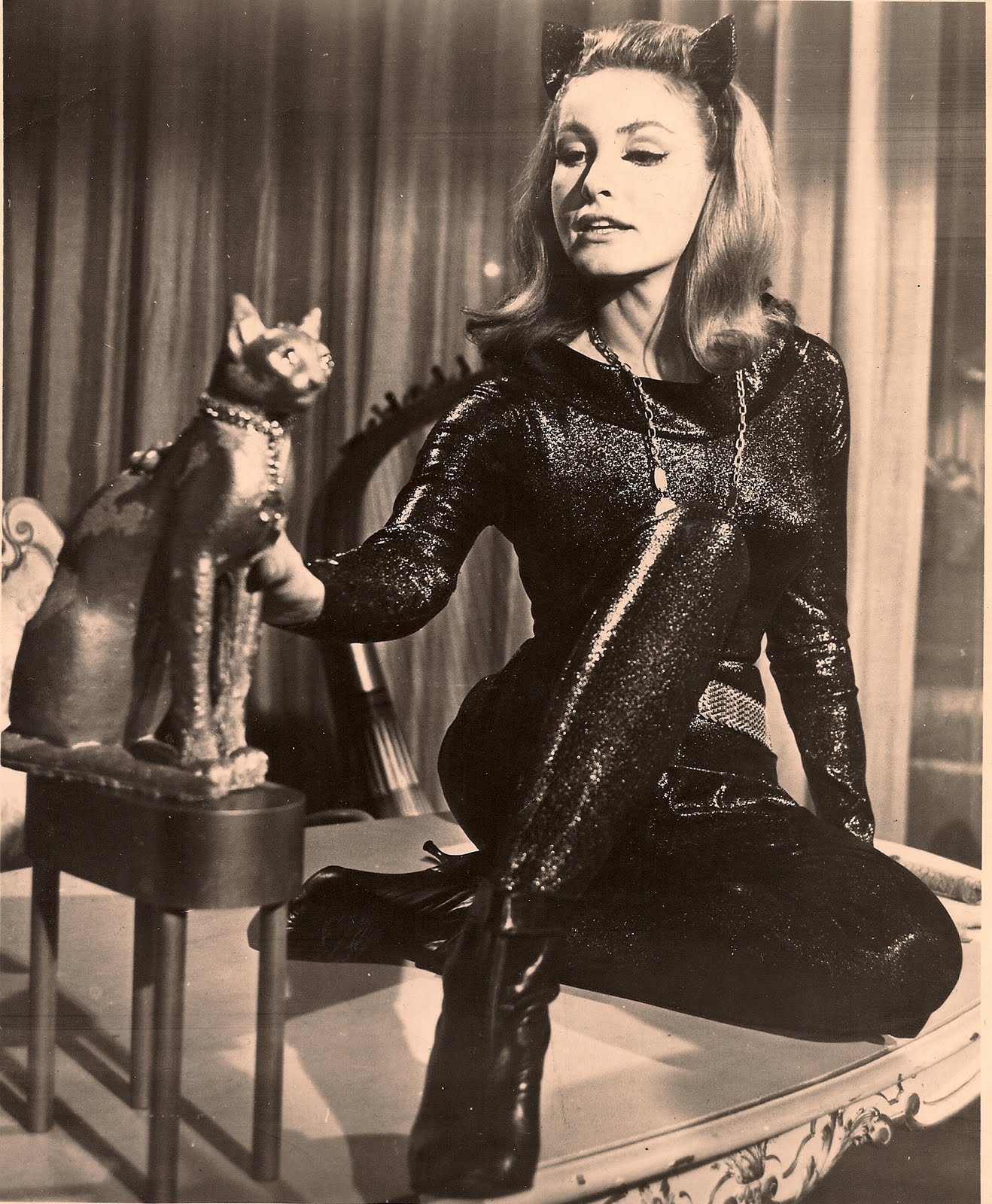
Of all the actresses who have played Catwoman on TV or in the movies, in my less than humble opinion, only Julie Newmar really captured the feline qualities that make a certain type of woman seem like slinky ocelots. She had the same lynx like quality that Simone Simon brought to the original Cat People (1942). She was a natural blond who went brunette for the role. Julie Newmar showed up early in her career (under her real name Julie Newmeyer) in William Castle’s Slaves Of Babylon doing a harem dance (bottom clip), but her real screen debut was in Seven Brides For Seven Brothers, she’s the highlight of an otherwise dull movie. She had cameos in all sorts of TV shows including Twilight Zone (in the 1963 episode Of Late I Think Of Cliffordville in which she plays a she-devil), F Troop, The Beverly Hillbillies, Route 66, The Monkees, Star Trek, Columbo, and Get Smart. She also shows up in Elvis’ King Creole (1958, uncredited), Lil’ Abner (1959, playing Stupefyin’ Jones), Rowan and Martin’s semi-retarded vehicle The Maltese Bippy (1969), Streetwalkin’ (1985), and loads of TV movies, not to mention being interviewed for the fairly watchable documentary King B: A Life In The Movies. She grew up in L.A. and began her career as an “artists model”, and posed nude in several 50’s pin up mags, none of which I can find at the moment, but I know I have a few in the basement somewhere. Judging by the change in her appearance over the years it looks as if she had a nose job in the early 60’s. Meow.