Gillian’s Found Photo #45

The Fang is back. And what has she dug up this week? No, this wasn’t taken in Germany in 1942, nor it is the Pope with his Nazi scout troup, it’s actually from somewhere in the mid-West of the good old USA. There were plenty of pro-fascist “bund” groups in the U.S. before we entered the war, and plenty of folks (Gen. Douglas MacArthur and Ambassador Joseph Kennedy among them) who thought maybe we should have sided with the Narzis as Mel Brooks would call ’em, to fight communism, don’t you know.

Hence, there were American Nazi rallies in Madison Square Garden and youth groups like the fun lovin’ bunch above who can’t wait to grow up so they can wear those snazzy SS uniforms.
Speaking of snappy uniforms, check out this clip here and keep in mind the wearers of the wild head gear also posses atomic weapons. As for the above group, I gotta admit, Nazi youth groups looked a lot less creepy back before the skinhead look became fashion De rigour.

Payday (1974)

Daryl Duke’s Payday (1973) with Rip Torn and a cast of fabulous unknowns, is the best movie ever made about American music. Written by Don Carpenter, who never got another screen credit, it appeared two years before Robert Altman’s overrated, condescending, Nashville.

Both cover the same territory, the world of country music in the early 70’s, but where Nashville attempts to stand above its subject in dismissive judgement, Payday revels in the down and dirty world of country singers; a life of pills, booze, one night stands, and gladhanding assholes at every stop. It gives the viewer an unflinching look at the life a of mid-level country star, played with gusto by Rip Torn, on the road eleven months a year, and it tells the story without the mythologizing and/or moralizing that seems to be built into the music film genre.
I bring up Payday mostly, because I happened to notice that Jeff Bridges won an Oscar for his portrayal of a country singer in an innoucous little film called Crazy Heart. I didn’t hate Crazy Heart, I just thought it was dull, but I’ve always liked Jeff Bridges and I’m glad he won the Oscar simply because he’s been in so many good movies over the years (and saved some mediocre ones) that have gone unacknowledged– Fat City, Thunderbolt and Lightfoot, The Last Picture Show, Heaven’s Gate (very underrated), Cutter’s Way, Masked and Anonymous (I know it was awful, but I liked it for reasons I can hardly explain), American Heart, insert your favorite here. Now both movies are supposed to be roughly based on the life of Waylon Jennings with a bit of Jerry Lee Lewis and Hank Williams thrown in. If you’ve seen both films, it’s hard to believe anyone two people could examine the same subject(s) and come away with such different view points. I can assure you Payday is a lot closer to real life.
Okay, film critic I’m not, but discounting documentaries (and there’s not even a whole lot of great music documentaries), great films about popular music– This Is Spinal Tap, A Hard Day’s Night, Expresso Bongo, Performance, Round Midnight, The Connection (which is more about dope than music, but it does star Jackie McClean), and for you low budget sleaze fans (count me in)– Wild Guitar, Space Is The Place, Rock Baby, Rock It, The World’s Greatest Sinner, hell, you can count ’em in a cigarette pack, are indeed a rare breed. More common are films so bad you can only laugh, or if you’re Elvis (who never made a great movie, and only four watchable ones*) shoot out the screen– Cadillac Records, What We Do Is Secret, Velvet Goldmine and I’m Not There are more recent examples of films that stand out as some of the worst crap I’ve ever sat through (okay, I turned the channel on Cadillac Records thirty minutes into it, but I just can’t imagine it was going to get any better). This dearth of intelligent use of multi-million dollar budgets only makes Payday that much more special. I won’t even get into the tired, cliches of the bio pics like Ray, I Walk The Line, and Control, the first two are practically the same movie, the later put me to sleep within minutes.
Getting back to Payday, it’s star Rip Torn turned in one of his very finest performances. In his portrayal of country singer Maury Dann, Torn created a character that tells us more about the world of country music than you’ll learn by watching ten years worth of CMT. As of late his great talent seems to be going to waste, he hasn’t had a decent role since his classic portrayal of Artie, the TV talk show producer (a character based on real life Tonight Show producer Freddie De Cordova) on the Larry Sanders Show, except a tiny part in No Country For Old Men (easily the best thing the Cohn brothers have ever put their stamp on). These days Rip’s most entertaining when getting arrested for his drunken antics (he recently broke into a bank after midnight thinking it was his house). Which brings us back to the fact that Payday is an overlooked masterpiece, and anyone who cares about music owes it to themselves to see it at least once.
* Okay, I’ll name what I think are the good Elvis movies, if you’re curious– Jailhouse Rock, Loving You, King Creole and Flaming Star. I guess if you held I gun to my head I’ll admit I like Viva Las Vegas but it’s hard to call it a good movie. In fact it’s hard to call any of them good movies, if Elvis wasn’t in them, they’d all be unwatchable, except Flaming Star which might have been better off without him.

Black Cracker

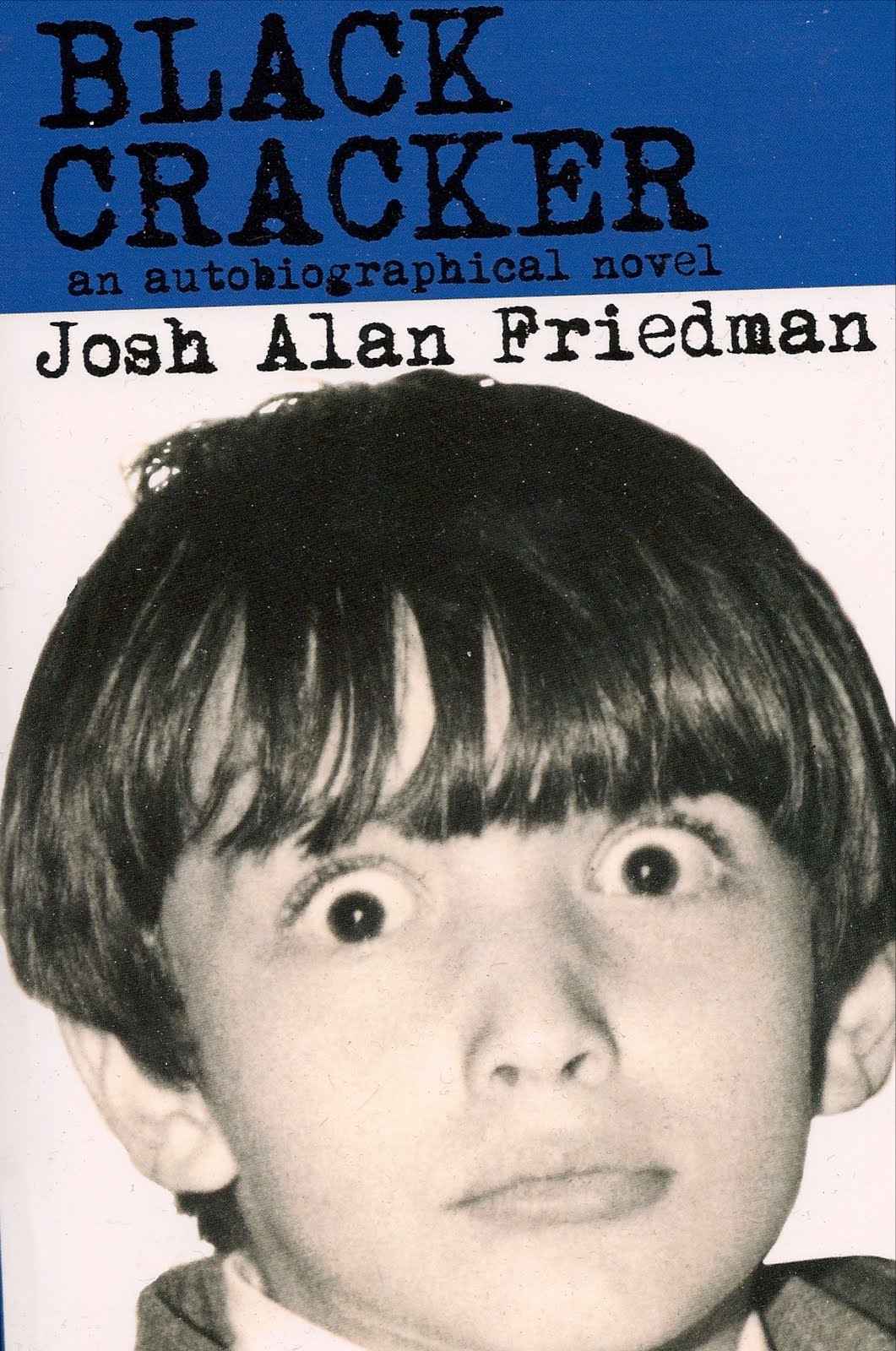
Back in October of 2008 I blogged (is that a word?) about Josh Alan Friedman’s incredible book Tell The Truth Until They Bleed (Coming Clean In The Dirty Business of Blues and Rock’n’Roll) (Backbeat Books, 2008), which if you haven’t read, give yourself detention for a month. Anyway, I mentioned that I’d read Friedman’s autobiographical novel Black Cracker, which had been passed along by a mutual friend as a computer file and which had not yet found publisher. Well, the brave souls at Wyatt Doyle Books have finally published Black Cracker, and I take it as my responsibility to hip you to its charms as I just don’t think the N.Y. Times Sunday Book Review is going to feature it anytime soon.

Friedman’s memoir takes us back to Long Island, New York, 1962 where he and his brother (cartoonist Drew Friedman) are the only two white students left at South School, in Glen Cove, L.I., and here we find a cultural tell all that will leave you howling. There’s an unforgettable cast of misanthropic tykes led by a kid called Bobo, who lives with his family in a shack on back road. Despite the family attempt at lynching young Josh, Bobo and Josh soon bond, and for the next few years Friedman experiences a cultural metamorphosis where once he leaves the confines of his suburban home, he becomes the black cracker of the title. Kind of pre-pubescent, anti-Johnny Otis if that makes any sense.

In these peculiar times when “political correctness” fights it out with Ann Coulter, while the rest of us keep our heads down, try and pretend that none of it matters, and avoid the tough questions (Does the president’s wife straighten her hair? Why are the Little Rascals banned from TV? Why does all hip hop sound like “Humpty Dumpty sat on a wall”? Is Patti Smith really a “Rock’n’Roll Nigger”?), I simply can not recommend this book highly enough. It may or may not enlighten you about the dual nature of race relations in this country, but it will sure as hell make you laugh, shake your head, and maybe even think.

BTW Josh Alan Friedman’s blog– Black Cracker Online is well worth checking out, especially for his Josh’s Lost New York features.

Wayne Cochran & the C.C. Riders

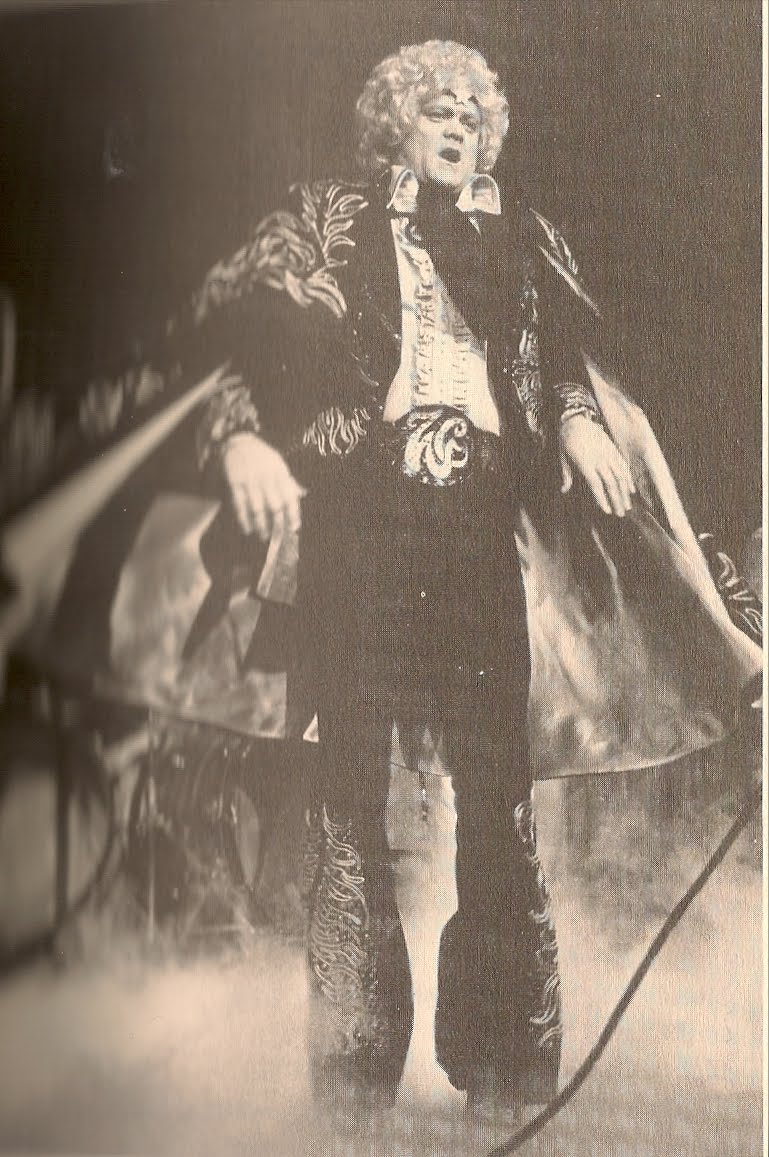
Wayne Cochran in a get up only he could (or would) wear.


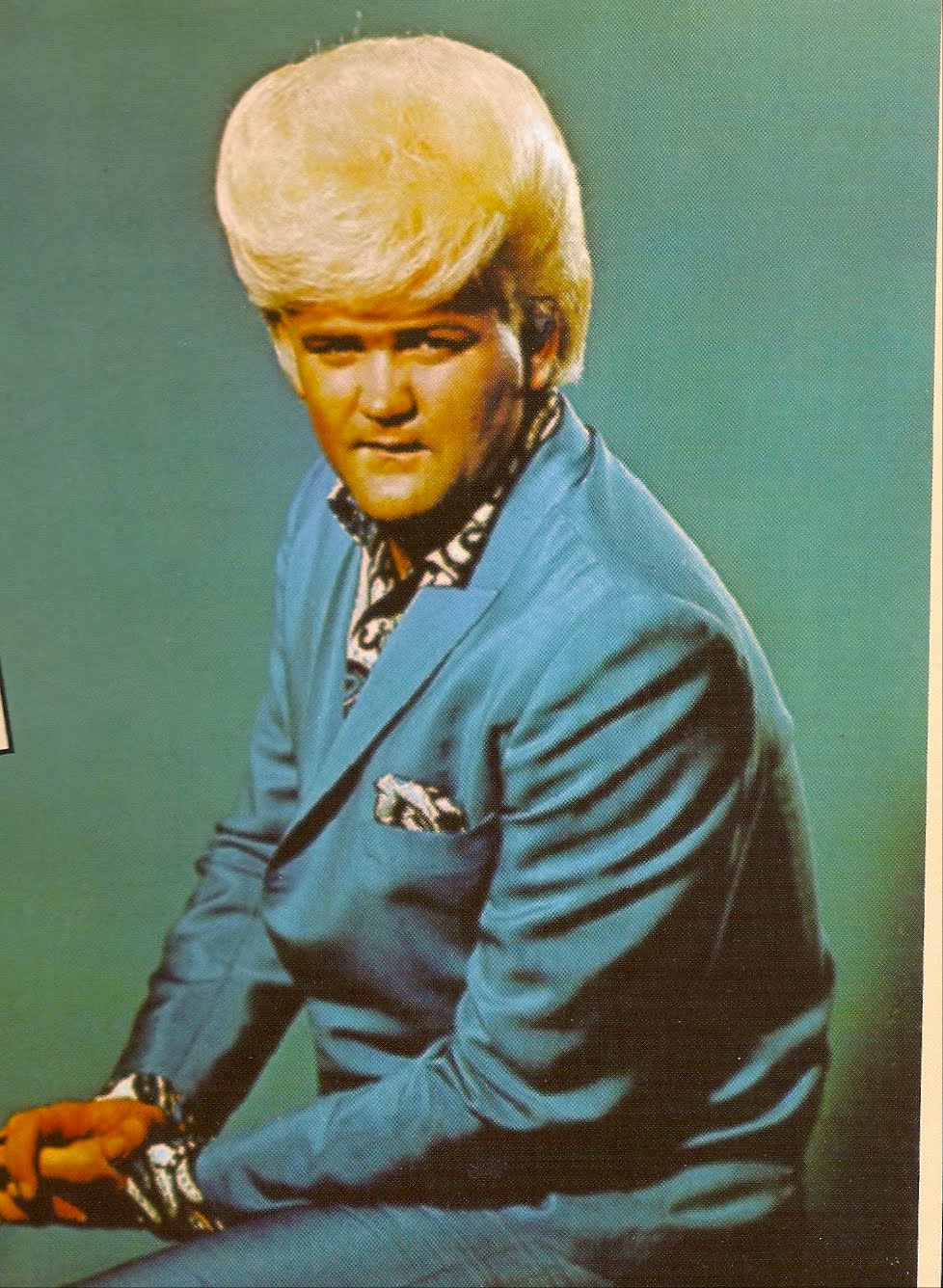
Wayne Cochran: The Man, The Hair.

On The Jackie Gleason Show, 1968.

Late 70’s, Wayne on guitar.

Another tune from the Jackie Gleason Show.

From C.C. & Company (1970) with Joe Namath and Ann Margret.

Re-Union of the C.C. Riders at Wayne’s church in Margate, Florida, 1999.

Growing up in South Florida, which had an eighteen year old drinking age, but nobody ever got carded, you could have driven into most bars on a tricycle back then and gotten served, something we used to do for yuks about once a year was to go see Wayne Cochran & the C. C. Riders, a wacky show band whose home base was a club in Miami on the 79th Street Causeway called The Barn. Usually drugs were involved. I distinctly remember tripping on at least one of these occasions. When the Barn closed, Cochran would often appear at some of the swankier hotels like the Diplomat in Hollywood, Florida (which was full of New York wise guys waiting for things to cool off back home), or Fontainebleau at the north end of Miami Beach (back in those days, the south end of Miami Beach was like an ocean front version of the Bowery), which had a real borscht belt type of crowd, or clubs like the Bachelor’s Three in Ft. Lauderdale (one of the three Bachelors being football star Joe Namath, Jerry Lee Lewis played for two weeks straight one night, or for him it was one long night, his long time guitarist, Kenny Lovelace told me on their final night “Jerry ain’t been to sleep since we got here, we been havin’ so much fun”). Wayne Cochran spent a lot of time in Vegas, where he made lots of money, so when he came back to Florida, three or four times a year, he would really packed ’em in. Most of the audience were middle aged couples in polyester leisure and pants suits trying to act hip, the kind of folks who bought Chicago and Chuck Mangione albums. At least they seemed middle age to me then, when you’re sixteen everyone seems old, when I think about it now, the crowd was probably in their early 30’s for the most part. Often the places he appeared at didn’t want to let me and my friends in (to them, we probably looked like Manson family) and on more than one occasion we were refused entrance for the way we were dressed and/or for having long hair (same thing used to happen at Disney World). It’s hard to fathom in this day and age of tattooed and pierced faces that not so long ago you could be beaten or killed for having hair over your collar. But I’ll always have a soft spot in my admittedly soft brain tissue for Wayne Cochran, he was like the (wrestler) Gorgeous George of the music world. By the time I got to see him, Wayne Cochran wasn’t exactly a rock’n’roll singer, he pitched himself as a white soul man (“The White Knight Of Soul”), but he was closer to Tom Jones, the Elvis of American Trilogy/Never Been To Spain/Steamroller Blues, and Blood, Sweat and Tears (remember David Clayton-Thomas? Don’t you hate “muscle” singers?) Anyway, the horn rock sound was very popular back then. But Wayne Cohran was something of a genre unto himself. He wore a huge white pompadour that had to be seen to be believed, fitted out in outlandish outfits that would have embarrassed Liberace (self designed but tailored by Nudie), he was a hoot, but he put on a great show and really worked his ass off onstage.
Wayne Cochran (b. 1939), from Thomaston, Georgia, had been scrappin’ around the music biz since the mid-50’s. In his late teens he moved to Macon, Georgia and there, in 1955, formed his first band. His debut record, a sleazy rockabilly grinder called The Coo, on the flip was My Little Girl, a light weight, guitar rocker, it was released on Scottie in ’59, and became a minor local hit (an even sleazier version– The Naughty Coo was issued under the name of The Great Sebastian, you’ll have to buy the Norton compilation The Rock-A-Round (Norton 332) to hear that one). The Coo was followed by the Buddy Holly style bopper Cindy Marie b/w Edge of The Sea, a snuff ballad in the Endless Sleep vein, it foreshadowed Last Kiss, and was released on the tiny Aire label. He cut a nice a couple of more singles, wrote and produced a good rockabilly record by Bobby Cash on King, he even played bass on Otis Redding’s screamer Shout Bamala. Wayne Cochran never scored a hit single and as a recording artist he is best remembered for writing and recording the original version of uber teen snuff ballad, Last Kiss which became a huge hit for J. Frank Wilson, and, I’m told (but have never heard) Pearl Jam. By the early 60’s, Wayne’s band–the C.C. Riders, had morphed from a small, guitar oriented, rockabilly group into a big, horn driven, soul revue. The money was in live performances, and having acquired a beat up old bus, he hit the road. At this point he had adopted the style of fellow Maconite James Brown (another performer who was inspired by Gorgeous George, that’s where Mr. Brown as he liked to be called, got the cape routine from). Wayne Cochran & the C. C. Riders, as they were billed, toured the chitlin’ circuit and cut sides for Confederate, Gala, King, Mercury, Chess, Epic, Bethlehem, Drive and I’m sure a few other labels I missed. He made many memorable TV appearances, and in addition to the above clip from The Jackie Gleason Show, he was seen on the Wild Wild West, The Merv Griffin Show, The Mike Douglas Show (great show, once Douglas had John and Yoko as his guest hosts for a whole week), and dozens of others. He even shows up in the 1970 Joe Namath/Ann Margret biker flick CC & Company. But it was the hair that really got wowed ’em in Miami and Vegas. Where as fellow white soul man Roy Head impressed the audience by doing splits, flips, knee drops, and all manner of acrobatic showmanship, all Wayne Cochran needed was his hair. What sat atop his dome was a magnificent work of art. It was a golden, teased, bouffant meets ducks ass kinda thing that was about eight inches high and sprayed, shellacked, and greased until it was the texture of granite. Swept back and piled high, when it caught the spotlight it seemed to glow like a full moon over the ocean. No matter how much he sweated and strained, his hair never changed shape or drooped even a little bit. In fact his hair alone could have been the basis for a religion. I’m sure the religion idea was suggested to him because after the not unusual sad show biz story–struggles with cocaine and booze, etc. , Wayne indeed went into the religion business (where income is tax free, why do you think so many R&B singers go in that direction when the pop hits dry up?) in the early eighties. Starting out with the Abundant Life Christian Church in Margate, Florida he made a brief move to Hialeah, Florida and a name change to The Voices For Jesus Family Center. Today, Wayne and his wife Monica are back in Miami where he’s raking it in as a televangelist. He can be seen on the Church TV channel (to find out when/if he’s on in your area click here). I watch him when ever I go back to visit my mom in Florida. He’s a natural, almost a white Reverend Ike. Every once in a while the C.C. Riders hold a reunion show, usually in his church, the last one was in 2001.
As far as his recorded legacy goes, even without the hair to mesmerize you, Wayne Cochran has made some fairly cool rock’n’roll records early in his career, and even some enjoyable non-rock’n’roll later on. For you rockers are The Coo, My Little Girl, Cindy Marie, Edge of the Sea (sorry about the skips) and his original version of Last Kiss. From the “White Knight Of Soul” days I kind of dig Get Down With It, a re-make of The Coo, these (possibly fake) live versions of John Lee Hooker’s Boom Boom and Don & Dewey’s I’m Leaving It Up To You , his theme song Goin’ Back To Miami, and a sappy version of Charlie Rich’s Life’s Little Ups and Downs that I sort of like.
As a teenagers who thought we were cool, my friends and I used to laugh at Wayne Cochran, but in my feeble old age, I appreciate what a hard worker and great showman he was. I got a lot of respect for the guy. And even more for his hair. In fact, when I think about it, he was a much harder worker than Johnny Thunders, the only other performer I’d seen at that point who teased his hair that much, and hell, Johnny couldn’t be bothered to tune his guitar half the time. When punk rock came in, Thunders, rest his battered soul, sold his hair to Motley Crue for a bundle of dope and started sporting a greasy da (while I’m at it, I refuse to recognize that crappy band that David Jo-has-been has been attempting to sell as the New York Dolls, Johnny and Jerry Nolan where the best part of the group, and without them, they’re just a crappy bar band, it looks silly seeing 60 year olds wearing their grandma’s clothes). Come to think of it, Wayne Cochran, for sheer flamboyance made the New York Dolls, Gary Glitter, David Bowie, Slade, and all the other glam rockers of the day look like the Allman Brothers’ road crew. Wayne Cochran, the man, the legend, the hair.

Willie Joe Duncan & his Unitar

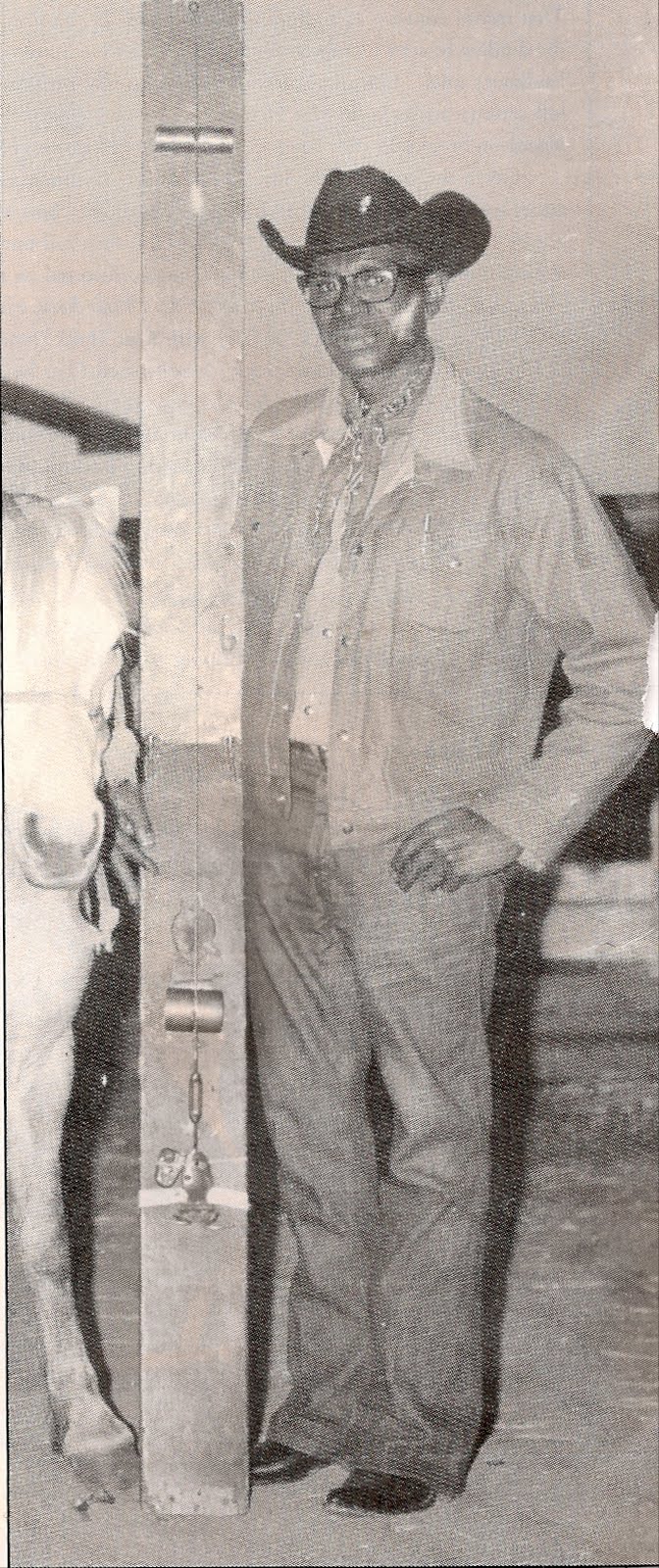
Willie Joe Duncan, his Unitar and the horse he rode in on.


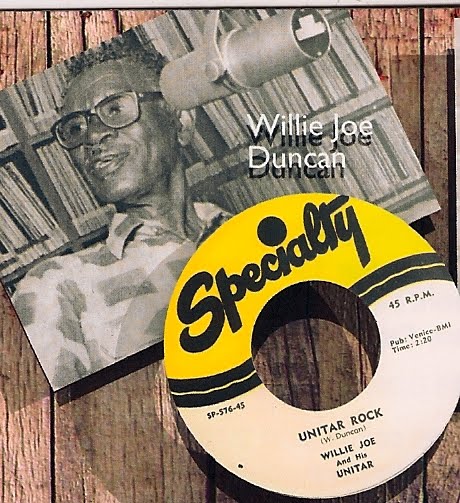
Bob “Froggy” Landers classic with Willie Joe Duncan & his Unitar

Rene Hall instrumental with Willie Joe.


Willie Joe (1988) and the b- side of Cherokee Dance.

Although he only made one and a half singles, there are some people out there, me for instance, that have spent an inordinate amount of their life wondering, just who the fuck was Willie Joe Duncan? It wasn’t hard to figure out what a Unitar is. A Unitar is a home made one string electric guitar. Willie Joe Duncan was remembered by many folks in Chicago who saw him in the early 50’s playing on Maxwell Street with Jimmy Reed. Jimmy Reed, who called Willie Joe by the nickname Jody, reminisced about Duncan in his final interview (Living Blues #1, June 1975):

“…he was doin this old crazy thing, with this one strand of wire, he wasn’t lettin’ me lose him nowhere; now, how he was catchin’ me on that one strand of broom wire I don’t know! But he was doing it all right. He could play that string of wire with a bottle, if he didn’t do it with his finger he’d do it with a little old piece of leather on his finger or something he’d pick it with. But on that one strand of wire on that board he could find whatever I was playin’ on that guitar. Now that was somethin’ I sure hated to lose. Yeah, I hated to lose Jody because it just was a crazy old thing”.

The last thing Jimmy Reed heard about his old busking partner “Jody” was that Duncan had taken up preaching in California. He hadn’t seen Willie Joe since 1955 when Duncan left Chicago for the coast, taking his crazy, one stringed instrument with him. Having settled somewhere in the greater L.A. area, in 1956, Duncan recorded with Bob “Froggy” Landers appearing on Landers’ classic– Cherokee Dance (Specialty), his rockin’, distorted, Unitar was the most predominate instrument on the record. On the b-side was Unitar Rock which was credited only to Willie Joe & his Unitar. It’s a classic of instrumental rock’n’roll, proving, less is more…but we already knew that. Bob “Froggy” Landers would go on to make one more record– River Rock parts 1 and 2 for Ensign on which he is backed by a band called the Cough Drops, but Willie Joe was nowhere to be heard.

Guitarist/A&R man/producer Rene Hall, one of rock’n’roll’s greatest unheralded guitar players brought Willie Joe back into the studio in 1957 to re-cut Unitar Rock under the title of Twitchy and it appeared on the flip side of Rene’s instrumental single Flippin’, also released on Specialty. And that, dear readers, appeared to be the extent of Willie Joe Duncan’s musical career. Or so it seemed.
The other day I was browsing the Roots & Rhythm mail order catalog that arrived via e-mail and something caught my eye (the one that’s permanently bloodshot)– One String Blues Masters (Delta Cat 1001). A new CD on a label I never heard of. In the brief description of the CD were the words– “Willie Joe Duncan & his Unitar, previously un-issued 1988 recordings“. Needless to say, out came the credit card, and for $16.98 + $5.00 for priority shipping, I am now the proud owner of the complete recorded works of Willie Joe and his Unitar, as well as One String Sam, Eddie “One String” Jones, and Louis Dotson. The later name being completely new to me. Pardon me, I’m going to pull five strings off my Telecaster now… I’m back, that felt good.
So what are these 1988 tracks with Willie Joe Duncan? Recorded in East Palo Alto, California, by a guy named Charlie Lange, we get Willie Joe talking about Jimmy Reed and Muddy Waters (whom he claims to have played with), and some unheard recordings where Willie Joe is backed by Chester D. Wilson on guitar, Lone Cat on harmonica and Willie G. on spoons. I have never heard of these three, but while they may not be Rene Hall or Froggy Landers, they do a nice job of backing up Willie Joe, all playing in pretty much the style of Jimmy Reed. There’s several instrumental jams, which are very loose and yet another instrumental using the riff that we know of as Unitar Rock and/or Twitchy, this time called Joe Duncan Instrumental. There’s also a jam in which he basically recreates what he sounded like playing on Maxwell Street with Jimmy Reed (Chester and Lone Cat filling in for the long gone Reed), called Key Of Jimmy Reed. Had Duncan never moved to L.A., Jimmy Reed’s records, might have sounded quite different. Perhaps they would have a Unitar on them. Back to the One String Blues Masters CD –I’m glad I bought it. It’s a bit short on liner notes and photos, in fact there’s no liner notes at all or even a booklet. But you do get One String Sam’s classic I Need $100, originally released on J-V-B, (owned by Joe Van Battle, who recorded John Lee Hooker’s first sides, I guess he figured if he did so well with a guy who knew one chord, a guy with one string couldnt’ miss. Anyway, it’s said to be Don Van Vliet’s favorite record, although don’t ask me who said it, I forgot, still it’s a classic by any one’s standards, and these parenthesis are making me claustrophobic). It’s also as rare as an honest politician. Personally, I wish the whole package was on vinyl, but clocking in at eighty minutes it would have to have been a two record set (or thirteen 78’s) which economically was probably not feasible. Of course if you don’t own the original 78 or 45 (does it exist on 45?) of One String Sam’s I Need $100 b/w My Baby Ooo, which, unless you’re extremely lucky, you could never find for a mere $100 nowadays, this compilation is double essential. There’s also a live version from the ’73 Ann Arbor Blues Festival and two other tracks from the same date. There’s really not a bad track on this CD, although One String Sam and the Specialty sides from Willie Joe are the best things here, Eddie “One String” Jones’ Rollin’ & Tumblin’ is excellent, as is his version of The Dozens, although it’s admittedly a hard song to fuck up.
There’s no law (yet) that says you need six strings on a guitar. Keith Richard played some of his best stuff with five, the live version of Midnight Rambler for example. Tiny Grimes and Alton Delmore used four, Big Joe Williams played with ten strings, in his case it being like a twelve string minus two, not a regular guitar plus four (does that make sense, if not, send me a telegram and I’ll explain it). But when you get down to one string, you really need some imagination. Willie Joe Duncan had that and more. He had a distorted, dirty, sound to go with his unique style. Now what became of the guy? This liner note-less CD does not tell us. If anyone knows please write in and tell me.
Note: if I’m steppin’ on any toes here with posting the sounds, e-mail me direct and I’ll yank ’em. I figure this blog thing is like radio, if you hear a tune and like it, you’ll go buy it. I certainly wouldn’t want to hurt Willie Joe’s royalty statement. Or hurt a label with the good taste to release Willie Joe Duncan and One String Sam records.

Robert Quine- Early Recordings: Bruce’s Farm (1969)

Robert Quine in a rare photo without his sunglasses.


Quine’s autograph, for you handwriting analysis freaks.

These are the earliest known recordings of Robert Quine playing guitar. A tape of him playing bass in a band called the Counterpoints exists, but he would never play it for me because the sax player (who had played on the Caps’ classic Red Headed Flea on White Star) didn’t show up the night of the gig that was taped and Quine hated the tape. These tunes were recorded in May, 1969 when Quine was a member of a band called Bruce’s Farm. The other members were Barry Silverblatt- guitar/lead vocals, Rick Davis- bass/vocals and Bob Clark- drums. Quine is playing guitar and singing harmony. Here’s one of the originals– Backwards. The other original is simply called Blues and is your basic twelve bar blues instrumental with a wild guitar break from Quine. The other twenty songs on the tape are covers of fairly well known tunes– Elvis, Beatles, Stones, Dylan, Hendrix, Kinks, Buddy Holly, Chuck Berry, Carl Perkins are all represented as well as a cool rendition of the Fiestas’ So Fine (done in three part disharmony) along four Byrds covers (Quine loved the Byrds). Here are some highlights– Satisfaction, Feel A Whole Lot Better, Where Have All The Good Times Gone (that’s Quine singing lead on the Kinks cover, I think he sings it better than Bowie did), Blueberry Hill, Walk Away Renee, Revolution, Eight Miles High, and Why. I’ll be posting the other elven tunes in the near future. The sound quality is a bit dodgy, there are some drop outs, static, etc. but that’s to be expected from a cassette recording of a gig from forty one years ago. To my ears, the most astounding thing is that you can hear just how much Quine had already developed his unique style by ’69. The only real difference is the heavy use of the wah wah pedal on some tunes. I believe this is the tape Quine played for Richard Hell when they first talked about putting the Voidoids together. It came to me from Barry Silverblatt who was the leader of the band and can be heard playing guitar and doing most of the singing. Barry and Quine kept in touch over the years, they talked nearly every week until the end of Quine’s life. You can hear Barry’s voice on the Velvet Underground Quine Tapes box set. If you listen closely when Lou announces from the stage that Sister Ray “is gonna go on for awhile”, you hear him laugh and mumble something to Quine (it’s the version of Sister Ray recorded in St. Louis). If you haven’t already, you can read my recollections of a 25 year friendship with Quine here. For the last recordings Quine made before his (I believe assisted) 2004 suicide, click here. It’s almost seven years since Quine took a powder, and not a day goes by when I don’t think of him.
Getting back to the music, from this tape we can see that Quine’s style changed more in the last year of his life (when he switched from the Stratocaster to the Telecaster and stopped using the whammy bar) than it had in the previous thirty years. Historically, this tape is a real gem, thanks Barry, you too are a gem. In my first Quine posting I talk about a band Quine told me he had in St. Louis called the Garbage Vendors. Barry, who knew Quine from that time assures me that Quine was yanking my crank with that one. Now that I think about it, it makes sense. Although he did show me picture of himself with three black guys, there were no instruments or anything in the shot, they could have been anyone. I’d love to believe that story, but the more I think about it, the more it sounds like it was made up especially for my ears.
BTW, Quine’s cousin Tim Quine has a blog– Rubber City Review which has a posting about Quine up this week.

Gillian’s Found Photo #44

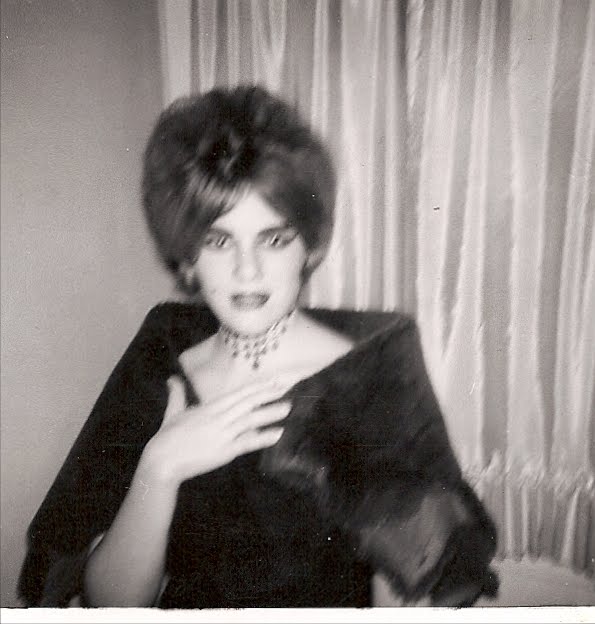
The Fang’s contribution this week is dated Feb. ’62, and this sultry vixen conjures up some type of cross between a sixties Italian film starlet and Vampira. Imagine if La Dolce Vita had been a vampire movie, this gal could have played Anita Ekberg’s role. It looks like her false eyelashes where soldered onto her eyes, with the help of a crane. Her eyes seem to be reflecting back

something of a void, perhaps she’s a succubus?

Albert Ayler- The Psychedelic Boogaloo Years

Albert Ayler- “We’re hungry….”


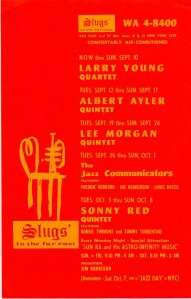
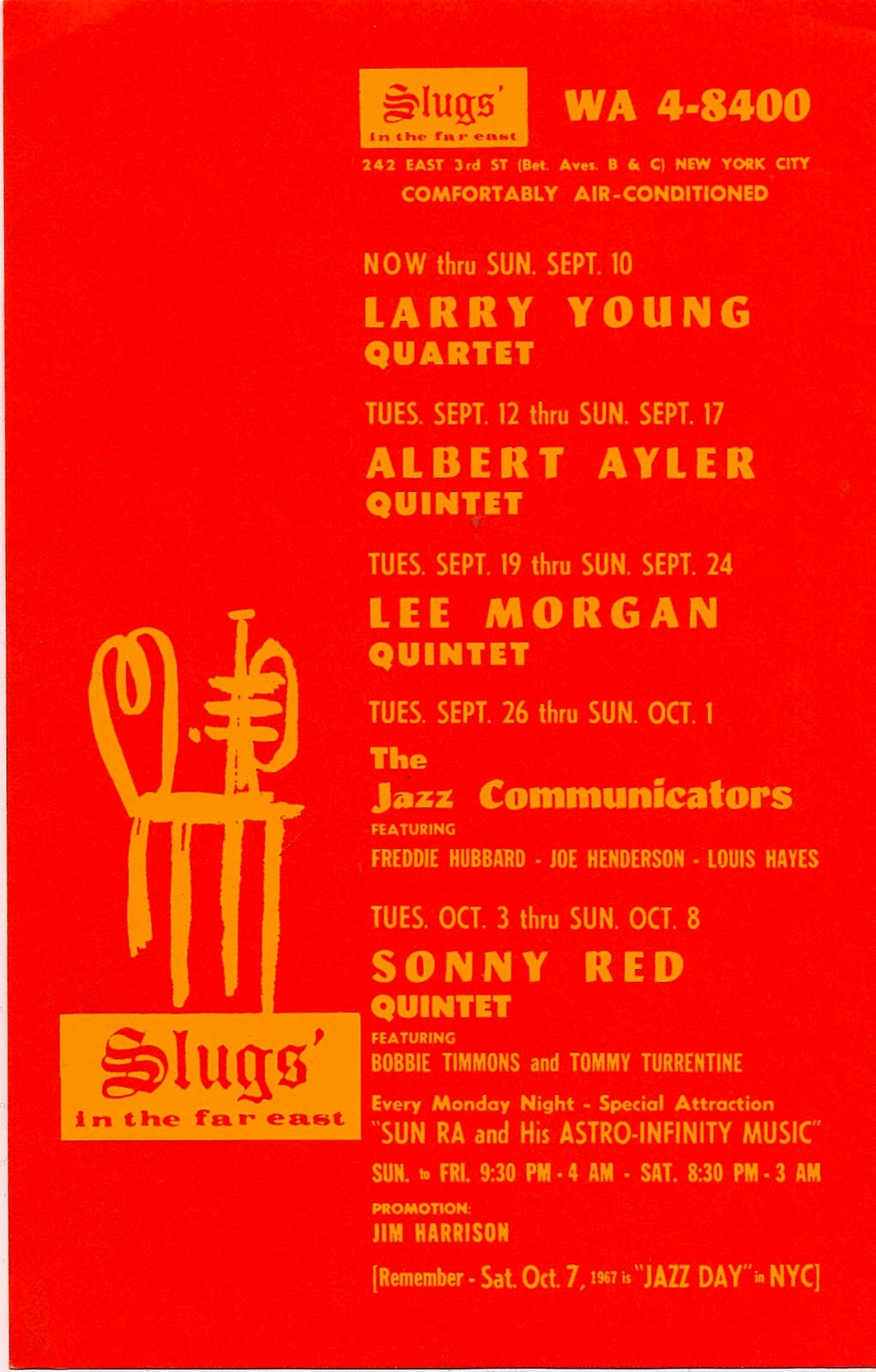
Handbill for Slugs on Ave C. Lee Morgan would be murdered out front in ’72 by a jealous girlfriend. Notice Sun Ra playing every Monday. Thems was the days.
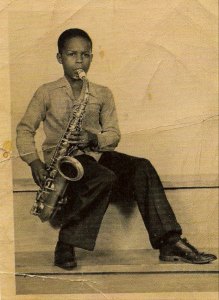
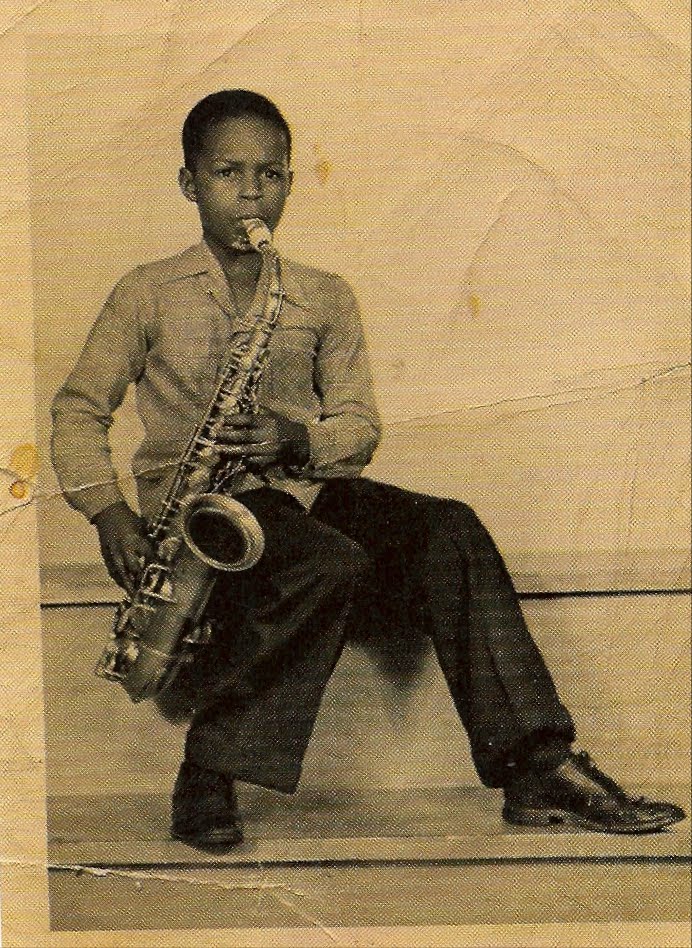
A young Albert Ayler, he’d join Little Walter’s band as a teenager.

Ayler playing at Coltrane’s funeral, 1967.


Albert Ayler (b. July 13, 1936, d. Nov. 1970) was (and is) one of the most important jazz musicians of the 2oth century and perhaps along with John Coltrane and Ornette Coleman the greatest of the “free jazz” players who came to prominence in the 1960’s. From his debut recording, a version of Gershwin’s Summertime recorded in Sweden with a clueless Swedish bebop rhythm section attempting to follow him, in which he turns the tune inside out, braying and screeching out his inner turmoil, it drags the listener to the edge of pathos and leaves you drained. For what it’s worth (in monetary value, exactly nothing) I consider Ayler’s Summertime a high point of free jazz equal to Coltrane’s Alabama and Ornette Coleman’s Lonely Woman, through his landmark ESP Disk recordings of the mid-60’s– Spiritual Unity, The Bells, Ghosts, Spirits, New York Eye & Ear Control, et al, recorded with one of the greatest free groups ever assembled– Don Cherry (who had played in Ornette’s original quartet) on trumpet, Gary Peacock (who left perhaps the best payday available at the time in Miles Davis’ band to play with Ayler) and drummer Sonny Murray (whose name New York Eye and Ear Control was released under), Ayler made music, that to John Coltrane– “seemed to have reached a place we have not been able to get to yet”. Ayler’s mission was to update the free spirited playing of the early New Orleans jazz groups (Sydney Bechet was one of his greatest influences) to reflect the world he lived in (his fiery sound mirroring the turmoil created by the Viet Nam war, the Black Panthers facing down the police dressed in black leather and armed with shotguns, children burned to death in church in Alabama, political leaders gunned down in public, etc.) One critic wrote– “Never before has their been such naked aggression in jazz”, and he was right. Ayler’s music was full of rage, pathos, and a search for “spiritual unity” that he would reach often through sheer force of lung power. He played with a raw, full bodied sound, with a gutsy vibrato and blistering tone. Ayler and Cherry in fact seemed to have an almost telepathic way of playing together that is often baffling. Jazz, however is not our subject for today. I believe jazz writing is best left to those who can explain things like exactly what “modular” playing is, and I’m really not that guy. Today’s subject are the discs Ayler cut near the end of his short life, records that are more R&B than jazz, yet they really defy categorization, as they are so unique there are few comparisons to be found in music. The only one I can make is the guitar dominated rock’n’roll/funk fusion of Miles Davis’ records like Jack Johnson, Live-Evil, Agartha, Pangaea, parts of Get Up With It (Rated X for example) and On The Corner (and the many outtakes that have recently emerged on the Jack Johnson and On The Corner sessions box sets). I once heard that Iggy when auditioning guitar players would make them listen to Jack Johnson, a great rock’n’roll record, jazz fans disdained it when it came out.
I guess some background is in order. Albert Ayler was born and raised in Cleveland. His father played jazz in the style of Dexter Gordon and raised his sons, Albert and brother Donald (who’d join Albert’s band in the late 60’s on trumpet) to play jazz. A fast study, by his teens he had mastered the style of Charlie Parker, no mean feat, and was known around Cleveland as Little Bird.
As a teenager he toured with blues great Little Walter, although Walter’s simple music quickly bored him and he was quickly fired for experimenting on the bandstand (Ornette Coleman had a similar experience in Pee Wee Crayton’s band, they left him stranded at the side of a road). In High School he was a champion golfer, but since most country clubs banned Afro-Americans there was no future in golf for young Albert and after graduating High School he joined the Army where he was stationed mostly in France. When he joined an Army jazz band, the officer who led the band told the other musicians to “Stay away from him— he’s insane”, according to Ayler. After his discharge in 1959 he moved first to L.A. and then, in 1962, to Sweden where he briefly played in one of Cecil Taylor’s groundbreaking free jazz groups (the only recording with Taylor that has surfaced can be found on Revenant’s incredible nine CD box set Holy Ghost). He made his first recordings in Sweden, and it was a Swedish radio broadcast that the aforementioned version of Summertime was recorded, and later released on the LP My Name Is Albert Ayler on the Debut label out of Denmark in 1963.
Ayler relocated to New York City in 1964 where he put together the classic line up and was soon recording for the tiny ESP-Disk label (which sometimes printed its liner notes in Esperanto as well as English), making a name for himself and becoming one of the most controversial and polarizing figures in jazz history. One of his earliest supporters was John Coltrane, both players seemed to have influenced each other to various extents and Trane became an important patron, even lending him money to get by. Trane’s Ascension was especially influenced by Ayler’s Spiritual Unity and Ghosts which Ayler had sent to Coltrane a year earlier.
In one of the few interviews he ever gave, Ayler told Downbeat’s Nat Hentoff– “We’re in the same position as some old blues guy playing his harmonica on the corner. Where a record company guy comes up and says, here play into this microphone and I’ll give you a drink of wine”. Basically, even low paying gigs were hard to come by, and he made almost no money from his recordings for the tiny ESP-Disk label which recorded him on a shoe string budget. “We’re hungry” he told Hentoff, and he meant it literally, it’s hard enough to play jazz, try it when you haven’t eaten in a few days.
In 1966 Coltrane helped Ayler get a deal with Impulse Records, the most important and open minded jazz label of its day, they were not only releasing Coltrane’s most experimental records (A Love Supreme, Ascension, Meditations, Interstellar Space) but also issued discs by Archie Shepp (Fire Music), Sun Ra (not a free jazz player, but surely one prone to experiment), and Pharaoh Sanders (Tauhid, whose centerpiece Upper and Lower Egypt would provide the Stooges with the classic bass line for Little Doll, to get off the track yet again). But Impulse could not find a larger audience for Ayler’s music and records like Live In Greenwich Village and Love Cry with their superior recording and better distribution failed to sell any more than his low budget ESP Disk sides. When Coltrane died in ’67 (Ayler played at his funeral, the recording, found on the Holy Ghost box is one of the most distraught and beautiful waxings ever made) Ayler’s mind seemed to come slightly unhinged. Which is a very roundabout way to bring us to today’s subject– Albert Ayler’s attempt to get his music across to a larger audience, to make enough money to eat regularly, or in the colloquialism of the time, his strange and desperate attempt at “selling out”.
The LP New Grass, released in 1968 saw a radical difference in Ayler’s music. New Grass finds him backed by an R&B band, playing in a style that Bob Quine, who turned me on to Ayler’s music dubbed –“psychedelic boogaloo”. Ayler began singing (badly) and his new girlfriend and manager (and later lead vocalist) Mary Maria Parks contributed by writing lyrics aimed at hippies, acid heads and people that said “groovy” a lot. Tunes like New Generation, Heart Of Love, Everbody Movin’, Oh! Love Of Life, and Free At Last, are positively perverse. I’m not sure what is says about me, and my “taste” (or lack there of) but I find these sides fascinating. For, although the backing is fairly commercial sounding funky boogaloo, when Albert solos, he’s playing in much the same style he played on his earlier groundbreaking free jazz sides. Listen to that solo in New Generation–it’s insane! The first time I heard it I almost wet myself. Playing on these tracks are such stellar R&B sideman as Bernard “Pretty” Purdie on drums, Buddy Lucas on baritone sax, and Joe Newman on trumpet. Of course, Mary Maria Parks is singing back up, that’s her delivering lines like “sock it to ’em, sock it to ’em/let ’em have it let ’em have it” on New Generation.
Ayler was savaged by the critics, and New Grass never found an audience with the hippies or R&B fans, so Ayler’s next record was something of a cross between his free jazz style and his new, R&B direction. Bringing in Canned Heat guitarist Henry Vestine (who also played on the Gamblers surf classic- LSD-25 b/w Moondog, he was riding high on the Heat’s success) and piano player Bobby Few, Albert recorded Music Is The Healing Force of The Universe (1969) the highlight of which is by a disturbingly grim blues dirge called Drudgery, which I think is one of the greatest and most successful attempts to fuse rock’n’roll and jazz ever waxed (there’s an outtake of the same tune called Toiling, the titles seem to hint at Ayler’s disillusionment with music and the music biz in general, another tune was called The Birth Of Mirth).
Again, this disc sold naught. As a sell out, Ayler was as much a commercial failure as he was as a visionary genius. Although he was often seen sporting a snazzy, leather suit, he was still often hungry. He even took up playing bagpipes which didn’t help matters in the least.
His last year and a half, much of which was spent touring in Europe, especially France, where he had a good following, he returned to playing in his ground breaking free style, at least to the European audiences which understood his music more. On some of his last recordings Mary Marie would become lead singer (and blow a bit of soprano sax), and also write many of the tunes. The sides recorded in 1969-70 (excepting those cut in France) were probably the least inspired of his career. In 1970 his brother Donald who had been playing trumpet in his band, entered a mental hospital from which he would periodically emerge– bitter, in fact, enraged. In Kasper Collins’ 2005 documentary My Name Is Albert Ayler, Donald, when interviewed, spends most of his time bitching about the fact that someone is making a film about his brother’s life and not his own. Donald Ayler passed away in 2007. On Nov. 5, 1970, Albert Ayler vanished and twenty days (Nov. 25, 1970 for the mathematically challenged) later his body was pulled out of the East River (not chained to a jukebox as one urban legend has the story). The police assumed it was a suicide, but Mary Marie Parks, the last person to see him alive, saw no sign of depression or possibly suicidal thoughts. Of course there were and still are all kinds of conspiracy theories and rumours, most say that he was murdered, but no one has ever come forth with a reasonable motive or a suspect. His death remains as much a mystery today as it was forty years ago. Albert Ayler’s life, and musical legacy, has left more questions than it answered. It’s safe to say, he is a lot more appreciated now than when he walked this planet. Google gives 174,000 results for a search of his name, it’s unlikely that all his records combined sold that many copies when he was alive.
For essential reading on Albert Ayler’s music and life may I suggest Val Wilmer’s As Serious As Your Life: The Story Of The New Jazz (Serpent’s Tail, reprinted in 1992), Albert Ayler: Holy Ghost a hard bound book that comes with the Revenant box set, and The Freedom Principle: Jazz After 1958 by John Litweiler (DeCao, 1984). Also, there’s always some interesting things up at this blog dedicated to Albert Ayler’s music.
Inventing Punk Rock, part 1 of 5,235

The Imperial Dogs, Don Waller out front.

The Imperial Dogs- inventing punk rock, 1974.

Richard Lloyd of Rocket From The Tombs, plugs their new brand new single.

Nick Kent today, plugging his new book.


For about a month I had been attempting to write a posting about the bands in the years 1972-4 that were the precursors to the punk explosion, the idea was to do a round up of band around the country who were blazing the trail, spreading the lore of the Stooges, Velvets, etc., but I finally have to admit, it’s too big a subject for one posting, and it’s just too hard to figure out who to include and exclude. I mean where to draw the line in the sand? Do I include the Flamin’ Groovies who had been together since 1966? Were the Dictators the first NY punk group to record or do I go back to the Velvet Underground, or Suicide, or the New York Dolls? Where does a group like the Runaways fit in? Or Big Star? Where to put Distorted Levels who probably never even played a gig? Does everything have to be classified and put in its own specimen jar? It’s a subject that really deserves a book. Anyway, after much blathering and trying to sum up entire scenes and/or careers in one or two sentences I gave up. I thought I would just discuss three groups and one book, and leave the rest for possible future blogeration or better yet, let somebody else do it (anyone but Clinton Van Heylin who can’t find CBGB on the map, I stopped reading his book when he put it on “the corner of Bowery and 2nd Ave”, two avenues that run parallel and never meet, although I had a feeling I wasn’t going to finish it when he called Raw Power — mellow, I think was the term). If you want to investigate the subject of the pre-punk underground I suggest you order back issues of Black To Comm fanzine which covered the ground in great detail for over a decade (it’s now a blog, but I think some back issues are still available if you e-mail ’em).
The first group I’d like to mention since they’re never given credit and seemed to be one of the first, is an L.A. group called the Droogs. They were the first (using terms like this make me want to saw my own toes off, but I can’t think of a better one) garage revival band, having released their own debut single– He’s Waitin’ b/w Light Bulb Blues (Plug’n Socket) in 1972, a mere six years after the peak year for the original American garage bands. Of course, the a-side is the Sonics tune, the flip originated with the Shadows Of Night. This was released the same year as Lenny Kaye’s original Nuggets (Elektra) compilation and Mark Shipper’s first Sonics re-issue Explosive (Buck Shot) opened people’s eyes that these groups all had something in common (Dave Marsh had dubbed the sound “punk rock” a year or two earlier in his Looney Tunes column in Creem). The Droogs second 45, their first original tune– Set My Love On You b/w the Kinks’ I’m Not Like Everybody Else (Plug n’Socket) is my favorite. They stayed together for decades, led by singer Ric Albin and guitarist Roger Clay, they cut many fine LP’s, I think the final one was in ’97. There is an excellent anthology of all their early singles released in ’98 on the German Music Maniac label called, oddly enough– Droogs Anthology. Of course, they only found a following in Europe, where I believe they toured. While working a one day job helping out the Dream Syndicate, I became friends with their bass player Dave Prevost (who was also in the Dream Syndicate for a time, he’d also been in Al Green’s band), and in 1984 while on their first (only?) visit to New York City, he dragged them into an after hours joint I was helping to run (No Se No on Rivington Street) and they played an incredible 5 AM set. I wish I could find the tape. They were fantastic.
Another trail blazing L.A. band of the era, who had a much shorter life span, were the Imperial Dogs seen in the above clips playing to a mostly bewildered audience in 1974 at a college in Long Beach, California. The clips are from a DVD–The Imperial DogsLive In Long Beach, Oct. 30 1974 which is available from the band’s own website. The Imperial Dogs represent those scattered (chosen) few who were spreading the gospel of the the Stooges (which is what the snazzy swastika flag draped over the amp refers to, not any type of racist/fascist political mentality, it was a much more innocent time, who thought real Nazis would make a comeback?), the Velvet Underground (one of the three covers on the DVD is burning version of Waitin’ For The Man), 60’s garage bands, the best 60’s British groups like the Kinks (Til The End Of The Day is another roar through) and the Yardbirds, and the spirit of real rock’n’roll– hard, mean with attitude to spare, and a sense of humor to boot. The Imperial Dogs had their own very original sound, wrote great songs and were excellent musicians. Of course they totally baffled everyone who saw them at the time except Kim Fowley and Iggy Pop who both gave ’em the thumbs up. The only gigs they could get were at Rodney’s English Disco where they played twice, and a few odd shows they set up themselves like the one seen on the DVD. By the time L.A. had a punk scene (I guess ’77 would be LA’s ground zero), the Imperial Dogs were long gone, but a posthumous 45 was issued on Back Door Man Records –This Ain’t The Summer Of Love (which was re-written by the Blue Oyster Cult and is the opening track on their biggest selling album Agents Of Fortune) b/w Midnight Dog, later followed by an LP– Unchained Maladies- Live 1974-5 issued in ’89 on the Australian Dog Meat label. Both are difficult to find today, so the DVD is the only way to hear ’em, but you also get to see ’em, and the liner notes and booklet alone are worth the twenty bucks the thing cost. Lead singer Don Waller would go on to co-found the great Back Door Man fanzine and become a respected music writer, too bad he never made anymore music, he was certainly on the right track. Had the Imperial Dogs stayed together for another year or two they might have changed the course of L.A. punk for the better. But then again, they might have been totally rejected for not having the right hair cuts. Hard to tell, and who knows? A movie got made about Darby Crash (I’d love to have been a fly on the wall at the meeting where that one was pitched), and the real visionaries are nearly forgotten. The only mention they get in Marc Spitz and Brendan Mullen’s We’ve Got The Neutron Bomb (Three Rivers Press, 2001) is in a quote from Waller concerning Back Door Man and Ron Asheton’s band The New Order (the Droogs don’t get mentioned at all). An old story, no?
Rocket From The Tombs were Cleveland’s great white light/white heat hope from the era, again they referenced the Velvet Underground and the Stooges at a time both names were virtually unknown or despised by most of the world (even covering Foggy Notion, a tune that wouldn’t see vinyl release until the 1976 Evil Mothers (Skydog) EP. Much has been written about RFTT and their guiding light Peter Laughner, once again I refer you to Black To Comm for the best (and first) things I’ve read about them (except for Lester Bangs’ obituary for Peter Laughner which can be found in the collection Psychotic Reactions and Carburetor Dung). Rocket From The Tombs are best remembered these days as the band that split into two factions– one formed Pere Ubu, the other the Dead Boys (whose best songs were from the RFTT repertoire– Sonic Reducer, Ain’t It Fun, Down In Flames). Some excellent live material has surfaced over the years and a re-recorded version of their 1975 set list also appeared early in this decade. I mention them today because they have newly recorded 45 out– I Sell Soul b/w Romeo & Juliet (Hearthan) and it sounds, well, just like their old stuff. I love it. There’s also a new live set of vintage RFTT material from Ann Arbor’s Second Chance club set for release some time soon on Smog Veil. If in 1976 when I sent away for the first Pere Ubu single from Hearthan, if you’d told me Rocket From The Tombs would have reformed and be releasing discs on the same label in 2010, well, I would not have believed you.
Then again, I wouldn’t believe the Stooges and William Burroughs would be on TV commercials and Andre Williams would be my good friend either.
Anybody who was looking for signs of life in rock’n’roll in the years 1972-5 read the New Musical Express, the best of Britain’s three weekly music rags, and for one reason–Nick Kent. While most Brit papers were worshipping at the alter of prog rock (especially Melody Maker), Kent was writing about the Stooges, uncovering the then forgotten stories of Syd Barrett and Brian Wilson. He was to the 70’s what Nic Cohn was to the 60’s, London’s guy in the know, and his new book– Apathy For The Devil: A 1970s Memoir (Faber, UK, 2010) is a moving, dirt filled, masterpiece. When punk erupted in the UK in ’76, like an exploding white head on a pimple, Malcom McClaren had Sid Vicious attack Kent with a chain at a Sex Pistols show, certainly as a way of covering his own tracks since it was Kent who turned the (pre-Johnny Rotten) Pistols onto the Stooges and the Modern Lovers, and McClaren would like to have the world believe that everything the Pistols did originated in his small mind. McClaren is truly a cretinous excuse for a human being. This set off a wave of attacks on poor Nick Kent. Any moron wanting immediate “punk cred” would attack the poor guy with chains, knives, steel toed boots, etc. as way of attempting to bond with their heroes the Sex Pistols. Kent, who unknown to us fans of his in the states, was living the hard scrabble life of a homeless junkie for much of the period takes it all in stride. In fact, there are parts of this book where he’s harder on himself than Sid was on him. He knew everyone worth knowing at the time and for insider looks at pre-fame Chrissie Hynde, down and out Iggy Pop and James Williamson in L.A. post Raw Power, Lester Bangs in his days at Creem in Michigan, the inner politics of the NME, not to mention setting his withering glare on the Stones, Led Zep, the Faces, Bowie, Bolan, Roxy, Eno, and others, make this book a juicy read. It nearly made me cry, and definitely made me laugh. If you never read The Dark Stuff (Farber, UK, 1996), a collection of many of his best pieces from 1972-1993 including the aforementioned groundbreaking Syd Barrett and Brian Wilson portraits, that might be the place to start (although personally, I think The Dark Stuff should have been twice as long, so many of his best pieces are missing, and I sold my NME collection years ago). To this day, I skim the Guardian and other UK newspapers and mags looking for his byline, I’ll read anything he writes. Even when I disagree, he’s one of the few music writers that I have any respect for, I believe that is because he’s honest even when his subject matter forces the ugliest aspects of rock’n’roll and the idiots who love it right in your face. Let’s face it, rock’n’roll too often brings out the worst in people, and it attracts many of the worst people, and Kent is the only writer I’ve ever read who doesn’t shy away from that white elephant in the room. Still, he comes off as more than fair, doling out the most jaundice critique for himself (for letting himself be duped by the allure of it all). For that reason alone Apathy For The Devil is an important book. Make your kids read it.
Addendum: I just ordered my copy of the first Stooges album, Collector’s Edition from Rhino Handmade. For two cds (with booklet and bonus 45), I do feel $50 + $5 shipping is a bit pricey. Of course I ordered the thing, how can I not? Basically, I feel like I can’t live without owning the two takes of Asthma Attack (which I’ve never heard before), but I feel kinda like a sucker. I only hope the Stooges didn’t give ’em a break on the publishing, but since the “ten song cap” (i.e. a record company will only pay the publishing royalties on ten songs no matter how many tunes are on the record, despite what federal law says about payment of publishing aka “mechanicals”) is usually a non-negotiable part of any record contract (and the Stooges signed theirs in 1969, their original contract actually has the words 78 RPM records in it), it’s rather unlikely the high price is due to a higher royalty/publishing rate for the band. But I’d feel better about shelling out fifty bucks for the thing if it did. WTF, it’s only money. I’m still glad I bought three copies of the Funhouse Sessions box, even if I did give two of them away as presents. Since most of my friends are dead, at least I have twenty eight takes of Loose to keep me company.

Gillian’s Found Photo #43

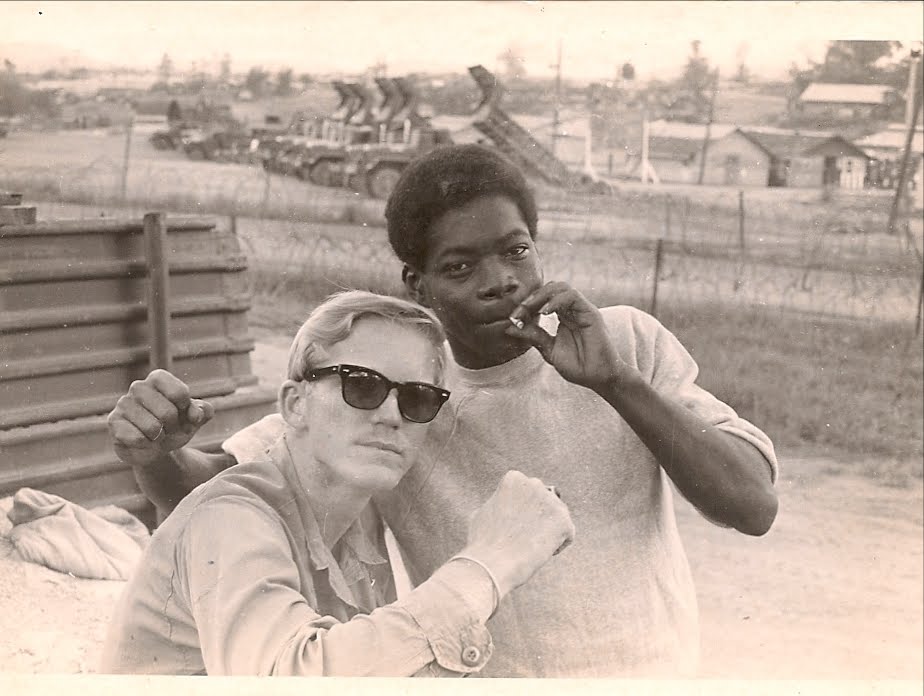
This one looks like it could be a casting call for Stanley Kramer’s The Defiant Ones (1958), the one where Sydney Poitier and Tony Curtis escape from jail chained together, on the run from a sheriff played by Theodore Bikel. Actually, you can’t tell by this photo, but judging from the other photos in the batch it came from, it’s turns out they are G.I.’s and this photo was taken in Viet Nam. Their unit seems to be doing some earth moving judging by the dump trucks in the rear of the shot. Possibly building an airstrip in some remote jungle spot. They also appear to be sharing, what back then would have been called “a reefer”. Of course the Ray Ban Wayfarers are a dead give away that the “first termer” on the left is one hep ofay.