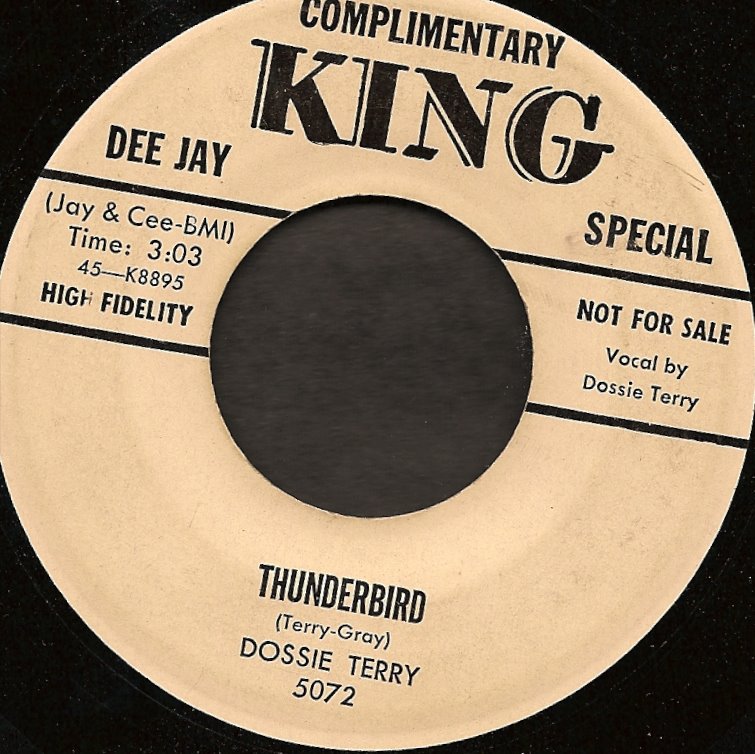
 Back in April after the mammoth bloggeration on the subject of Thunderbird (the song and the wine, here), my pal Barry Stoltz e-mailed me to remind me that I’d forgotten this version, on King by Dossie Terry. I meant to go back and add the thing but of course, I forgot. Anyway, I finally pulled the 45 off the shelf and played it, it’s a great record by something of a mystery artist, so I thought I’d post it. In my opinion any record with a Mickey “Guitar” Baker’s guitar solo (see Jan. 9th posting for more on my Mickey Baker worship) is worth hearing, and second, this version is musically unique in that Dossie adds what’s called in music a “middle eight”, that is, a change up in the middle that lasts eight bars, giving this rendition a extra verse that makes it unique. This same version was re-issued by King in the 70’s with the Lamplighters’ Be-Bop Wino on the flipside, a marketing move that I assume was aimed at skid row juke box operators.
The other reason for the posting is my own curiosity. Just who is Dossie Terry? He had a long recording career, starting in 1949 with “When I Hit The Numbers” on RCA, he would go on to cut sides for King, Amp 3, Bonus, Ebony, Chicago, 20th Century, and Enrica. He wrote or co-wrote tunes for Dinah Washington, Floyd Dixon, Ruth Brown, the Drifters, the Clovers, and Eddie “Cleanhead” Vinson, co-writing with such well known names as Rudy Toombs, yet there is no biographical information on him anywhere. He’s not even mentioned in Mary K. Aldin’s Blues Magazine Index (an invaluable website, it is an artists index for blues magazines Blues Unlimited, Blues & Rhythm, Juke Blues, Living Blues, 78 Quarterly, etc., every researcher and blues fan should bookmark it here). Dossie Terry is listed in no discography that I own except for the multiple listings for him in The R&B Indies (Eyeball, 2004) (although I don’t have the latest update of Blues Records 1946-1970 by Les Fancourt and Bob McGrath Eyeball, 2007, is he listed?). Anybody out there know anything about this guy? He was active in the music biz for forty years , in this day and age when T. Valentine can come walking through the door at any minute he’s one of the last mysteries out there, but whatever trail he left is growing cold fast.
Month: May 2009
Gillian’s Found Photo #11
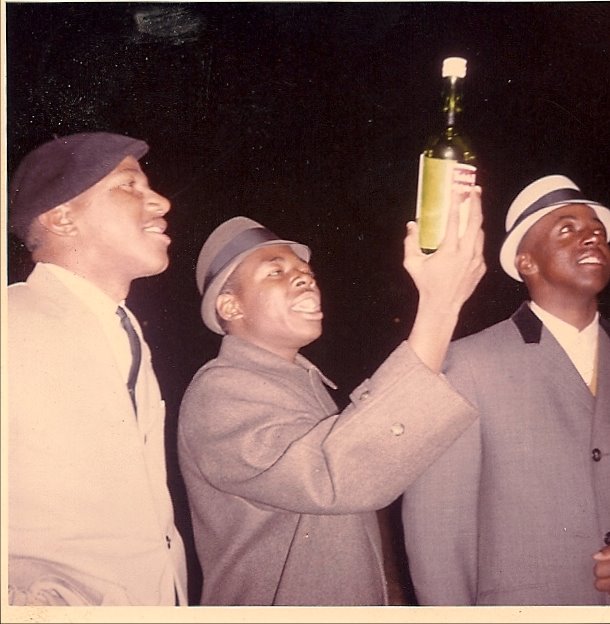 After a week off the Fang is back with a real doozie from her archives. We just can’t seem to stay off the subject of cheap wine here at the Houndblog, my apologies to anyone who arrived here via the link on Eric Asimov’s The Pour blog over at the NY Times. If you missed out on the discussion of Thunderbird wine and its significance in music see the April 17th posting.
These young slicks not only drink the swill, they seem to have based a religion around it. The fellow holding the bottle sure looks like he sees the light. What do you think the other two are looking at?
Jimmy Reed For Gypsy Rose Wine
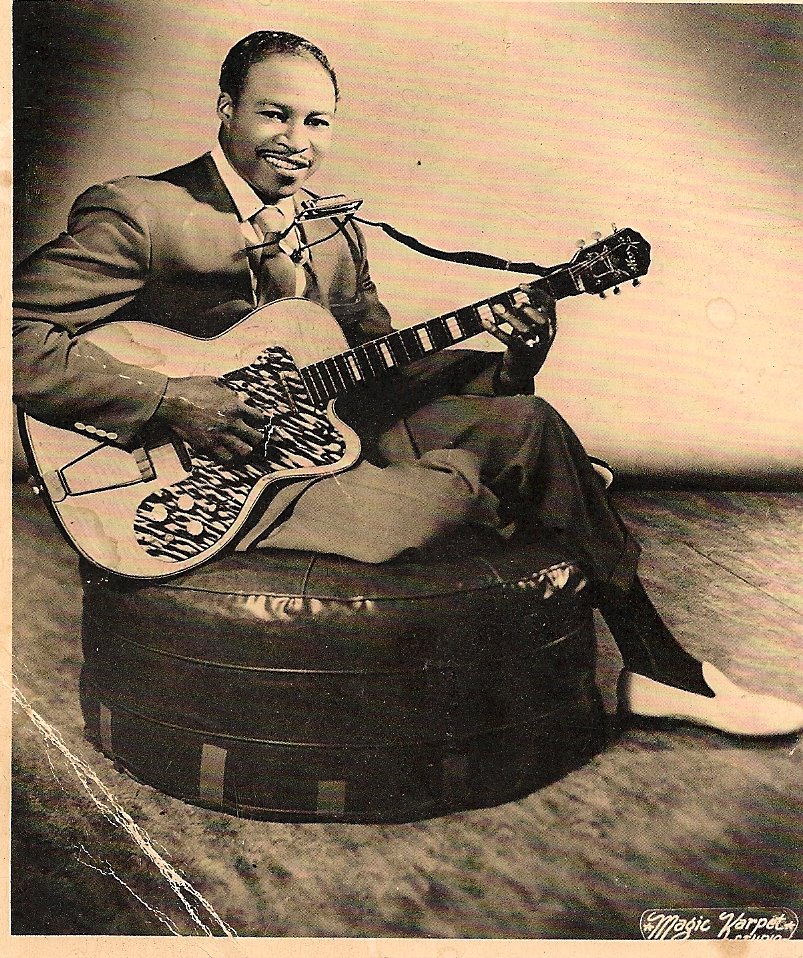

I love Jimmy Reed. As a singer, guitarist, and songwriter he was the greatest, and the drunkest. I assume you’re all familiar with Jimmy Reed’s Vee Jay LP’s- I’m Jimmy Reed, Rockin’ With Reed, Best Of Jimmy Reed, Found Love, t’ain’t no big thing but HE is…Jimmy Reed, and Just Jimmy Reed. All his Vee Jay sides are great, but the earliest, maroon label singles and LP’s are greatness personified. He made it sound so simple. That said, I love this spot Jimmy did for Gypsy Rose Wine in the early 70’s. I heard it as a kid on WLAC, a Nashville station that I could pick up in Florida on rainy nights, it took decades to track it down (if I could only find the Bo Diddley hair straighter spot!), and now here it is again, my present to you readers. Jimmy needed a little help getting through the thing, so his son Jimmy Reed Jr. aka Boonie is actually reading the ad copy. Jimmy must have gotten into the product before the recording started. The Gypsy Rose Wine (a fortified wine like MD 20/20, Night Train and Thunderbird) folks really understood their market. Somewhere in my archives I have a print ad that Carl Perkins did for a toupee company.
I’ll try and dig that out one of these days. Come to think of it, Jimmy Reed also wore a toupee …maybe that was the secret their success? The Rock’n’Roll Hall Of Fame should build a wing for drunk guys in toupees…
Roy Buchanan- The Oily Years

http://video.google.com/googleplayer.swf?docid=-7480111672444131563&hl=en&fs=true
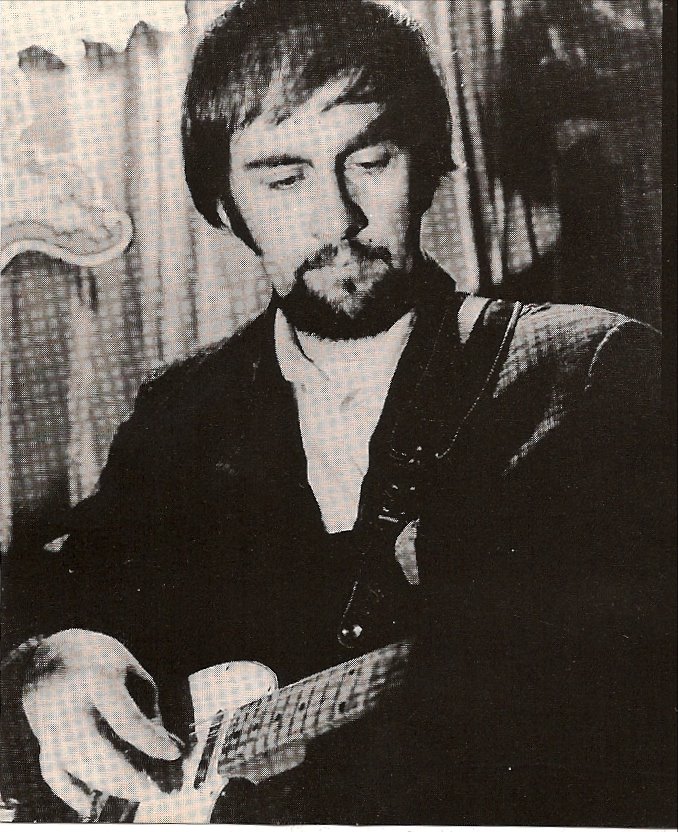
Long before he became king of the blues bar bores, Roy Buchanan was actually a great rock’n’roll guitar player. His best recordings unfortunately are spread out over a handful of obscure 45’s on small labels, coast to coast. By the time he’d made a name for himself the fire had pretty much gone out of his playing, and while he was always a great technician, he simply was not a much of a band leader, so his LP’s are dreadfully dull affairs.
Today, however, we will give a listen to those early sides, and these records I believe more than justify his reputation as one of the all time greats.
Buchanan was born in Ozark, Arkansas, September 23, 1939, and raised in Pixley, California which is in the Central Valley, south of Fresno. I think the Joads end up there at the end of Grapes of Wrath. His father was a Pentecostal preacher. Roy Nicholas, the country guitar great, star of the best Maddox Brothers & Rose 4-Star recordings and later Merle Haggard’s band lived ten miles away and was an early influence. Another influence was Jimmy Nolen of the Johnny Otis Show who Buchanan claims to have met at age 15, more likely he saw him on Otis’ TV Show (Buchanan was known for, lets call it, stretching the truth).
He would site Nolen’s Federal recording of After Hours as his favorite record through out his life.
Roy Buchanan left home as a teenager and in 1958 he hooked up with Dale Hawkins’ band in Tulsa, traveling with them to Shreveport, Louisiana, home of the Louisiana Hayride radio show (where Elvis started) and a hotbed of guitar playing talent– James Burton, Scotty Moore, Carl Adams, and dozens of other six string hotshits passed through Shreveport where Dale Hawkins and his brother Jerry were both based, Buchanan cut his some of his earliest sides with the Hawkins brothers.
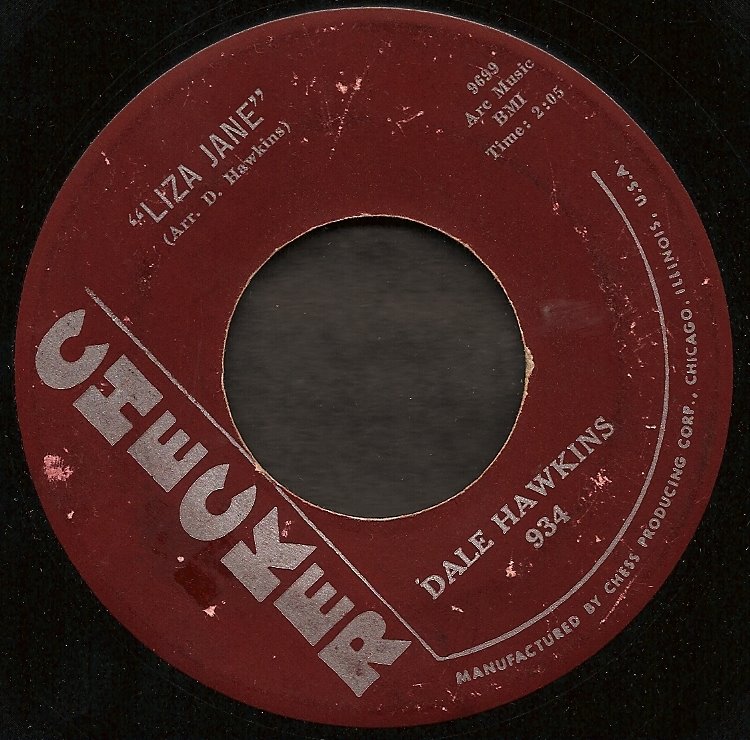
It’s hard to figure out what order his earliest sides appeared, but in 1958 he may have recorded with Alis Lesley on Era, a moot point since I don’t have that particular record. He does appear on Jerry Hawkins’ rockabilly classic Swing Daddy Swing on Ebb (one of his best solos ever), as well appearing on several Dale Hawkins Checker 45’s, the best, guitar playing-wise being his rendition of My Babe (here’s an alternate take ), I Want To Love You, and Liza Jane. While touring with Dale Hawkins he found time for some session work and can be heard on two excellent rockabilly singles on Imperial from that same year– Al Jones’ Loretta (written by Merle Kilgore who penned Ring Of Fire) and Bobby Jay’s So Lonely, a nice Gene Vincent sounding rocker.
Meanwhile, back at the Hayride, Buchanan, following in James Burton’s footsteps moved from Dale Hawkins’ band to Bob Luman’s outfit, recording with four songs with Luman issued by Warner Brothers in 1959, the most interesting of these discs is My Baby Walks All Over Me.
Rockabilly is all about guitar playing, and especially on the Dale Hawkins sides Buchanan is really in his element. Dale was (and is) a great band leader, and he knew how to get the best of of his guitarists.
With the Hawkins band, young Roy Buchanan was touring constantly. He finally left Dale in Toronto and joined his cousin Ronnie Hawkins’ Hawks briefly around 1960, his only recording with them however was on bass. He soon settled in the greater Washington D.C./Maryland/Virginia area where he would spend the rest of his life. There was plenty of work for a guitar player, mostly in rough biker and cowboy joints (remember this is the time and place where Link Wray & the Rayman ruled the roost), and Buchanan soon made a name for himself as far north as Philadelphia where he started doing session work. It’s these Phili recordings that I’d call Buchanan’s best.
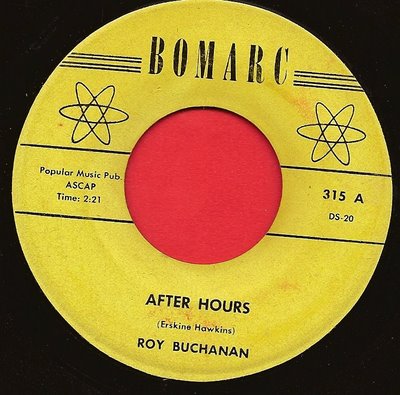
Again, it’s almost impossible to figure out the exact order these discs were released but the first record under his own name was After Hours b/w Whiskers (Bomarc) in 1961. I’ve already blogged about the a-side (see Feb. 6 entry), the b-side (actually a retitled version of Johnny Heartsman’s Johnnie’s House Party) is just as great, capturing Buchanan in top form, take a listen and and ask has a white guy ever bent strings so soulfully?
Later that same year came Mule Train Stomp b/w Pretty Please (Swan). The a-side is an instrumental workout on the old Frankie Laine number Mule Train with Buchanan’s Telecaster riding over a galloping beat and whip cracks, alternating between making his Tele sting at the high end and a rumbling, distorted groove on the low strings, he throws in his best guitar tricks, like using the volume control knob for wah wah effect and overdriving his amp for distortion. Many of the sounds that would become common place by the late 60’s through the use of pedals and boxes, Buchanan was mastering in the early 60’s, but doing it with his hands. He spent years perfecting these signature motifs and they mark his style. Pretty Please is a variation on the Peter Gunn riff which he’d return to at various times over the years, although I think this is his best version. I love the way he bends the strings just before the stops and just lets them ring, he really knew when not to play. As he works his way up the neck with each chorus his playing gets more ominous, more dramatic. He’d never make a better record.
Buchanan would end 1961 on a high note appearing on Cody Brennen and the Temptations (no, not the Motown Temptations) Ruby Baby b/w Am I The One. Buchanan, playing with his amp turned up for maximum distortion is the star of the disc, he just about overpowers the singer with his brutal sound. His solo is simply monstrous, listen to how it ends, did he just slam his guitar into the amp?
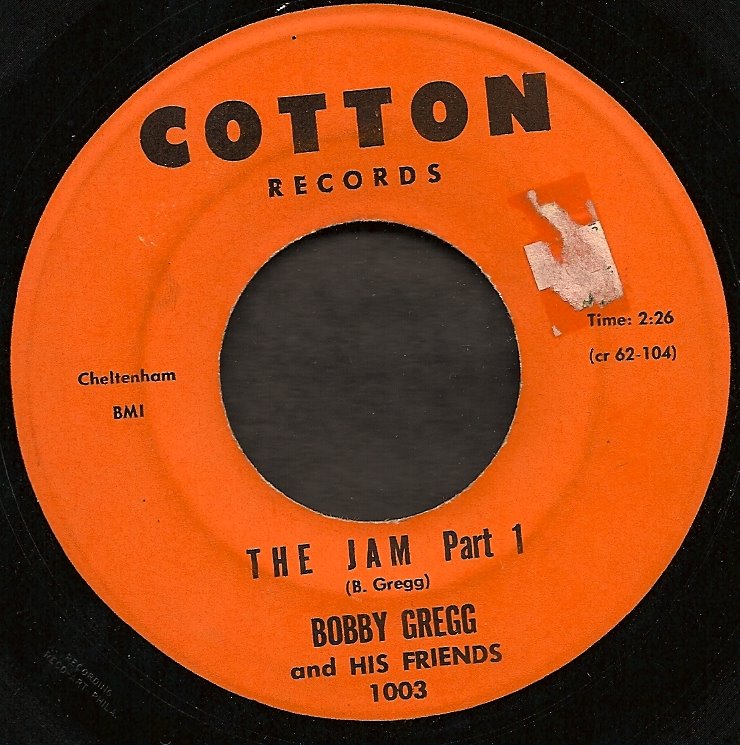
The only hit single of Buchanan’s career came in 1962 where he appears on Bobby Gregg and Friends’ The Jam pt.1 b/w The Jam pt. 2 (Cotton). For the record, Buchanan said of drummer Bobby Gregg “He was no friend of mine”. This crazed instrumental workout went top forty pop and R&B and was such a huge hit in the North East they were drawing thousands of fans a night. In typical, anti-social fashion Buchanan walked out on Gregg before a gig with 8,000 kids screaming for the band. The follow up– Potato Peeler b/w Sweet Georgia Brown (Cotton) finds Buchanan chickin’ pickin’ and using the volume knob to great effect. Too bad it fades as he begins his second solo.
The Secrets’ Twin Exhaust b/w Hot Toddy (Swan) came out in ’62 is basically an excuse for Buchanan to wail, which does in top form. Extra points for dumbest drum solo ever recorded. I love the way it seems to modulate into a completely different song halfway through.
The same year he did session work with Swan appearing on Freddie Cannon’s Teen Queen of The Week and Danny and the Juniors’ Doin’ The Continental Walk. I’ve never heard the latter, and Freddie Cannon (who owns his Swan catalog) is against downloading, so I’ll respect his wishes.
Jerry Leiber and Mike Stoller produced a four song session in ’63 for Bob Moore and the Temps’ which feature Roy’s guitar heavily — Mary Lou b/w The Shuffle (ABC-Paramount) and Trophy Run b/w Braggin’ (Daisy). These are killer sides. Mary Lou is the Young Jessie/Ronnie Hawkins classic and Buchanan is all over it, playing like a maniac. The second single is an instrumental, and it would be Buchanan’s last truly great disc. He’s reach the peak of his style here. Roy claimed Leiber and Stoller recorded other material with him including another version of After Hours, but if they did, none of it was ever issued.
In 1962 Buchanan started playing with a two bit country singer named Danny Denver, appearing on his record Image Of Love on Go Go (later leased to Chancellor), not much of a record, but with Denver, Buchanan would find a steady job that lasted on and off for the next seven years. He’d appear on many of Denver’s self released 45’s and LP’s,although the only good tracks to emerge from this union that I’ve ever heard are this 1966 waxing of Let’s Twist Again, worth hearing only for Buchanan’s out of control solo, and a version of Peter Gunn recorded live with Denver’s band the Soundmasters that same year.
There are a few more spotty recordings from the mid-sixties: the British Walkers’ I Found You on Try was an attempt to sound like the Beatles, he may be playing on on a record by the Hi-Boys on Unicom called They Say, but I’ve never heard it, he also played harmonica on two rare Link Wray singles– Rumble ’68 (Heavy) and Rumble ’69 (Mr. G), but let’s face it, Rumble don’t need no harmonica. Mostly he stepped out of the spotlight, only in his mid-twenties he was already embittered by lack of success, and found a regular gig backing Danny Denver, playing country bars, far from the limelight. With the introduction of wah wah pedals, fuzztones, etc. he felt lost, tricks he’d spent years learning to do were now available for a small price at your local guitar shop. The emergence of Jimi Hendrix in ’67 must have shook him because he told an interviewer later: “when you play at that volume the amps and guitar plays you, I like to use the smallest amp possible, it gives you maximum control”. Roy was feeling the heat, and competing was against his reclusive nature, he would shun the limelight for the rest of his life. Sometimes he appeared with his own band– Roy Buchanan and the Poor Boys but mostly he backed up Danny Denver until a Rolling Stone magazine article in 1969 proclaimed him “the greatest guitar player alive you never heard of” which led a path of rock stars to the crappy clubs Denver was playing to herald Buchanan’s talent. He claims the Rolling Stones asked him to replace Brian Jones but he turned them down because he didn’t want to learn their repertoire. This is most likely bullshit.
Still, players like George Harrison and Jeff Beck sung him praises and soon a PBS documentary brought him to fame’s doorstep, kicking and screaming. He was signed by Polydor and cut a series of boring ass records. He retired and came back several times, the last on Alligator Records in the late 80’s. Unfortunately the fire had gone out. Unlike our previous subject, Charlie Christian, given the freedom to stretch out, Buchanan had become a bore. Under the tight restraints of the three minute 45, and with a strong band leader like Dale Hawkins or producers like Leiber and Stoller, he was great, but as heard on his LP’s, twenty minute solos on standards like Green Onions were duller than dishwater. He became hugely popular in an era that worshipped “chops” and “tasty riffs”, even selling out Carnegie Hall at one point.
His was praised in print by critics and guitar players everywhere, toured the world, had his own signature model guitar marketed by Fender, and was doing quite well despite his inability to make an interesting album.
Each time he reached a commercial peak however, he’d bore audiences to tears and end up back on the Maryland/Virginia/D.C. bar circuit, but even there the competition was nipping at his heals. His friend and student Danny Gatton had become his main competitor, and made records that were much more interesting than Buchanan’s. He was a depressed man in his final years. On August 14, 1988 he was arrested in Fairfax, Virginia for public intoxication, and that night was found hanging in his cell, a suicide according to the police (murdered by the police according to some of his friends).
Sad fuckin’ story, no? But not unique. There’s a million tragic stories in rock’n’roll: Lafayette “The Thing ” Thomas, who made Jimmy McCracklin’s The Walk a hit ended life working as a hose fitter, Pete “Guitar” Lewis of the Johnny Otis Show died a homeless wino, Kenny Paulson, star of Freddie Cannon’s Tallahassee Lassie and Buzz Buzz A Diddle It (and one time Dale Hawkins side man) was almost murdered in prison, and died of an overdose, utterly forgotten, in 1972, and oddly enough, Buchanan’s one time pal and student Danny Gatton, who would commit suicide, shooting himself in his garage, Robert Quine, committed suicide in 2004 had not recorded commercially in four years at the time of his death. Buchanan did better for himself than any of those guys. Hell, he made a living at music, which is more than most musicians do.
In 1989 the U.K. Krazy Kat label released an LP Roy Buchanan: The Early Years, I’m not sure if it ever made it to CD but it had fourteen of the above tracks and is well worth looking for.
As far as his Polydor and Alligator output, I find them unlistenable and recommend them only for students and collectors.
Charlie Christian- Live At Mintons

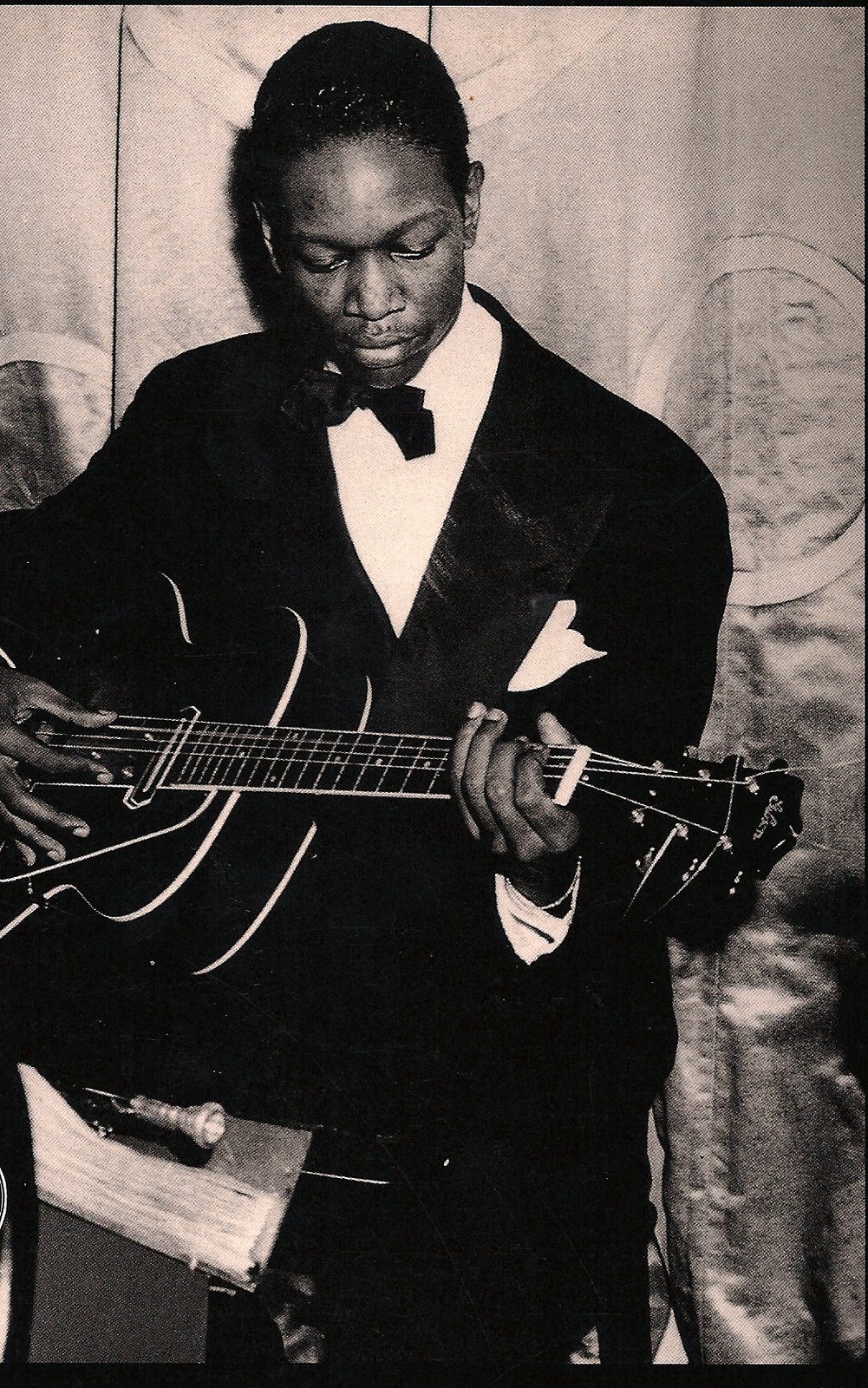
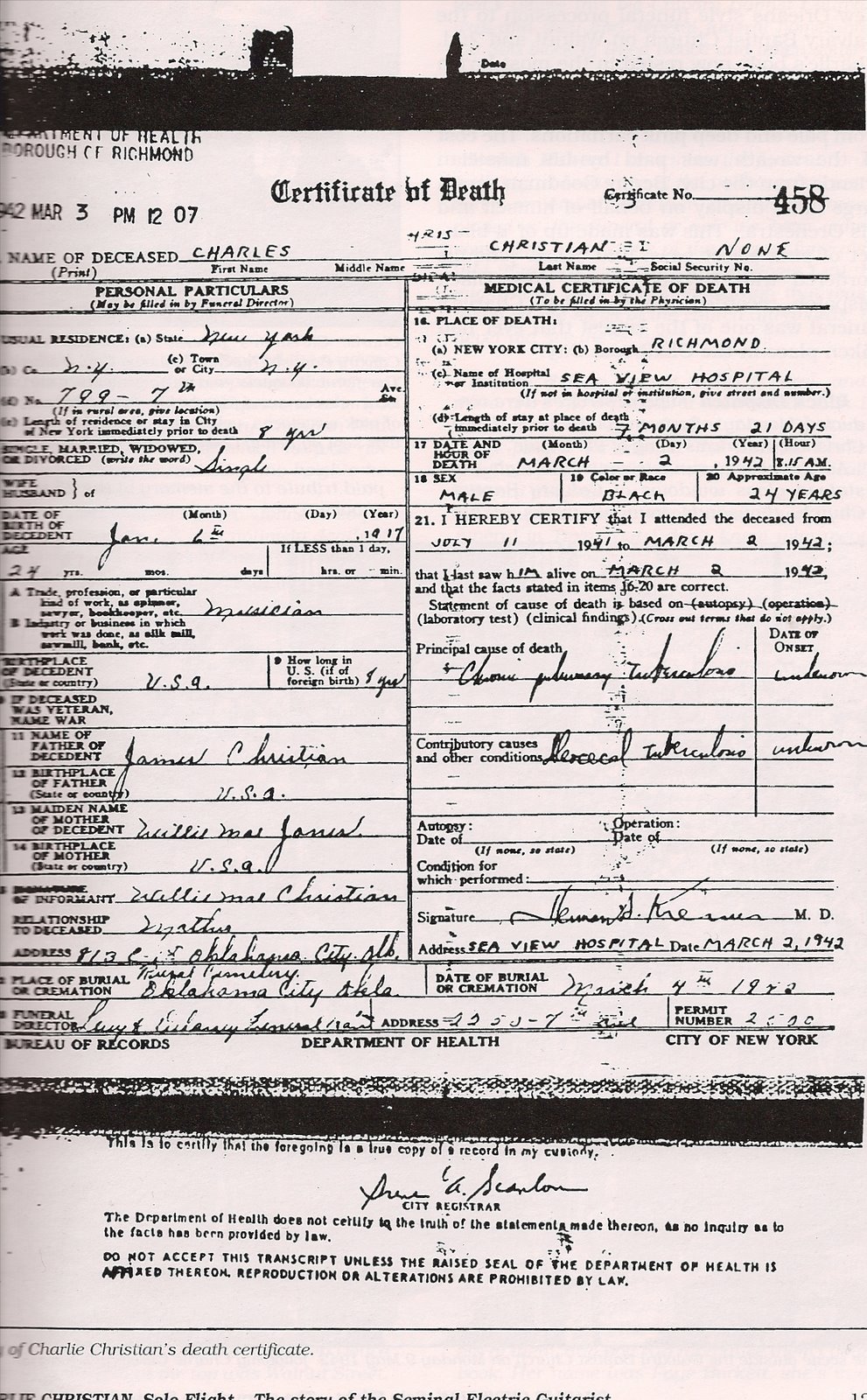 Why can’t the mayor’s office understand that every creative movement in New York City of the 20th Century, from jazz to abstract expressionism to punk rock started in bars and after hours joints. We need such places. Nowadays, the city loves to harass and bust bars and clubs–for noise tickets, sending in undercover cops to try and bust a place for serving minors (God forbid a twenty year old has a beer), no smoking laws, etc. Fuckin’ idiot politicians…sorry, I’m way off the track already. The subject I’m trying to get to being one of my very favorite records– Charlie Christian Live At Minton’s, which captures the great jazz guitarist Charlie Christian in late night jams where he gets a chance to stretch out in a way he never could in any of the configurations of Benny Goodman’s bands that he played with.
If you’re not familiar with the name, Charlie Christian was one of the very first electric guitar players, he came out of Oklahoma, discovered by John Hammond who brought him to the attention of Benny Goodman who hired him, bringing him to fame at a young age.
I know he was an excellent musician, but I’ve never liked Benny Goodman’s playing. There’s something about his tone that sounds to me like he’s trying to squeeze a dime between his ass cheeks. Sadly, Christian contracted tuberculosis and died at age 24 (March 2, 1942) so most of his short recording career was spent with Benny Goodman playing in his big and small bands.
It was these Goodman groups that the majority of Christian’s legitimate recordings are recorded with.
Mintons was an afterhours club at 220 W. 118th Street in Harlem where musicians came to jam with the house band which was Kenny Clarke on drums, Nick Fenton on bass, Thelonious Monk on piano and Joe Guy on trumpet. If a crummy player got onstage they’d play at ridiculously fast tempos or in difficult keys to clear the air, this left more time for the best players of the era to work out their ideas in public. Charlie Christian played there so often he kept an extra amp at the place. Over a few nights in early May of 1941 a guy named Joe Newman brought a recording machine in and recorded Charlie Christian in these late night jam sessions.
They were recorded direct to acetate and these discs ended up with John Hammond whose wife sold them in 1974, five tracks would appeared on the bootleg album Charlie Christian At Minton’s. Later a sixth track (Down On Teddy’s Hill) surfaced and was issued on CD with the five existing tunes.
Sixty eight years later, these recordings sound totally modern. He hear the ideas that would later surface in be bop in their musical infancy, but don’t let that scare you, this is jazz that’s fun to listen to.
I love the way Christian, given the space to stretch out (which he never had with Goodman) uses repetition of short phrases at the beginning of his solos to build the tension before letting loose on the longer passages. I love the vibe of these recordings, the way his guitar cuts through the late night din, you almost feel like you’re there at Mintons at 5 AM, you can almost hear the cigarette smoke.
Listen to Swing To Bop, Christian’s most extended recorded workout, Goodman never let him explore like he does here, it might just be the peak of his short career. Or his swinging Stompin’ At The Savoy. The other tracks– Up On Teddy’s Hill, Guy’s Got To Go, and Lip Flips
show us a side of Christian that was only hinted at in most of his recordings with Goodman.
I love everything about this album, it never grows old.
As far as his other recordings go, they’re all worth hearing, like Bird and very few others, every note Charlie Christian ever played is worth a listen. On the Goodman studio sides his solos are usually limited to four bars, which is quite frustrating, but a few fragments survive where he can be heard stretching out, of these non-commercial recordings my favorite is this short impromptu jam– Blues In B which was played for the radio engineer so he could get his mike levels straight. Here Christian plays his ass off, not having to worry about incurring Goodman’s “withering glare”. I also include his blazing solo recorded with Goodman’s big band, at the Hollywood Bowl on this version of Flying Home, Christian drives the whole band. Another great moment is this live aircheck of Solo Flight (Chonk Charlie Chonk), another example of just how advanced the man was.
At one point, in ’41 Goodman decided he would give up his big band and form a group with Count Basie, using Basie’s rhythm section– Joe Jones (drums), Walter Page (bass) and Freddie Green (rhythm guitar), along with Lester Young on tenor sax and Buck Clayton on trumpet. A great idea, especially if Goodman fired himself! The group lasted one rehearsal, part of which was taped. Here are two examples– Lester’s Dream and Charlie’s Dream from said rehearsal. It’s almost as if Goodman does his best (or worst) to keep Christian and Young from exchanging ideas, even cutting off Christian’s solo in Charlie’s Dream just as he gets warmed up. Despite Goodman’s inexplicable inability to let this band this band really swing. we hear two of the greatest soloists in jazz history backed by one of the greatest rhythm sections of all time.
Would have, should have, could have, it’s the story of life….
We’ll never know how far Charlie Christian would have gone musically, but these late night recordings are his best, and for my money among the most essential jazz recordings ever made.
They were never issued legitimately, and to this day remain available only as a bootleg. Had he lived, lord knows what Charlie Christian would have sounded like in the ensuing decades, but I’d bet he would have been using distortion and feedback by the fifties. The Mintons tapes show him already using sustain and the amplifier’s harmonic and sonic overtones, something it took other jazz guitar players years to come around to.
It’s a rainy Sunday afternoon, a perfect day to lay around and listen to the same record over and over again, and I can’t think of a better jazz record for such a purpose than Charlie Christian Live At Minton’s. It’s a like having a table in a smoky club at be-bop’s inception anytime you feel like it. I guess this is my deluxe version, with those last four cuts thrown in. My present to you readers who don’t already have a copy.
Benny Goodman fans, please hold the hate mail. I tried to like him, but compared to Charlie Christian he sounds constipated. Just my opinion, which are like assholes….