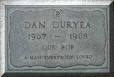
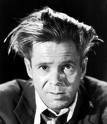
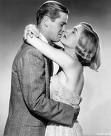
Dan Duryea was one of the most memorable character actors in film history, yet today his name is barely known. A cryin’ shame because he played a sniveling, cowardly, yet somehow likable creep better than anyone except maybe Richard Widmark. Anyone who has seen his performance as Johnny, Joan Bennett’s pimp in Fritz Lang’s classic Scarlet Street (1945) (clip above) can attest to his skill at portraying sleazebags. Scarlet Street was the second time Lang cast Duryea as Bennett’s pimp, the first being Woman In The Window (1944)(Bennett, one of the first actresses to start her own production company hired Lang to direct her in four film noir’s between 1941-48. The other two were Man Hunt (1941) and Secret Beyond The Door (1948)) Enough parenthesis for you?
Uncategorized
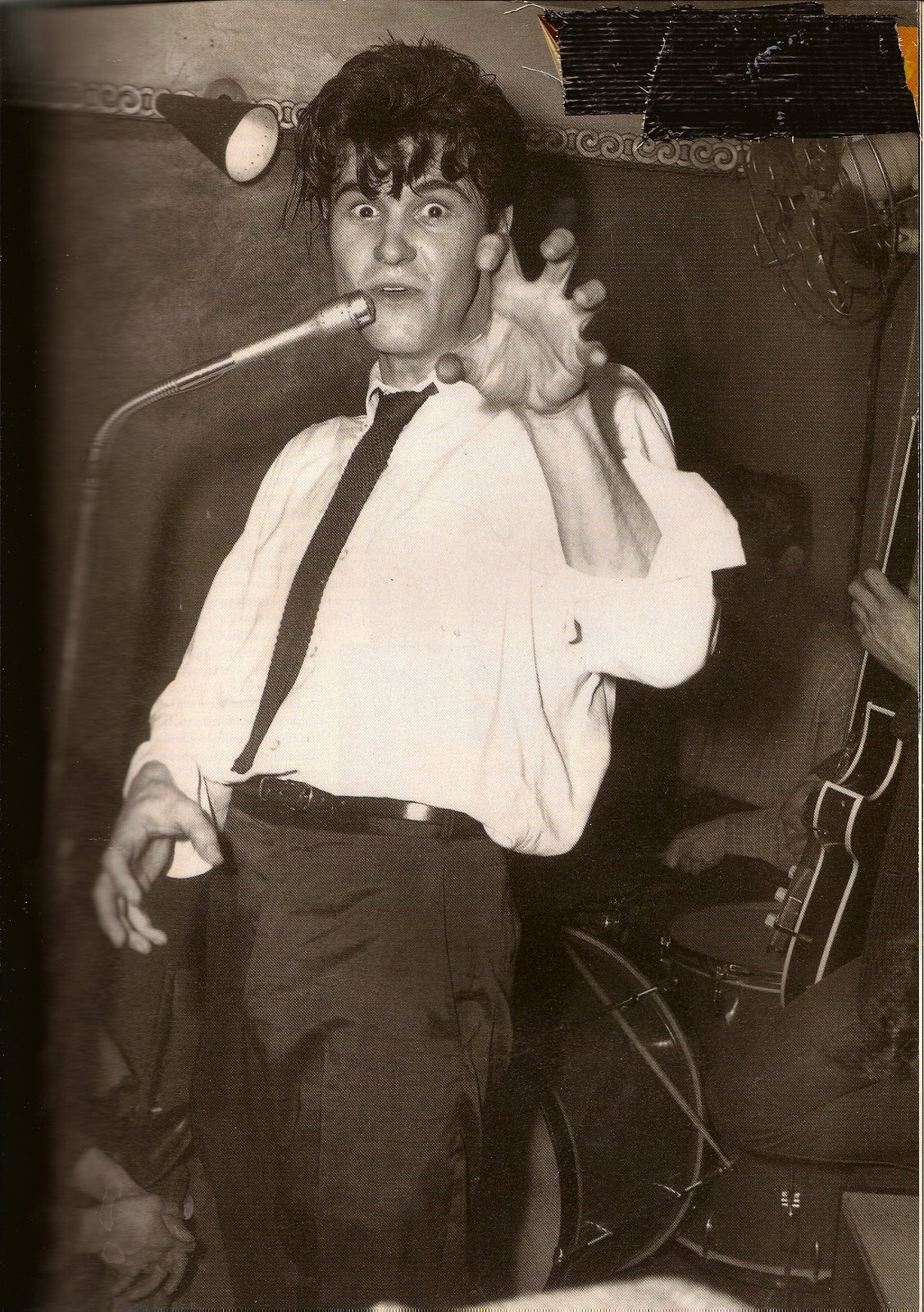
Alias Vince Taylor
Vince, just after his mind was blown….
The best rock’n’roll stories are the ones where the performer goes nuts or dies. This way we don’t have to watch their heads get soft in public, or see them make fools of themselves trying to keep up with the times. This is one of those stories where the guy goes crazy. Boy, did he.
Vince Taylor was probably born off kilter, but rock’n’roll and LSD didn’t help matters. Born Brian Maurice Holden in July of 1939 in Isleworth, Middlesex, England, his family moved to New Jersey, USA in 1946 where his father got a job as a coal miner. Coal mines in New Jersey? See? This story is already weird. Fast forward to 1958. Brian had an older sister named Shelia who moved to Hollywood and married Joe Barbera, half of the animation team of Hanna-Barbera who had just hit it big with the Huckleberry Hound cartoon. With such a stroke of luck, young Brian, who fostered fantasies of turning himself into the next Elvis realized that back home in England there wasn’t much competition and with his greasy, good looks stardom would be assured. In one telling of the story he hears a Tommy Steele record and says “If that passes as rock’n’roll I can’t miss”, or something like that. Bankrolled by his sister’s new found wealth, young Brian set his plan in motion.
Renaming himself Vince Taylor (in an homage to one of his heroes– Gene Vincent), Vince, his sister Shelia, and his newly acquired manager Joe Singer headed east, landing in London in the summer of 1958 where he was soon a regular at the 2i’s coffee bar the incubator of British rock’n’roll (ironic for a country with so many pubs and so imbued with booze culture that rock’n’roll would emerge from a coffee bar). Taylor put together the first of what would be dozens of back up bands, this one featuring Tony Sheridan (who gave the Beatles their first recording session) on guitar and future Shadows rhythm section Brian “Licorice” Locking on bass and Brian Bennett on drums. Vince was signed by Parlaphone, and his first single, a rather pedestrian reading of Ray Smith’s “Right Behind You Baby” went nowhere, but his second platter– “Brand New Cadillac” was and is one of the pinnacles of British rock’n’roll. Based on a riff that sounds like a cross between Peter Gunn and “Lucille”, it is easily the best pre-Beatles British rock’n’roll record (beating out the other two contenders Johnny Kidd’s “Shakin’ All Over” and Cliff Richard’s “Move It” on sheer menace). Passing himself off as an authentic American (he being the rarest of all Brits, one with good teeth, could pull it off) gave Taylor great cache in the U.K.. With his brooding good looks and a wild stage show, Taylor was a natural. The fact that he had trouble singing in time and in key was of little consequence when the competition was the likes of Wee Willie Wayne, Tommy Steele, and Johnny Gentle.
Although it would go on to be considered of a classic it didn’t exactly tear up the charts and for his third 45 Taylor was on the tiny Palette label which issued his other great achievement in wax– “Jet Black Machine” a killer uptempo hot rod tune that brings the menacing quality in his sound to the forefront. It was his last great disc, but it too failed to chart, and despite the fact that he was a good live draw, in the U.K. he was already a spent force as a recording act.
Vince Taylor played an extended engagement at the Top Ten Club where he drove audiences to seismic frenzy, toured a bit, hired and fired musicians weekly and despite the hysteria caused by his live show, within a year he was back at the 2i’s where he started, his manager Singer disappeared and Vince was already displaying the erratic behaviour that would eventually destroy his career. He was insanely jealous and if he phoned his girlfriend and she wasn’t home, he’d blow off the show, spending his night searching for her in the pubs and coffee bars of Soho. He fought with his musicians to the point that he would lose one band to Marty Wilde, and their replacement to Duffy Power (there’s a rumor that goes that Larry Parnes who packaged and managed most of the early British rock acts, gave them their stage names according to their performance in his bed– hence Billy Fury, Johnny Gentle, etc.).
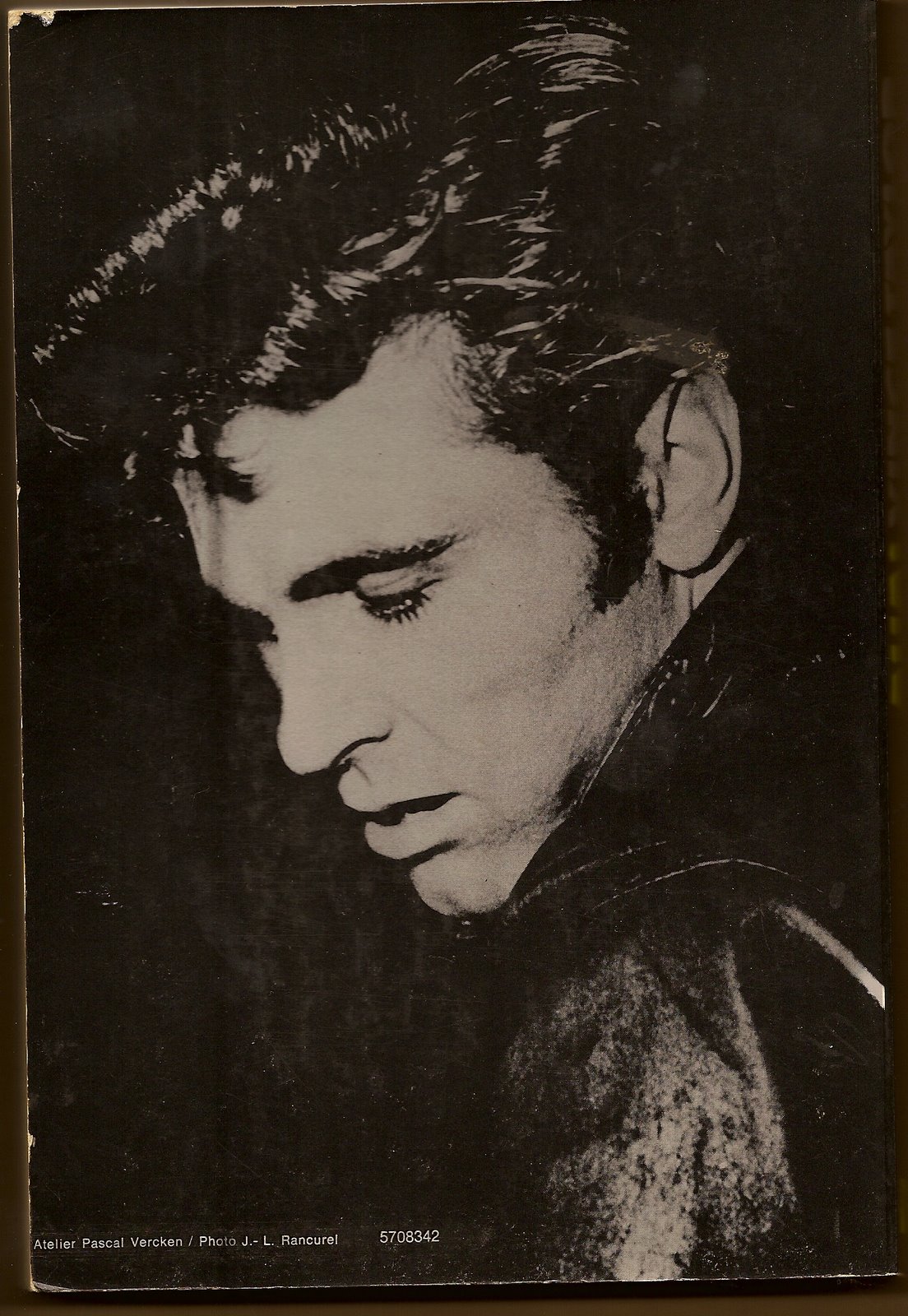
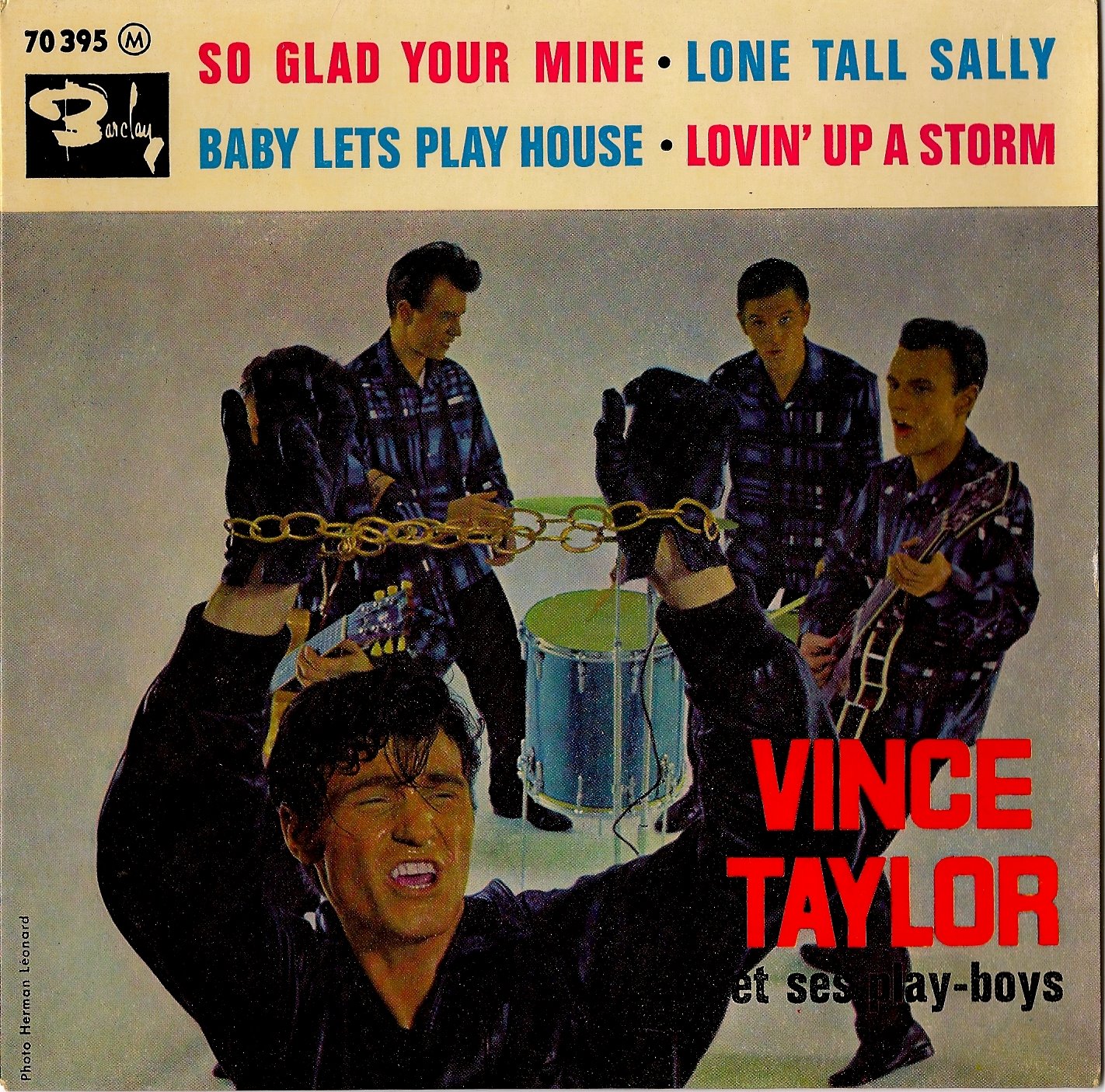
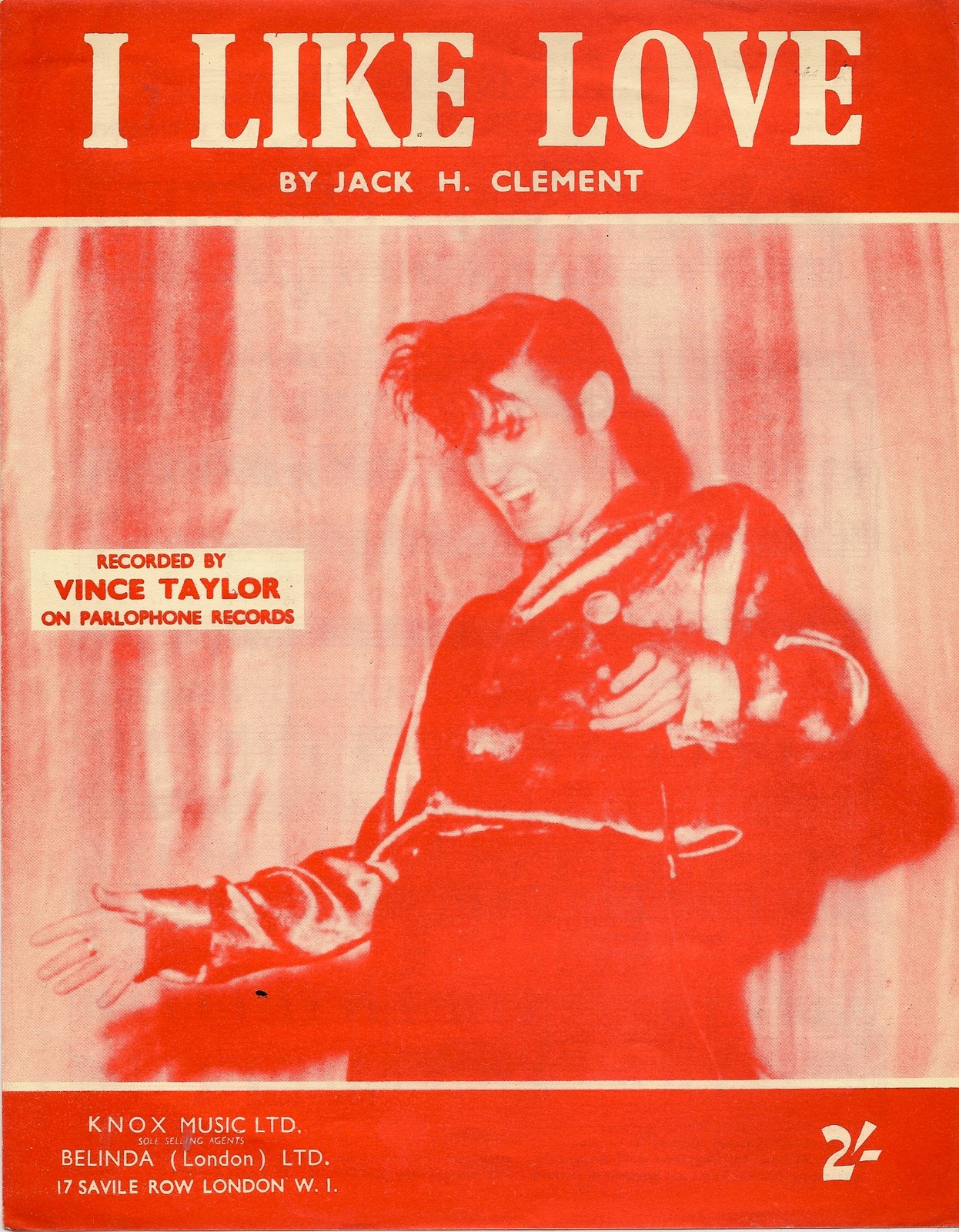
It was around this time Taylor adopted what became his signature look, a black leather sweat suit, long leather gloves, and a large chain as an accessory. There’s much debate as to whether he copped his look from Gene Vincent (who’d been outfitted similarly by British producer/promoter Jack Goode for his first U.K. tour), or if Goode and Vincent got the idea from Taylor. It was a look that Elvis would copy to much acclaim on his ’68 Comeback TV special and eventually become part of every rock idiot’s wardrobe. Nobody wore it as well as Vince Taylor, and if “Brand New Cadillac” and “Jet Black Machine” hadn’t ensured his immortality, he would still be remembered as one of rock’n’roll’s most photogenic images. Still, Taylor’s popularity had peaked in England and rock’n’roll was practically out of style in the U.S., lucky for Vince his career was given a reprieve when he took his band to Paris in 1960, appearing at the bottom of a bill that featured Vince Eager, Wee Willie Wayne and Nero & the Gladiators. Taylor in full leathers, chain, black kohl eye make-up and his hair dyed black and sculpted with grease stole the show with his stylized moves and malevolent stage presence, and was immediately signed to the French Barclay label, owned by Paris’ answer to Morris Levy, Eddie Barclay who put him to work recording covers of Eddie Cochran, Little Richard, Elvis and other rock’n’roll classics, issuing a ten inch LP and many EP’s (packaging was very important to the visually oriented French, and the EP picture cover became France’s greatest contribution to rock’n’roll). Barclay issued dozens of Vince Taylor records, many promoted by Scopitones, short films made especially for the video jukebox Scopitone machine that was popular only in France (the U.S. rights to it were owned by George Jessel, the comedian who produced the amazing movie Nightmare Alley with Tyrone Power), the clips seen here were made for the Scopitone machines.
In 1962 he headlined a bizarre show called Twist Appeal– L’Erotisme Au Xxe Siecle (Eroticism In The 20th Century) in which Taylor performed between displays of erotic dancers, sets and costumes by Erte, a famous ballet designer. Vince was packing them in and this was the pinnacle of his career as a French rock’n’roll icon.
Fueled by alcohol and prellies (preludin, the same brand of speed favored by the Beatles in their Star Club days) Taylor became more and more undependable. He blew off a two week booking at Hamburg’s Star Club, and seemed to travel between the U.S., the U.K. and France without rhyme or reason, eventually settling in St. Tropez with model Helene April who supported him financially for a spell.
In April, 1965 he opened for the Rolling Stones at Paris’ Olympia, this time backed by a new band– the Bobby Clarke Noise (whose bass player Stanislas “Stash” Klossowski would strike up a friendship with Keith Richards after the show, they remain best friends to this day). By all accounts Vince was still in fine form as a performer, but not for long. By May it was all over for Vince. On a trip back to the U.K. he attended a party for Bob Dylan and tried LSD for the first time, it was just what he needed to push his already loopy mind over the edge.
Vince scored some more acid and returned to Paris for a gig, he was filthy, unshaven and bug-eyed, clutching a bottle of Mateus wine. He insisted his name was Mateus, he was the new Jesus, son of God, and he appeared onstage that night wrapped in a sheet extolling the audience to follow him as he led a procession out the door of the venue and across the Seine to St Germain Des Pres preaching all the way. From here Taylor joins the likes of Syd Barrett, Skip Spence, and other acclaimed acid burn outs as one of those legends we love to speculate about. According to long suffering drummer Bobbie Woodman, from this point on all Vince did was eat eggs. There were comeback attempts in ’67, ’72, ’74 and ’75, all disastrous. He wrote his autobiography Alias Vince Taylor: Le Survivant (Editions Delville, 1976) but it was never translated into English. A French girl started reading it to me once but we lost touch before she could finish, although I do remember her proclaiming it “merde'”.
At some point (possibly in 1966) David Bowie came in contact with a very distraught Taylor and used his impressions of him as the basis for his Ziggy Stardust character. A sad claim to fame for the guy who cut “Brand New Cadillac”. Joe Strummer whose band the Clash would record a rather mediocre cover of “Brand New Cadillac” in the early 80’s tells a similar story of running into a very paranoid Taylor in a bar, ranting about the Duke of Windsor trying to kill him.
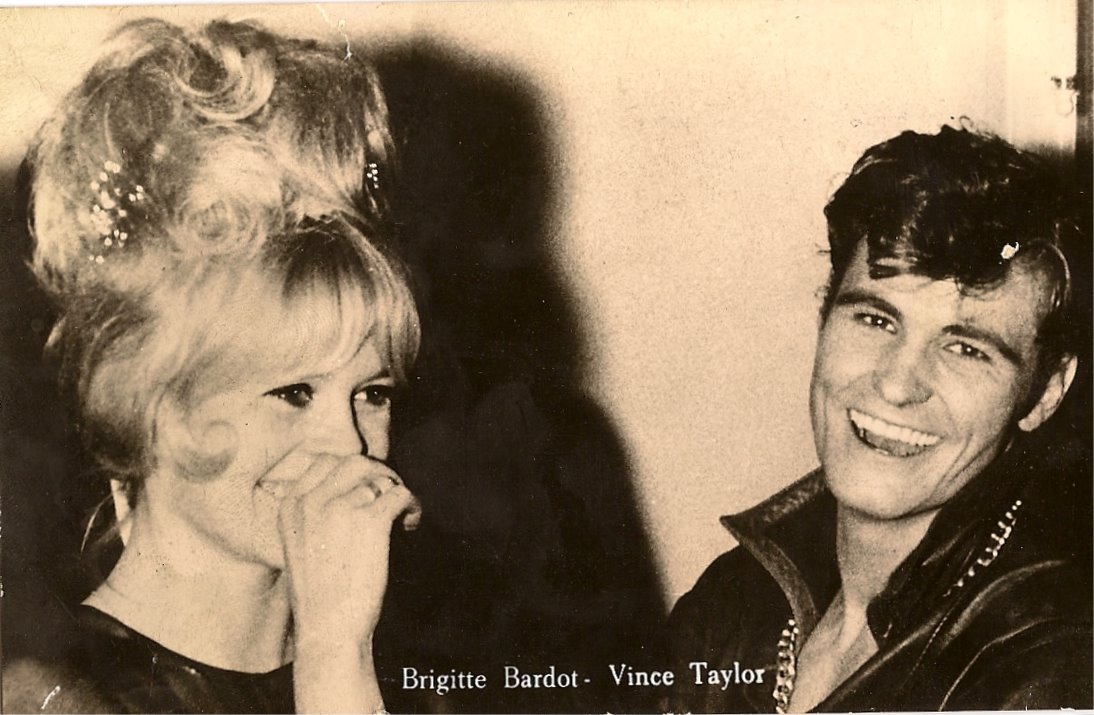
Vince Taylor still took the occasional rent money gig, cutting an awful live LP in ’77 (his second, his first was a fake audience dubbed live disc for Barclay in ’65) and was appearing at Teddy Boy festivals, rock’n’roll revivals and in tiny clubs until the early 80’s. He moved to Switzerland in 1983, married Nathalie Minster and spent six months in the bug house. He died of lung cancer in Switzerland on August 7, 1991. Did I mention he slept with Brigitte Bardot?
It’s Tuesday


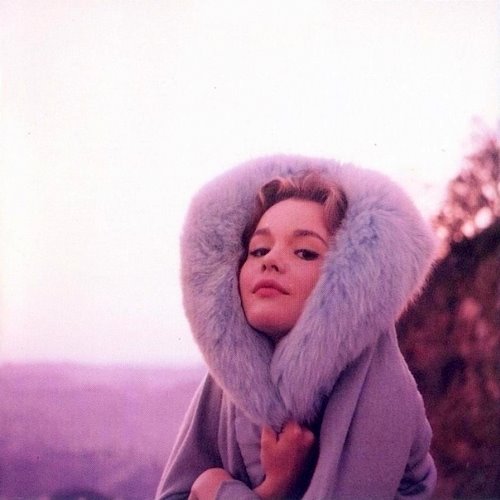
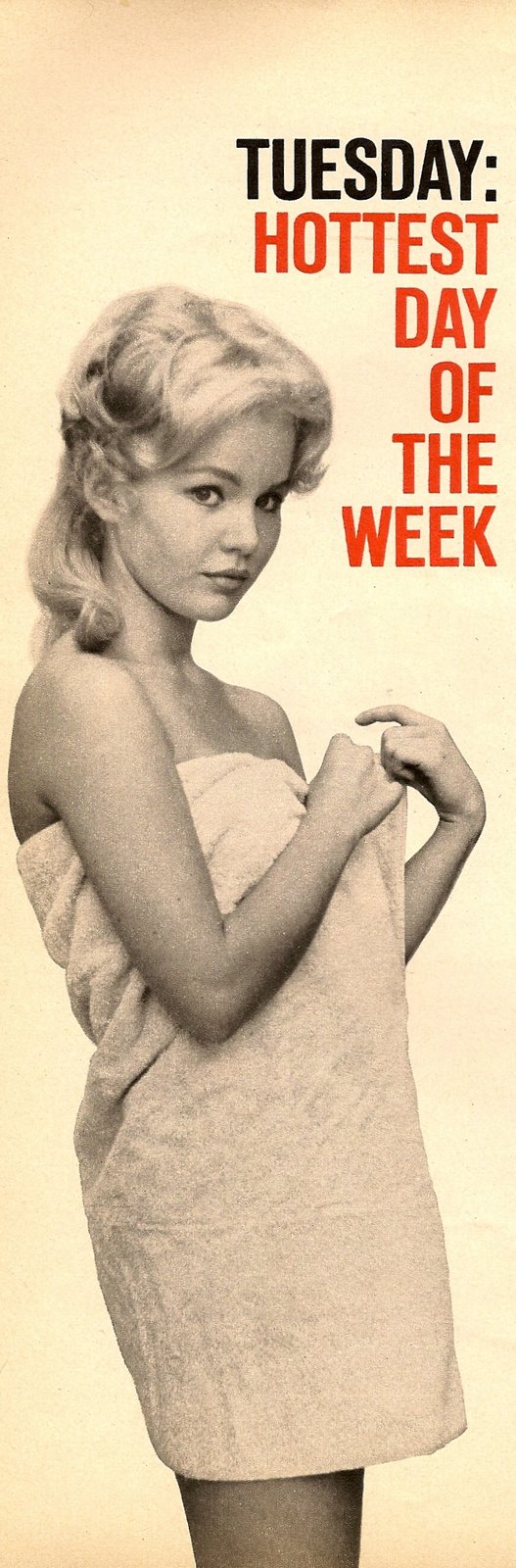
Isn’t Tuesday Weld great? From her first flick Rock Rock Rock where she shares screen time with the Johnny Burnette Trio in their only film performance, to the retarded Sex Kittens Go To College where she proves to be much sexier than the va-va voom overstated Mamie Van Doren, to the utterly nutso Pretty Poison (clip seen above), she’s livened up many movies and TV Shows (The Loves of Doby Gillis, 77 Sunset Strip, Naked City, et al). I’m convinced the only reason people bought that Mathew Sweet record Girlfriend was the cover shot (above). She was born Susan Weld in New York City in 1943, and whatever she’s doing today I hope she’s having a great time.
Among her better film appearances are Play It As It Lays (with Anthony Perkins, who also co-stars in Pretty Poison), Thief (with James Caan), Who’ll Stop The Rain, Looking For Mr. Goodbar, and Wild In The Country (with Elvis what’s his face). Her entire filmography can be found here.
Wild Jimmy Spruill


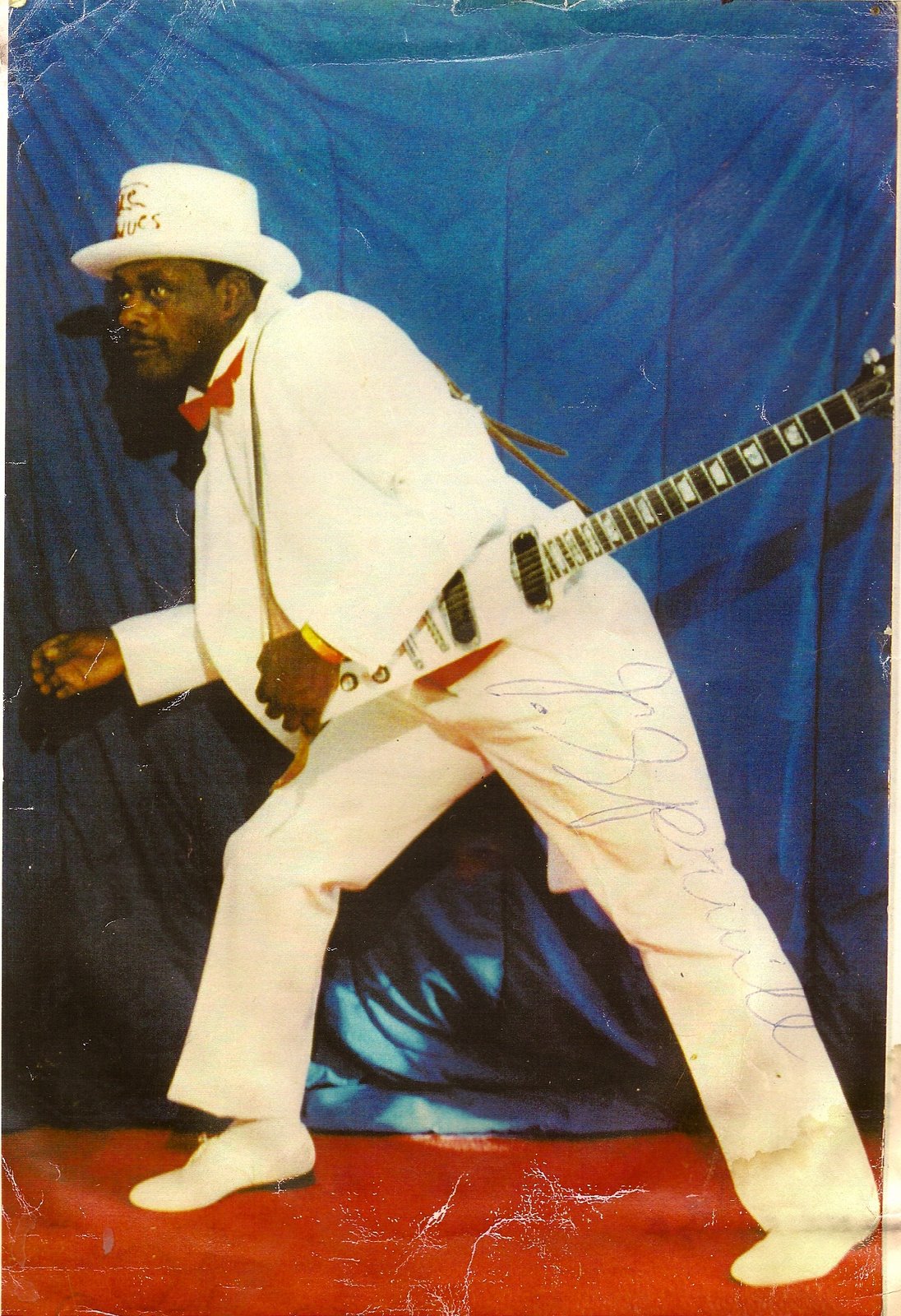
The day I was born (May 23, 1959) the #1 record was Wilbert Harrison’s “Kansas City“. A re-make of a tune originated by Little Willie Littlefield and written by Jerry Lieber and Mike Stoller (itself based on an old tune by Jim Jackson), it featured an ultra-twangy guitar solo by Wild Jimmy Spruill. For this and other reasons I’ve always felt some sort of cosmic bond with Jimmy, who was in my opinion one of the greatest guitar wranglers in the history of rock’n’roll. You won’t find his name in the Rock’n’Roll Hall Of Fame (unlike such great talents as Art Garfunkel, Steven Stills and Bono and I don’t mean Sonny), but if you have any taste in music at all you’ve heard his playing. As a session musician he played on hits like Bobby Lewis’ “Tossin & Turnin'”, King Curtis’ “Soul Twist”, Dave “Baby” Cortez’ “The Happy Organ”, the Charts “Deserie” and tons of others. Today however we shall be discussing his best records, including those issued under his own name. First let’s get the background part out of the way.
A Stranger In My Own Hometown
New York City, 2008, welcome to the Paramus Mall. Since the Republican takeover of NYC with Adolph Guiliani in the 90’s we’ve seen more and more chain/big box type stores and less and less of the weird little mom and pop shops. Endless branch banks, fast food joints (the NY Times put the number of Dunkin’ Donuts opened in Manhattan in the last five years at over 500), cell phone stores, Duane Reade drug stores (that sell aisle after aisle of psuedo-ephedrine products), and if you live in Park Slope lots of designer baby clothes. There’s only two decent book stores left in Manhattan (St. Marks Books and the Strand), there’s not a good record store in the borough. Even the movie theaters are starting to suck. I used to go the the movies every day, now I doubt if I go twice a year. Film Forum plays the same stuff over and over, year after year (latest schedule, Les Blank retrospective, Godard’s Made In The USA, Preston Sturges retrospective, Fellini’s Amacord, not exactly breaking ground here are we)? There are multi-plexes in every neighborhood.
Of the “art houses”, or what’s left of them only the Anthology Film Archives shows any imagination and that place is the coldest, dirtiest most rat ridden theater since the Deuce was cleaned up. At least they showed the Monks documentary. There’s three movies showing in Europe right now that are probably the only three current films I want to see, there’s The Baader-Meihof Complex, a film about the IRA hunger striker Bobby Sands called Hunger and Gomorrah which is supposed to show at the IMF theater in the Village in January. A clip from the Monks film and the trailers for The Baader-Meinhof Complex and Hunger are above. Getting back to the point, what gives? Is there no market in New York City for adventurous film programming? A cool records store? Or anything that you can’t find in any mall out there in that wasteland we used to call our country? I guess not. It seems the suburbanites who moved here in the 90’s to be closer to their now non-existent Wall Street jobs, the proximity to 5,000 Starbucks, and idiot celebrity watching, rather than absorb the culture that this city once had to offer, prefer to bring their suburban life with them, and they’ve killed our town. There’s not much of the New York City I loved left. When I moved here in the late 70’s we (rejects from society) had the town to ourselves, no law and order (I ran an illegal after hours club for a year before the cops showed up in 83-84, now even a legal bar is subject to endless police harassment). I never saw a kid get carded at CBGB. If this city is to have any sort of cultural life we need an atmosphere for
creativity to grow in. Not a police state. Whether it was abstract expressionism or punk rock, virtually every interesting thing that happened in NYC in the 20th century was incubated in bars and clubs. Maybe this economic meltdown will help by driving commercial real estate down but it’s unlikely since most landlords would rather let a space sit empty for years than rent at a reasonable price. And if they let it sit the city gives them a tax break!
If you don’t like the noise, go back to New Jersey. And when you come visit don’t set your car alarm when you park here.
*******************
On a different subject has anyone noticed on the latest CD release of the Rolling Stones More Hot Rocks (Big Hits & Fazed Cookies) has an alternate take of “Let It Bleed” ? I only noticed by accident. BTW one of the best Stones live/rehearsal tapes to ever surface, a mix of a show in Dallas, ’72 and the afternoon rehearsal can be found here. Amazing sound quality (stereo!), and probably the best they ever sounded without Brian. In the UK, a few years back the the Elvis Blues CD had this unheard take of Stranger In My Own Hometown, one of my all time favorite Elvis tunes. Neither of these alternates are mentioned on the packaging so I assume they were released by mistake. BTW, if you never heard Percy Mayfield’s original version of “Stranger In My Own Hometown”, from Ray Charles’ Tangerine label, here it is.
*********************
Here, from an old Hound show aircheck is my musical re-creation of a Thanksgiving dinner:
Lionel Hampton- Turky Hop, Nat Kendricks & the Swans- Mashed Potatoes, Robert Williams & the Groovers- Cranberry Blues, Andre Williams- Please Pass The Biscuits, Nite Caps- Wine Wine Wine, Marvin & Johnny- Cherry Pie and of course Alfred E. Newman- It’s A Gas. Happy Holiday.
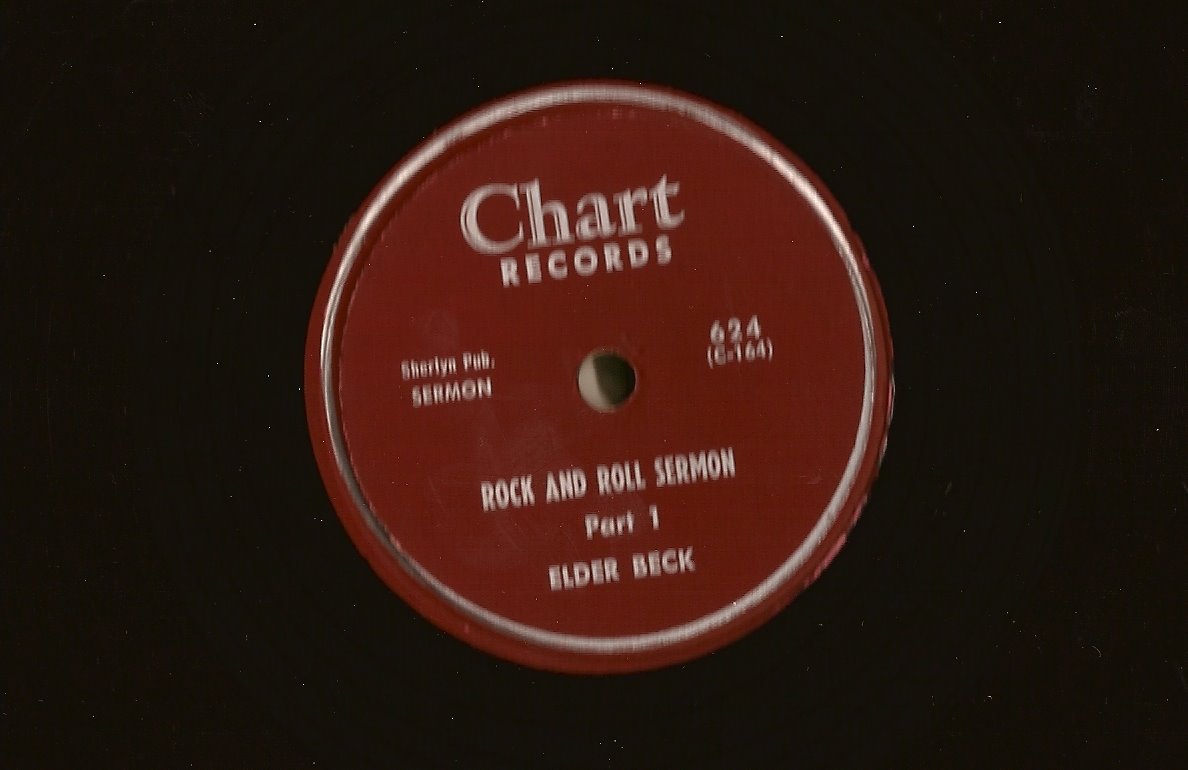
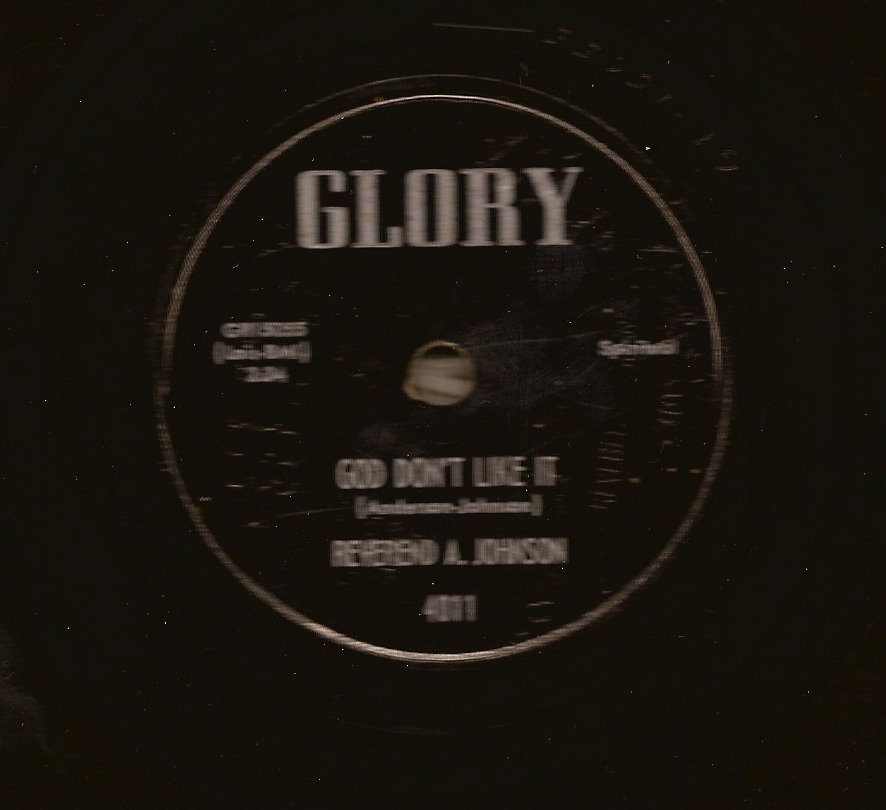
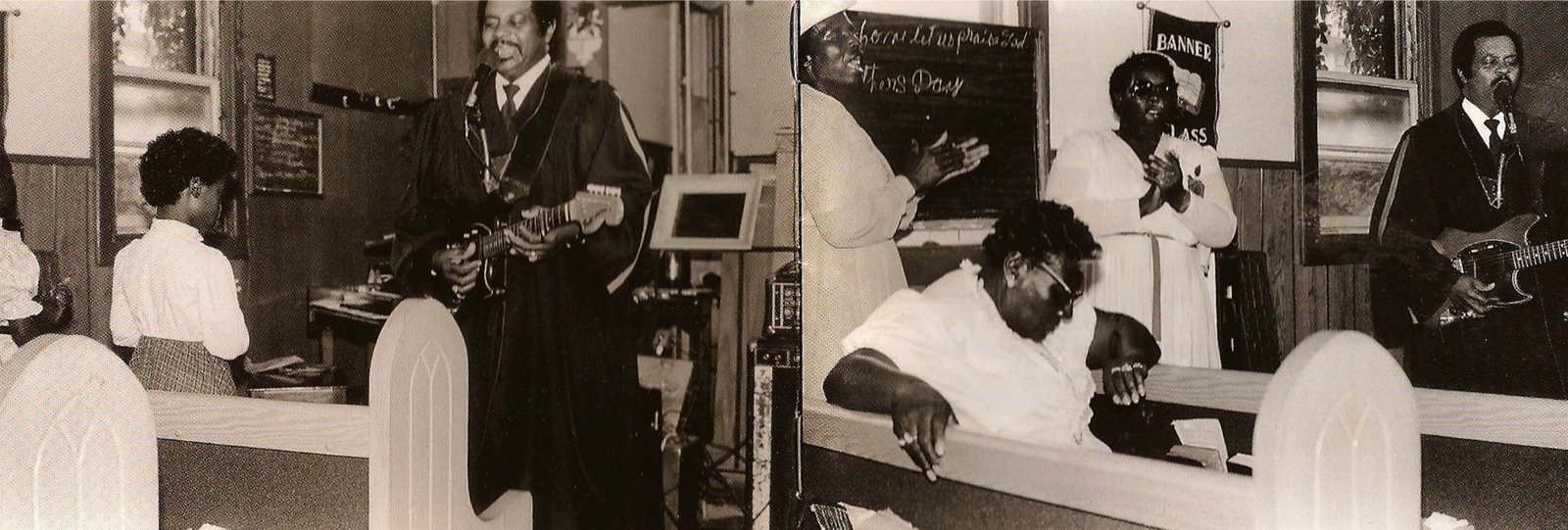
Guitar evanglists, singing preachers and the like….
[youtube https://www.youtube.com/watch?v=IwvZyoLnKSs&hl=en&fs=1%5D


I’ve been collecting gospel records since 1977. It started at a bargain bin in a Woolworth in Ft. Lauderdale’s only black neighborhood where I spotted a peculiar looking LP in the 39 cent bin.
The cover photo showed a heavy set, middle age black woman wearing a turban and a huge feathered boa playing an arch top electric guitar. It was Sister Rosetta Tharpe (bottom clip) and I’d never heard of her but for 39 cents it was worth it just for the photo. When I brought the record home and played it imagine my surprise when the sound of Sam Price’s boogie piano backed by a slapping string bass and drums came rolling out of my speakers. This was followed by a guitar solo that could have come off of an obscure Sun rockabilly 45, then a woman’s voice began belting out “Strange Things Happening Everyday“. A call and response rocker that except for the religious bent of the lyrics could have easily fit in with the rockabilly and R&B 45’s I was just then discovering. Record collecting of course is part archeology, and I’d struck a new layer in the excavation of rock’n’roll’s past. I’ve been mining that vein ever since, especially since the rise in prices, record conventions and Ebay have taken most of the fun out of record collecting. Gospel discs though are still relatively cheap, and you can still find ’em if you know where to look.
Jody Reynolds 1932-2008
Jody Reynolds died Nov. 7 of liver cancer, I didn’t know him, but I’ve always loved his records on the Demon label. “Endless Sleep” was a huge hit, it’s the all time greatest teen snuff ballad (it can be heard above along with somebody’s homemade video tribute). Jody Reynolds was born in Denver, Colorado and raised outside of Pheonix , Arizona where “Endless Sleep” was cut. After “Endless Sleep” got to #6 on the Billboard chart in ’58 he relocated to California where he cut a handful of great sides for the Demon label (cool looking label too), here’s my favorite:Fire Of Love. You punk rockers might remember the cover versions by the Gun Club and Panther Burns, neither version can touch the original. Here’s the flipside– “Daisy Mae” His back up band the Storms with the great Al Casey on guitar and/or six string bass are featured on this instrumental– “Thunder” b/w “Tarantula” which came out on the Indigo label. Al Casey All seven Demon 45’s are Reynolds originals and all of them are good. I’d like to add some of his other tunes like “Tight Capris” (which was on the first tape Quine ever made for me, see Oct. Quine posting), “Beaulah Lee”, “Whipping Post” and “The Storm” but as I’ve mentioned before I don’t have a turntable with USB plugs at the moment and I only have his records on 45’s not CD. Bear Family did a complete Jody Reynolds CD a few years back and it’s well worth buying. Here’s R&B singer Jimmy Witherspoon’s cover of “Endless Sleep“. A rare example of the reverse of the trend at the time of white singers covering black originals. This time it’s the white original that is superior but Witherspoon’s version is still pretty cool. Reynolds last record was a duet wit Bobbie “Ode To Billy Joe” Gentry called “Stranger In The Mirror”. Dying is usually a good career move but in Reynolds case I doubt it’ll do him much good.
Tielman Brothers…now that’s entertainment!
Later they added a va-va-voom girl singer. This clip is from 1960 but they recorded up to 1981. Check Youtube to see what they looked like in ’81 with their DA’s morphed into greasy mullets, they look just like the sleazy dope dealers you find at the bottom end of Amsterdam’s Seldick. More info than you need on them can be found here. Their mixture of showmanship, musicianship and acrobatics are perfect. It makes the crap that passes for rock’n’roll, or even entertainment nowadays even more unforgivable.
I mean what the hell is going on? I can’t stand all these lame ass singer songwriters who stand there looking at their toes like they can’t figure out how they got there? (fill in the name of your least favorite). Not to mention the combination of drone and whine sound that was pioneered by groups like U2 and REM who seem to have influenced the under thirty crowd to emote their precious feelings in public in a way that’s downright undignified. It’s hard to say what makes a great rock’n’roll record, but I do know it doesn’t take a genius to make one. I mean total lames like Paul Simon, Dr. Hook’s Ray Sawyer, Bread’s David Gates, R. Dean Taylor (“Indiana Wants Me”) and even Wayne Newton managed to make great rock’n’roll records. Yes that last one was Wayne Newton. It’s called “Comin’ On Too Strong” and is one of the all time greatest Beach Boys rip-offs. Better than anything on the last three Brian Wilson LP’s or anything the Beach Boys themselves cut since 20/20. I believe Gary Usher, Roger Christian and Terry Melcher were all involved in the production of “Comin’ On Too Strong”, the idea being to make a killer backing track and then bring in the worst person they could find to cut the lead vocal. Sort of part joke, part challange. It takes might take a genius to make a dozen great rock’n’roll records, but anybody could get do it once or twice. So why aren’t there any great records anymore?
Sure there’s one or two a year, usually put out by some tiny label (last year I liked the Mary Weiss disc, two years ago it was the Dirtbombs, this year I like the Lost Crusaders, but it’s a rare year I find more than one). Let’s face it, people have changed. They have (or make that we have) finally bred a generation too dumb for rock’n’roll! The mind reels. Kids who grew up under Bush/Cheney and fed on reality TV seem to have both their shame and cool chromosones missing. Darwinian? Maybe the coming depression will humble the mall brats and bring forth some sort of positive creativity but if you ask me the under 30’s haven’t come up with one good musician, writer, film maker, artist ….they’ve got nothing. Makes me glad I’m old. In fact I wish I was older, I wish I saw Howlin’ Wolf and Jimmy Reed in their prime. I wish the Tielman Brothers were playing down the block….
Robert Nighthawk & Link Wray- Two Guys I Never Met….
I know I just posted this clip (see the Ike Turner posting) but it’s so great and it fits today’s subject Robert Nighthawk so here it is again, from the film …and this is Free a documentary about Maxwell Street in Chicago’s Jewtown section which used to be a flea market and gathering place for street musicians every Sunday. The city tore down all of Maxwell St. and moved it across the road into a mall several years back so scenes like these are long gone as is Mr. Nighthawk (born Robert Lee McCollum in Helena, Arkansas, Nov. 30 1909, next year is his centennial. He died on Nov. 5, of ’67 just before the blues revival that might have put a few bucks in his pockets arrived).
Nightawk had a long recording career in years, short in output. He recorded under the name of Robert Lee McCoy for BlueBird in ’37-38, and again billed as “Peetie’s Boy” (to cash in on the popularity of William Bunch aka Peetie Wheatstraw “The Devil’s Son In Law”) in 1940. After World War II he changed his name to Robert Nighthawk (supposedly on the run from the law, but who knows…). His post war sides are great, some of them are almost rockabilly (, best are the ones recorded for the United and States labels which are incdredibly rare although they’ve been re-issued on the Pearl label which is owned by Delmark (which is owned by the guy who runs the Jazz Record Mart, one of the last great record stores in the U.S.). A 78 of “Maggie Cambell” just sold on Ebay for over $500 (the financial meltdown doesn’t seem to have effected the price of rare records yet, at least not the ones I want). He recorded for Aristocrat (which became Chess) in ’48 and ’49, I have a Japanese LP of all those recordings which are also scattered about on various compilations. Here’s one of rockers, his version of “Kansas City Blues. Oddly enough Ernest Tubb would cover this one and his version (here) is as bluesy as Nighthawks’ is country. Don’t you love the way Tubb says “chump”? “Nighthawk cut a last session for the Testament label in ’66 with his guitar teacher Houston Stackhouse. Here’s a five song tribute with some interview stuff spliced in, taken from an old aircheck. The tunes are “Prowlin’ Nighthawk” from Blue Bird, 1937, “Maggie Cambell” issued on States in ’52, “”Goin’ Down To Eli’s” and “Anna Lee Blues” were recorded live on Maxwell Street in ’63 (and are from the film) and the final tune, a version of Tommy Johnson’s “Big Road Blues” is from the Testament LP
The Link Wray clip is from the Jack Spector TV show which showed locally in Providence, RI, an after school Bandstand type show. Not Link’s best tune but dig that Danelectro Longhorn! It’s the only early TV footage of Link I’ve ever stumbled across. He’ll be gone three years now this month, he died on Nov. 5, 2003. Here’s an aircheck set of five Link instrumentals to remember him by. The tunes are “Fat Back”, “Slinky”, “Vendetta”, “The Swag” and “The Earth Is Crying”. The good folks at Norton records have an incredible amount of Link Wray stuff in their catalogue including four volumes of rarities (Missing Links Vol.1-4), a double CD of the complete Swan Recordings, and best of all the Norton Jukebox 45 series which has a dozen killer 45’s which is still the best way to hear rock’n’roll.
Non avete letto qui


I love books. Nearly every room in my house seems to have grown its own library. Even the kitchen. Novels, photography books, cookbooks, hundreds of books on music, film, history, reference books. An earthquake would bury us under the damn things. There’s an entire sub-industry of the publishing biz that seems to feed off the publics insatiable appetite for mafia books. Since the mafia no longer controls city politics, unions or even gambling, they’ve come to the point where their main function in our society is cultural, that is they exist mostly to entertain us. HBO has reaped nearly a billion dollars off of the Sopranos concession alone! Any prosecutor looking to make a name for himself need only find an Italian who may have committed a crime and a journalist to write about it and he’s or she’s assured of higher political office. Or as I once heard one old guinea say to another–“FBI, For Botherin’ Italians”!
Alexander Stille’s Excellent Cadavers: The Rise And Death Of The First Italian Republic (Vintage Books, 1995) is probably the best written and researched source in English (maybe in any language) on the rise of the Corleonesi. Centering on the 1992 assassinations of Giovanni Falcone and Paolo Borsellino, the magistrates who were in charge of the famed “maxi-trial” (where 366 suspected mafia thugs were kept in a cage during the trial), the story follows the rise of Leggio, Riina, Michel Greco, and their ties to politicians at the very top of the Italian pasta chain, including then prime minister Giulio Andreotti (who would go on to be tried for ordering the murder of a journalist, and you think American politics is dirty?). The “Excellent Cadavers” of the title are the high profile victims of the Corleonesi, and their take over of the billion dollar heroin business from the traditional Palermo family bosses is jaw dropping reading. This book also inspired an excellent documentary and a terrible feature movie. Definitely the place to start.
Despite the rather bland title John Dickie’s Cosa Nostra: A History Of The Sicilian Mafia (Palgrave/MacMillan, 2005) is an excellent all around history of the Sicilian mob starting off in 1860 it documents the rise of it’s first real boss Antonino Giammona (who I’m pretty certain was either my great-grandfather’s father or uncle), its entry into political system, its importation into the U.S. then follows the story through the mob’s persecution under Mussolini and his “Iron Prefect” Cesare Mori, and it’s rehabilitation under the auspicious of the CIA. The story then documents the mob’s rebirth, and such golden memories as “the Sack Of Palermo” (the tearing down of beautiful historic buildings so the Mob could get the construction contracts to build the “mafia slums” that scar the landscape today), the take over of the international heroin trade, two bloody Mafia wars (’62-’69 and again with the Corleonesi takeover from 1970-82), the Michele Sindona affair in which the mafia laundered money through the Vatican bank (covered best in Nick Tosches’ classic Power On Earth, Arhbor House, 1986), the era of terror covered in more detail in Excellent Cadavers and the era of “Bombs and Submersion” that followed Toto Riina’s imprisonment and Provenzano’s more low keyed management style bring book up to date circa 2003 when it was published.
Octopus: The Long Reach Of The International Sicilian Mafia (W.W. Norton, 1990) by Claire Sterling was written before the pile of “excellent cadavers” grew into a small mountain, and before the Falcone and Borsellino murders but covers much ground not found in the above books. This one centers on the Corleonesi take over of the heroin trade, the cross fertilization with the American Bonnano family, the American 1985 “Pizza Connection” trials, the testimony of Palermo boss Tommaso Buscetta, the highest ranking Zip (as they’re known over here, because they talk so fast) to ever turn rat. Well researched, this is a fascinating look into the day to day mechanics of the heroin business on four continents.
Men Of Dishonor: Inside The Sicilian Mafia by Pino Arlacchi (William Morro, 1992) is translated from the Italian version by Marc Romano and follows the thirty year career of a mid-level mafiosi, one Don Antonino Calderone. This is a priceless look at the customs, mores, and day to day life of what turns out to be a rather shitty job. Being a Sicilian gangster just isn’t as much fun as it looks on TV. This volume is valuable as a documentary look at life inside a mob clan and quite a good read to boot.
The latest entry into the field Roberto Saviano’s Gomorrah (Farrar, Straus and Giroux, 2007, translated from Italian) is probably the only book in English the covers La Cosa Nostra’s cousins to the north in Naples, the Camorra. Conventional wisdom tells us that La Cosa Nostra are Italy’s most powerful organized crime group and that their Mezzigiorno bretheran like Naples’ Camorra and Calabria’s ‘Ndrangheta are small time in comparison. Saviano’s book however turns conventional wisdom on its ear as he presents evidence that the Camorra are in reality today’s big time players. They are historically the older organization and are an international outfit with global reach that will make you shutter. Since Camorra history and lore is all new to me I can’t vouch for it factually but it’s a hell of a story, one of the best crime books I’ve ever read. It also inspired a fictional movie Gomorrah that was the hit of the recent New York Film Festival (although it doesn’t seem to have a U.S. distributor yet). The Camorra has been making some fun headlines in the European news of late with the women of the various families opening up on each other wild west style in public (it seems most of their men are doing time). I can’t recommend this one highly enough. I’ve added the trailer for the movie above.
Leonardo Sciascia’s The Moro Affair (New York Review Books Classics, 1978, reprinted 2004) covers one of Italy’s most intriguing cases. The 1978 kidnapping and murder of former Prime Minister Aldo Moro by the Brigate Rosse (Red Brigade), a left wing political action group. How does this case tie in with the Sicilian La Cosa Nostra? As Sciascia explains it they (the mafiosi) immediately made contact with Red Brigade members in prison and arranged for Moro’s release. However, as it turns out, the politicos, led by Christian Democrat Andreotti didn’t want Moro back, he knew too much and when the Brigate Rosse conveniently kidnapped him it presented to them the opportunity to silence a potentially dangerous voice. Sciacia does the detective work, and using the letters Moro sent to newspapers from his Red Brigade prison cell tells a chilling story of how Italian politics and the mob worked together to cover their bloody tracks, and how they forced the hand of the Brigate Rosse into a murder they really didn’t want or need to commit. Sciascia has also written many excellent novels concerning Sicilian crime , now translated into English courtesy of the New York Review of Books Classics series I’d say The Day Of The Owl, The Wine Dark Sea and Equal Danger are mandatory reading for fans of genre fiction. Or just plain old great books.
Although it covers much more than just organized crime, Tobia Jones’ The Dark Heart Of Italy (North Point, 2004) has excellent chapters on the Corlenesi rise, and other Italian crime stories (like Berlusconi’s inexplicable ability to avoid prison and get himself re-elected again and again). It’s extremely well written and a good all around look at modern Italian culture. His chapter on Lampadusa’s masterpiece The Leopard is the best anaylsis I’ve ever read on the subject.
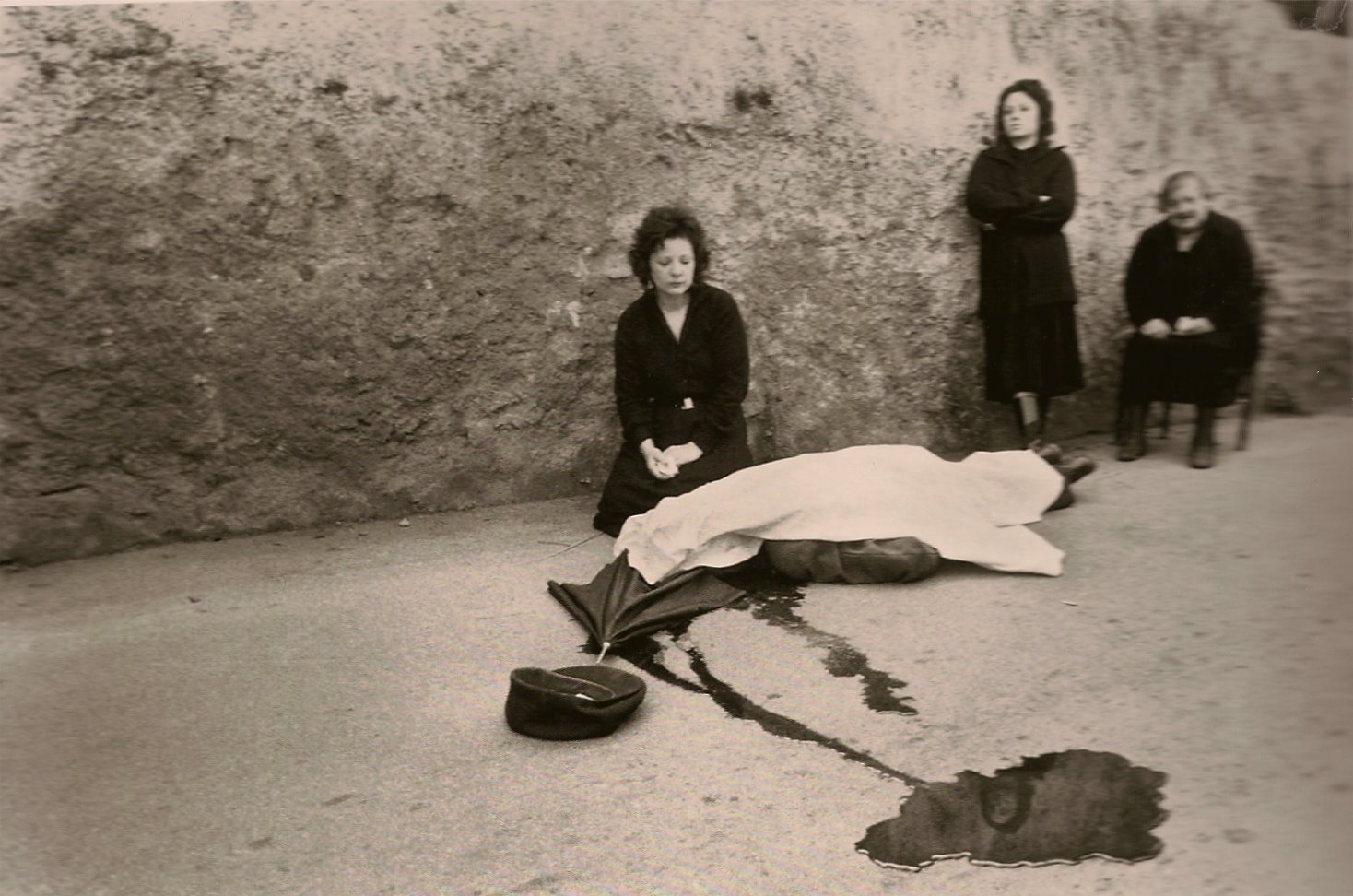
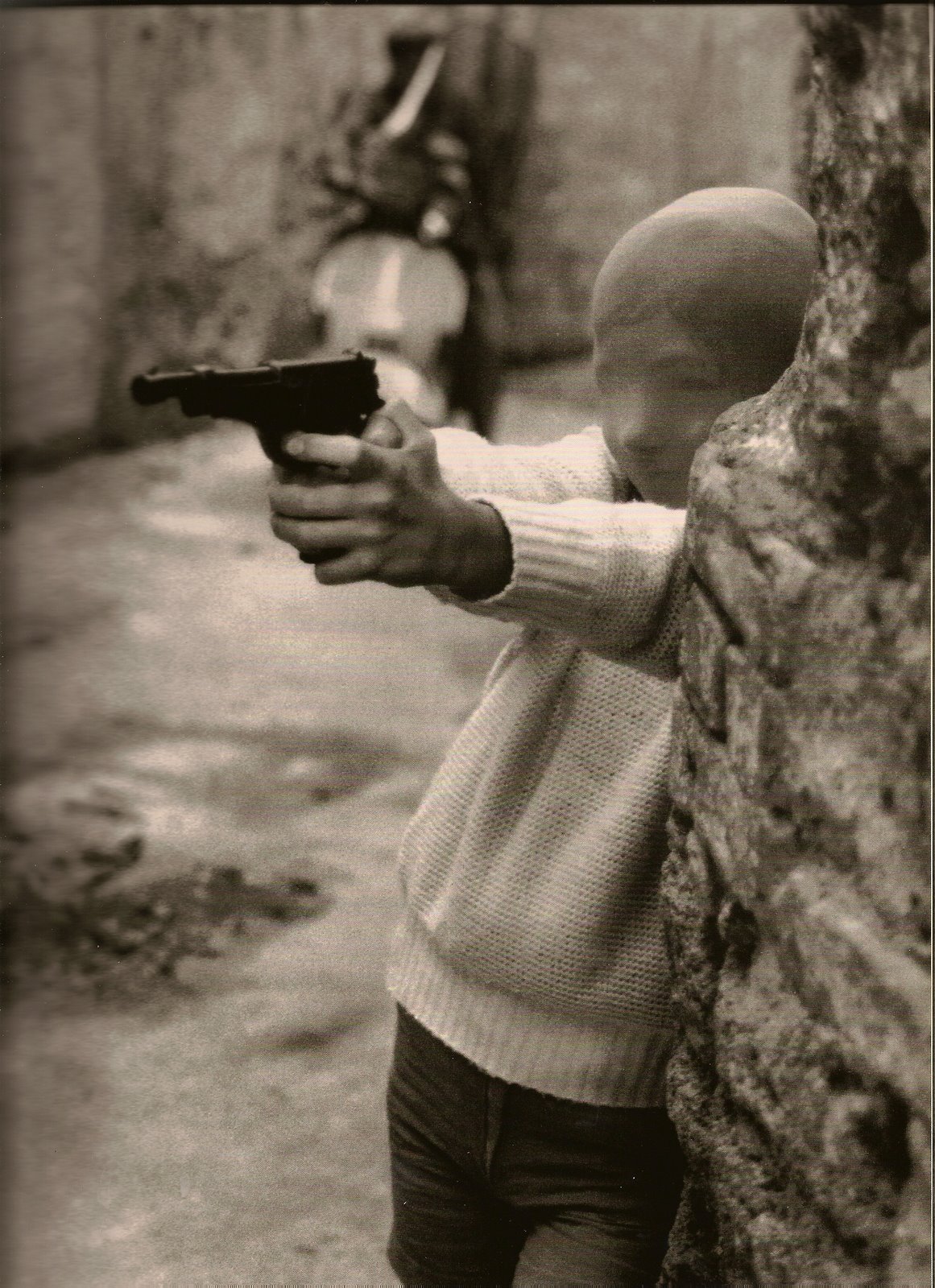
The above photos were taken by Palermo born photo journalist Letizia Battaglia and are from her book Passion Justice Freedom: Photographs Of Sicily (Aperture, 1999). Battaglia uses her camera to document not just the mob murders but the entire spectrum of influence that La Cosa Nostra has on day to day life in Sicily, and her riveting images of the other victims, such as the women and children left behind, living in slums, mourning over the bodies of the fallen, sharing a meal with rats, are among the most compelling you will ever see. The photo of the mother of a missing mafia punk, holding a photo of her missing, beloved son (middle) is one of the most haunting things I’ve ever seen. Battaglia raises photo journalism to high art. Unfortunately, after many years of documenting La Cosa Nostra crimes and a brief stab at Palermo city politics she’s been forced to flea Sicily and currently works in Paris. The photos here (pardon my crappy scanner) are reproduced strictly for review purposes and give just a hint at her great talent. Buy the book and you’ll see what I mean.