Black Cracker

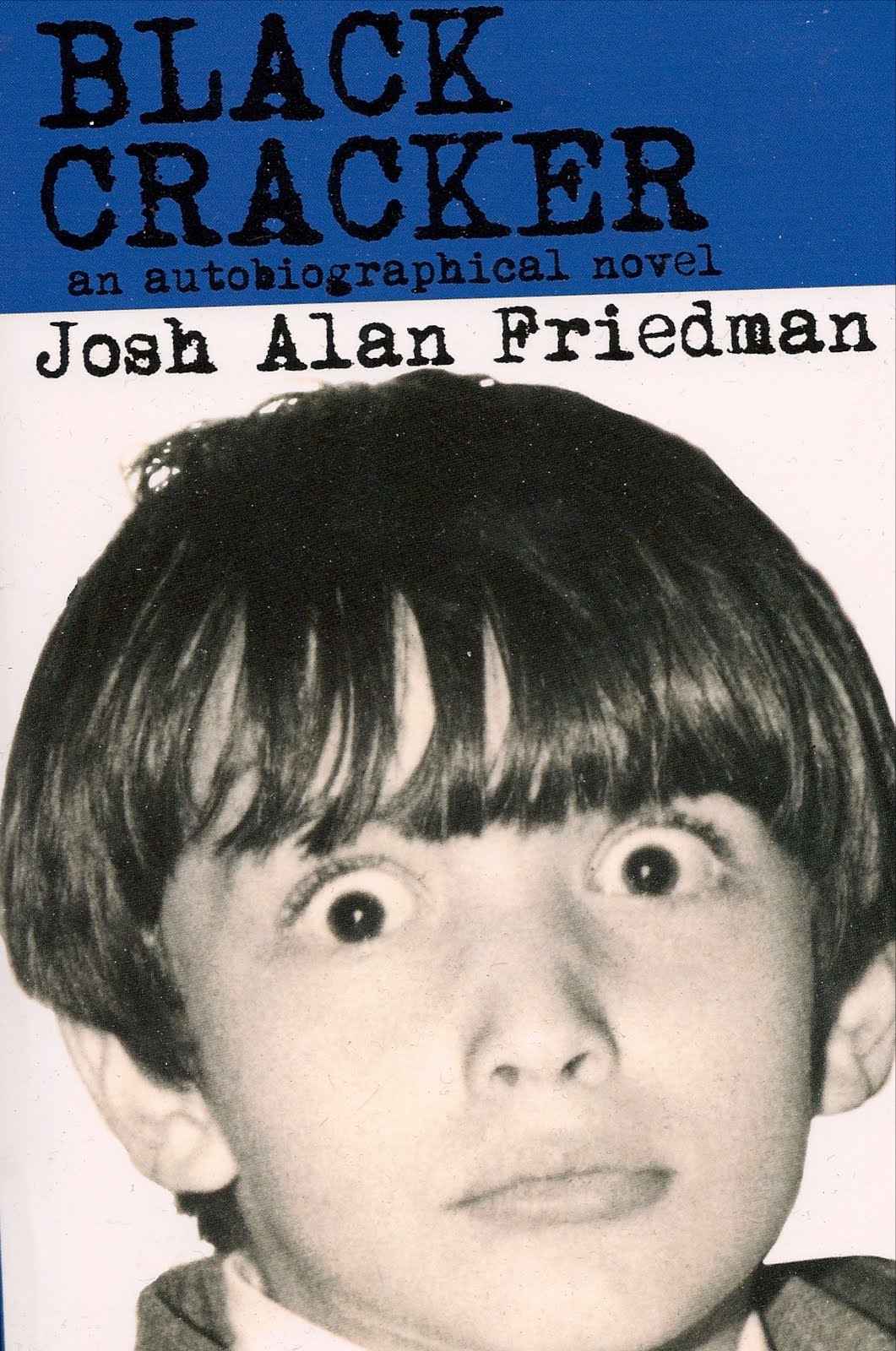
Back in October of 2008 I blogged (is that a word?) about Josh Alan Friedman’s incredible book Tell The Truth Until They Bleed (Coming Clean In The Dirty Business of Blues and Rock’n’Roll) (Backbeat Books, 2008), which if you haven’t read, give yourself detention for a month. Anyway, I mentioned that I’d read Friedman’s autobiographical novel Black Cracker, which had been passed along by a mutual friend as a computer file and which had not yet found publisher. Well, the brave souls at Wyatt Doyle Books have finally published Black Cracker, and I take it as my responsibility to hip you to its charms as I just don’t think the N.Y. Times Sunday Book Review is going to feature it anytime soon.

Friedman’s memoir takes us back to Long Island, New York, 1962 where he and his brother (cartoonist Drew Friedman) are the only two white students left at South School, in Glen Cove, L.I., and here we find a cultural tell all that will leave you howling. There’s an unforgettable cast of misanthropic tykes led by a kid called Bobo, who lives with his family in a shack on back road. Despite the family attempt at lynching young Josh, Bobo and Josh soon bond, and for the next few years Friedman experiences a cultural metamorphosis where once he leaves the confines of his suburban home, he becomes the black cracker of the title. Kind of pre-pubescent, anti-Johnny Otis if that makes any sense.

In these peculiar times when “political correctness” fights it out with Ann Coulter, while the rest of us keep our heads down, try and pretend that none of it matters, and avoid the tough questions (Does the president’s wife straighten her hair? Why are the Little Rascals banned from TV? Why does all hip hop sound like “Humpty Dumpty sat on a wall”? Is Patti Smith really a “Rock’n’Roll Nigger”?), I simply can not recommend this book highly enough. It may or may not enlighten you about the dual nature of race relations in this country, but it will sure as hell make you laugh, shake your head, and maybe even think.

BTW Josh Alan Friedman’s blog– Black Cracker Online is well worth checking out, especially for his Josh’s Lost New York features.

Wayne Cochran & the C.C. Riders

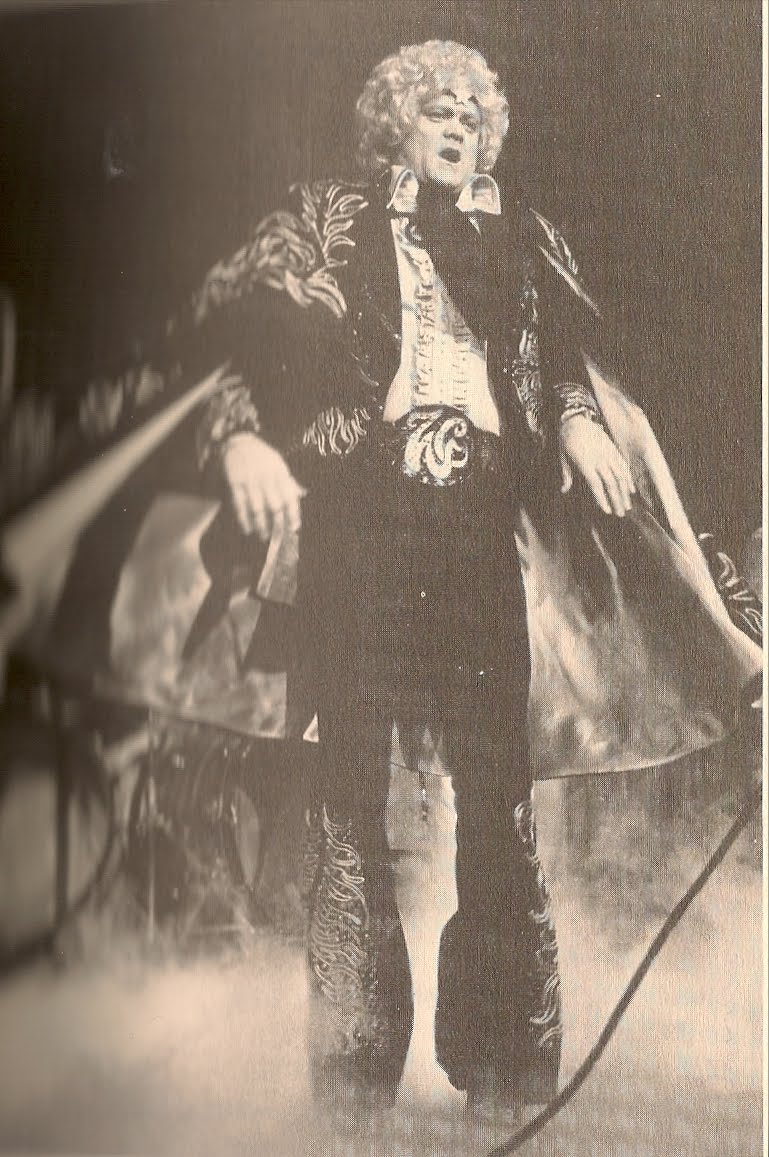
Wayne Cochran in a get up only he could (or would) wear.


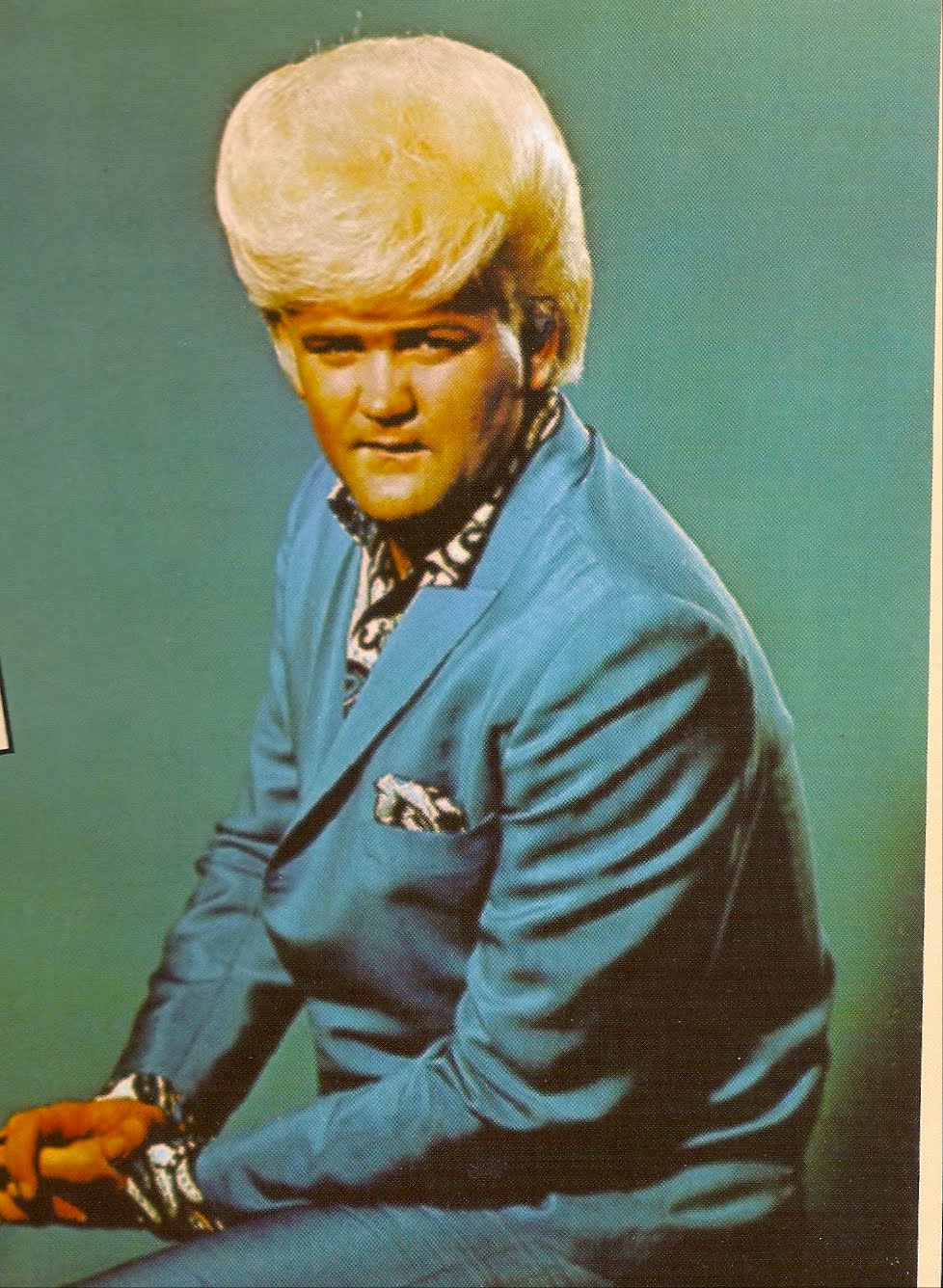
Wayne Cochran: The Man, The Hair.

On The Jackie Gleason Show, 1968.

Late 70’s, Wayne on guitar.

Another tune from the Jackie Gleason Show.

From C.C. & Company (1970) with Joe Namath and Ann Margret.

Re-Union of the C.C. Riders at Wayne’s church in Margate, Florida, 1999.

Growing up in South Florida, which had an eighteen year old drinking age, but nobody ever got carded, you could have driven into most bars on a tricycle back then and gotten served, something we used to do for yuks about once a year was to go see Wayne Cochran & the C. C. Riders, a wacky show band whose home base was a club in Miami on the 79th Street Causeway called The Barn. Usually drugs were involved. I distinctly remember tripping on at least one of these occasions. When the Barn closed, Cochran would often appear at some of the swankier hotels like the Diplomat in Hollywood, Florida (which was full of New York wise guys waiting for things to cool off back home), or Fontainebleau at the north end of Miami Beach (back in those days, the south end of Miami Beach was like an ocean front version of the Bowery), which had a real borscht belt type of crowd, or clubs like the Bachelor’s Three in Ft. Lauderdale (one of the three Bachelors being football star Joe Namath, Jerry Lee Lewis played for two weeks straight one night, or for him it was one long night, his long time guitarist, Kenny Lovelace told me on their final night “Jerry ain’t been to sleep since we got here, we been havin’ so much fun”). Wayne Cochran spent a lot of time in Vegas, where he made lots of money, so when he came back to Florida, three or four times a year, he would really packed ’em in. Most of the audience were middle aged couples in polyester leisure and pants suits trying to act hip, the kind of folks who bought Chicago and Chuck Mangione albums. At least they seemed middle age to me then, when you’re sixteen everyone seems old, when I think about it now, the crowd was probably in their early 30’s for the most part. Often the places he appeared at didn’t want to let me and my friends in (to them, we probably looked like Manson family) and on more than one occasion we were refused entrance for the way we were dressed and/or for having long hair (same thing used to happen at Disney World). It’s hard to fathom in this day and age of tattooed and pierced faces that not so long ago you could be beaten or killed for having hair over your collar. But I’ll always have a soft spot in my admittedly soft brain tissue for Wayne Cochran, he was like the (wrestler) Gorgeous George of the music world. By the time I got to see him, Wayne Cochran wasn’t exactly a rock’n’roll singer, he pitched himself as a white soul man (“The White Knight Of Soul”), but he was closer to Tom Jones, the Elvis of American Trilogy/Never Been To Spain/Steamroller Blues, and Blood, Sweat and Tears (remember David Clayton-Thomas? Don’t you hate “muscle” singers?) Anyway, the horn rock sound was very popular back then. But Wayne Cohran was something of a genre unto himself. He wore a huge white pompadour that had to be seen to be believed, fitted out in outlandish outfits that would have embarrassed Liberace (self designed but tailored by Nudie), he was a hoot, but he put on a great show and really worked his ass off onstage.
Wayne Cochran (b. 1939), from Thomaston, Georgia, had been scrappin’ around the music biz since the mid-50’s. In his late teens he moved to Macon, Georgia and there, in 1955, formed his first band. His debut record, a sleazy rockabilly grinder called The Coo, on the flip was My Little Girl, a light weight, guitar rocker, it was released on Scottie in ’59, and became a minor local hit (an even sleazier version– The Naughty Coo was issued under the name of The Great Sebastian, you’ll have to buy the Norton compilation The Rock-A-Round (Norton 332) to hear that one). The Coo was followed by the Buddy Holly style bopper Cindy Marie b/w Edge of The Sea, a snuff ballad in the Endless Sleep vein, it foreshadowed Last Kiss, and was released on the tiny Aire label. He cut a nice a couple of more singles, wrote and produced a good rockabilly record by Bobby Cash on King, he even played bass on Otis Redding’s screamer Shout Bamala. Wayne Cochran never scored a hit single and as a recording artist he is best remembered for writing and recording the original version of uber teen snuff ballad, Last Kiss which became a huge hit for J. Frank Wilson, and, I’m told (but have never heard) Pearl Jam. By the early 60’s, Wayne’s band–the C.C. Riders, had morphed from a small, guitar oriented, rockabilly group into a big, horn driven, soul revue. The money was in live performances, and having acquired a beat up old bus, he hit the road. At this point he had adopted the style of fellow Maconite James Brown (another performer who was inspired by Gorgeous George, that’s where Mr. Brown as he liked to be called, got the cape routine from). Wayne Cochran & the C. C. Riders, as they were billed, toured the chitlin’ circuit and cut sides for Confederate, Gala, King, Mercury, Chess, Epic, Bethlehem, Drive and I’m sure a few other labels I missed. He made many memorable TV appearances, and in addition to the above clip from The Jackie Gleason Show, he was seen on the Wild Wild West, The Merv Griffin Show, The Mike Douglas Show (great show, once Douglas had John and Yoko as his guest hosts for a whole week), and dozens of others. He even shows up in the 1970 Joe Namath/Ann Margret biker flick CC & Company. But it was the hair that really got wowed ’em in Miami and Vegas. Where as fellow white soul man Roy Head impressed the audience by doing splits, flips, knee drops, and all manner of acrobatic showmanship, all Wayne Cochran needed was his hair. What sat atop his dome was a magnificent work of art. It was a golden, teased, bouffant meets ducks ass kinda thing that was about eight inches high and sprayed, shellacked, and greased until it was the texture of granite. Swept back and piled high, when it caught the spotlight it seemed to glow like a full moon over the ocean. No matter how much he sweated and strained, his hair never changed shape or drooped even a little bit. In fact his hair alone could have been the basis for a religion. I’m sure the religion idea was suggested to him because after the not unusual sad show biz story–struggles with cocaine and booze, etc. , Wayne indeed went into the religion business (where income is tax free, why do you think so many R&B singers go in that direction when the pop hits dry up?) in the early eighties. Starting out with the Abundant Life Christian Church in Margate, Florida he made a brief move to Hialeah, Florida and a name change to The Voices For Jesus Family Center. Today, Wayne and his wife Monica are back in Miami where he’s raking it in as a televangelist. He can be seen on the Church TV channel (to find out when/if he’s on in your area click here). I watch him when ever I go back to visit my mom in Florida. He’s a natural, almost a white Reverend Ike. Every once in a while the C.C. Riders hold a reunion show, usually in his church, the last one was in 2001.
As far as his recorded legacy goes, even without the hair to mesmerize you, Wayne Cochran has made some fairly cool rock’n’roll records early in his career, and even some enjoyable non-rock’n’roll later on. For you rockers are The Coo, My Little Girl, Cindy Marie, Edge of the Sea (sorry about the skips) and his original version of Last Kiss. From the “White Knight Of Soul” days I kind of dig Get Down With It, a re-make of The Coo, these (possibly fake) live versions of John Lee Hooker’s Boom Boom and Don & Dewey’s I’m Leaving It Up To You , his theme song Goin’ Back To Miami, and a sappy version of Charlie Rich’s Life’s Little Ups and Downs that I sort of like.
As a teenagers who thought we were cool, my friends and I used to laugh at Wayne Cochran, but in my feeble old age, I appreciate what a hard worker and great showman he was. I got a lot of respect for the guy. And even more for his hair. In fact, when I think about it, he was a much harder worker than Johnny Thunders, the only other performer I’d seen at that point who teased his hair that much, and hell, Johnny couldn’t be bothered to tune his guitar half the time. When punk rock came in, Thunders, rest his battered soul, sold his hair to Motley Crue for a bundle of dope and started sporting a greasy da (while I’m at it, I refuse to recognize that crappy band that David Jo-has-been has been attempting to sell as the New York Dolls, Johnny and Jerry Nolan where the best part of the group, and without them, they’re just a crappy bar band, it looks silly seeing 60 year olds wearing their grandma’s clothes). Come to think of it, Wayne Cochran, for sheer flamboyance made the New York Dolls, Gary Glitter, David Bowie, Slade, and all the other glam rockers of the day look like the Allman Brothers’ road crew. Wayne Cochran, the man, the legend, the hair.
Willie Joe Duncan & his Unitar

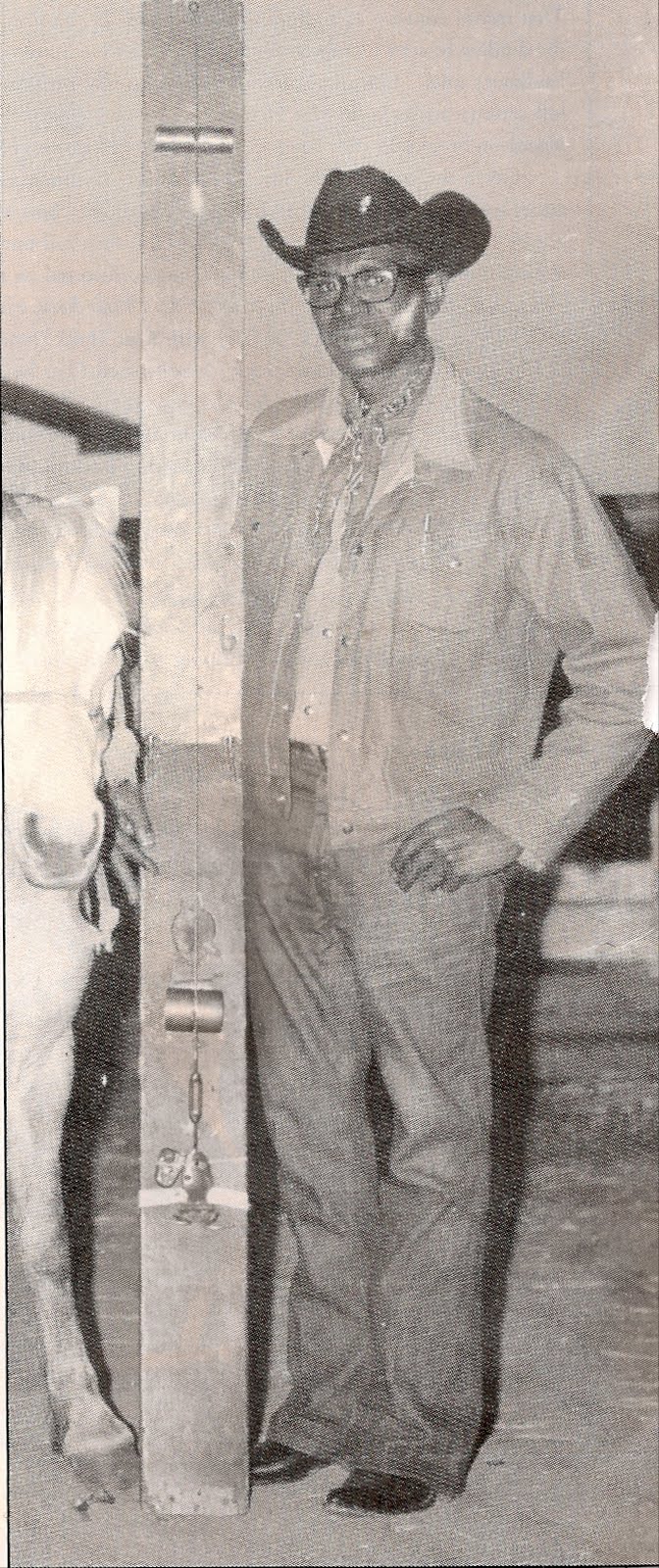
Willie Joe Duncan, his Unitar and the horse he rode in on.


Bob “Froggy” Landers classic with Willie Joe Duncan & his Unitar

Rene Hall instrumental with Willie Joe.


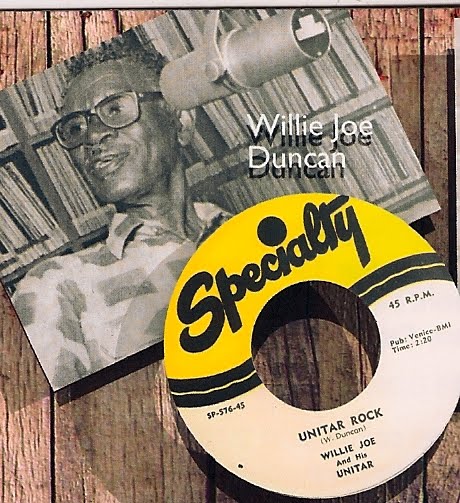
Willie Joe (1988) and the b- side of Cherokee Dance.

Although he only made one and a half singles, there are some people out there, me for instance, that have spent an inordinate amount of their life wondering, just who the fuck was Willie Joe Duncan? It wasn’t hard to figure out what a Unitar is. A Unitar is a home made one string electric guitar. Willie Joe Duncan was remembered by many folks in Chicago who saw him in the early 50’s playing on Maxwell Street with Jimmy Reed. Jimmy Reed, who called Willie Joe by the nickname Jody, reminisced about Duncan in his final interview (Living Blues #1, June 1975):

“…he was doin this old crazy thing, with this one strand of wire, he wasn’t lettin’ me lose him nowhere; now, how he was catchin’ me on that one strand of broom wire I don’t know! But he was doing it all right. He could play that string of wire with a bottle, if he didn’t do it with his finger he’d do it with a little old piece of leather on his finger or something he’d pick it with. But on that one strand of wire on that board he could find whatever I was playin’ on that guitar. Now that was somethin’ I sure hated to lose. Yeah, I hated to lose Jody because it just was a crazy old thing”.

The last thing Jimmy Reed heard about his old busking partner “Jody” was that Duncan had taken up preaching in California. He hadn’t seen Willie Joe since 1955 when Duncan left Chicago for the coast, taking his crazy, one stringed instrument with him. Having settled somewhere in the greater L.A. area, in 1956, Duncan recorded with Bob “Froggy” Landers appearing on Landers’ classic– Cherokee Dance (Specialty), his rockin’, distorted, Unitar was the most predominate instrument on the record. On the b-side was Unitar Rock which was credited only to Willie Joe & his Unitar. It’s a classic of instrumental rock’n’roll, proving, less is more…but we already knew that. Bob “Froggy” Landers would go on to make one more record– River Rock parts 1 and 2 for Ensign on which he is backed by a band called the Cough Drops, but Willie Joe was nowhere to be heard.

Guitarist/A&R man/producer Rene Hall, one of rock’n’roll’s greatest unheralded guitar players brought Willie Joe back into the studio in 1957 to re-cut Unitar Rock under the title of Twitchy and it appeared on the flip side of Rene’s instrumental single Flippin’, also released on Specialty. And that, dear readers, appeared to be the extent of Willie Joe Duncan’s musical career. Or so it seemed.
The other day I was browsing the Roots & Rhythm mail order catalog that arrived via e-mail and something caught my eye (the one that’s permanently bloodshot)– One String Blues Masters (Delta Cat 1001). A new CD on a label I never heard of. In the brief description of the CD were the words– “Willie Joe Duncan & his Unitar, previously un-issued 1988 recordings“. Needless to say, out came the credit card, and for $16.98 + $5.00 for priority shipping, I am now the proud owner of the complete recorded works of Willie Joe and his Unitar, as well as One String Sam, Eddie “One String” Jones, and Louis Dotson. The later name being completely new to me. Pardon me, I’m going to pull five strings off my Telecaster now… I’m back, that felt good.
So what are these 1988 tracks with Willie Joe Duncan? Recorded in East Palo Alto, California, by a guy named Charlie Lange, we get Willie Joe talking about Jimmy Reed and Muddy Waters (whom he claims to have played with), and some unheard recordings where Willie Joe is backed by Chester D. Wilson on guitar, Lone Cat on harmonica and Willie G. on spoons. I have never heard of these three, but while they may not be Rene Hall or Froggy Landers, they do a nice job of backing up Willie Joe, all playing in pretty much the style of Jimmy Reed. There’s several instrumental jams, which are very loose and yet another instrumental using the riff that we know of as Unitar Rock and/or Twitchy, this time called Joe Duncan Instrumental. There’s also a jam in which he basically recreates what he sounded like playing on Maxwell Street with Jimmy Reed (Chester and Lone Cat filling in for the long gone Reed), called Key Of Jimmy Reed. Had Duncan never moved to L.A., Jimmy Reed’s records, might have sounded quite different. Perhaps they would have a Unitar on them. Back to the One String Blues Masters CD –I’m glad I bought it. It’s a bit short on liner notes and photos, in fact there’s no liner notes at all or even a booklet. But you do get One String Sam’s classic I Need $100, originally released on J-V-B, (owned by Joe Van Battle, who recorded John Lee Hooker’s first sides, I guess he figured if he did so well with a guy who knew one chord, a guy with one string couldnt’ miss. Anyway, it’s said to be Don Van Vliet’s favorite record, although don’t ask me who said it, I forgot, still it’s a classic by any one’s standards, and these parenthesis are making me claustrophobic). It’s also as rare as an honest politician. Personally, I wish the whole package was on vinyl, but clocking in at eighty minutes it would have to have been a two record set (or thirteen 78’s) which economically was probably not feasible. Of course if you don’t own the original 78 or 45 (does it exist on 45?) of One String Sam’s I Need $100 b/w My Baby Ooo, which, unless you’re extremely lucky, you could never find for a mere $100 nowadays, this compilation is double essential. There’s also a live version from the ’73 Ann Arbor Blues Festival and two other tracks from the same date. There’s really not a bad track on this CD, although One String Sam and the Specialty sides from Willie Joe are the best things here, Eddie “One String” Jones’ Rollin’ & Tumblin’ is excellent, as is his version of The Dozens, although it’s admittedly a hard song to fuck up.
There’s no law (yet) that says you need six strings on a guitar. Keith Richard played some of his best stuff with five, the live version of Midnight Rambler for example. Tiny Grimes and Alton Delmore used four, Big Joe Williams played with ten strings, in his case it being like a twelve string minus two, not a regular guitar plus four (does that make sense, if not, send me a telegram and I’ll explain it). But when you get down to one string, you really need some imagination. Willie Joe Duncan had that and more. He had a distorted, dirty, sound to go with his unique style. Now what became of the guy? This liner note-less CD does not tell us. If anyone knows please write in and tell me.
Note: if I’m steppin’ on any toes here with posting the sounds, e-mail me direct and I’ll yank ’em. I figure this blog thing is like radio, if you hear a tune and like it, you’ll go buy it. I certainly wouldn’t want to hurt Willie Joe’s royalty statement. Or hurt a label with the good taste to release Willie Joe Duncan and One String Sam records.

Robert Quine- Early Recordings: Bruce’s Farm (1969)

Robert Quine in a rare photo without his sunglasses.


Quine’s autograph, for you handwriting analysis freaks.

These are the earliest known recordings of Robert Quine playing guitar. A tape of him playing bass in a band called the Counterpoints exists, but he would never play it for me because the sax player (who had played on the Caps’ classic Red Headed Flea on White Star) didn’t show up the night of the gig that was taped and Quine hated the tape. These tunes were recorded in May, 1969 when Quine was a member of a band called Bruce’s Farm. The other members were Barry Silverblatt- guitar/lead vocals, Rick Davis- bass/vocals and Bob Clark- drums. Quine is playing guitar and singing harmony. Here’s one of the originals– Backwards. The other original is simply called Blues and is your basic twelve bar blues instrumental with a wild guitar break from Quine. The other twenty songs on the tape are covers of fairly well known tunes– Elvis, Beatles, Stones, Dylan, Hendrix, Kinks, Buddy Holly, Chuck Berry, Carl Perkins are all represented as well as a cool rendition of the Fiestas’ So Fine (done in three part disharmony) along four Byrds covers (Quine loved the Byrds). Here are some highlights– Satisfaction, Feel A Whole Lot Better, Where Have All The Good Times Gone (that’s Quine singing lead on the Kinks cover, I think he sings it better than Bowie did), Blueberry Hill, Walk Away Renee, Revolution, Eight Miles High, and Why. I’ll be posting the other elven tunes in the near future. The sound quality is a bit dodgy, there are some drop outs, static, etc. but that’s to be expected from a cassette recording of a gig from forty one years ago. To my ears, the most astounding thing is that you can hear just how much Quine had already developed his unique style by ’69. The only real difference is the heavy use of the wah wah pedal on some tunes. I believe this is the tape Quine played for Richard Hell when they first talked about putting the Voidoids together. It came to me from Barry Silverblatt who was the leader of the band and can be heard playing guitar and doing most of the singing. Barry and Quine kept in touch over the years, they talked nearly every week until the end of Quine’s life. You can hear Barry’s voice on the Velvet Underground Quine Tapes box set. If you listen closely when Lou announces from the stage that Sister Ray “is gonna go on for awhile”, you hear him laugh and mumble something to Quine (it’s the version of Sister Ray recorded in St. Louis). If you haven’t already, you can read my recollections of a 25 year friendship with Quine here. For the last recordings Quine made before his (I believe assisted) 2004 suicide, click here. It’s almost seven years since Quine took a powder, and not a day goes by when I don’t think of him.
Getting back to the music, from this tape we can see that Quine’s style changed more in the last year of his life (when he switched from the Stratocaster to the Telecaster and stopped using the whammy bar) than it had in the previous thirty years. Historically, this tape is a real gem, thanks Barry, you too are a gem. In my first Quine posting I talk about a band Quine told me he had in St. Louis called the Garbage Vendors. Barry, who knew Quine from that time assures me that Quine was yanking my crank with that one. Now that I think about it, it makes sense. Although he did show me picture of himself with three black guys, there were no instruments or anything in the shot, they could have been anyone. I’d love to believe that story, but the more I think about it, the more it sounds like it was made up especially for my ears.
BTW, Quine’s cousin Tim Quine has a blog– Rubber City Review which has a posting about Quine up this week.

Gillian’s Found Photo #44

The Fang’s contribution this week is dated Feb. ’62, and this sultry vixen conjures up some type of cross between a sixties Italian film starlet and Vampira. Imagine if La Dolce Vita had been a vampire movie, this gal could have played Anita Ekberg’s role. It looks like her false eyelashes where soldered onto her eyes, with the help of a crane. Her eyes seem to be reflecting back

something of a void, perhaps she’s a succubus?